REVIEW · MONTEVIDEO
Best Private Montevideo Shore Excursion: City Tour. Optional WineTasting Tour.
Book on Viator →Operated by Top Private Tours · Bookable on Viator
Montevideo can feel big, fast. This private shore excursion stitches together the city’s main landmarks and a few lesser-seen neighborhoods, with the option to add a tannat winery tasting.
I like that the tour is built around cruise timing: you start near Independence Plaza, see Old City highlights, then move through parks and coastal areas like La Rambla and Playa Pocitos. I also like the option to upgrade with a winery visit tied to Uruguay’s signature grape, tannat, plus the listed bonus of tasting with empanadas.
One thing to consider: the experience quality can swing a bit depending on your guide’s English and how much context you get at each stop. A few guests reported limited explanations during the city portion, and at least one mentioned empanadas weren’t served even when the wine option was selected.
In This Review
- Key Things I’d Mark on Your Montevideo Map
- Why This Montevideo Shore Excursion Fits Cruise Days
- Port Pickup and the Real Benefit of Private Touring
- Ciudad Vieja, Mercado del Puerto, and Plaza Matriz: The Old City Starter Pack
- Independence Plaza to Puerta de la Ciudadela: Monuments With Meaning
- El Prado, Parque Batlle, and Estadio Centenario: Where Montevideo Breathes
- La Rambla and Pocitos: Coastal Views Without the Guesswork
- Mercado Agricola MAM and the Catedral Stop That Changes the Pace
- Optional Pizzorno Winery Tour: What the Tannat Tasting Adds
- Price and Value: Is $210 Per Person a Fair Deal
- Guide Language and How to Get the Day You’re Paying For
- Should You Book This Montevideo Private Tour?
- FAQ
- How long is the city tour?
- What is included in the tour price?
- What does the optional wine tasting tour include?
- Is this a private tour or shared group?
- Where does the tour start and end?
- Which stops are part of the city itinerary?
- What if my cruise ship is delayed?
- Can I cancel and get a full refund?
- Is the tour suitable for most people?
Key Things I’d Mark on Your Montevideo Map
- Private, port-to-port pickup that’s designed for a cruise day (and includes a worry-free return plan)
- Ciudad Vieja + Mercado del Puerto in one go, so you get both history and local food energy
- Plazas that actually teach the city’s story, from Plaza Matriz to Artigas at Plaza Independencia
- Montevideo’s “real neighborhoods”: El Prado mansions, Parque Batlle, and the seaside walk at La Rambla
- Optional Pizzorno winery visit (family-run) centered on Uruguay’s award-winning tannat
- Flexibility for photo stops, especially since private means you’re not stuck on a bus schedule
Why This Montevideo Shore Excursion Fits Cruise Days
This is the kind of tour that works when your time is measured in ship schedules, not loose itineraries. You get a structured half-day city circuit, starting in the Old City area and moving outward to greener spots and the waterfront, with a return transfer that’s meant to keep you on time for the gangway.
What makes it practical is the mix of “must-see” and “nice-to-see.” Independence Plaza and the Old City are quick hits, but the day also includes Montevideo’s calmer rhythm—parks, a coastal promenade, and neighborhood streets—so the city doesn’t blur into just a list of buildings.
If you like walking and taking photos, private helps. You can pause for a view without having to sprint back into a crowded vehicle. If you want a faster, more structured explanation style, just know that the depth of commentary can vary by guide (more on that below).
Port Pickup and the Real Benefit of Private Touring
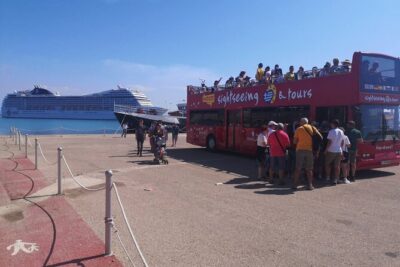
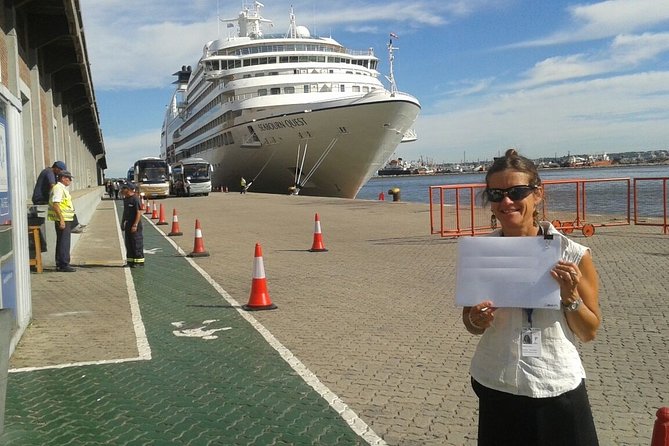
You’ll be met at the cruise terminal for a pickup, and the day ends with a drop-off back at the port. This is one of those tours where the “small” details matter: easy meeting, direct transport, and no negotiating taxis while you’re trying to beat a departure time.
Private also means your guide can tailor the pacing. Many reviews highlight guides who were friendly, patient, and willing to adjust based on what you want to see—whether that’s extra photo stops, a specific interest, or swapping a moment when the ship is delayed.
That said, private isn’t automatically better if you and your guide aren’t aligned on language. Some guests loved the communication; others found that the guide’s English was too limited to really connect the dots. So if you strongly rely on storytelling, I’d treat language as a key decision factor.
Ciudad Vieja, Mercado del Puerto, and Plaza Matriz: The Old City Starter Pack
The Old City portion is designed to get your bearings fast. You’ll spend time in Ciudad Vieja around the harbor, where remnants like old gates and colonial-style street lamps help explain why this area still feels different from the newer parts of Montevideo.
A highlight here is Mercado del Puerto. It’s housed in a wrought-iron structure that used to be a train station, and today it’s a lively market known for meat and seafood restaurants. Even if you don’t eat right away, it’s one of the best places to sense local food culture in a single stop.
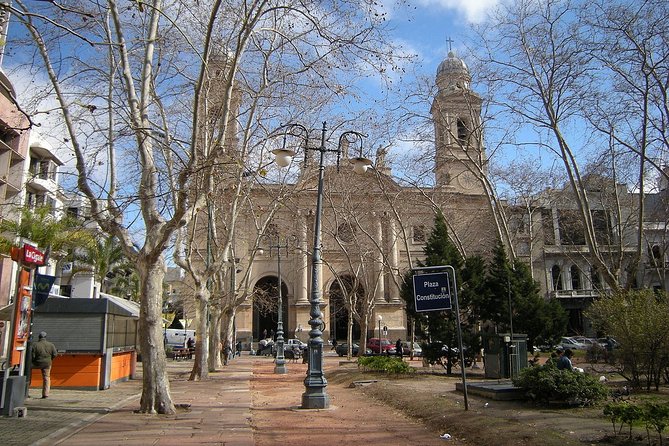
Then you rotate to Plaza Matriz, a smaller leafy square with a fountain and surrounded by major civic buildings like the town hall and cathedral area. It’s a short stop, but it’s the kind of moment that helps you understand the city’s layout—less rushing, more “okay, this is where everything clusters.”
Independence Plaza to Puerta de la Ciudadela: Monuments With Meaning
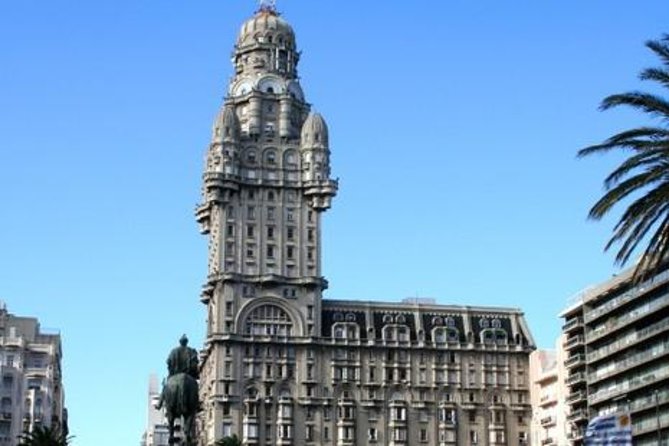
After Plaza Matriz, you move to Plaza Independencia, the divider between Old City and “what came after.” The iconic statue of José Artigas anchors the national story, and you also get architectural contrast around the square.
You’ll also see Puerta de la Ciudadela, one of the few surviving remnants of the old city wall. That’s a useful stop because it turns what could be a quick photo into a real explanation of Montevideo’s earlier defenses and city boundaries.
Depending on your route and the stop order, you may also pass the Palacio Salvo, described as a major landmark with a prominent tower profile (and noted in the tour as having been the tallest building in South America at one point). If you’re a “see it once, remember it forever” person, this is the kind of landmark that sticks.
El Prado, Parque Batlle, and Estadio Centenario: Where Montevideo Breathes
One of the smartest parts of this tour is the shift from squares to neighborhoods. El Prado brings you tree-lined streets and early 20th-century mansions—more residential, more graceful, and a break from the postcard rush.
Then you’ll get to Parque Batlle, a large public park tied to Estadio Centenario. You’re not going to spend a long time inside—this is more about seeing how the city centers sports and public space together.
Estadio Centenario is a big deal in football history. It was built in 1929–1930 for the 1930 FIFA World Cup and the centennial of Uruguay’s first constitution. It’s also connected to famous tournament moments for Uruguay and major club wins, which gives you context beyond “that’s a stadium.”
Even if you’re not a football fanatic, it’s a good reminder that Montevideo isn’t just about museums—it also runs on public landmarks tied to national pride.
La Rambla and Pocitos: Coastal Views Without the Guesswork
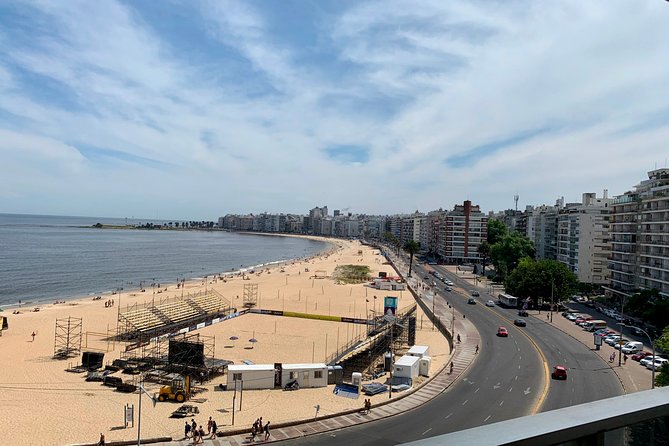
After the park stops, the tour swings toward the coast. You’ll drive through elegant Carrasco and then stroll along La Rambla, the seaside promenade where you get broad views across the beach and the Rio de la Plata.
This part is valuable because it shows Montevideo’s “in-between” spaces. Instead of jumping from one museum-like stop to another, you’re seeing daily-life geography: the long walkway, the coastal vibe, and the way the city turns outward.
You’ll also pass Playa Pocitos, a more fashionable seaside neighborhood with lots of amenities. It’s not meant as a beach day; it’s a quick orientation so you can recognize the vibe if you go back later on your own.
If you want one simple travel tip: pack sunscreen and something to drink. Even in good weather, that walking-on-a-promenade time can add up fast.
Mercado Agricola MAM and the Catedral Stop That Changes the Pace
Montevideo’s markets are where you can swap tourist structure for local routine. The tour includes Mercado Agricola Montevideo (MAM), described as a food court and area for dry goods and garden fair—plus occasional live performances. This is a good stop if you want snacks, a casual browse, or just a break from heavy sightseeing.
Then comes Catedral de Montevideo, known for its domed bell towers. The tour notes it dates to 1804, and it’s the burial place of some of the country’s important figures. Even as a short stop, it adds gravity to the day, especially after lively market energy.
If you’re trying to photograph across multiple styles—colonial-ish remnants, civic plazas, and church architecture—this route gives you variety without extending the day endlessly.
Optional Pizzorno Winery Tour: What the Tannat Tasting Adds
If you upgrade, the day extends to about 6 hours total. The winery portion is described as a 2-hour visit at Pizzorno Family Estates, hosted by a member of the family—an approach that’s meant to turn wine tasting into stories, not just samples.
Uruguay’s headline grape here is tannat, which the tour highlights as Uruguay’s prominent grape variety and as award-winning. In plain terms: tannat is bold and character-forward, and this tasting is your chance to connect the grape to the local culture that produces it.
The listed package includes wine tasting + empanadas with the option. Lunch can also show up as part of some guests’ experiences at the winery, but what’s consistently stated for the add-on is the tasting and empanadas.
One caution: a few reviews call out that empanadas weren’t provided even when they expected them. If this matters to you, ask the operator at booking to confirm what’s included in your exact option.
Price and Value: Is $210 Per Person a Fair Deal
At $210 per person, you’re paying for three things: private transport, time-efficient route planning from the port, and a guide who can make Montevideo click in a short window.
That price can feel like a bargain if you get a guide who explains context well. Reviews repeatedly praise guides like Hector, Beatriz, Sandra, Brigitte, and Guillermo for being informative, passionate, and flexible. Guests also mention practical wins like clean air-conditioned vehicles and smooth help when ships run late.
But the value drops if the city portion feels thin. Some guests reported minimal explanations and limited English, which makes a private tour feel more like a chauffeured ride than a guided education. If you’re paying premium rates, you should care about communication.
The winery add-on helps justify cost for wine lovers, especially because it’s tied to a family-run operation. If you’re not into wine, you’ll likely prefer the shorter city tour, since the main payoff then is the concentrated highlights around Old City and the coast.
Guide Language and How to Get the Day You’re Paying For
English isn’t guaranteed with private guides. Some guests reported guides who spoke English well, like Hector, Sandra, and Beatriz. Others described a guide who didn’t speak much English and relied on translation tools.
So here’s the practical approach: before your day, confirm your guide language expectations through the booking channel. If you can’t confirm, plan to treat the tour as sight-based rather than story-based.
Even when English is limited, private touring can still be enjoyable because you’ll see the listed places, and the route is built for easy photo stops. Just don’t assume every stop will have deep historical commentary.
If you’re the type who loves learning details, tannat wine tasting is often where the explanations land best, since winery guides tend to be dedicated to the process and wines.
Should You Book This Montevideo Private Tour?
Book it if:
- You want port-friendly timing plus a private vehicle.
- You like seeing plazas, markets, parks, and waterfront without picking which bus stop to trust.
- You’re considering the winery add-on and care about learning about Uruguay’s tannat and how it’s made.
- You value flexibility—slower photos, quick stops, or adjusting based on what you want.
Skip or rethink it if:
- You mainly want heavy historical narration and you’re very sensitive to language issues.
- You expect the city portion to feel like a museum-grade lecture. This is built for highlights and orientation, and the explanation depth can vary.
- You have strict expectations about included food like empanadas—there’s at least one inconsistency noted in feedback.
FAQ
How long is the city tour?
The city tour is about 4 hours. If you add the winery option and tasting, the total experience is about 6 hours.
What is included in the tour price?
The tour includes a professional guide and port pickup and drop-off. If you select the winery option, wine tasting and empanadas are included.
What does the optional wine tasting tour include?
The optional add-on is a winery and vineyard visit at Pizzorno Family Estates, including a tasting of Uruguay’s tannat wine. The experience lists empanadas as included with the wine tasting option.
Is this a private tour or shared group?
It’s a private tour. Only your group participates.
Where does the tour start and end?
Pickup is at the cruise terminal area, and after the tour you’re transferred back to the Montevideo port.
Which stops are part of the city itinerary?
The itinerary includes places such as Mercado del Puerto, Ciudad Vieja, Plaza Matriz, Plaza Independencia (with the José Artigas statue), Parque Batlle with Estadio Centenario, La Rambla, Playa Pocitos, Mercado Agrícola Montevideo (MAM), and Catedral de Montevideo, plus additional stops along the route.
What if my cruise ship is delayed?
The tour includes a worry-free policy: they aim to ensure you return on time. If the ship has already departed, they will arrange transportation to the next port-of-call. If your ship is delayed and you can’t attend, you can receive a refund.
Can I cancel and get a full refund?
Yes. You can cancel up to 24 hours in advance for a full refund.
Is the tour suitable for most people?
The information provided says most travelers can participate.