REVIEW · SELCUK
Ephesus Shore Excursion: Private Guide and Vehicle
Book on Viator →Operated by Fez Travel · Bookable on Viator
Ephesus is one of those places that never feels real. This private shore excursion packs the city’s best ruins, plus the Temple of Artemis and a stop in Şirince for fruit wine. It’s built for cruise-day reality: you get port pickup, an air-conditioned vehicle, and a guide who keeps the walking moving.
What I like most is the personal pace. With a private guide, you can slow down at the spots that grab you, like the Library of Celsus and the Great Theatre, and you still cover the big names without feeling herded. I also really like that guides can bring the site to life; names that come up a lot include Erman, Begu, Char, Serdar Karakas, and Metin, and the common thread is clear, engaging explanations.
One consideration: the day may include extra stops tied to local shops or demonstrations (carpets, leather, candy, and the like). Some people love the shopping angle; others don’t, so if you want zero retail time, plan to steer the conversation back to ruins and keep your wallet closed.
In This Review
- Key things to know before you go
- Your day starts at Kusadasi Port, not somewhere else
- Magnesia Gate to the main streets of Ephesus
- Library of Celsus and the Great Theatre: the star pair
- Roman baths, Odeon, and civic landmarks you can recognize
- Terrace Houses and Mary’s House: where the mood changes
- Temple of Artemis: the Seven Wonders stop
- Şirince hill town and fruit wine tasting
- Price and logistics: does $173 make sense?
- Pacing, shopping stops, and what to pack
- Who this tour fits best
- Should you book this private Ephesus and Şirince tour?
Key things to know before you go
- Private guide + private vehicle: you’re not sharing the day with strangers.
- Magnesia Gate to the main sights: a smart route through Ephesus on foot.
- Library of Celsus and Great Theatre: two of the most photo-friendly stops in the ancient city.
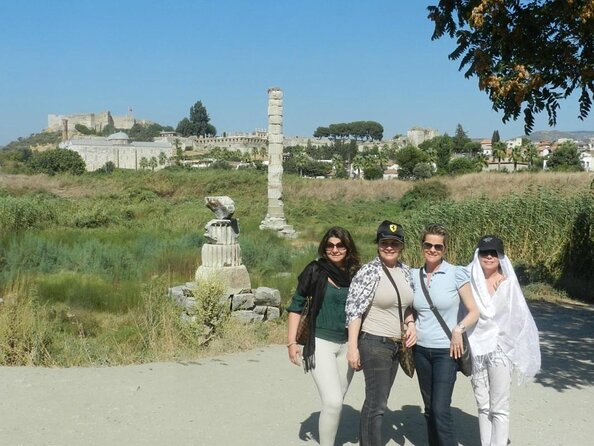
- Temple of Artemis: it’s the Seven Wonders stop you can still recognize in real size.
- Şirince village walk + fruit wine tasting: a nice change from ruins and stone.
- Return-to-ship focus: the excursion is designed to get you back to Kusadasi on time.
Your day starts at Kusadasi Port, not somewhere else
This tour is designed for cruise passengers who want a full day without the usual chaos. You meet your guide at Kusadasi Port, then climb into an air-conditioned minivan for the drive out to the Ephesus area. The ride is short enough that you don’t feel like the day disappears in traffic, but long enough to get you oriented as the Aegean-side landscape gives way to the ancient-city region.
A small but important detail: the tour includes port pickup and drop-off, so you’re not trying to solve transport while your ship schedule ticks in the background. And it’s covered by a worry-free approach that’s meant to protect your cruise day if anything goes sideways with timing. In practice, that means less stress and more time on the ground where you want to be.
If you care about guide quality, this is also a strong format. The reviews highlight guides who are easy to follow in English and who explain what you’re seeing without turning it into a lecture. Seeing Ephesus on a screen is one thing. Seeing it with a human guide pointing out what’s left, what’s restored, and what used to be here? That’s the difference.
You can also read our reviews of more tours and experiences in Selcuk.
Magnesia Gate to the main streets of Ephesus
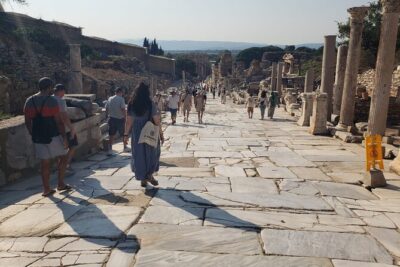
Once you’re at Ephesus, the walk begins at Magnesia Gate, the entry point your guide uses to set the stage. You step into a city that was built for power and movement—Greco-Roman architecture, wide marble-covered routes, and street-level views that make you think about crowds, commerce, and everyday life.
From here, you’ll move along the main spine where the ruins still feel organized. Your guide points out how the city worked: how people moved between public spaces, where the status buildings and civic structures sat, and why Ephesus became such a big deal in Roman times. The history lesson is practical—tied to what you’re standing in front of, not floating in the air.
Along the route, you’ll also pass areas that make Ephesus feel like a lived-in place. Look for the Roman-era urban details: Roman baths you can recognize as major public facilities, plus the idea of shops and market life that used to line these streets. Even when storefronts are gone, the street plan still tells you where the activity concentrated.
One tip: wear shoes you trust. Ephesus is a lot of stone and uneven ground. If you’ve got soft soles, you’ll feel it by hour two.
Library of Celsus and the Great Theatre: the star pair
If you only had energy for two stops, I’d still pick these: the Library of Celsus and the Great Theatre.
The Library of Celsus is instantly satisfying because the façade is so visually complete compared with many other ruins. Your guide points out why it mattered—this was not just a quiet room for reading. It was a statement of prestige and education in a Roman capital in Asia Minor. You’ll also get a sense of how the structure sat inside the city’s cultural life, not off on some distant hill.
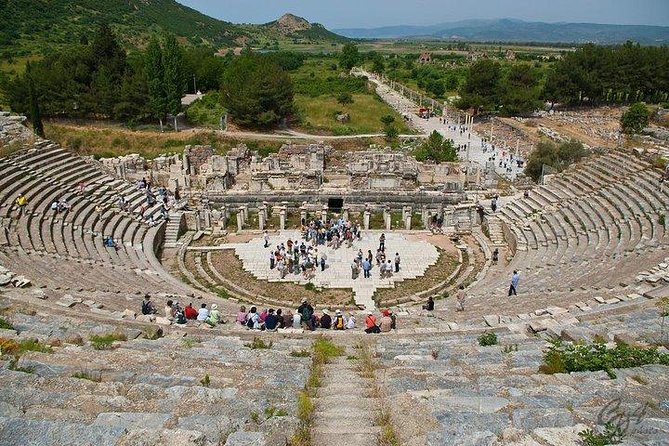
Then comes the Great Theatre, a massive venue that once held about 25,000 spectators. Standing in the space gives you a visceral feel for scale. It’s also a natural place for your guide to connect religion and history: you’ll hear how St. Paul preached sermons here or gathered audiences in that setting. Even if you’re not into biblical history, this is still a powerful moment because the theatre’s geometry makes the idea of thousands of people feel real.
Photo tip: move around a bit to find angles where the theatre doesn’t turn into a flat wall. A small shift in position makes a big difference.
Roman baths, Odeon, and civic landmarks you can recognize
Ephesus isn’t only about famous landmarks. Part of what makes it such a top shore excursion is that the city had civic spaces everywhere—places for politics, entertainment, and public life.
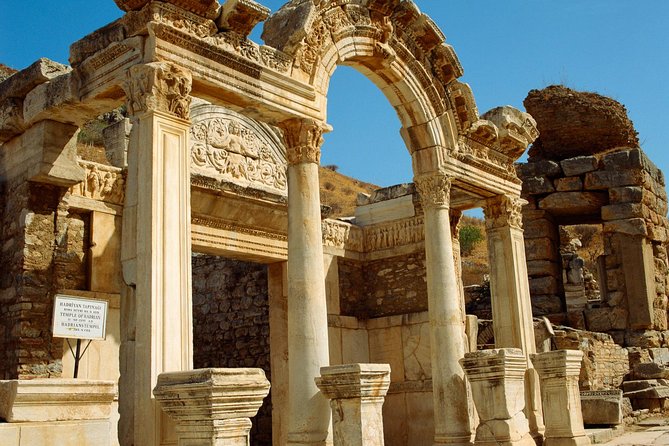
Your route includes stops around Roman baths, plus Odeon and other signature structures like the Temple of Hadrian and the Fountain of Trajan. These names sound like a textbook until your guide ties them to what you can still see: where people gathered, how the city displayed imperial power, and how water and public facilities worked together in daily urban life.
There’s also a practical bonus here: these civic landmarks tend to break up the walk. After the grandeur of the library and theatre, these areas help you see the city as a working machine, not a set of unrelated ruins.
If you like architecture details, this section rewards you. Watch how columns, stonework, and street levels relate to one another. Even partial remains communicate design intent.
Terrace Houses and Mary’s House: where the mood changes
One of the best parts of Ephesus is the contrast. After big civic spaces, you may get time at more intimate sites, including the Terrace Houses—often described as the homes of the wealthy, with mosaics and frescoes. They’re a reminder that Ephesus wasn’t only grand buildings. Real people lived here, and some lived with serious style.
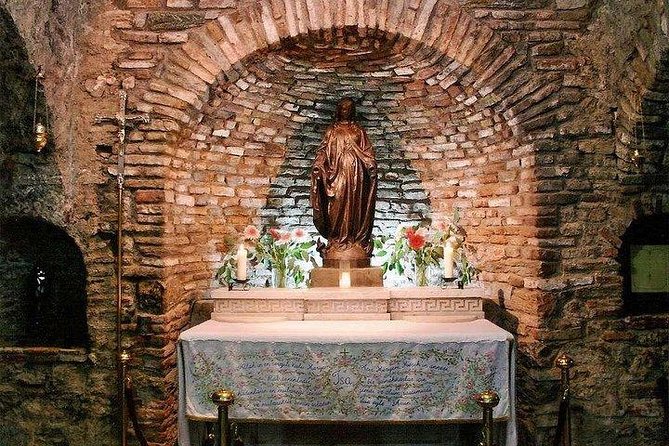
Another stop you should look forward to is Mary’s House, a serene site believed to be Mary’s final residence. This is less about visual spectacle and more about atmosphere. If you want a quieter pause from the main streets, this is the kind of stop that gives your brain a breather.
From there, your tour may also include ruins of the basilica of St John, built in honor of St John. This part adds a spiritual layer to the city’s story and helps explain why Ephesus still matters to many visitors today.
If you have limited time, don’t rush these slower stops. They’re often what makes your memory stick longer than the biggest monuments.
You can also read our reviews of more private tours in Selcuk
Temple of Artemis: the Seven Wonders stop
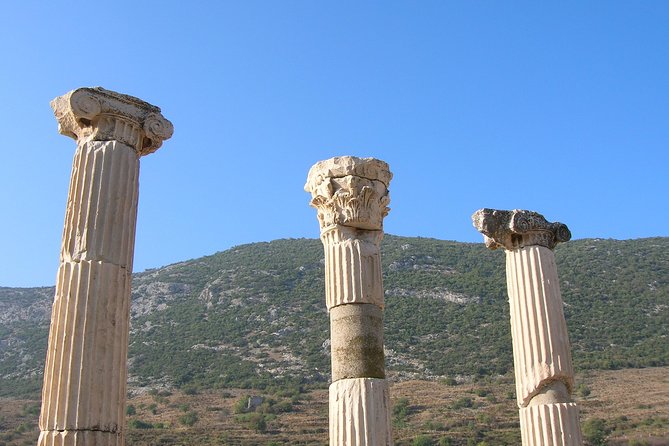
No Ephesus day is complete without the Temple of Artemis, and this tour treats it like a highlight, not a quick photo stop. Your guide will show you the restored column that helps you understand the temple’s scale even though so much is gone.
You’ll hear the basic arc: Artemis is signified by a restored column, and the temple dates to around 550 BC. It was reconstructed three separate occasions before being destroyed in 401 AD. That timeline matters because it shows Artemis wasn’t a one-time build. It was a repeating act of devotion and political will.
Here’s the reality check: you won’t see a fully intact temple. But you will see enough of what remains—plus the guide’s explanation—to make it feel like a major ancient landmark, not a sad pile of stones.
Şirince hill town and fruit wine tasting
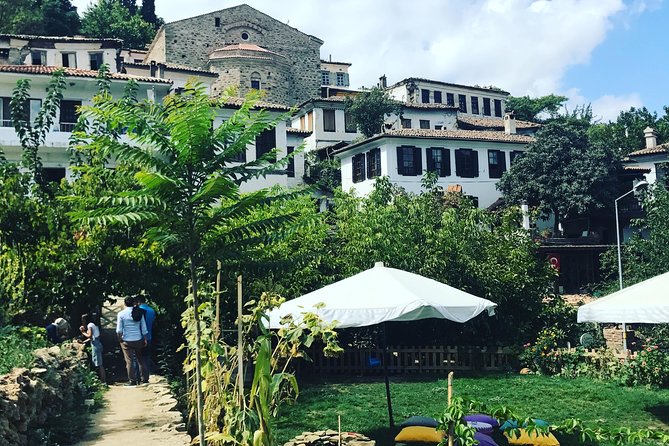
After the long walk through the ancient city, the drive up to Şirince feels like a reset. This is a hillside town sitting above Ephesus, and your guide helps you connect the modern place to the earlier layers of the area.
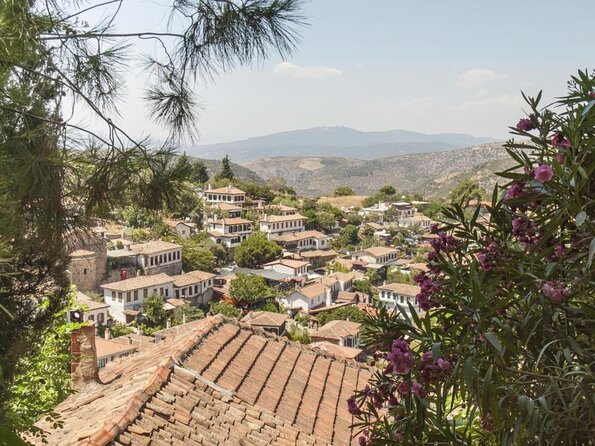
You’ll walk through cobbled streets lined with craft shops and food stalls. The vibe shifts from Roman stone to everyday Turkish life—old buildings, small storefronts, and the kind of slow wandering you do when you’re not trying to beat a checklist.
Then comes the fun part: fruit wine tasting at a local winery. This is one of those experiences that turns a history-heavy day into a day with flavor. Even if you don’t buy anything, the tasting itself gives you a memorable souvenir that’s tied to the region.
A practical note: Şirince can be slightly busier than the ruins, depending on the time of day. If you want photos without crowds, keep your camera ready as you approach the quieter side streets.
Price and logistics: does $173 make sense?
At $173 per person for about 5 to 6 hours, you’re paying for three things that matter on cruise days: private guide time, private transport, and port pickup/drop-off. The admission tickets are not included, so add entrance fees to your mental budget, plus any parking fees if they apply (listed as not included).
Is it “cheap”? No. But it can be good value if:
- you care about seeing a lot without rushing
- you want someone to explain what you’re looking at
- you’d rather avoid waiting for a shared group after the ship docks
- your group prefers a tighter, more flexible day
In the real world, the private format tends to pay off in comfort and time. One guide can adjust the pace to your energy level, which is hard to do on a large bus tour. And because you’re not coordinating multiple groups, you spend more minutes at the sights that matter.
Pacing, shopping stops, and what to pack
Ephesus can feel bigger than you expect, mostly because you’re walking through multiple zones that each have their own “wow” moments. That’s exactly why a good guide matters. You don’t just see monuments—you learn which ones to prioritize and how to move efficiently between them.
One thing to be aware of: the day can include stops related to local products, including items like carpets and leather, plus other vendor-style locations (candy and small goods show up in some accounts). The way it’s handled seems to vary by guide and situation. If you’re not interested in shopping, you can still make it work. Just treat these stops as optional time and keep your attention on the explanation and the walk.
For packing, keep it simple:
- comfortable walking shoes
- weather-ready layers (you’ll be outdoors a lot)
- sunscreen and a hat
- water if you can’t easily find it during the day
- a small bag you can handle in crowds and at uneven ground
Also, since the order of visits may be modified, don’t plan your day around a strict timeline. Bring the mindset that you’re there to see everything key, but the sequence might shift.
Who this tour fits best
This is a great match if you want:
- a private shore excursion (not a big bus)
- an expert guide to make Ephesus make sense
- a full route that combines major ruins with a change of scenery in Şirince
It’s also a solid pick for families who want a guide to handle questions and keep things moving. One common theme from guide praise is patience, including with kids.
If you’re traveling with anyone who needs frequent breaks, the private format is helpful. A shared tour can be rigid. Here, the guide can usually shift the plan slightly to keep people comfortable.
If you’re someone who hates shopping stops, choose your expectations carefully. You might still get a lot from the ruins, but you’ll want to stay firm about where you want to spend time.
Should you book this private Ephesus and Şirince tour?
If your goal is to see the best of Ephesus with minimal stress and maximal guide time, I think this is a strong booking. The Library of Celsus and Great Theatre alone justify the effort, and adding Temple of Artemis plus Şirince fruit wine turns it into a complete day, not just a monument sprint.
Book it if:
- you like guided storytelling tied to what you’re seeing
- you want private transport and a worry-free return focus
- you’re excited to walk Ephesus rather than just stand outside it
Skip or adjust expectations if:
- you want a ruins-only day with zero retail or demonstration stops
- you’d rather save money on a bus tour and accept more crowd time
Overall: for most cruise-day travelers, this hits the sweet spot—big ancient sites, real local flavor, and a guide you can actually ask questions to.