REVIEW · HELLESYLT
From Hellesylt: The Best of Geiranger Shore Excursion
Book on GetYourGuide →Operated by Excursions.no · Bookable on GetYourGuide
Norway turns dramatic when the road starts climbing. This shore excursion strings together fjord-country icons with a guide who explains the scenery in plain, human terms. Two things I really like: the mountain road views on the way up, and the big-sky payoff from Dalsnibba at about 1500 m.
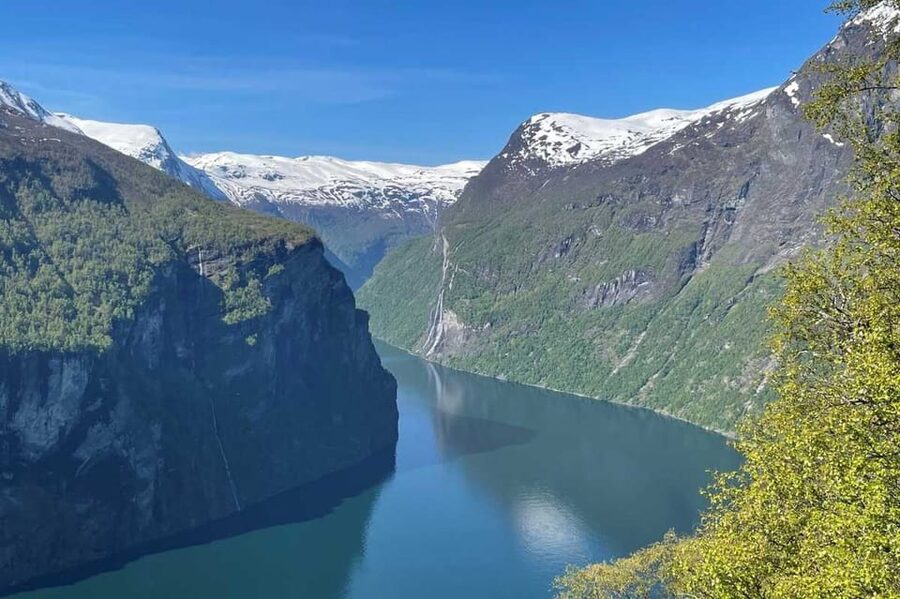
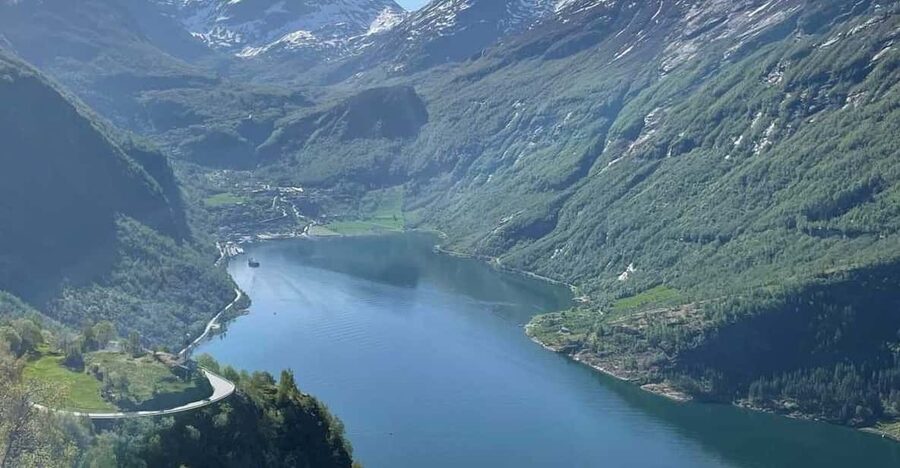
You’re also close enough to the action to actually see what people talk about—Eagle Bend, waterfalls, and the Geiranger village area from above. The main drawback is simple: it’s a long day on the bus, with breaks that may feel short, especially if you’re traveling with very young kids or you’re sensitive to long stretches of road.
If you want value for a cruise-day itinerary—packed with stops, timed for your ship, and led by an English-speaking guide—this one makes sense. Just keep weather flexibility in mind, because the high viewpoints depend on it.
In This Review
- Key Things I’d Focus On
- From Hellesylt to Geiranger: Why This Trip Works for Cruise Days
- Hornindal Lake: The Biggest Fact You’ll Hear All Day (514 m)
- Stryn and Easy Breaks: The “Breathe Here” Part of the Route
- Glacier Country Photo Stop at Jostedalsbreen Nasjonalparksenter
- Mount Dalsnibba: Two Big Variables—Weather and Nibbevegen
- Djupvatn Lake and the “Before the Summit” Build-Up
- Geiranger Views You’ll Actually Remember: Eagle Bend and Waterfalls
- Price and Value: What $188 Gets You (and What It Doesn’t)
- Logistics That Matter: Where to Meet, How the Day Runs
- Who Should Book This Excursion (and Who Should Consider Another Option)
- Should You Book It?
- FAQ
- Where is the meeting point in Hellesylt?
- How long is the excursion?
- Is food included?
- Is the guide available in English?
- What are the main highlights along the route?
- What happens if Dalsnibba or Nibbevegen can’t be accessed?
- Is there a guarantee you’ll get back to the ship?
- Are pets allowed on the tour?
Key Things I’d Focus On
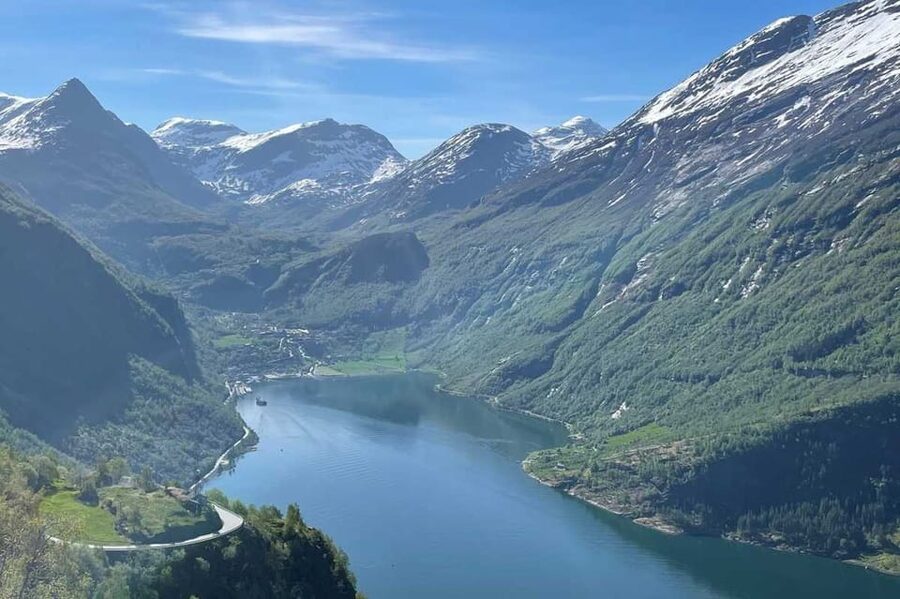
- Hornindal Lake depth: Europe’s and Norway’s deepest lake, measured to 514 m.
- Jostedalsbreen Nasjonalparksenter: glacier-country stop with photo time.
- Dalsnibba at 1500 m: summit views over Geiranger when Nibbevegen is open and weather cooperates.
- Geiranger viewpoints: Eagle Bend and waterfall views are the payoff.
- Cruise-friendly timing: the tour is built around getting you back with a back-to-ship guarantee.
From Hellesylt to Geiranger: Why This Trip Works for Cruise Days
This is the kind of tour that’s designed for the reality of a cruise ship schedule. You start from the pier area in Hellesylt, meet the team at Coop Marked (Hellesyltvegen 45-47), and roll out by coach with a live English-speaking guide.
What makes it practical is the pacing and the variety. You’re not just sitting in the bus until you reach Geiranger. Along the way you hit major “wow” stops—deep-lake country, glacier views, a waterfall photo stop, then mountain roads leading to two of Geiranger’s most impressive sight anchors. You’ll also have multiple moments to stretch your legs, use the toilet, and grab snacks/coffee during scheduled stops.
The tone is also helpful. This isn’t just pointing and posing. Guides are set up to tell you what you’re looking at and why it matters. On some days you may hear a guide like Malina (and a driver such as Tom) who kept the narration lively and timed the trip carefully.
Hornindal Lake: The Biggest Fact You’ll Hear All Day (514 m)
Early on, you go past Hornindal Lake, the one that earns Norway the “deepest” headline. It’s officially measured to 514 m (1686 ft), and you also learn it’s the deepest in Norway and in Europe.
Why I think this stop is worth it: it gives you a fast reality-check about how the fjord region works. Geiranger gets all the postcard fame, but Hornindal helps you understand the deeper geology of the area. Even if you only get a short moment to look around and take photos, the depth number stays with you—because it’s so extreme compared with what most people expect from a lake.
You’ll also pass other waters in the same region (like Oppstryn), which keeps the day from feeling like one long straight line. It’s more like a slow reveal: valleys, water, then more dramatic elevation as the tour heads toward Geiranger.
Stryn and Easy Breaks: The “Breathe Here” Part of the Route
You’ll stop in Stryn, a town known for charming street character and clothing shops—plus it’s a practical place to reset after time on the bus. In a long day excursion, these smaller towns are more important than they sound. They’re where you can check your phone, use the restroom without rushing, and take a proper break.
You’ll also get another “leg-stretcher” chance along the way before you move toward glacier-country. One review-style detail that matches the way the route feels: the tour includes stops where you can buy coffee/snacks and use toilets, which matters when you’re heading into higher elevations and you don’t have food included.
A quick note: if you’re traveling with a very young child, the long coach segments can be tough. One family flagged that the bus time can feel heavy and the breaks may be shorter than you’d hope for baby/toddler schedules. If that’s your situation, think carefully about whether you want a trip built around scenic driving with a few fixed stops.
Glacier Country Photo Stop at Jostedalsbreen Nasjonalparksenter
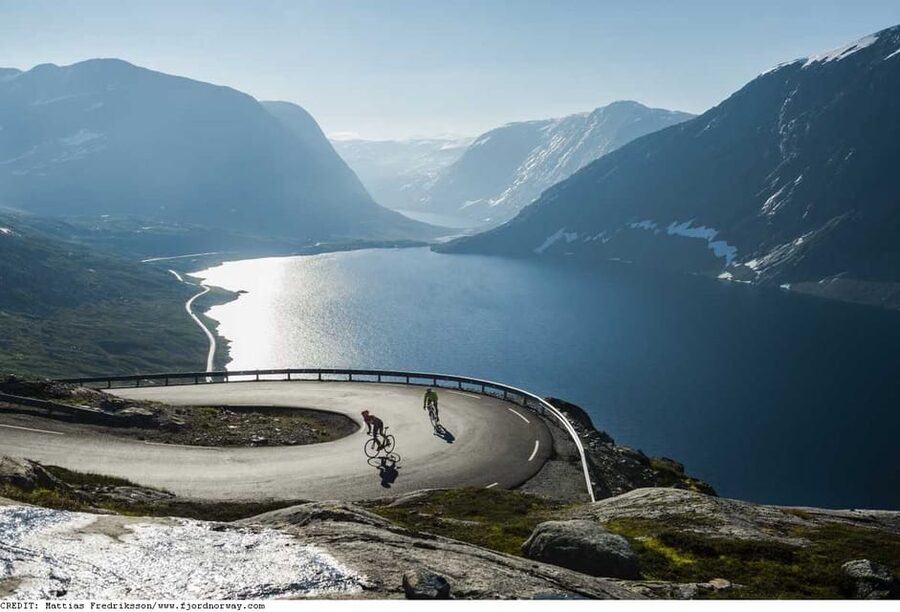
As the day climbs into glacier territory, you’ll pass Jostedalsbreen Nasjonalparksenter for a photo stop. This is one of those locations that helps connect the fjords and mountains to the glaciers that still shape them.
Even if you don’t have time for a deep visit, the value is in the timing. You’re seeing the “glacier country” vibe just as the roads start looking more mountainous and the views start opening up. That makes the whole day feel like it’s traveling through related regions, not just collecting random stops.
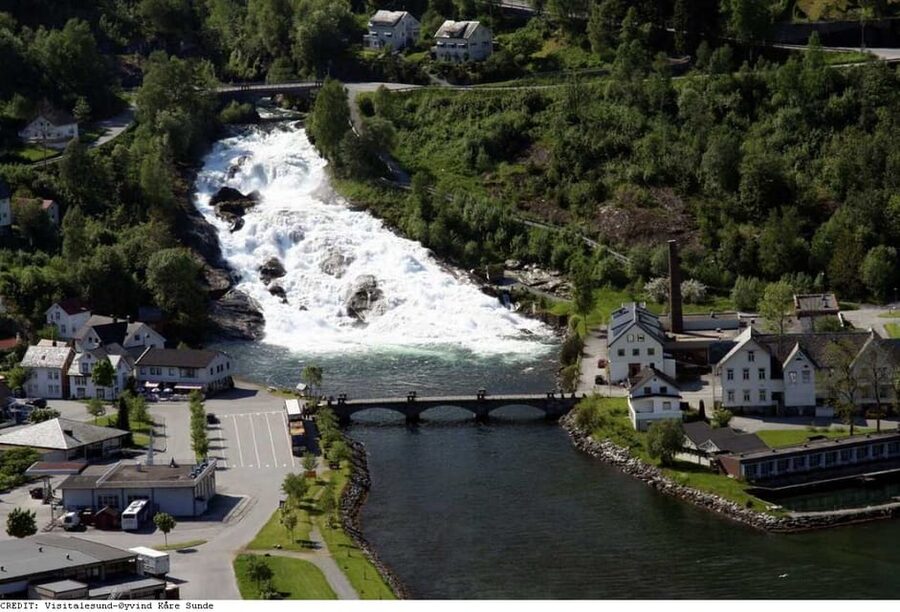
You’ll also make a short Øvstefossen Waterfall photo stop. This isn’t a long hike stop—it’s designed for quick photos and a break in motion. On days when weather shifts quickly, these shorter stops can be especially helpful because they give you a chance to catch something even if clouds or rain roll in.
Mount Dalsnibba: Two Big Variables—Weather and Nibbevegen
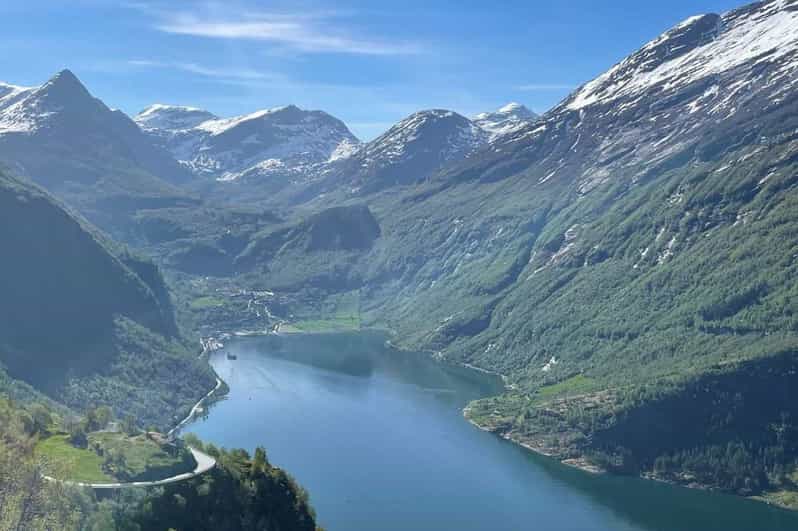
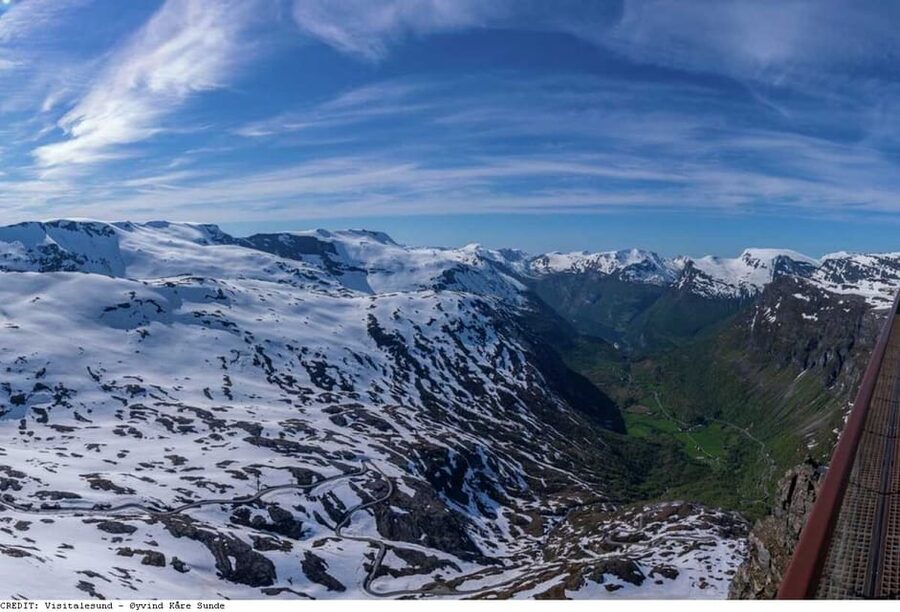
Then comes the main climb toward the summit experience: Dalsnibba, reached at about 1500 m (4920 ft). From there, you can look down toward Geiranger, including the famed Eagle Bend and surrounding waterfalls.
But here’s the reality check: access depends on conditions.
- Nibbevegen, the private road that goes up to the highest point, is open mid May to mid September.
- The trip also depends on favorable weather. If Dalsnibba isn’t accessible, it can be substituted with an alternative stop in Geiranger.
- The order of sights can vary depending on timing and conditions.
So what should you do with this information? Plan to enjoy the day even if the summit doesn’t happen exactly as hoped. The route still delivers major viewpoints (including the deep-water stop at Djupvatn Lake before the summit segment), and the guide’s job is to keep the day working within the weather window.
One practical thing: Dalsnibba can feel very exposed. A past experience noted snow and delays due to wild weather, yet the mountain and deep-water highlights still landed. If you’re trying to maximize visibility, aim for a day with clearer skies—but don’t count on it.
Djupvatn Lake and the “Before the Summit” Build-Up
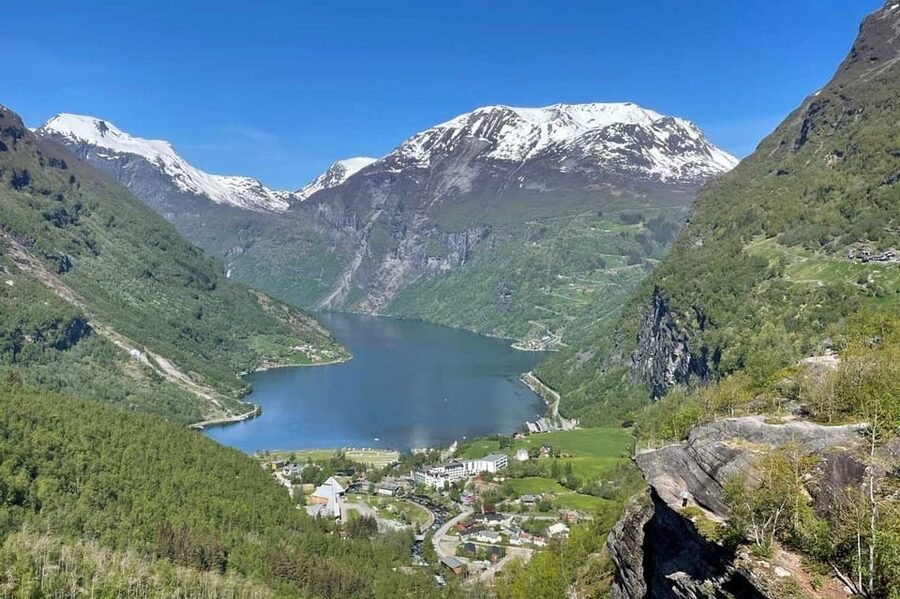
Right before you get the highest viewpoint, you’ll reach Djupvatn Lake—another moment that reinforces the region’s underwater drama. If Hornindal gives you “deep numbers,” Djupvatn helps you feel the geography.
This stop also works as a mental warm-up. After the glacier-country and waterfall photo breaks, Djupvatn is a calmer pause before the summit push. You’re not just waiting for the big finale—you’re actively moving through related scenes that make the summit make more sense.
It’s also a good time to regroup physically. You’ll still be on the bus for a while, but having a distinct “we’re heading into the mountains now” landmark improves how the day feels.
Geiranger Views You’ll Actually Remember: Eagle Bend and Waterfalls
When the route goes well, the Dalsnibba summit is the headline. From there you can see:
- The village of Geiranger below
- Eagle Bend, one of the most recognizable bends associated with the area
- Surrounding waterfalls
This matters because Geiranger’s beauty is hard to grasp from a single angle. At sea level, you’re often seeing fjord walls and the scale of boats. From above, the water pattern becomes clearer and the shape of the terrain becomes readable. That’s where the views start to feel less like postcards and more like geography.
If Dalsnibba is skipped for weather or seasonal road access, you’ll get an alternative stop in Geiranger. It won’t replace the specific summit angle, but the fallback is there so the day doesn’t collapse into only driving time.
Price and Value: What $188 Gets You (and What It Doesn’t)
At $188 per person for a 450-minute (7.5-hour) excursion, the value comes from structure. You’re paying for:
- Transportation by bus
- A live English-speaking guide
- Tolls connected to the Dalsnibba private road
- A back-to-ship guarantee, with the tour required to end 1 hour prior to your ship’s departure (so you still have time to get back and settle in)
That back-to-ship piece is a big deal on cruise days. It turns a “maybe I’ll make it” sightseeing plan into something timed and managed.
What’s not included: food and beverages. So even though the route includes stops to buy snacks/coffee, you’ll want a strategy—either bring your own snacks or plan to grab something at those breaks. And because it’s a long bus day, you’ll feel it more than a short excursion.
If you’re cost-sensitive, you can save money by doing something independently—but you’d be trading away the guided interpretation and the timed cruise logistics.
Logistics That Matter: Where to Meet, How the Day Runs
Meeting point is Coop Marked near the main road, across from the local school, and next to the Joker market. It’s a very short walk from the pier. Plan to arrive 15 minutes early.
The guide wears a light blue jacket, and the tour operator is EXCURSIONS.NO. Communication also matters: you’re asked to register the correct mobile number with the country code, since there are no refunds if they can’t reach you.
One last timing detail that affects your comfort: the stops include brief breaks where you can use facilities and grab coffee/snacks, but the overall day still leans toward scenic driving. If you’re someone who gets restless in long coach rides, this is the one part to be honest with yourself about.
Who Should Book This Excursion (and Who Should Consider Another Option)
This works best for you if you want a guided day that hits multiple signature Geiranger-area viewpoints without worrying about driving. It’s also a good fit when your ship time is tight, because the tour is adapted to cruise arrivals and departures and aims to get you back with enough buffer.
It’s not suitable for:
- People with back problems
- People with heart problems
Also not allowed: pets and non-folding wheelchairs.
And for families: it’s doable for older kids who handle bus time, but if you’re traveling with very young children, the long ride and shorter breaks may be a mismatch. One family specifically said it wasn’t ideal for an infant/toddler routine, since the breaks weren’t built around long meal timing.
Should You Book It?
I’d book this excursion if you want the Geiranger highlights with minimal effort: deep-lake facts, glacier-country stops, then summit views that can deliver Geiranger + waterfalls + Eagle Bend from above. The tour is also built for cruise timing, which is the difference between stress and just enjoying the day.
I would think twice if you know you dislike long bus rides or you need long, frequent meal stops. Also, if you’re traveling outside mid May to mid September, or you’re going on a day when weather looks rough, be prepared that Dalsnibba access may not happen exactly as planned.
If you can handle weather uncertainty and long coach time, this is a strong way to turn a cruise port into a real mountain-view day.
FAQ
Where is the meeting point in Hellesylt?
You meet at Coop Marked (Hellesyltvegen 45-47), next to the main road, across from the local school, and next to the Joker market. It’s a very short walk from the pier, and you should be there 15 minutes early.
How long is the excursion?
The duration is 450 minutes, which is about 7.5 hours.
Is food included?
No. Food and beverages are not included.
Is the guide available in English?
Yes, the tour includes a live guide in English.
What are the main highlights along the route?
You’ll head toward Geiranger, with stops connected to Hornindal Lake (including its depth), Stryn, Jostedalsbreen Nasjonalparksenter, and Øvstefossen Waterfall, plus viewpoints like Djupvatn Lake and Dalsnibba (weather-dependent).
What happens if Dalsnibba or Nibbevegen can’t be accessed?
Access to Dalsnibba depends on favorable weather. If it can’t be reached, the stop is substituted with an alternative visit in Geiranger.
Is there a guarantee you’ll get back to the ship?
Yes. There’s a back-to-ship guarantee for cruise passengers, as long as your cruise ship name is registered during booking, and the tour ends at least 1 hour before your ship’s departure.
Are pets allowed on the tour?
No, pets are not allowed.