REVIEW · MANILA
Intramuros Walking Tour by Don’t Skip Manila | Shore Excursion
Book on Viator →Operated by Don't Skip Manila · Bookable on Viator
Walled-Manila history without the photo grind. This half-day Intramuros tour turns the cramped streets into a timeline, using storytelling instead of stop-and-go trivia. You’ll walk key sections, visit major sights, and for larger groups you’ll also get a horse-drawn ride option while moving between locations.
What I like most is how tightly the tour links place to event—400 years of Filipino history gets explained through real, named locations like Fort Santiago and the Rizal sites. I also appreciate the practical package: you get an air-conditioned vehicle, bottled water, and museum/entrance fees included, so you’re not nickel-and-diming your day. The main drawback to keep in mind is time. Most stops are short (think 10–30 minutes), so if you want lingering photo time or deep museum wandering, this will feel a bit fast.
You’ll usually start from Pier 15 South Harbor (morning hours), and the day runs with a cruise-shore-excursion pace. Weather matters too: the tour requires good weather, and if conditions are off, you’ll be offered a different date or a refund. On the guide side, I’ve seen names like Anne/Ann and Andrei/Andrew mentioned in feedback, and the common theme is clear, friendly English with strong history narration.
In This Review
- Key highlights you’ll feel right away
- A half-day Intramuros story tour that moves fast but makes sense
- Morning meeting at Pier 15 South Harbor: timing and pace
- Stop 1: Rizal Park—starting with the national hero
- Stop 2: Fort Santiago—Miguel López de Legazpi’s citadel
- Stop 3: Rizal Shrine—final-night details that make the story stick
- Stop 4: Manila Cathedral—Immaculate Conception in Intramuros
- San Agustin Church and the UNESCO Baroque Churches context
- Stop 5: Casa Manila—everyday life during Spanish colonization
- The walking + ride plan: how you’ll get around inside Intramuros
- Price and value: what $83.34 gets you in real terms
- What makes the guides matter here
- Best use of this tour: pair it with a smart next step
- Should you book this Intramuros Walking Tour?
- FAQ
- How long is the Intramuros walking tour?
- What sites are included in the itinerary?
- Is pickup available?
- Are admission fees included?
- Is there a horse-drawn carriage ride?
- What happens if the weather is poor?
Key highlights you’ll feel right away
- A story-first approach that maps major events to specific Intramuros stops, not just a checklist
- Short, focused visits that keep you moving through the walled city without eating your whole day
- Included admission fees plus bottled water and an air-conditioned vehicle
- Horse-drawn carriage ride when the group is over four people
- Rizal-centered stops that add meaning beyond the monuments (including his final-night hiding connection)
- A small group limit (up to 24), which usually keeps the experience from turning into a cattle-herd parade
A half-day Intramuros story tour that moves fast but makes sense
Intramuros is one of those places where it’s easy to get lost in the scenery. This tour’s value is that it gives you a plot to follow. Instead of “here’s a wall, here’s a church,” the guide threads Spanish colonial Manila, fortifications, and the Rizal era into one connected narrative.
That storytelling style matters in a place like this. The streets are narrow and the sights are close together, so a guide who explains why each site matters helps you connect the dots on the spot. You leave with a clearer understanding of how the city’s walls shaped power, defense, and daily life.
You can also read our reviews of more tours and experiences in Manila.

Morning meeting at Pier 15 South Harbor: timing and pace

This tour is set up for a shore-excursion rhythm. You meet at Pier 15 South Harbor in the morning window (typically 8:00 AM to 8:30 AM, Tuesday–Sunday for the stated seasons). If you’re arriving by cruise, that timing is convenient—you’re not stuck waiting around for a late start.
The other practical detail is transport. Pickup is offered, and the tour uses an air-conditioned vehicle, which is a big deal in Manila heat. You’ll also have bottled water included, so you can stay hydrated without hunting for a shop mid-sightseeing.
Stop 1: Rizal Park—starting with the national hero

You kick off at Rizal Park, a central Manila park dedicated to José Rizal. The tour frames him as a national hero whose execution in 1896 is tied to this area’s story. It’s a smart first stop because it sets the emotional and historical stakes right away.
Even though the time here is brief (about 10 minutes), that doesn’t have to be a problem. A park like this is best used to orient your understanding. You get names and context first, then you can walk through Intramuros with a more informed lens.
Practical note: if you hate rushing through outdoor spaces, plan for the fact that the tour keeps a tight schedule. You’ll get the “why this matters” version, not the “sit and people-watch for an hour” version.
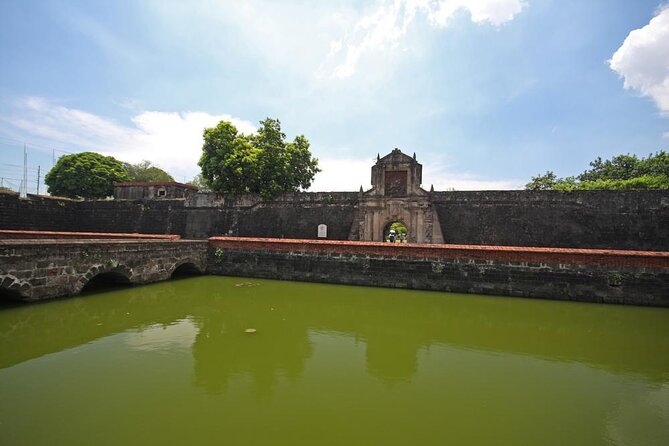
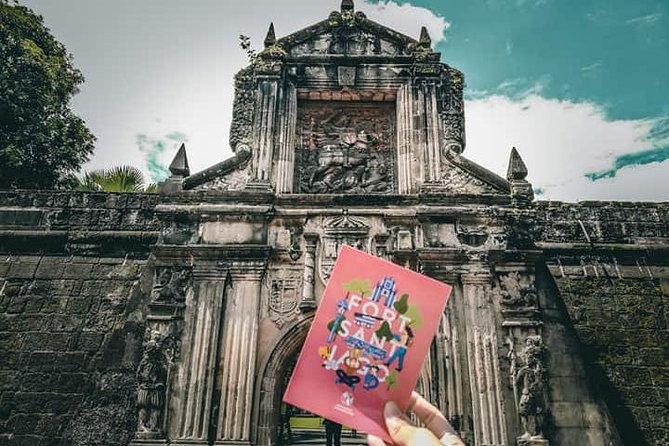
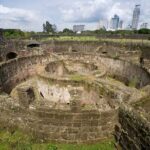
Stop 2: Fort Santiago—Miguel López de Legazpi’s citadel
Next is Fort Santiago, one of the anchors of Intramuros. The fort is connected to the Spanish-era founding story of Manila, first built by Spanish conquistador Miguel López de Legazpi for the city’s early government and defense.
Fort Santiago is where the tour’s history becomes physical. You can walk the defensive logic of the place instead of just reading about it. The stop runs about 1 hour and includes admission, which is helpful because it reduces friction. You spend time inside rather than standing around wondering where to buy tickets.
If you like your history grounded in architecture—walls, fortifications, and how power operated—this is a highlight. It’s also one of the spots where a good guide really earns their pay, because the fort can otherwise feel like a set of old stones.
Stop 3: Rizal Shrine—final-night details that make the story stick
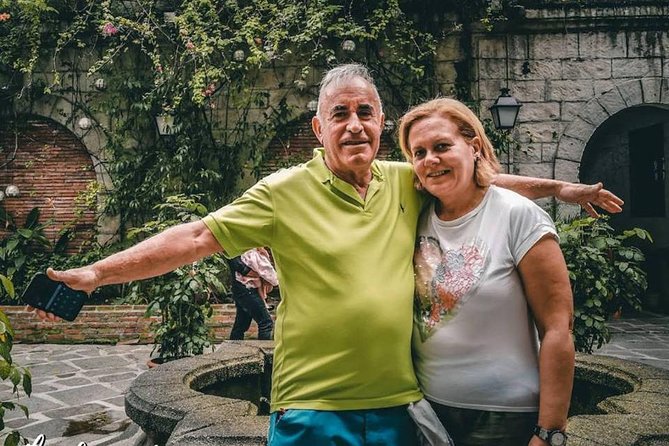
Then you head to Rizal Shrine, a museum dedicated to José Rizal’s life work. This is not just “a museum about Rizal.” The connection is intensely specific: the museum sits in the building where Rizal spent his final night, and the tour explains how he hid his famous poem Mi último adiós (My Last Farewell) in an oil lamp.
That kind of detail changes how you experience a place. You’re not only seeing a site—you’re seeing a moment. Even with a shorter visit (about 30 minutes), the information is the point.
This stop is also one of the best examples of why the tour works as a story. Rizal Park introduces him. Fort Santiago places him within the Spanish colonial power structure. Rizal Shrine then gives you the personal “how” behind the “what.”
Stop 4: Manila Cathedral—Immaculate Conception in Intramuros
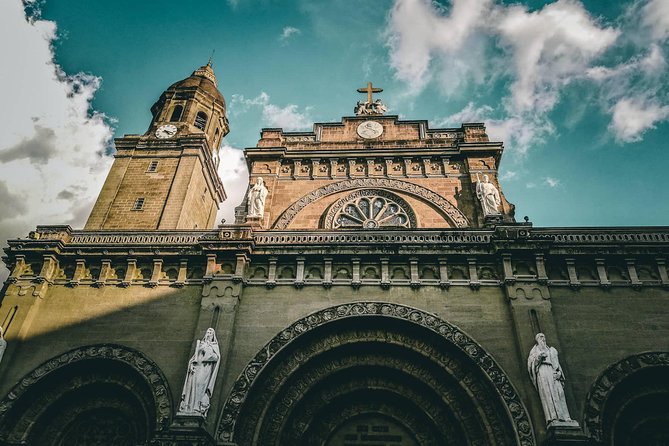
Next up is Manila Cathedral, described here as the first cathedral of the Philippines and a basilica inside Intramuros. It’s dedicated to the Immaculate Conception, a title for the Blessed Virgin Mary and the principal patroness of the country.
The stop is short—about 15 minutes—which makes this a “see it, understand it, move on” kind of visit. But cathedral visits can still be worthwhile in that timeframe if the guide points out what to notice. Think: its role as a central institution, and how Spanish religious power intertwined with political life.
If you’re someone who enjoys architecture and religious history, this is a solid checkpoint. If you’re hoping for long, quiet time inside, you might wish you had extra minutes.
San Agustin Church and the UNESCO Baroque Churches context
The route also touches on San Agustin Church, which is part of the UNESCO World Heritage group called the Baroque Churches of the Philippines. The tour frames it as one of the four churches built during the Spanish colonial period to receive that UNESCO designation.
This is a good moment in the day to broaden beyond Rizal and the fort. The story shifts toward the long shadow of colonial institutions—religion as culture, religion as control, religion as community building. Even if your time inside isn’t long, you’ll come away with a reason to respect the site.
Stop 5: Casa Manila—everyday life during Spanish colonization
You finish with Casa Manila, a museum that depicts colonial lifestyle during Spanish colonization. The tour notes it as a copy of an 1850s San Nicolas House that used to stand on Calle Jaboneros.
This stop is where the tour rounds out. Fort Santiago gives you authority and defense. Rizal Shrine gives you a personal and political climax. Casa Manila gives you the daily-life layer—the habits, domestic details, and “how people actually lived” side of history.
It runs about 30 minutes, and admission is included. For many people, this is the easiest stop to remember because it’s less about battles and more about routine. You may not leave with a single photo, but you’ll likely leave with a clearer picture of colonial Manila beyond its major monuments.
The walking + ride plan: how you’ll get around inside Intramuros
This is a walking tour, but it’s not foot-only. The tour includes a horse-drawn carriage ride when there are more than four tourists. That matters because Intramuros can feel tiring when you’re hot, holding a phone, and trying to keep up with explanations.
The day also typically blends movement methods so you don’t spend every minute stepping through streets. In feedback tied to the experience, people have referenced a mix of walking and an open-vehicle style ride as part of the route flow. Either way, the goal is simple: cover enough ground to hit the major story points without turning the day into a marathon.
Who does this fit best? It’s a great match if you:
- want a guided history narrative in 4–5 hours
- like museums but don’t want a half-day to become an all-day museum crawl
- prefer small-group pacing (max 24)
If you’re traveling with mobility limitations, you’ll want to think carefully. The tour is described as mostly walking, and the timing suggests you’ll need the ability to move steadily between clustered sights.
Price and value: what $83.34 gets you in real terms
The price is $83.34 per person, which is not the cheapest way to see Intramuros. But it’s also not hard to justify if you add up what’s included and what would cost you separately.
Here’s what’s bundled:
- Air-conditioned vehicle (plus bottled water)
- Tour guide services
- Museum and entrance fees
- Horse-drawn ride option (depending on group size)
If you’re visiting a cluster of paid sites in a short window, included admission often flips the math quickly. You also get guided storytelling in a compact schedule, which is hard to DIY well if you don’t already know the key dates and who’s tied to each location.
The value swings depending on your style. If you love flexible time and long stops, you might feel like you’re paying for a structure that doesn’t match your pace. If you like guided direction and want the “why” behind each stop, this price starts looking fair.
What makes the guides matter here
Names mentioned in feedback include Anne/Ann and Andrei/Andrew, and the consistent point is clarity. The guides are described as friendly, funny in a good way, and able to explain history in English you can actually follow without fighting the language.
That’s not a small thing in a place where stories are layered. Intramuros history can be confusing if you only read signs. A guide who can connect the Spanish city, the fortifications, and Rizal’s final nights makes the experience feel organized instead of overwhelming.
And the best guides do something else: they help you notice what counts. Fort Santiago is easy to treat as just old walls; a strong guide gives you a mental map of power and purpose as you walk.
Best use of this tour: pair it with a smart next step
If you’ve got more time after the tour, I’d plan an easy add-on rather than a second heavy schedule block. Intramuros is compact, and you’ll already have context for what you see next. You might want to return for a slower look at the parts that resonated most—cathedral details, church exteriors, or whatever your guide emphasized.
If you only have one half-day in Manila, this is a practical choice because it covers the major story hubs: Rizal Park, Fort Santiago, Rizal Shrine, Manila Cathedral, and Casa Manila, with UNESCO church context built in.
Should you book this Intramuros Walking Tour?
Book it if you:
- want history storytelling more than picture-chasing
- prefer included admissions and a guided route with an AC vehicle
- have around half a day and want the key sites covered without extra planning
Skip or consider a slower alternative if:
- you hate short museum stops and need long, quiet time
- you want maximum free roaming with minimal structure
- you’re traveling when weather could be unreliable, since the tour requires good conditions
FAQ
How long is the Intramuros walking tour?
The tour runs about 4 to 5 hours, approximately.
What sites are included in the itinerary?
You’ll visit Rizal Park, Fort Santiago, Rizal Shrine, Manila Cathedral, and Casa Manila, with additional Intramuros church context including San Agustin Church.
Is pickup available?
Yes, pickup is offered.
Are admission fees included?
Yes. Museum and entrance fees are included in the tour.
Is there a horse-drawn carriage ride?
A horse-drawn carriage ride is included if there are more than four tourists.
What happens if the weather is poor?
The tour requires good weather. If it’s canceled due to poor weather, you’ll be offered a different date or a full refund.