REVIEW · MANGALORE
Mangaluru Shore Excursion – Full Day Private Mangaluru Guided City Tour
Book on Viator →Operated by Pacific Classic Tours India · Bookable on Viator
Cashews and temples share the same timetable. I like how this day is built for real visitors, with port pickup and a private guide who keeps everything moving.
You start early from the New Mangalore Port area, ride in a private air-conditioned vehicle, and get a guided sweep of the city’s best-known heritage spots.
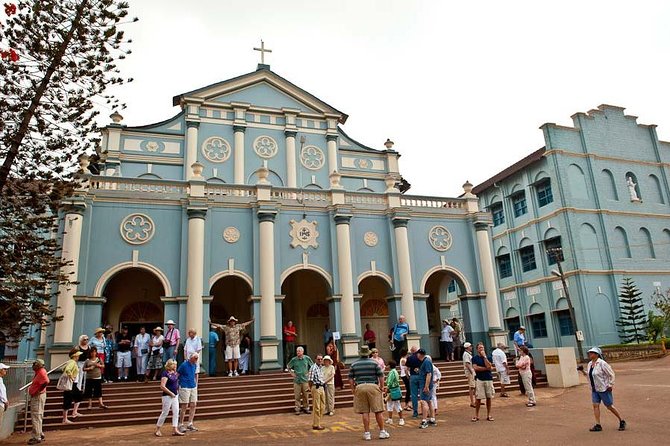
I especially love the hands-on cashew stop and the contrast of Christian art afterward. The cashew factory tour explains how nuts go from sorting through cooking and packing, and St. Aloysius Chapel is an eye-catching payoff with late-1800s paintings by Italian Brother Moscheni.
One consideration: the worship sites have a strict dress code, so plan clothing that covers shoulders and knees.
In This Review
- Key highlights I’d plan around
- A cruise-port day that actually feels like a day in Mangalore
- Port pickup at New Mangalore Port: how to start without stress
- Cashew factory morning: sorting, cooking, and packing
- Kadri Manjunath Temple: ponds, gardens, and a 10th-to-11th-century complex
- Kudroli Gokarnatheshwara Temple: white marble, gold paint, and Shiva murals
- Central Market: shop like a local at Mangalore’s main vegetable hub
- Lighthouse hill and St. Aloysius Chapel: late-1800s Christian art in a chapel built to impress
- Lunch timing: plan for your own restaurant meal
- Dress code and what to bring (this is not the time to guess)
- How private guide time improves the day (especially in a tight schedule)
- Price and value: what you’re paying for at $178.38 per person
- Who this tour fits best
- Should you book this Mangalore private city tour?
- FAQ
- What time does the tour start?
- How long is the Mangalore shore excursion?
- Where is the pickup point?
- Is this tour private or shared?
- What’s included in the price?
- Is lunch included?
- Are tickets and entry fees covered?
- What is the dress code for temples and the chapel?
- Is the cashew factory open every day?
- Can cruise passengers join, and what do they need to provide?
- Is cancellation possible?
Key highlights I’d plan around
- Cashew factory tour that follows the process from sorting to cooking and packing
- Kadri Manjunath Temple with ponds, gardens, and a Kerala-style complex dating to the 10th or 11th century
- Gokarnanatheshwara Temple’s visual art: white marble floors, gold paint, and extensive Hindu murals
- Central Market shopping energy focused on fruits, vegetables, and everyday household items
- St. Aloysius Chapel on Lighthouse hill with oil paintings connected to Aloysius Gonzaga and distinctive chapel architecture
A cruise-port day that actually feels like a day in Mangalore
If you only have a single full day, this is the kind of plan that gives you momentum without feeling random. You’re not stuck choosing between viewpoints and temples on your own. Instead, you’re guided through a practical loop: industry first, then spirituality, then street-level shopping, then a dramatic finish on Lighthouse hill.
I also like that the tour is private. That matters in a city where you’ll be walking through temple grounds and narrow market lanes—your pace can be your pace. Add an English-speaking guide, bottled water, and a private air-conditioned vehicle, and you’ve got the basics of a comfortable day, especially if you’re arriving by cruise ship and need reliable timing.
You can also read our reviews of more tours and experiences in Mangalore.
Port pickup at New Mangalore Port: how to start without stress
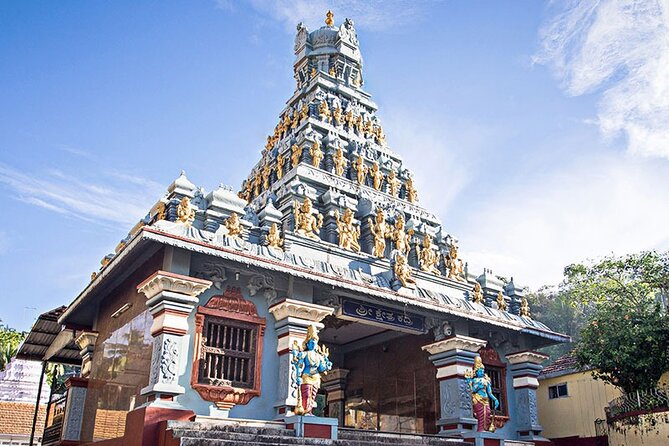
Your morning starts with pickup at the New Mangalore Port area (New Mangalore Port Authority on NH 17). The schedule is set for a 9:00 am start, so you’re not burning your morning trying to find transportation.
From there, you’re driven to the first stop in a private, air-conditioned vehicle. This is more than convenience. It gives you a clear structure when you’re working around dock times and re-boarding windows. If you’re a cruise passenger, you’ll provide your ship name and docking/disembarkation/re-boarding times when booking, so the provider can plan the day around reality, not theory.
Cashew factory morning: sorting, cooking, and packing
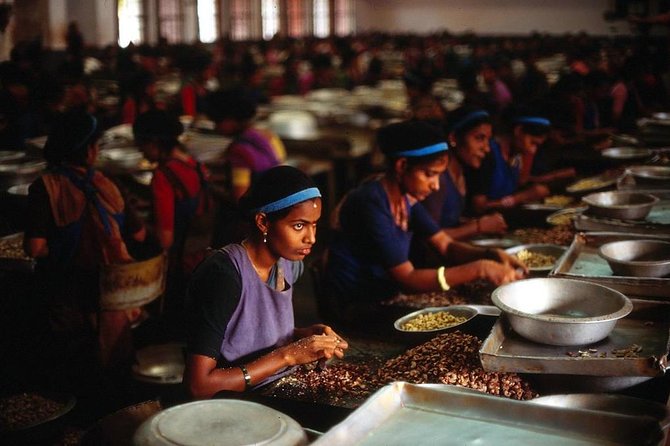
The first big stop is a cashew factory—one of Mangalore’s signature exports. You’ll spend about 30 minutes there, which is short enough to keep the day from dragging, but long enough to understand what you’re seeing.
What I like about this stop is that it’s not just a photo moment. You learn the process: sorting to cooking and packing. Cashew production is a big deal here, and it’s easier to appreciate the city when you understand what drives it. Even if you don’t care about factory work, you’ll leave knowing why Mangalore is so associated with cashews.
Important scheduling note: the cashew factory is closed on Sundays. If your ship is in port on a Sunday, you’ll want to plan for the possibility that your day’s flow may adjust.
Kadri Manjunath Temple: ponds, gardens, and a 10th-to-11th-century complex
Next comes the hills of Kadri and Kadri Manjunath Temple, a Hindu temple often described as dating to the 10th or 11th century. The setting helps. Your guide takes you through the temple complex, including ponds and gardens, plus the ornate areas that make this place feel more like a designed sacred space than a single building.
A standout feature is the temple’s connection to older traditions. The complex houses a very old bronze statue of Lokeshwara and Guatama Buddha in the Dhyani posture—a detail that points to layered influences over time. If you like places where art and religion overlap across centuries, this is one of the most rewarding stops on the route.
Practical tip: plan for some walking on temple grounds. Even when the stated time at each stop is about an hour, the real time is affected by how crowded a site feels and how long you pause for photos.
Kudroli Gokarnatheshwara Temple: white marble, gold paint, and Shiva murals
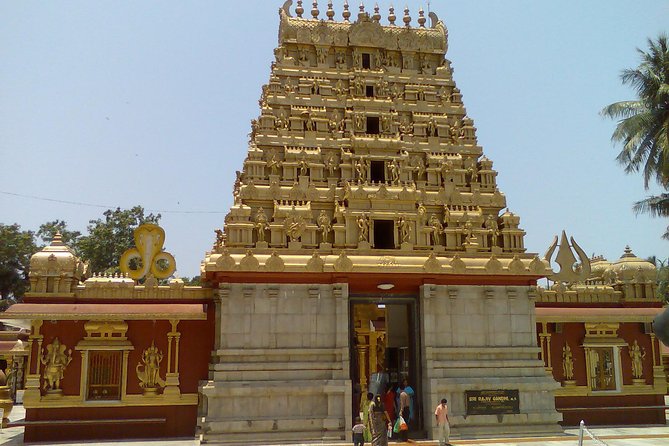
After Kadri, you head to Sri Gokarnanatheshwara Temple, also referred to as the Gokarnath Temple. This one is devoted to Lord Shiva, and the visual style is instantly recognizable once you’re there.
Expect white marble floors and gold paint, plus extensive murals depicting Hindu gods and goddesses. The effect is part religious instruction, part art history—standing in the right place can feel like reading a story through images.
As with Kadri, your visit is guided, so you’re not guessing what you’re looking at. That’s especially helpful in temple interiors where symbolism can fly past quickly if you’re just moving from landmark to landmark.
Central Market: shop like a local at Mangalore’s main vegetable hub
Then you switch from sacred sites to everyday life: Central Market. This is described as the city’s main vegetable market, and it’s exactly the kind of stop that gives you texture. You’ll see local people shopping for fruits, vegetables, and other household items, with lots of small shops lining narrow alleys.
If you want souvenirs that feel real rather than mass-produced, this is where your eye should go. You might spot spice items, produce varieties you don’t see at home, and the kind of practical goods that make Mangalore feel like a living city instead of a postcard.
One realistic point: it can get hot. You’ll be standing and moving in a crowded area for about an hour. Wear breathable clothes and comfortable shoes, and consider taking a slower pace if you’re sensitive to heat.
Lighthouse hill and St. Aloysius Chapel: late-1800s Christian art in a chapel built to impress
For the final major cultural stop, you head up to Lighthouse hill for St. Aloysius Chapel. This is built in 1885, and it’s known for its superb painted interior—specifically, oil paintings connected to the life of Aloysius Gonzaga, painted in the late 1800s by Italian artist Brother Moscheni.
What you’ll notice right away is the chapel’s architecture. There are circular pillars holding up an arched ceiling, and the way paintings are arranged makes the space feel intentional rather than accidental.
If you like art that’s both devotional and visual—faces, scenes, and color that are meant to be seen from within a room—this stop is a strong capstone. It’s also a clean contrast to the earlier temples: different faith, different aesthetics, and yet the same respect for craft.
Lunch timing: plan for your own restaurant meal
Lunch is on your own expense, typically after the temple portion of the day. That’s normal for a private city tour that includes entrance fees and transportation; it keeps the total package price lower while still letting you choose what you want to eat.
I suggest using the guide’s judgment for where to pause, because your guide already knows the flow of the day and where the most convenient options are. If you want to keep the afternoon smooth, ask for something filling but not heavy, then settle in before you head to the market and the chapel.
Dress code and what to bring (this is not the time to guess)
This tour includes visits to places of worship, and the dress expectations are clear: no shorts or sleeveless tops, and knees and shoulders MUST be covered for both men and women. If you show up with the wrong outfit, you risk being refused entry.
Because of that, I treat this as a packing priority:
- Bring a light layer that covers shoulders
- Choose bottoms that cover your knees
- Wear comfortable walking shoes (temple grounds and market alleys are not flat, and you’ll want your feet to stay happy)
You’ll get bottled water as part of the tour, but it’s still smart to keep sipping during the hottest parts of the day.
How private guide time improves the day (especially in a tight schedule)
A full-day private tour can go two ways: you either feel guided, or you feel herded. This one is designed to be guided. You’ll have a professional English-speaking private guide, and each stop includes a short orientation so you understand what matters there.
One detail worth valuing: the tour guide isn’t just reading facts. With a private day, they can flex the pacing to keep you from rushing through the places that are most important to you. In fact, one named guide from similar experiences is Gaywain Lasrado, and the feedback around her style was that she kept the timing right for the amount of walking while still finding room for extra Mangalore touches when there was time.
That flexibility can be the difference between a day that feels like a checklist and one that feels like a story.
Price and value: what you’re paying for at $178.38 per person
At $178.38 per person for a 7 to 8 hour private day, you’re paying for more than transportation. The value is in the package structure:
- Cruise port pickup and drop-off
- Private air-conditioned vehicle
- A professional English-speaking guide
- Entrance fees included
- Bottled water
- Mobile ticket
Compared to booking each stop separately, this bundled approach saves you the hassle of lining up multiple tickets and directions while also keeping the day controlled. If you’re traveling as a group, private pricing can feel steep—until you price out private drivers, paid admission, and the time cost of figuring everything out.
In other words: if you want a single, well-paced day that covers industry, major temples, the main market, and a standout chapel without decision fatigue, this price can be fair.
Who this tour fits best
This is a strong match if:
- You have limited time and need a structured city day from a cruise port
- You want both culture and everyday life (cashews + temples + market)
- You prefer a private guide over group tours
- You like religious art and historic sites, not just sightseeing from a bus window
It may be less ideal if:
- You strongly dislike walking in warm conditions
- You don’t want to deal with a strict worship dress code
Should you book this Mangalore private city tour?
If your goal is to see Mangalore’s key characters in one long afternoon—industry, temples, markets, and chapel art—this tour is the kind of planning that makes a port stop feel like a real day on the ground. I’d book it if you’re comfortable covering shoulders and knees and you can handle a full schedule with a lunch break that’s on you.
Skip it (or adjust expectations) if you’re sensitive to crowd heat or you want a slower, more open-ended day with long lounge time between stops. For many people, though, this is a smart use of limited time.
FAQ
What time does the tour start?
The tour starts at 9:00 am.
How long is the Mangalore shore excursion?
It runs about 7 to 8 hours.
Where is the pickup point?
Pickup is at New Mangalore Port Authority on NH 17 New.
Is this tour private or shared?
It’s a private tour, so only your group participates.
What’s included in the price?
Included are port pickup and drop-off, private air-conditioned transport, a professional English-speaking private guide, bottled water, and entrance fees.
Is lunch included?
Lunch and meals are not included. Food and drinks are your expense unless otherwise specified.
Are tickets and entry fees covered?
Yes. Entrance fees are included, and the stops list admission ticket free.
What is the dress code for temples and the chapel?
You need to cover shoulders and knees. No shorts or sleeveless tops are allowed, or you risk being refused entry.
Is the cashew factory open every day?
The cashew factory stop is marked Sunday closed.
Can cruise passengers join, and what do they need to provide?
Yes. Cruise passengers should provide ship name, docking time, disembarkation time, and re-boarding time when booking.
Is cancellation possible?
This experience is non-refundable and cannot be changed for any reason.