REVIEW · OSLO
Oslo Shore Excursion: City Sightseeing Oslo Hop-On Hop-Off Bus Tour
Book on Viator →Operated by City Sightseeing Ltd - Europe · Bookable on Viator
Oslo in 90 minutes, then more on your terms. This City Sightseeing hop-on hop-off bus gives you an easy way to cover Oslo’s highlights with 17 stops, running every 30 minutes from late morning into mid-afternoon. It’s built for short port days and for anyone who wants flexibility instead of a fixed walking plan.
I like two things a lot here: the route places you near big-ticket spots like Akershus Fortress and the museum areas on Bygdøynes, and the onboard audio guide comes in 8 languages with free headphones plus Wi-Fi. The main catch is simple: plan extra time. Some days don’t run perfectly, and audio or timing can be uneven, so you’ll want a buffer to make your way back to your ship.
In This Review
- Key things to know before you ride
- Why this hop-on hop-off bus fits Oslo port days
- Price and what you’re really buying at $46.60
- Getting on: where to board and how to handle your voucher
- Route and timing: how to plan a loop without stress
- Stop-by-stop: where each part of the loop pays off
- Stop 1: Karl Johans Gate area (National Theatre / Royal Palace)
- Stop 2: Vigelandsparken (Vigeland Sculpture Park and Oslo Museum)
- Stop 3: Folkemuseet (Norwegian Museum of Cultural History)
- Stop 4: Bygdøynes (Kon-Tiki Museum / FRAM / Maritime Museum)
- Stop 6: Hjortnes (Color Line Terminal Hjortnes)
- Stop 7 and Stop 9: Cruise terminals near Akershus Fortress
- Stop 8: Tjuvholmen
- Stop 10 and Stop 11: Vippetangen and Langkaia (Oslo ferry port areas)
- Stop 12: Operagata 4 (Opera House / MUNCH Museum)
- Final return: back toward Karl Johans Gate
- Audio, Wi-Fi, and comfort: what matters when weather turns
- How to make the most of this on a single Oslo day
- Common friction points (and how to protect your day)
- Who should book this hop-on hop-off bus?
- Should you book this Oslo Shore Excursion?
- FAQ
- FAQ
- How long is the Oslo hop-on hop-off bus tour?
- How often do buses depart?
- What are the operating hours?
- Is there an English audio guide?
- How many stops are there?
- Can I hop on and off as many times as I want?
- Where do cruise ship guests board?
- What’s included on the bus?
- What’s not included?
- Is the bus open-top and does it run in bad weather?
Key things to know before you ride
- Cruise-terminal friendly boarding: you can board directly outside the cruise terminal.
- Frequent departures: buses come about every 30 minutes between 10:00 and 16:30.
- Flexible ticket time: your voucher is valid for 24 hours for hop-on hop-off use.
- Multiple boarding points: you can start at the National Theatre on Karl Johans Gate or other major sight areas.
- Audio options: choose in-seat modules or bring-your-own-device (BYOD); you can use borrowable headsets if you need adapters.
- All-weather operating: buses run in bad weather, but visibility can still be tough when it’s rainy.
Why this hop-on hop-off bus fits Oslo port days

If your time in Oslo is measured in hours, not days, this kind of tour can actually save your legs. You’re not trapped in a strict schedule. You choose when to get off, when to re-board, and whether you take the full loop or just hop between the places you care about most.
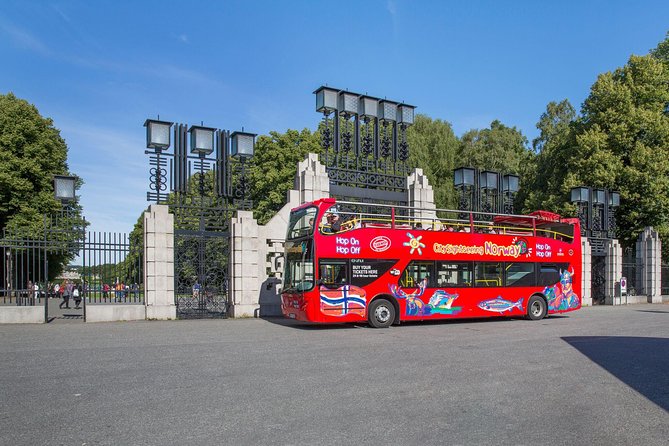
The bus is an open-top double-decker, which helps for views along the central waterfront and museum districts. Even if it’s cold or drizzly, you’re still not stuck in a stuffy, windowless box the whole time. And because it’s a loop with 90-minute timing, it’s easy to build a day around museums and a quick look at the city center.
Price and what you’re really buying at $46.60
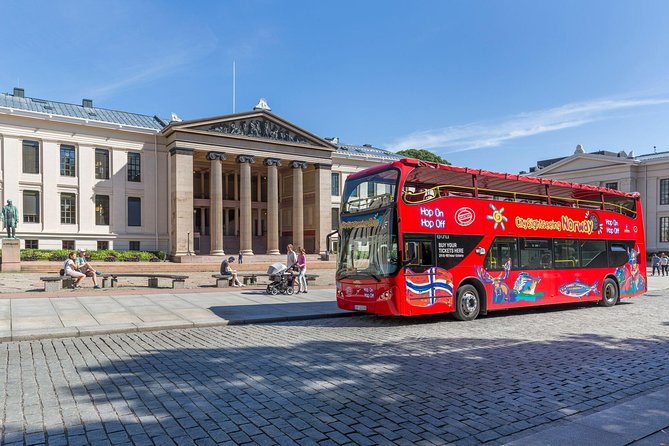
At $46.60 per person, this isn’t the cheapest way to get around Oslo. But you are paying for three practical things:
- Location coverage: the stops are placed near major sights rather than deep inside residential areas.
- Time flexibility: you’re not paying for a single, one-shot ride. Your voucher allows hop-on hop-off for 24 hours.
- Onboard guidance: the audio guide is in 8 languages, and you get free headphones.
If you’re only going to use the bus for one stop and then go back by taxi, the value drops fast. If you’re doing a museum day plus a quick city overview, the price starts to make sense—especially if you’d otherwise spend your time figuring out transit on your own.
Getting on: where to board and how to handle your voucher
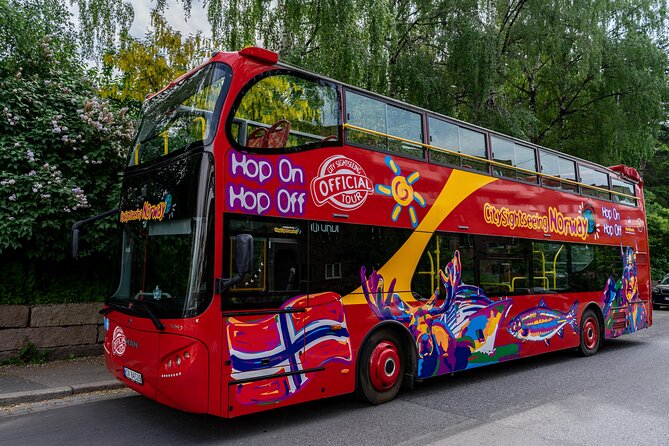
For cruise guests, the big win is where boarding happens: you can board directly outside the cruise terminal. If you’re not arriving by ship, you can still start at convenient stops—especially the National Theatre on Karl Johans Gate (Stop 1).
One step matters: you’ll need to exchange your voucher for the hop-on hop-off ticket with City Sightseeing staff or the bus driver before or when you board. Keep your ticket with you at all times, because you don’t want a simple check to turn into a rush.
Also note the service window: first departure is 10:00 AM, and the last departure from Stop 1 is 4:00 PM. The buses run every 30 minutes, with departures scheduled between 10:00 and 4:30 PM. On a port day, that last part is key: you’ll want to be thinking about your return to the ship well before the final departures.
Route and timing: how to plan a loop without stress
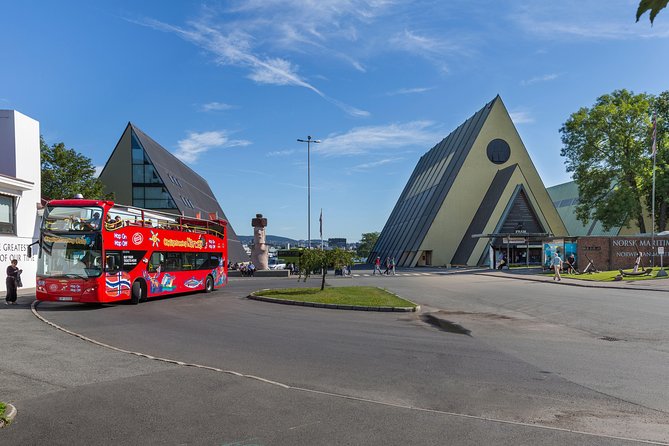
The full loop runs about 90 minutes, and buses depart roughly every 30 minutes. That means you can do a simple strategy:
- Take the loop once to get your bearings.
- Pick one or two stops to explore longer.
- Re-board at a later bus and finish the day without trying to cram everything.
Because you control how long you stay at each stop, you’re not forced into a museum sprint. Still, you should treat the timing as “good to plan around,” not “guaranteed to land perfectly.” Some riders have run into delays, and audio can cut out or fall out of sync on certain seats. If you have a hard deadline—like a ship departure—build in padding.
Stop-by-stop: where each part of the loop pays off
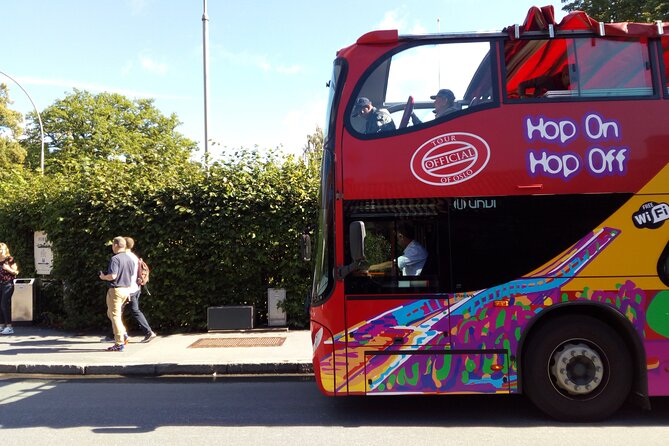
Below is the route logic in plain terms: central Oslo first, then the park and museum areas, then back toward the waterfront and back to the city core.
Stop 1: Karl Johans Gate area (National Theatre / Royal Palace)
This is your best starting point if you want the classic Oslo view of the city center. From here, you’re close to the The National Theatre / The Royal Palace / Karl Johans Gate area. It’s a good first ride segment because it sets up the rest of the day: you’ll see how Oslo’s main street aligns with the waterfront and park districts.
If Christiana Square is on your wish list, this city-center zone is the place where you’re most likely to connect quickly.
Stop 2: Vigelandsparken (Vigeland Sculpture Park and Oslo Museum)
This stop is for people who want to feel something on their Oslo trip. The Vigeland Sculpture Park area is one of the most talked-about cultural spaces in the city, and having a bus stop right there makes it much less tiring than trying to time buses and then walk.
This is also a smart hop if you only have energy for one big outdoor attraction.
Stop 3: Folkemuseet (Norwegian Museum of Cultural History)
This museum area is ideal if your day includes some structured learning. The Cultural History Museum is the kind of stop that can turn a quick bus loop into a real afternoon plan.
Practical tip: if you’re trying to do a museum and still make it back on time, keep your re-boarding plan simple—get off, enjoy a set amount of time, and come back by your next scheduled bus.
Stop 4: Bygdøynes (Kon-Tiki Museum / FRAM / Maritime Museum)
This is your museum concentration zone. If you want Viking-era and ship stories in one radius, this area is where the bus earns its keep. You can reach the Kon-Tiki Museum, the FRAM museum, and the Norwegian Maritime Museum from this part of the loop.
Even if you don’t plan to visit all three, this is a great location to choose one ship-related museum and still enjoy the surrounding feel of the Bygdøynes waterfront.
Stop 6: Hjortnes (Color Line Terminal Hjortnes)
This is a transport-facing stop tied to cruise and ferry infrastructure. You probably won’t treat this as a top attraction, but it can be useful if you’re trying to adjust timing around ferry schedules or to move through the harbor area without extra walking.
Stop 7 and Stop 9: Cruise terminals near Akershus Fortress
You’ll pass through the cluster of cruise gates and then reach the area by Akershus Fortress (Stop 9: Akershuskai Søndre 35 / Oslo Cruise Ship Terminal).
If your time is short, Akershus is one of the best targets because it’s visually dramatic and easy to plan around. You can hop off, walk through the fortress area, and still be back at a sensible time to re-board.
Stop 8: Tjuvholmen
This is a waterfront stop that’s convenient for a quick scenic break. If your plan is less “museum all day” and more “see the city from the water,” this is an easy place to do that without changing your whole itinerary.
Stop 10 and Stop 11: Vippetangen and Langkaia (Oslo ferry port areas)
These harbor-area stops help connect the central city to the waterfront activity. If you like seeing how a working port city feels, it’s a good zone to pop off for photos and a quick walk.
Stop 12: Operagata 4 (Opera House / MUNCH Museum)
This stop is a strong choice if you want architecture plus a museum option. The Opera House and MUNCH Museum are here, so it’s easy to decide between a quick exterior look and a longer museum visit.
If you’ve got one rainy hour or you want a predictable, indoor option, this is often the kind of stop that saves a day.
Final return: back toward Karl Johans Gate
The route loops back toward the central area near the National Theatre and Royal Palace. That’s useful because it keeps you near the easiest re-boarding point if you’re trying to wrap up smoothly.
Audio, Wi-Fi, and comfort: what matters when weather turns
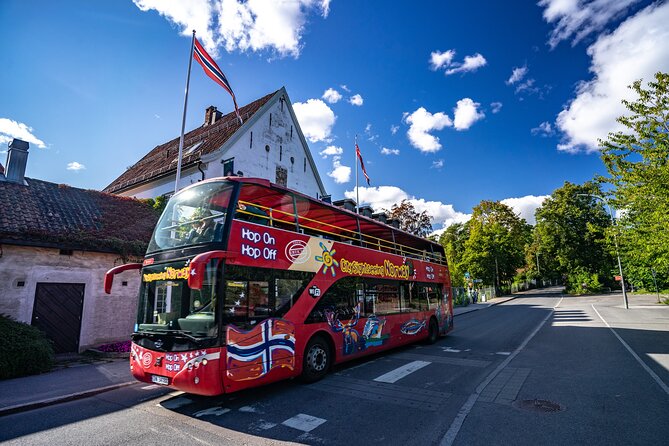
The bus includes a recorded audio guide in 8 languages, and you can use free headphones. You can also choose between in-seat audio modules and BYOD (bring your own device), and there are borrowable headsets with adapters available.
Where this becomes practical: if the audio isn’t working correctly on your seat, you can get stuck listening to silence—especially if you don’t know which stop is next. Keep an eye on stop signage and the bus screen cues, and don’t assume every seat has perfect sound the whole time.
Now the weather reality check. Buses run in all weather, so you won’t be shut down because it’s raining. But open-top + rainy conditions can still mean reduced visibility, and some riders have noted issues when it’s wet and cold. If you’re going in a warm or hot stretch, also remember that at least some departures aren’t air-conditioned, so plan hydration and a light layer.
How to make the most of this on a single Oslo day
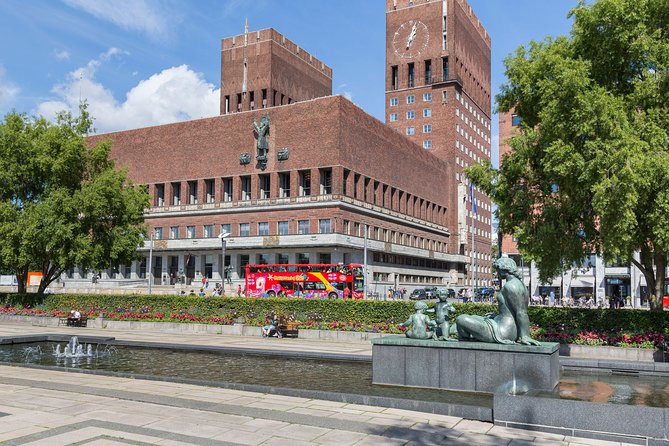
Here are a few ways to use the loop that feel efficient:
- Museum-first plan: hop off at Vigeland, then ride onward to Bygdøynes for one ship museum. Finish back in the Opera House / MUNCH area.
- City-center plus one “wow” plan: do the Karl Johans Gate segment first, then choose just one big site (Akershus Fortress or Vigeland Park).
- Two-museum day without running: Folkemuseet plus one stop from Bygdøynes.
If you’re traveling with limited mobility or just don’t want long walks, focus on stops with direct attraction access. If you want the absolute most time inside museums, you’ll likely prefer the Bygdøynes and Opera House zones.
Common friction points (and how to protect your day)
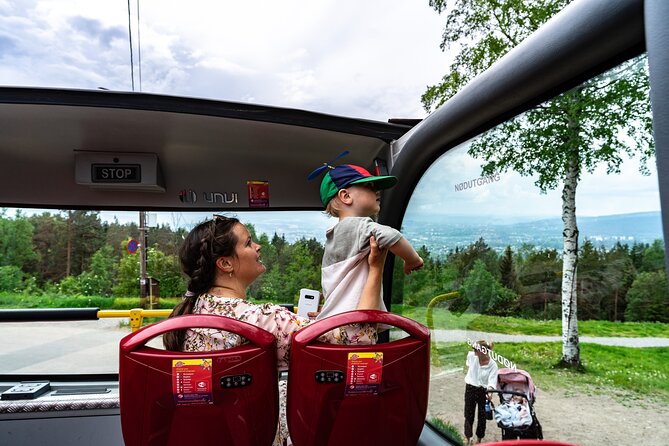
This tour works best when you treat it like a flexible transport tool, not a precision clock.
A few issues that can hurt your experience:
- Delays between buses can happen, especially at busy harbor areas.
- Audio can be patchy or out of sync on some seats.
- Visibility can be worse in heavy rain, especially if the bus windows aren’t easy to use.
- Confusion can happen when stop signage doesn’t feel super clear at a glance—so don’t wander far from the official stop point.
Your best defense is planning with a buffer. If you need to be back at the ship by a specific time, set a personal “return by” earlier than you think you need.
Who should book this hop-on hop-off bus?
You’ll love this most if:
- You’re on a port day and want to see several areas without thinking about transit.
- You’re comfortable choosing one or two longer stops and letting the bus handle the rest.
- You want audio guidance in English and other languages are covered too.
You might skip it if:
- You only want to visit one location and everything else is better by walking or a taxi.
- You have a very tight schedule with no buffer time.
- You’re sensitive to audio issues and need perfect narration at all times.
Should you book this Oslo Shore Excursion?
Book it if you want the simplest way to cover Oslo highlights with flexible hop-on hop-off access, especially when your time is tight and your goal is to hit spots like Vigeland Sculpture Park, Akershus Fortress, and museum districts on Bygdøynes and near the Opera House.
Don’t book it if you can’t handle uncertainty around timing or you’re expecting a smooth, always-perfect narration experience. In that case, consider a plan with fewer moving parts, or pair one hop-off stop with direct transport where you must be punctual.
FAQ
FAQ
How long is the Oslo hop-on hop-off bus tour?
The loop ride is about 90 minutes.
How often do buses depart?
Buses run about every 30 minutes.
What are the operating hours?
It runs from 10:00 AM to 4:00 PM on the dates shown, with departures continuing up to 4:30 PM.
Is there an English audio guide?
Yes. The tour offers audio commentary in English (and also in up to 8 languages total).
How many stops are there?
There are 17 stops around town.
Can I hop on and off as many times as I want?
Yes. With your voucher, you can hop on and off whenever you like, and the voucher is valid for 24 hours.
Where do cruise ship guests board?
Cruise guests can board directly outside the cruise terminal.
What’s included on the bus?
Included are the 24-hour hop-on hop-off ride, audio guide commentary in 8 languages with free headphones, stops near major sights, and free Wi-Fi onboard.
What’s not included?
Entry to attractions and food and drinks are not included.
Is the bus open-top and does it run in bad weather?
It runs in all weather, and it’s an open-top double-decker—so you’ll want to dress for rain and wind.