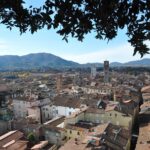
Two cities in one port day. This private Pisa & Florence shore trip is built for travelers who want the big art and the real streets without getting swallowed by mass tours. You’ll ride in an air-conditioned vehicle with a licensed local guide, stop smartly, and keep moving at a pace that feels human.
What I really like is how the stops are chosen for maximum meaning, not just maximum photos. In Pisa, you get the Leaning Tower square and also the quieter University area tied to Galileo, plus a drive that shows a Pisa you might not expect from postcards. In Florence, you start with the big view from Piazzale Michelangelo, then work your way through landmarks like Duomo square and Signoria, with a reservation strategy to help with museum time.
One thing to consider: it’s a long day (about 9 hours) with limited time at each place, so you’ll want to treat it like a guided highlights sprint rather than a slow wander. If you hate rushing at all, pick a longer stay day instead.
In This Review
- Key things to know before you go
- From Livorno to Pisa and Florence: a smart shore-day plan
- Pisa: Leaning Tower Square plus the Galileo connection
- The river-drive: seeing a Pisa you don’t expect
- Florence first views: Piazzale Michelangelo sets your bearings fast
- Duomo square and the Baptistery gates by Ghiberti
- Accademia Museum timing: reservation help that saves your day
- The Signoria area, Old Bridge zone, and Dante’s house
- Santa Croce square: where Italian glories rest
- Lunch and shopping time that you can actually use
- Private-group value: what you’re paying for (and what you’re not)
- Guide quality makes a big difference here
- Who this Pisa & Florence shore trip is best for
- Should you book this tour?
- FAQ
- How long is the Pisa & Florence shore trip?
- Is this tour private?
- What does the price include?
- What’s not included?
- Do you provide tickets for the tour?
- Is cancellation free?
Key things to know before you go
- Private, small-group pacing (up to 8) that you can flex based on your interests
- Reservation help for museum timing, so you’re not stuck outside waiting around
- Pisa beyond the Tower with Galileo-linked stops and river-drive viewpoints
- Hilltop first stop at Piazzale Michelangelo for orientation fast
- Core Florence landmarks in one sweep: Duomo square, Baptistero gates, Signoria area, Old Bridge zone, Santa Croce square
- Guide-led museum interpretation that helps you spot what matters, not just what’s famous
From Livorno to Pisa and Florence: a smart shore-day plan
This trip is designed for the realities of a cruise schedule. You leave early (start time is 8:00am) and you cover two cities without the usual “we’ll try to see everything” chaos. The payoff is simple: you’ll get a guided sense of what Florence and Pisa are, where the power centers were, and how the art shows up in daily life.
You’re in a private vehicle the whole time, which matters more than it sounds. Walking between far-flung points in Florence can eat up energy fast. Here, you’re using transit as a tool so your time goes to the viewpoints, squares, and museums where your guide can put context on what you’re seeing.
The tour also claims no hidden charges, which is worth paying attention to when you’re buying a shore excursion. You’ll still want to budget for entrance fees and lunch, but the core experience (guide + transportation + major guided stops) is handled.
You can also read our reviews of more tours and experiences in Livorno.
Pisa: Leaning Tower Square plus the Galileo connection
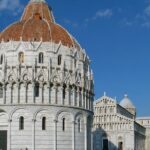
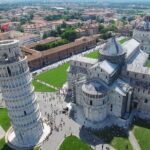
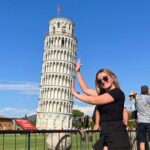
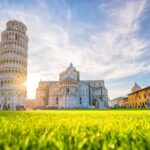
Pisa starts strong and stays focused. After about 30 minutes driving from Livorno, you have around 45 minutes on foot split between two key areas: the Leaning Tower square and the University square.
The Leaning Tower square is the obvious hit, but the real value is what your guide frames around it. Your stop isn’t only about the photo. You’ll also connect it to the wider academic and cultural world that existed in Pisa—especially through the University square tied to Galileo. That’s where the story shifts from landmark tourism to why this city mattered to science.
You also move beyond the most crowded layers. Instead of only lingering in the most obvious tourist cluster, you’ll hear about a less “done-for-you” side of the city—helping you notice details in the streets and the layout. Even if you’re short on time, that kind of guidance is what makes the Tower visit feel like it belongs to the city, not the other way around.
The river-drive: seeing a Pisa you don’t expect
Between Pisa stops and your Florence transfer, the vehicle time does more than “get you there.” You’ll drive along the river to pick up a different angle on the city. This matters if you’ve only seen Pisa from the viewpoint of the Tower complex.
From the car, you can catch how the city breathes—how neighborhoods relate, how the river shapes movement, and how the built environment changes as you move away from the main monument zone. It’s a small element, but it’s one of those things that makes the day feel complete rather than chopped into disconnected photo stops.
Florence first views: Piazzale Michelangelo sets your bearings fast
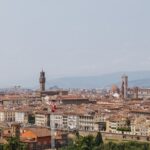
Once you drive about 1 hour and 15 minutes into Florence, you don’t start with museums or churches. You start with the hilltop view at Piazzale Michelangelo.
I love this opening because it works like a map you can see with your own eyes. From above, Florence’s layout makes more sense: where the major squares sit, how the river corridor ties the neighborhoods together, and why certain areas became stages for power and art. Even if you’ve been before, it can refresh your understanding quickly.
From there, you keep moving toward the historic center—so you’re not staring at buildings later wondering how they connect. You’ll already know what you’re looking for.
Duomo square and the Baptistery gates by Ghiberti
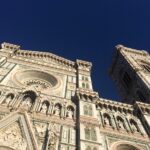
Next comes the visual core of Florence: Duomo square and the Battistero. This is where the city’s identity shows up in stone and scale.
You’ll focus on the Baptistery and its famous gates by Ghiberti. Even if you don’t study art formally, your guide can explain what you’re seeing in a way that makes details click—how the design shows up, why these works mattered, and how Florence’s artistic ambition kept escalating.
This is one of those stops where you’ll either feel rushed or you’ll feel like you got the point. With a licensed guide and a tight schedule, the difference is interpretation. If your guide explains the why behind the art, you’ll leave with more than a surface impression.
Accademia Museum timing: reservation help that saves your day
Museum time is where this tour earns its keep. The plan includes a reservation to help you avoid lines at the Accademia. The timing matters because you’re working inside a real-world schedule with opening hours and crowd pressure.
There’s a specific heads-up here: expect Monday to be tricky because it’s closed. If you’re booking for a Monday, ask what your guide plans to do with that museum timing and how they’ll adjust the flow.
What’s great is that the museum visit isn’t treated like a ticket punch. Guides like Giuseppe (when assigned) are especially focused on helping you see what’s going on inside the artworks—how styles evolve, what choices artists made, and how architecture and sculpture speak to each other. That kind of explanation turns the visit into learning, not just sightseeing.
The Signoria area, Old Bridge zone, and Dante’s house
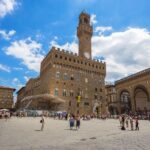
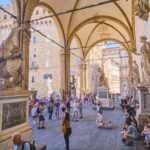
After the Accademia, you shift back to Florence’s public stage: Signoria square and the nearby XIV-century town hall. This is the political heart you can feel in the stones—where art and governance sit side by side.
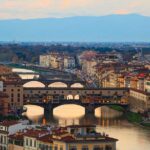
Then you head toward the Old Bridge area and continue to Dante’s house. These aren’t just name-drops. With the right guidance, you’ll start seeing Florence as a city where literature, civic power, and visual culture overlap. It’s the kind of connection that’s hard to catch if you’re moving on your own with a map and a schedule.
One practical benefit: the private format lets your guide adjust pacing based on how your group responds. If you’re more interested in art, you’ll likely spend more time on the interpretive parts. If you want quicker photo time, you’ll get that too.
Santa Croce square: where Italian glories rest
The day lands at Santa Croce square, where major Italian figures are buried. Your guide connects the squares and monuments back to the people who shaped culture—so this stop feels like a conclusion rather than just another church-area photo.
This is also a place where your understanding can jump. If you’ve heard names before but never connected them to the setting, the guided pacing helps everything click. For example, you’ll hear about how icons like Michelangelo and Galileo are connected through the burials here (along with other celebrated figures).
Lunch and shopping time that you can actually use
You’ll have time for lunch and shopping if you request it. This is important because Florence is the kind of city where you can burn an hour fast just wandering storefronts.
One thing I appreciate about how guided lunches are handled on this style of tour is the chance to step off the main tourist corridors. On tours led by Giuseppe, guests have been guided to an authentic restaurant on a quieter back street for lunch. That kind of choice matters when your day is tightly scheduled—you want food that’s good, not just convenient.
Still, don’t expect a full sit-down feast. This is a shore trip, so treat lunch as a reset button and keep an eye on time.
Private-group value: what you’re paying for (and what you’re not)
The price is $1,356.59 per group (up to 8) for about 9 hours. That’s not “cheap,” but it’s also not trying to be. You’re paying for a private, licensed guide plus private transportation—things that make the day smoother and more flexible than a big group bus tour.
Here’s how I think about the value:
- If you’re traveling as a small group (up to 8), the per-person cost can feel more reasonable than you might think.
- You save time with reservation help and smart sequencing.
- You get context on what you see, including art interpretation inside the museum.
What’s not included is lunch and entrance fees. Also, some areas in Pisa and Florence are exterior or don’t require paid entry, which is why the guided stops can feel efficient. But if you’re expecting every ticket included, budget ahead for museum entrance.
Guide quality makes a big difference here
This is one of those tours where the guide can genuinely change your experience. Based on the guides who have led this trip, you can expect a strong mix of enthusiasm and real city knowledge.
Giuseppe has a reputation for bringing Florence and Pisa to life with clear explanations and timing discipline—especially around museum entry. Paola, on the other hand, is described as responsive, fluent in English, and willing to tailor the excursion to your interests. That matters if you have strong opinions—like you want more art focus, less church focus, or you’d like to spend extra time at key squares.
In other words: pick this tour not only for the route, but for the human factor. The schedule is fixed-ish, but the way it’s taught doesn’t have to be generic.
Who this Pisa & Florence shore trip is best for
This is a great match if you’re:
- On a cruise or short on time and want a high-impact day
- Interested in art and culture but don’t want to figure out logistics under pressure
- Traveling in a group up to 8 and prefer private pacing
- The type who enjoys learning why something mattered, not only where it is
It may not be the best fit if you:
- Want a super slow, no-rush exploration style
- Plan to spend long hours inside multiple museums on your own after the tour
- Need lots of downtime built into the schedule
Should you book this tour?
I’d book it if your goal is to get a guided, meaningful taste of both Pisa and Florence in one day, without losing hours to crowd bottlenecks or complicated navigation. The combination of private transport, a licensed local guide, and reservation help at the Accademia is the core reason this works as a shore-day plan.
If you’re booking on a Monday, ask questions about museum timing due to closure. Otherwise, if you want a day that feels organized, story-rich, and efficient—this is a strong option.
FAQ
How long is the Pisa & Florence shore trip?
It runs for about 9 hours (approximately), starting at 8:00am.
Is this tour private?
Yes. It’s a private tour/activity with only your group participating, up to 8 people.
What does the price include?
Included are an air-conditioned vehicle, private transportation, and a licensed local guide.
What’s not included?
Lunch and entrance fees are not included.
Do you provide tickets for the tour?
You’ll receive a mobile ticket.
Is cancellation free?
Yes—free cancellation is available. You can cancel up to 24 hours in advance for a full refund.