REVIEW · SANTIAGO
Shore Excursion: 3-Hour Guided Historic Tour of Praia & Cidade Velha
Book on Viator →Operated by Bu Country Tours · Bookable on Viator
UNESCO and colonial streets in three hours. This shore tour links Praia and Cidade Velha with a guide who keeps the day moving and the meaning clear. You’ll do a quick scan of the capital first, then switch to walking history at the UNESCO site.
I love that it’s designed for cruise-day timing without feeling like a drive-by. The tour also leans on strong guiding: when I hear names like Elzo All Dias, I think of careful pacing, clear English, and lots of small details that make the places feel real. I also love the variety of stops, from the big everyday life of the market to the heavy old-school defense and church sites.
One drawback to plan for: not everything is included. The Fortaleza has an entrance fee (about €5 per person) and a couple sites can be closed on specific days, like the market on Sundays and the fortress on holidays.
In This Review
- Key highlights you’ll notice fast
- A cruise-day winner: how the 3-hour timing works
- Praia first: where to see everyday city life
- Quartel Jaime Mota: a quick taste of military-era Santiago
- Presidential Palace: colonial architecture in plain sight
- Praça Alexandre Albuquerque: oldest-square energy
- Mercado de Sucupira: souvenirs and real daily life
- Cidade Velha UNESCO: fortress, churches, and hard history
- Fortaleza Real de San Felipe: defenses against pirate attacks
- Se Catedral: first European cathedral ruins in Sub-Saharan Africa
- Banana Street: traditional thatched houses and a slower pace
- The slave pillory and other reminders
- Who your guide might be, and why it matters
- Price and logistics: what your $64.69 covers
- Stop-by-stop timing: what to expect at each moment
- What to bring (and how not to waste time in the sun)
- Who this tour suits best
- Should you book this tour?
- FAQ
- How long is the guided shore excursion?
- Where do you get picked up and dropped off?
- Is transportation included?
- How big is the group?
- Are there any entrance fees?
- What should I bring and should I plan around closures?
Key highlights you’ll notice fast
- Port pickup plus drop-off handled by a climate-controlled minivan for your group
- UNESCO walking tour at Cidade Velha with forts, churches, and old-past sights
- Praia’s classic squares and markets, including Mercado de Sucupira for local life
- Clear WWII-era style? No. Instead you get pirate-era defense thinking at Fortaleza Real de San Felipe
- Small group size (up to 8), which usually means fewer waits and more questions answered
A cruise-day winner: how the 3-hour timing works
A shore excursion is only as good as its timing. This one is built around a simple rhythm: quick sampling in Praia, then a focused walking stretch at Cidade Velha. In about three hours, you get a storyline—how people lived now, and how they lived when the island was being fought over.
The format also helps you avoid the worst cruise-day problem: spending the whole day in transit. Here, transportation is included and you’re moved by a private minivan to keep you comfortable. Then you’re mostly on foot where it counts, so you actually see what you paid to see.
You should still expect some walking, but it’s described as small. Bring comfy shoes and expect sun. You’ll be outside for market and street scenes, then again for the walking portion and viewpoint time.
Praia first: where to see everyday city life

Praia is a great opener because it shows you the modern face of Santiago before you step into UNESCO-world history. The tour begins with pickup at the port area and a straight line into the city center.
Quartel Jaime Mota: a quick taste of military-era Santiago
One stop is Quartel Jaime Mota, with a short visit and a bit of background on the barracks. It’s not a long museum moment, but it gives you context. Even on a short day, a marker like this helps you understand how power and control showed up in the city layout.
Presidential Palace: colonial architecture in plain sight
Next comes the Presidential Palace. The emphasis here is the architecture—colonial style, big forms, and a sense of official presence. You’re not there for a lengthy guided interior tour (time is tight), so treat it like a visual chapter break. Look at how the buildings are shaped and how the streets funnel around them.
Praça Alexandre Albuquerque: oldest-square energy
Then you’ll hit Praca Alexandre Albuquerque, described as the oldest square in Praia. This is one of those stops that can be surprisingly useful even if you only stand there briefly. Squares are where daily routines gather—people pause, meet, and orient themselves. You’ll get a feel for the city’s bones before you move on.
Mercado de Sucupira: souvenirs and real daily life
The highlight for many first-timers is Mercado de Sucupira, Cape Verde’s largest souvenir market. The best part isn’t the shopping. It’s the rhythm of daily life—how a family-run market behaves when you’re not trying to stage a photo.
You’ll have about 30 minutes here, which is enough to browse without turning it into a marathon. If you want to buy something, do it early. Market hours and cruise schedules rarely agree, and you’ll be happier if you’re not rushing later.
Tip: come with small bills or the ability to handle local payment the day of the tour. The tour description doesn’t spell out payment methods, so plan for normal in-person marketplace purchases.
Cidade Velha UNESCO: fortress, churches, and hard history

Once you shift from Praia into Cidade Velha, the tour turns into a walking history lesson. This is the part you’ll remember most because UNESCO sites reward slow attention—especially when you’re guided.
Fortaleza Real de San Felipe: defenses against pirate attacks
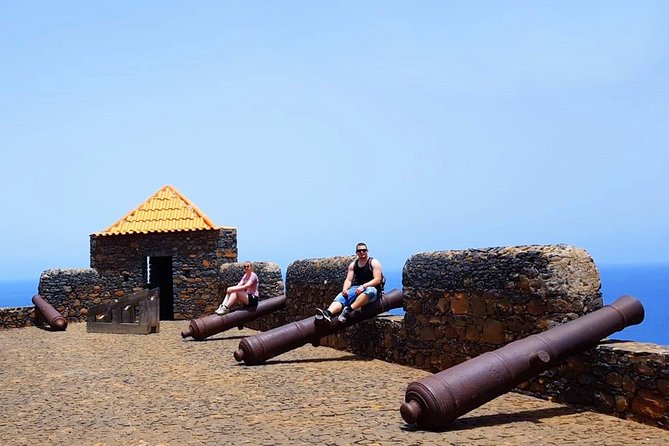
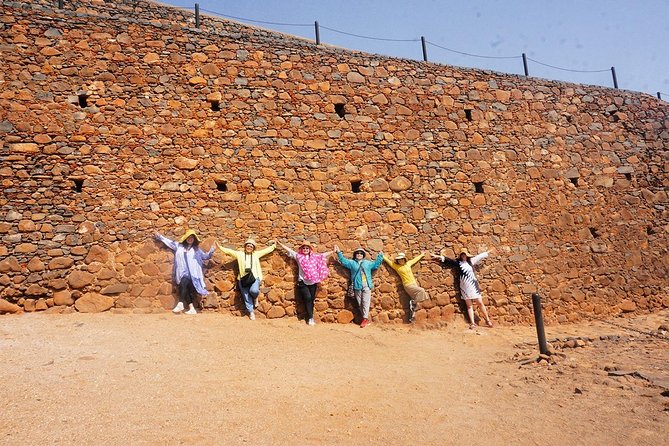
Fortaleza Real de San Felipe is your first UNESCO anchor point. The tour frames it as an ancient system of defense against pirate attacks. That wording matters: you’re not just seeing old stone. You’re seeing how the island responded to real threats.
This stop also has a cost. The entrance fee is not included (noted as about €5 per person). If the fortress happens to be closed, the tour notes it’s shut on holidays, so the itinerary may adjust. If fortress entry is a must for you, plan around your travel dates.
Why it’s worth the extra money: defense structures are built for visibility—angles of approach, sight lines, and the logic of where you’d stand to protect. You’ll probably understand it faster with a guide explaining what you’re looking at, especially in a place where the features could feel random on your own.
Se Catedral: first European cathedral ruins in Sub-Saharan Africa
Then comes Se Catedral, the ruins of the first Cathedral built by Europeans in Sub-Saharan Africa. It’s a big historical claim, and you’ll want to look at the ruins with both awe and skepticism in the best way: notice what’s left, and let the scale of the remnants do the teaching.
The stop also includes a panoramic view of the city center’s colonial buildings from the top of Calhau fishing bay. This is where the tour earns its time budget. Ruins alone can feel like “old rock,” but a viewpoint makes it geography, not just archaeology. You’ll see how the town sits and why certain places mattered.
Banana Street: traditional thatched houses and a slower pace
The walking tour continues toward Rue Banana, the famous Banana Street with beautiful traditional thatched houses. This is the part that tends to feel most “on foot” and human. Streets like this show you domestic architecture and everyday scale—how people lived and how buildings fit the land.
The tour includes about 15 minutes here, which is enough to get a few good photos and feel the vibe without feeling trapped.
The slave pillory and other reminders
The overall tour description also flags historical highlights like a slave pillory and several churches. You’ll be seeing structures connected to colonial-era systems and forced labor. If that makes you uneasy, it’s still a fair use of a short shore day. History doesn’t get kinder just because the cruise ship timetable is nicer.
Who your guide might be, and why it matters
For me, the biggest value in a guided tour isn’t facts. It’s how the facts land. The experience here tends to get strong praise for English and for energy. Names show up like Elzo All Dias, and the driver My Didi gets credit for careful, competent driving—exactly what you want when your schedule is tight.
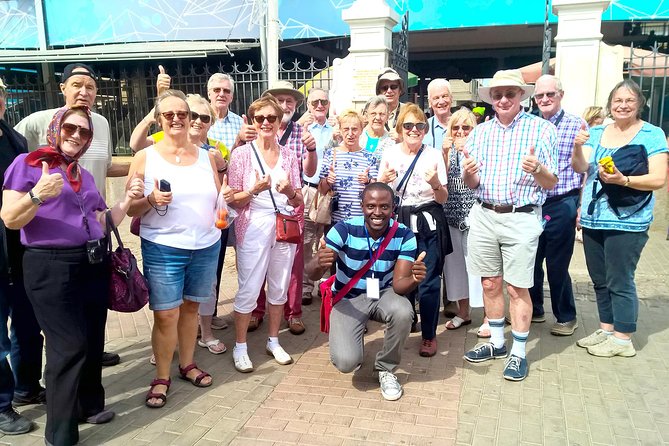
You might also be guided by people like Garcia or Elisandro, and the common thread is responsiveness. A good guide doesn’t just recite dates. They adjust to what you care about: quick explanations, room to ask questions, and a pace that keeps you on schedule without snapping you through stops.
Practical takeaway: ask for the story behind what you’re standing next to. Even on a short tour, that one question can turn a building into a timeline.
Price and logistics: what your $64.69 covers
At $64.69 per person, the tour sits in a reasonable cruise-excursion zone—especially because it bundles more than just a walk. You’re paying for:
- Pickup and drop-off at Praia harbor
- Transportation in a climate-controlled private minivan
- A professional tour guide
- Liability insurance
- A mobile ticket and small group format (max 8)
Then there’s the one key extra cost: the fortress entrance fee. If the Fortaleza is open and you go inside, budget the listed fee (about €5 per person). That’s not a dealbreaker, but it is the only clear additional line item noted.
In plain terms, you’re paying for convenience plus explanation. If you’re the type who enjoys walking history but doesn’t want to fight for timing on your own, this is the right kind of deal.
Stop-by-stop timing: what to expect at each moment
Here’s what the flow tends to feel like, based on the order and timing in the itinerary.
- Praia pickup and first city look: you start at the port area and quickly transition into sights around Praia.
- Quartel Jaime Mota: short stop, fast context.
- Presidential Palace: brief architectural stop.
- Praça Alexandre Albuquerque: a slightly longer pause (about 25 minutes) that helps you orient.
- Mercado de Sucupira: about 30 minutes for shopping or browsing and getting a feel for daily life.
- Fortaleza Real de San Felipe: about 15 minutes with the extra entrance fee.
- Se Catedral: about 10 minutes, plus the viewpoint angle from Calhau fishing bay.
- Rue Banana: about 15 minutes for traditional thatched houses and walking.
- Finish back at Praia harbor: drop-off around the end of the 3-hour window.
That last point matters. Ending at Praia Harbor reduces stress when you’re returning to the ship. It’s also easier to manage photos and shopping because you don’t need to “figure out” transport at the end.
What to bring (and how not to waste time in the sun)
Cape Verde sun is part of the package, even on a “short” walking tour. The basic kit is simple, and I’d follow it:
- Comfortable clothes
- A hat
- Sunscreen
- Comfortable shoes for sidewalks and a short walking stretch
If you want to shop at Mercado de Sucupira, bring a small bag you can close. Markets move fast, and a quick stop is still a stop with momentum.
Also keep an eye on closures. The tour notes the Praia Municipal Market is closed on Sundays and the fortress is closed on holidays. If your cruise day lines up with either, don’t assume every stop will run exactly as written.
Who this tour suits best
This is a smart fit if you want:
- A compact history and culture day on a cruise stop
- A guided pace through UNESCO sites where you’d otherwise miss context
- Small group comfort with pickup and drop-off handled for you
- Outdoor time for viewpoints and walking, not just sitting in a bus
It might be less ideal if you hate any walking at all, or if you’re only interested in one site (like just the fortress or just the cathedral ruins). Since the tour mixes Praia city scenes with Cidade Velha, it’s best for people who like variety.
The tour also says most travelers can participate, which is a strong indicator that it’s not designed for extreme physical demands. Still, plan for uneven surfaces and sun.
Should you book this tour?
If your goal is to get real context in a limited cruise window, I think this is one of the better ways to spend a Santiago port day. You cover Praia’s everyday life—squares and a major market—then transition into UNESCO Cidade Velha defenses and church ruins. The structure is tight, but it’s not shallow.
I’d book it if:
- You want a guided UNESCO walk without organizing transportation yourself
- You like history but also enjoy street scenes like Rue Banana
- You’re comfortable paying a small extra fee for Fortress entry if it’s open
I’d hesitate if:
- Your day falls on a Sunday (market closure) or a holiday (fortress closure)
- You’re hoping for everything to be free at every site (Fortaleza isn’t)
- You only want one specific attraction and don’t care about the broader story
If you’re choosing between a generic bus tour and a small guided walking day, this one leans toward the better payoff: you’ll come away with names, places, and the why behind them.
FAQ
How long is the guided shore excursion?
It runs for about 3 hours.
Where do you get picked up and dropped off?
Pickup is at Praia Port, and the tour ends with drop-off at Praia Harbor.
Is transportation included?
Yes. Transport is included, and you ride in a climate-controlled private minivan.
How big is the group?
The tour has a maximum of 8 travelers.
Are there any entrance fees?
Yes. Fortaleza Real de San Felipe has an entrance fee not included in the tour price (noted as about €5 per person).
What should I bring and should I plan around closures?
Bring comfortable clothes, a hat, and sunscreen. The Praia Municipal Market is closed on Sundays, and the Fortress is closed on holidays.