REVIEW · THESSALONIKI
Thessaloniki Jewish Sightseeing Private Tour, Shore Excursion
Book on Viator →Operated by Hello Thessaloniki · Bookable on Viator
Jewish Thessaloniki is walking distance of tragedy and life. This private shore excursion strings together major memorials, synagogues, and city icons with a sensible 3 to 4 hour pace, so you don’t just see points on a map—you understand what you’re looking at. You’ll also roll through town in an air-conditioned vehicle with bottled water and WiFi on board.
I love two things most: the chance to stand at the Holocaust Memorial with free admission and a clear sense of what happened in 1943, and the time in the Monastiriotes Synagogue, the one surviving pre–World War II synagogue in Thessaloniki. Both stops make the story feel personal, not abstract.
One possible drawback is simple: two of the longer, most museum-like stops cost extra. The Jewish Museum and the White Tower do not include entrance fees, so budget for those tickets.
In This Review
- Key Highlights You’ll Actually Feel During the Tour
- Private shore-excursion rhythm: meeting you and keeping time for key sites
- Holocaust Memorial: what you’re seeing and why it’s placed here
- Monastiriotes Synagogue: Thessaloniki’s prewar survivor
- Agia Sofia (Villa Allatini) and Casa Bianca: religious layers and Sephardi losses
- Modiano and Kapandji villas: money, government, and Sephardi influence
- Yad LeZicaron synagogue, Aristotelous Square, and reading the city’s layout
- Jewish Museum and White Tower: ticketed stops with the most time on themes
- Roman Forum and Old Train Station: from ancient civic space to deportation machinery
- Price and value: what $331.22 per person really buys
- Who should book this Thessaloniki Jewish sightseeing private tour
- Should you book this Thessaloniki Jewish private tour?
- FAQ
- How long is the Thessaloniki Jewish Sightseeing Private Tour?
- What’s the price per person?
- Is pickup offered?
- Is the tour offered in English?
- Are tickets included for the Jewish Museum and the White Tower?
- Is the Monastiriotes Synagogue entrance included?
- What’s included in the tour besides the guide?
- Is there free cancellation?
Key Highlights You’ll Actually Feel During the Tour
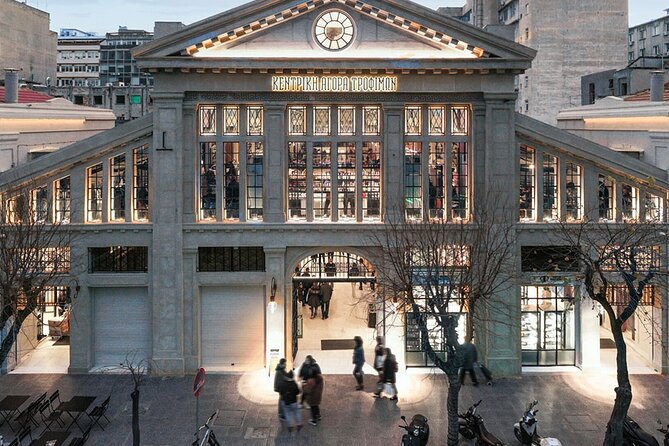
- A private route built for shore time with an approximate 3 to 4 hour run, pickup offered, and a comfortable drive between stops
- Monastiriotes Synagogue (founded 1925–1927) where you can connect modern community life with the prewar era
- A villa-and-mansion trail linked to Sephardi families including Casa Bianca, Modiano, and the Kapandji residences
- Two ticketed stops that deserve planning: the Jewish Museum (1 hour) and the White Tower (20 minutes)
- High-impact history points like the Old Train Station, tied to the deportation of about 50,000 Greek Jews
Private shore-excursion rhythm: meeting you and keeping time for key sites
This is built as a true private experience. Only your group rides together in an air-conditioned vehicle, with bottled water, coffee and/or tea, and WiFi on board. That matters on a cruise day or a tight sightseeing schedule, because your time stays yours instead of being chopped up for everyone else’s timing.
Pickup is offered, and if you’re arriving by ship, you should expect a meet-up right at the dock at the requested time. Add the mobile ticket option, and it’s one less thing to juggle while you’re walking in a new city.
The pacing is practical: lots of short stops (many around 10 minutes) plus a couple of deeper moments (the synagogue, the museum). You’ll see a broad sweep of sites without turning your day into a marathon. And since the tour is in English, it’s easier to ask questions as you go—especially when you hit places tied to names, dates, and community changes.
You can also read our reviews of more tours and experiences in Thessaloniki.
Holocaust Memorial: what you’re seeing and why it’s placed here
The tour starts with the Holocaust Memorial in the center of Thessaloniki. It’s free, and you get about 10 minutes here. Since 1997, this monument has marked the fate of the city’s murdered Jews, including the chilling detail that the deportations to Auschwitz-Birkenau happened within just a few months in 1943.
What I like about this stop is the location and the framing. It’s not tucked away on the edge of town. You get to anchor the rest of the day to something real and specific before moving into synagogues, villas, and museums. It also helps you read the city differently: later on, when you see historic buildings and formal civic spaces, you understand that these were part of a community that was violently disrupted.
If you tend to get emotionally heavy on history stops, give yourself those 10 minutes. Don’t rush this one. A memorial like this is more about focus than photographs.
Monastiriotes Synagogue: Thessaloniki’s prewar survivor
Next up is Monastiriotes Synagogue, with admission included and about 30 minutes allotted. This synagogue is the key reason this stop earns a full spot on a Jewish sightseeing route: it’s the most important of the three synagogues that existed in Thessaloniki, and it’s the only one that survived from before World War II.
The story behind the building adds texture. It was founded in 1925, with construction running until 1927. It was established by Inda Aroesti in memory of her husband, Isaak Aroesti. It’s also called Monastiriotes because many of the families who helped fund the synagogue came from Monastery in Yugoslavia, today Bitola. Those families left during the Balkan Wars and World War I.
During the visit, you’ll get a sense of how community identity traveled with people—and how religious buildings became memory-making machines. This is a good stop to ask questions about terminology, community structure, and how a living congregation keeps continuity when the surrounding world changes fast.
Agia Sofia (Villa Allatini) and Casa Bianca: religious layers and Sephardi losses
After the synagogue, you’ll move into a section of the route that feels like walking through time. Stop 3 is Villa Allatini, but the description connects it to Agia Sofia / Agia Sophia—a domed basilica built over earlier ruins. Construction began in the 7th century AD, and the building went through additions and modifications. Under the Ottoman Empire, the church became a mosque, and then it was destroyed by fire in 1890. It reopened for holy service in 1913.
You usually won’t spend long here (about 10 minutes), but it’s a strong reset. It reminds you that Thessaloniki’s religious architecture is layered. When you later see Jewish community buildings and civic mansions, you can place them in a wider city story instead of treating each site as an isolated fact.
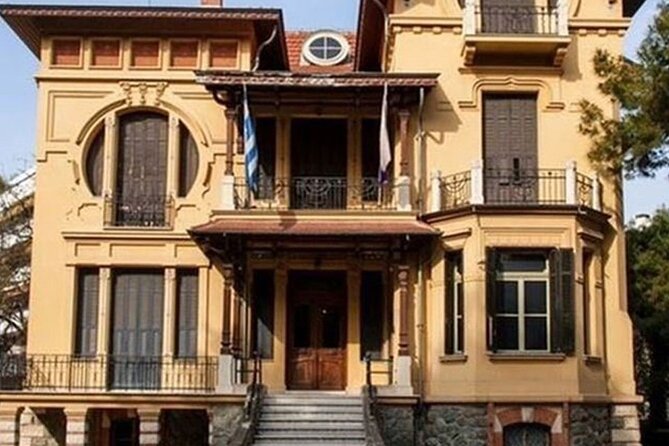
Stop 4 is the Municipal Art Gallery of Thessaloniki, also known as Casa Bianca or Villa Fernandez. Built between 1911 and 1913 on Vassilisis Olgas street, it began as a residence for Dino Fernandez Diaz and his family. The architect was Pietro Arrigoni, and the family’s Sephardi (Spanish) roots shaped the kind of merchant wealth that helped build Thessaloniki’s public and private grandeur.
Then comes the harsh wartime turn. During the Axis occupation, the building was confiscated and used by the Germans. Dino Fernandez Diaz fled to Italy with family members to escape the Nazis, but the family was murdered in 1943 by the German SS near Como Lake. Since 2013, the building has housed the Municipal Art Gallery.
Even with only about 10 minutes, this stop lands. The mansion is beautiful in structure, but the meaning is tragic. It’s the kind of place where a good guide’s explanations help you avoid just admiring the façade.
Modiano and Kapandji villas: money, government, and Sephardi influence
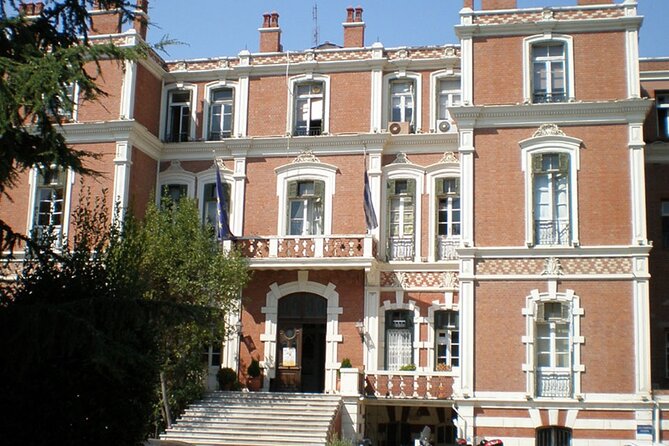
Stop 5 is Villa Joseph Modiano (often called the old Governor’s Residence). It was built around 1905–1906 as the home of banker Yiako Modiano, designed by Ali Modiano. The name matters because this wasn’t only a private home—its role shifted over time, hosting commanders of Macedonia and later a minister of Northern Greece.
Architecturally, it’s eclectic with Art Nouveau elements. In 1913, it was bought by the Greek Government. Later, it served the Army Medical School, then a Priest School in the early 1960s, and by the end of that decade it was used by the Ministry of Northern Greece. Today, it houses the Folklife and Ethnological Museum of Macedonia.
Stop 6 is Villa Ahmed Kapandji, also known as Villa Kapandzi in the Kapantzi-family story. Built at the end of the 19th century, the description places it around 1890, designed by Piero Arrigoni for Mehmet Kapantzi. There are two mansions in Thessaloniki bearing the name Villa Kapantzi, both created by the same architect for the Kapantzi brothers, Ahmet and Mehmet.
This is where you see Sephardi roots showing up in civic leadership. Mehmet Kapantzi was president of the Thessaloniki Chamber of Commerce, and Ahmet Kapantzi was mayor of Thessaloniki in 1907–1908. The description also ties their ancestors to deportations from Spain at the end of the 15th century. Today, the cultural center of the National Bank of Greece sits in the oldest mansion.
These villa stops are about more than architecture. They show you what prosperity looked like when Jewish families were deeply woven into Thessaloniki’s economic and civic life. Because each visit is short (about 10 minutes), you’ll want your guide to give you the meaning fast—and you’ll likely get that.
Yad LeZicaron synagogue, Aristotelous Square, and reading the city’s layout
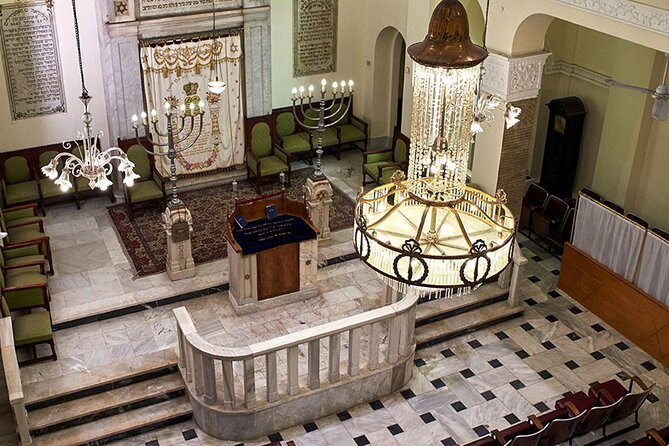
Stop 7 is Yad LeZicaron Synagogue. The focus here is the older Jewish cemetery of Thessaloniki, which was located from the early 15th century at what is now the site of Aristotle University of Thessaloniki. The cemetery included over 400,000 graves.
This kind of stop can feel abstract if you only look at the present-day university setting. The payoff comes from hearing the scale and time depth: you’re standing where a large part of a historic community once rested. It’s a quiet stop, but it helps explain why names and memory matter so much in this city.
Stop 8 is Aristotelous Square, about 10 minutes. After the Great Fire of 1917, architect Ernest Hébrard redesigned the city center. He placed Aristotelous Square at the heart of the plan due to the point’s historical significance. It sits where sea meets land, and it’s described as the central open space for public events, recreation, meetings, and promenades.
One of the best practical perks: this is also a natural viewpoint. The orientation gives you a captivating view of Mount Olympus on clear days. It’s a breather in the route, letting you reset physically while your brain continues stacking historical connections.
Jewish Museum and White Tower: ticketed stops with the most time on themes
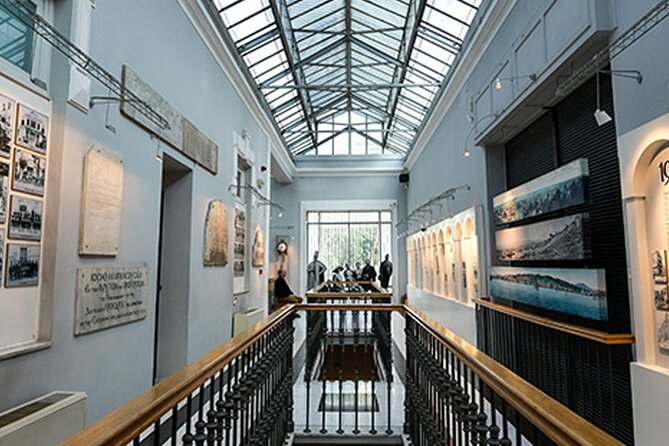
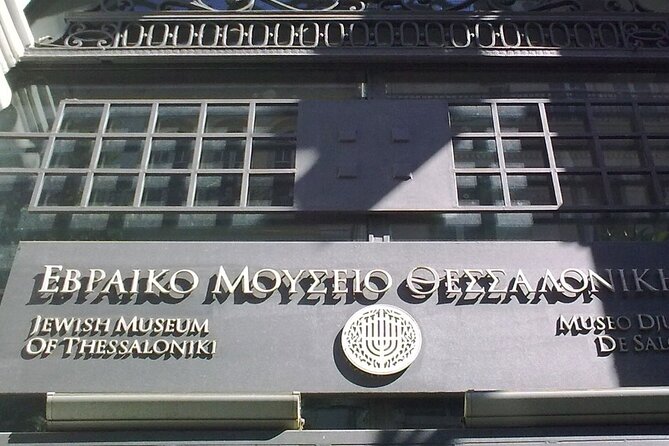
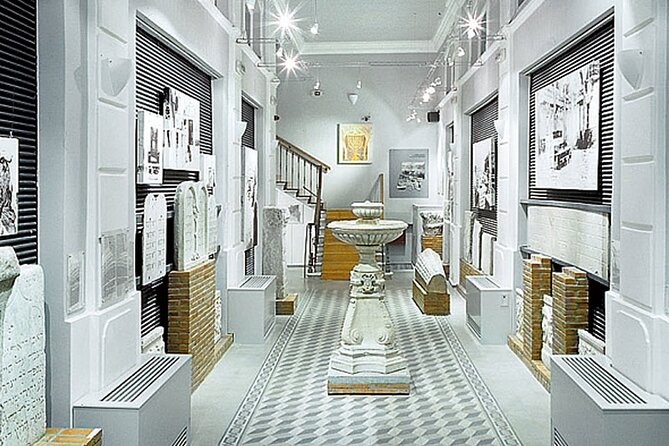
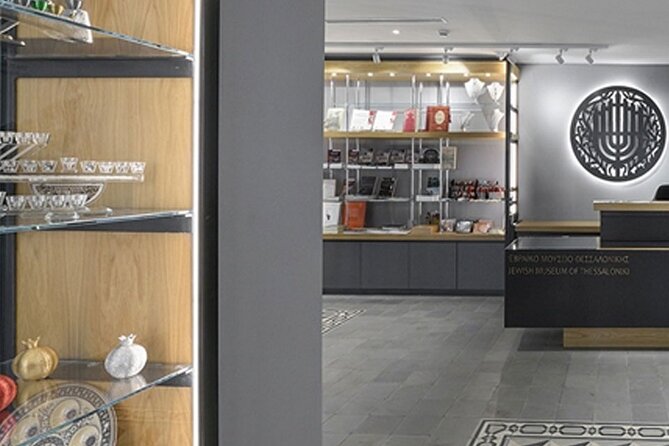
Now you hit the two locations where entrance fees are not included. The Jewish Museum of Thessaloniki is stop 9, and it’s a longer visit: about 1 hour. The museum was established in 2001 in an old commercial arcade belonging to the Jewish Community of Thessaloniki and renovated with funds connected to Thessaloniki Cultural Capital of Europe 1997. Its mission is to collect documents and heirlooms that survived the Holocaust, preserve remembrance of the victims, and encourage research about more than 2,000 years of Jewish presence in Thessaloniki.
If you want the “why it matters” part of the tour, this is it. This is the only major stop on the route that’s designed for sustained reading and viewing, so it’s worth treating it as your main indoor anchor.
Stop 10 is the White Tower of Thessaloniki, about 20 minutes. Entrance fee is not included. The tower houses a permanent exhibition that presents the city’s history from its founding in 316/15 B.C. to the present, with an emphasis on Thessaloniki’s long, unbroken historical presence.
What I like here is the contrast. After a museum focused on the Jewish story, you get a city-level story. You can then hold both ideas at once: the big arc of the city and the specific arc of a community that was forcibly interrupted.
Roman Forum and Old Train Station: from ancient civic space to deportation machinery
Stop 11 is the Greek Agora and Roman Forum, about 30 minutes, and it’s free. The Roman Forum is the ancient Roman-era forum of the city at the upper side of Aristotelous Square. It’s a large two-terraced forum with two-storey stoas, uncovered by accident in the 1960s.
This is a good segment for people who like places that still show structure. Even if you don’t feel like you need a lecture, you can look at the terraces and stoas and understand how public space worked in ancient times.
Stop 12 is the Old Train Station, also free, with about 30 minutes. This stop connects directly to the deportation story: the station is tied to the deportation of about 50,000 Greek Jews to Poland concentration camps.
This is one of those “you can’t un-know it once you hear it” stops. The station turns the route’s earlier names and buildings into a sequence: community life, forced disruption, and then the machinery of deportation. It’s heavy, but it’s also clarifying. It gives you a hard endpoint for the day’s emotional thread.
Price and value: what $331.22 per person really buys
At $331.22 per person for a private 3 to 4 hour tour, you’re paying for logistics plus interpretation, not a pile of ticketed admissions. What makes it feel more reasonable is the included comfort and transportation: air-conditioned vehicle, bottled water, coffee/tea, WiFi, and private transportation between stops.
Also, most stops here have free admission. That means your extra spend is mostly limited to the two ticketed locations: the Jewish Museum and the White Tower. If you’re already planning to visit both, the tour’s value rises fast because you’re folding in guided context and time management.
The biggest lever on price is group size. Since it’s private, you’ll want to think about what the per-person cost means for your specific group. A couple booking together can feel much more manageable than a solo booking.
Who should book this Thessaloniki Jewish sightseeing private tour
This tour fits best if you want a focused Jewish-history route without wrangling buses, tickets, and directions on a tight schedule. I’d especially point it to:
- Cruise passengers with limited shore time who still want multiple key sites
- People who like city walking less and prefer a guided route with transport between stops
- Anyone drawn to Sephardi stories in Thessaloniki, not only Holocaust-era sites
- Families or couples who want a mix of memorials, synagogue life, and major city landmarks (like Aristotelous Square and the White Tower)
Weather matters here. The experience notes it requires good weather, so if conditions are poor, you may be offered a different date or a full refund. Good to know if you’re planning around a cruise day.
Also, service animals are allowed, which is a practical inclusion for some visitors.
Should you book this Thessaloniki Jewish private tour?
Yes, if your goal is meaningful context in a short time. The route gives you the core anchors: Holocaust Memorial, Monastiriotes Synagogue, key Sephardi-linked villas, plus the Jewish Museum and White Tower with the right mix of city-wide perspective and community-specific detail.
One more reason to book: you’ll get a private pace where you can ask questions. In guided services like this, English-speaking guides such as Margarita and Maria are specifically praised for professionalism and friendly answers, and the driving support (Catalina or Katrina mentioned in feedback) helps keep the day smooth.
Skip it only if you want a longer, slower museum-first experience. Here, the strategy is motion with meaning. If that’s your style, this is a strong choice for Thessaloniki Jewish sightseeing.
FAQ
How long is the Thessaloniki Jewish Sightseeing Private Tour?
The tour runs about 3 to 4 hours.
What’s the price per person?
The price is $331.22 per person.
Is pickup offered?
Yes, pickup is offered.
Is the tour offered in English?
Yes, it is offered in English.
Are tickets included for the Jewish Museum and the White Tower?
No. The Jewish Museum entrance fee is €8.00 per person, and the White Tower museum entrance fee is €4.00 per person. Those are not included.
Is the Monastiriotes Synagogue entrance included?
Yes. Monastiriotes Synagogue has admission included.
What’s included in the tour besides the guide?
Included features are an air-conditioned vehicle, bottled water, coffee and/or tea, private transportation, and WiFi on board.
Is there free cancellation?
Yes. You can cancel up to 24 hours in advance for a full refund. The experience also requires good weather, and if canceled due to poor weather, you’ll be offered a different date or a full refund.