REVIEW · BUSAN
Busan Shore Excursion; Private City Tour
Book on Viator →Operated by Tagytravelkorea · Bookable on Viator
Busan can feel like two trips in one day. You get a tight mix of seafood market culture and dramatic coastline sights, all guided by someone who can shape the day around you. I really liked starting at Jagalchi Market, where you can see (and taste) fresh seafood right where it’s sold. I also loved the stop at Haedong Yonggungsa, a temple that sits right along the shore instead of up in the mountains. One real consideration: this day includes lots of walking and some steps in older neighborhoods, so if you’re limited, you’ll want to tell your guide early.
The private format makes a big difference here. With hotel pickup and drop-off plus your own minivan, you’re not stuck with long waits or forced pacing. In my experience, the guide—Kyungae—was flexible in a very practical way, including adjusting drop-offs and pickup timing to reduce walking for someone with breathing issues. That kind of routing matters on a 7 to 8 hour day, especially when you’re moving between coast, markets, and hillier villages.
In This Review
- Key Points I Think You’ll Care About
- Why Busan’s “One-Day” Plan Actually Works
- Hotel Pickup, Private Transport, and the Real Meaning of “Customizable”
- Jagalchi Market: Where Busan’s Seafood Reputation Starts
- BIFF Square: Movie District Energy in a Short Stop
- Haedong Yonggungsa: A Coastline Temple You’ll Actually Remember
- Haeundae Beach: Classic Busan Coast Time
- Nurimaru APAC House and Dongbaek Island: Government-Era Architecture Meets Sea Views
- 49 Tombstone Culture Village: When History Shows Up as Stairs
- Busan Gamcheon Culture Village: Art From Refuge, Not Just Aesthetic
- Price and Logistics: Is $280.50 Per Person Worth It?
- Timing Tips for a Smooth 8-Hour Busan Day
- Who This Tour Fits Best
- Should You Book This Busan Shore Excursion?
- FAQ
- What’s the duration of this Busan private city tour?
- Is hotel pickup and drop-off included?
- What does the tour price include?
- Are food and drinks included?
- What time does the tour start?
- Is the itinerary flexible?
- Is there free cancellation?
Key Points I Think You’ll Care About
- Private minivan + hotel pickup keeps the day moving without transit hassles
- Jagalchi Market is the real Busan seafood entry point, not a watered-down stop
- Haedong Yonggungsa is one of the rare Korea temples you can pair with sea views
- Haeundae Beach and Dongbaek Island give you classic Busan coastline in about an hour
- Gamcheon Culture Village and 49 show how Busan creativity and hardship live side by side
Why Busan’s “One-Day” Plan Actually Works
Busan is South Korea’s second-largest city, and it earns that reputation with an easy rhythm: you can go from seafood stalls to sea air to art alleys without feeling like you’re touring only for photos. This tour is built for that. In roughly 7 to 8 hours (starting at 8:30 am), you see a strong cross-section of what makes Busan feel different from Seoul—more seaside, more street life, more neighborhood character.
And the “private” part is not just marketing. When your schedule is tight, private transport means fewer delays. You also get a locally based, English-speaking guide who can adapt. That flexibility is key because coastal weather, crowds, and your own energy levels can change minute to minute.
You can also read our reviews of more tours and experiences in Busan.
Hotel Pickup, Private Transport, and the Real Meaning of “Customizable”
You’re picked up and dropped off at your hotel in Busan, and you ride in a private minivan. That combo is what turns a list of attractions into a workable day. You’ll also get a mobile ticket, which sounds small until you’re standing somewhere busy and don’t want to hunt for paperwork.
The tour is fully customizable, so you’re not locked into a rigid script. If you care more about seafood than film history, or you want extra time for photos in a village, your guide can adjust. The day is designed around several “anchor” places, but the timing can breathe.
Kyungae’s flexibility (including reducing walking for a breathing issue) is the kind of detail you should take seriously. This route includes stairs and uneven terrain in spots, so if you have mobility limits, make it clear right away. A good guide can shift where you park, how you enter, and how long you stay.
Jagalchi Market: Where Busan’s Seafood Reputation Starts
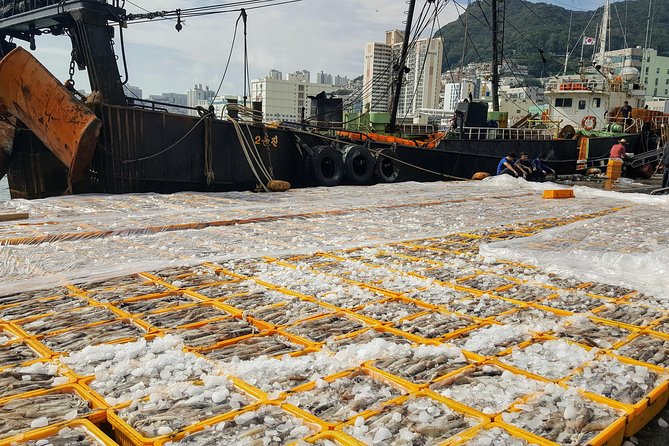
Jagalchi Market is Korea’s largest seafood market, and it’s famous throughout the country for one simple reason: it’s where fresh seafood is the main event. The market’s story ties to Busan’s post-war identity—after the Korean War, it became solid as a fish market. Today, it’s one of the fastest ways to get your bearings about the city.
You get about an hour here, which is enough to do three smart things:
- Walk the stalls and see what’s available
- Watch how seafood is sold and prepared
- If you want, eat fresh raw fish right at the market
If you’re sensitive to strong smells, you might still enjoy the viewing and skip the tasting. And if you’re a seafood fan, do the opposite: plan to try something here rather than saving your appetite for later. The longer you wait, the easier it is for the day to become “just sightseeing.”
Practical tip: bring cash or a simple payment method you trust. This tour doesn’t include food, so you’ll pay on your own at stops like this.
BIFF Square: Movie District Energy in a Short Stop
BIFF Square is where Busan’s modern movie district shows up. The area started as two cinemas built after Korea’s liberation from Japanese colonial rule, and later it became known for film culture. Even with only about 20 minutes allotted, it’s a good breather between busier food and coastal stops.
This is the sort of place where you get the vibe quickly. You can look around, take a few photos, and keep moving. Don’t expect a long museum-style visit. It’s more like a street checkpoint: a short walk that connects Busan’s entertainment identity to everyday city life.
Haedong Yonggungsa: A Coastline Temple You’ll Actually Remember
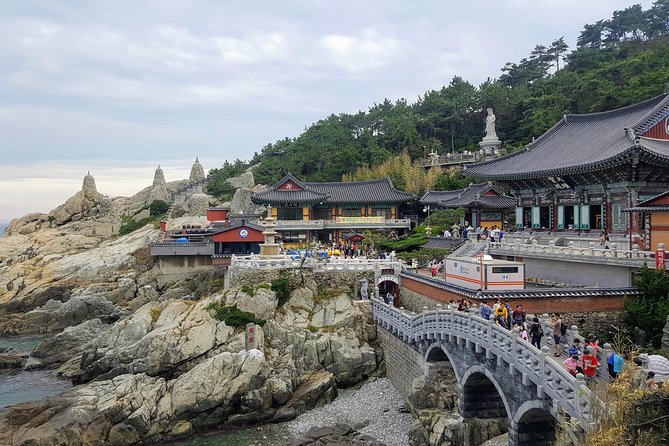
Haedong Yonggungsa is a standout because it breaks the usual pattern. Most Korean temples are up in the mountains, but this one sits along the coast in Busan’s north-eastern area. That shift changes the whole feeling. You don’t just look at temple buildings—you also get sea light, sea wind, and the sense that the ocean is part of the setting.
You’ll have about an hour here, which is enough time to:
- Take in the temple buildings without rushing
- Walk around for viewpoints facing the shore
- Sit for a moment and let the scenery do the work
The only “watch out” is timing and weather. Coastal temples can be windy, and if you’re visiting in hot weather, you’ll want water. Since food and drinks are not included on this tour, pack a plan for hydration.
Haeundae Beach: Classic Busan Coast Time
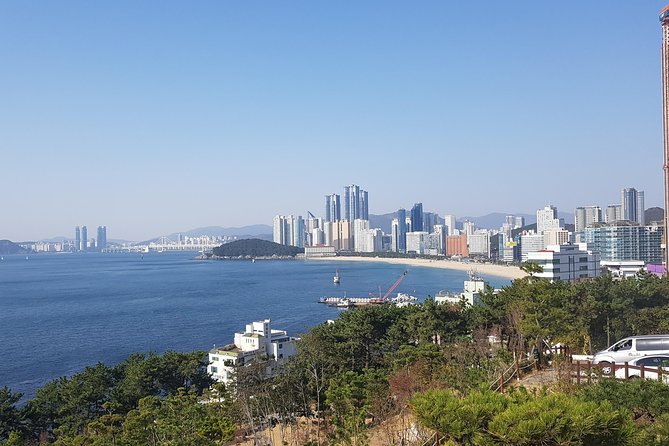
Haeundae Beach is Busan’s most famous beach, and the numbers help you understand why people talk about it. It’s roughly 1.5 km long and about 30 to 50 meters wide, forming a coastline before a shallow bay. That makes it one of the more swim-friendly beaches in the city.
Your time here is about an hour, so think of it as “coast reset” time. You’ll get:
- A walk along the shoreline
- Time to enjoy the bay views
- A break from markets and stairs
If you’re coming mainly for photos, focus on perspective. Stand where you can see the curve of the bay, not just the sand in front of you. If you’re hoping to swim, check conditions on the day and keep safety in mind.
Nurimaru APAC House and Dongbaek Island: Government-Era Architecture Meets Sea Views
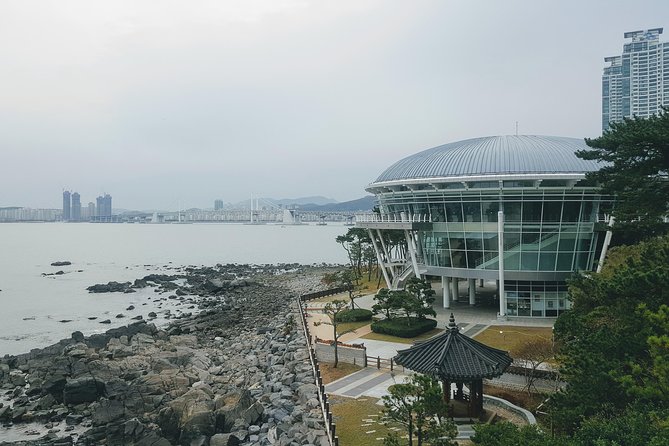
From Haeundae, you move to Nurimaru APAC House on Dongbaek Island. The name is linked to Camellia, with growth common around March—details like that give the place a seasonal feel. You’ll have about an hour here, so it’s enough time to see the viewpoint areas and take in the coastal setting.
This stop is less about hands-on activities and more about atmosphere: sea air, a shoreline walk, and the feeling that Busan can be both formal and scenic in the same hour. If you like architecture or you just enjoy seeing how cities place major buildings against natural views, you’ll probably appreciate it.
49 Tombstone Culture Village: When History Shows Up as Stairs
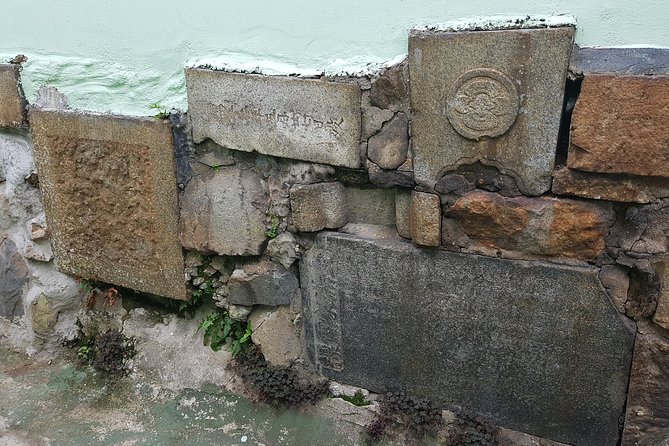
Stop 6 is listed as 49, and it’s different in a memorable way. The walls and stairs in this village are all tombstones. That’s why it’s connected to tombstone culture. People began living there in tents since 1951, so the site carries a strong human history, not just a photo-op layout.
You get about 40 minutes, and that’s the right amount. This is the sort of place where you should slow down and read the surroundings (as you can) instead of speeding through. The environment itself is the story—stone elements, stairways, and the unusual layout.
One consideration: the physical terrain can be uneven. If you have breathing issues, knee pain, or you tire quickly, tell Kyungae (or whoever guides your day) so you can plan a comfortable route through the area.
Busan Gamcheon Culture Village: Art From Refuge, Not Just Aesthetic
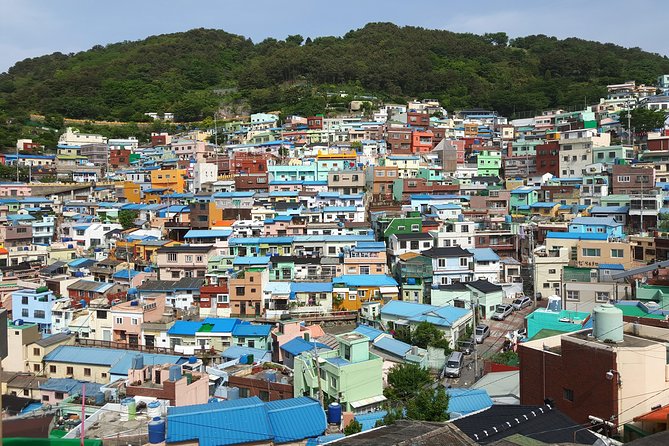
Busan Gamcheon Culture Village comes out of wartime history. It started as a refuge for people fleeing to Busan during the Korean War, and later it became a creative urban regeneration project beginning in 2010. The result is a patchwork of houses, painted textures, and street scenes that millions of visitors have come to recognize.
You’ll have about 40 minutes here. That time is short, but it can work if you focus on what you want most:
- If you like street photography, pick a couple of “viewpoints” and stick with them
- If you like storytelling, slow down near the areas that show how the neighborhood evolved
- If you just want to feel the mood of the place, keep it light and enjoy the wander
Gamcheon is one of those neighborhoods where the details can distract you—in a good way—but you still have to manage time because you’re cycling through the day’s other anchors.
Price and Logistics: Is $280.50 Per Person Worth It?
At $280.50 per person, this isn’t a budget “hop on a bus” day. It’s a private, guided outing with hotel pickup/drop-off and a private minivan. For me, the value comes down to this: how much you hate wasting time.
If you’re doing Busan by yourself, you’d need to spend real effort lining up transport, timing, and direction between coast stops, markets, and hillside villages. A private guide compresses all of that. You’re paying for reduced friction plus local context plus itinerary flexibility.
You’ll also save money on the hidden costs of stress: fewer wrong turns, fewer wasted hours, and someone watching the pacing so you can actually enjoy each stop. The main cost not included is food and drinks, so budget for meals and snacks. If you eat well during your market stop (or plan a lunch you enjoy), the day feels like a complete experience, not a string of quick look-backs.
If you’re traveling with others, ask about group discounts. Since the tour is private for your group, it can become more reasonable when you split the logistics.
Timing Tips for a Smooth 8-Hour Busan Day
This tour starts at 8:30 am. That early start matters because some of your stops are better before crowds and before midday heat. It also gives you a chance to get through the day without feeling like you’re rushing at the end.
Here are a few practical moves that match this exact route:
- Start your water plan early since food/drink isn’t included
- Expect stairs and uneven sections at least once (49 is a big hint)
- Wear shoes you trust for mixed surfaces
- If you have breathing or mobility concerns, say it at pickup so the guide can adjust parking and walking time
Also, since the tour is customizable, don’t be shy about requesting a tweak. If you want more time at Haedong Yonggungsa for photos, or less time in a street district, that’s the point of a private day.
Who This Tour Fits Best
This Busan private city day is especially good if you:
- Want to see the classic coastal highlights plus key neighborhoods in one day
- Prefer a guide and a driver over figuring it out yourself
- Like markets, temples with sea views, and art-filled village streets
- Have limited time and want a plan that starts early and runs efficiently
If you’re the kind of traveler who hates walking and stairs, you can still make it work, but you’ll need to communicate your limits up front. This route includes terrain that may be tough without pacing changes, and the best results come when your guide can reroute you for comfort.
Should You Book This Busan Shore Excursion?
If you want a guided, efficient Busan day with real local highlights—Jagalchi Market, the coastal temple of Haedong Yonggungsa, and creative neighborhoods like Gamcheon—this is a strong pick. The biggest reason to book is simple: private transport and a flexible guide help you spend your time enjoying places instead of solving logistics.
If you’re traveling on a tight budget and you don’t care about having an English-speaking guide or custom pacing, you might find cheaper options. But if you value comfort, time management, and a route designed to connect seafood, seaside, and history in one sweep, this private tour looks like a good use of money.
FAQ
What’s the duration of this Busan private city tour?
It runs about 7 to 8 hours.
Is hotel pickup and drop-off included?
Yes. The tour includes hotel pick-up and drop-off service.
What does the tour price include?
The price includes a 1-day private Busan city tour, a qualified English-speaking guide, private transportation in a minivan, and hotel pick-up & drop-off.
Are food and drinks included?
No. Food and drinks are not included, so you’ll want to budget for meals and snacks.
What time does the tour start?
The start time is 8:30 am.
Is the itinerary flexible?
Yes. The tour is fully customizable, and you can adjust the itinerary to include specific places in Busan.
Is there free cancellation?
Yes, you can cancel up to 24 hours in advance for a full refund.