REVIEW · SARDINIA
Cagliari Private Shore Excursion: Nora Archaeological Site and Pula Town
Book on Viator →Operated by Bitan Daily Tours · Bookable on Viator
Roman ruins meet Mediterranean calm in Nora and Pula. I love how round-trip private transfers cut the usual port stress, and I love that a private guide ties Phoenician and Roman details directly to the spots you’re walking through, from the Temple of Tanit in Piazza del Foro to Nora’s famous theater. It’s the kind of day where you actually understand what you’re seeing, not just photograph it.
One thing to plan for: Nora has uneven surfaces and exposed ruins, so wear comfortable, grippy shoes and don’t count on the site being stroller-friendly or totally flat. Also, if there are delays leaving the port, the schedule can get shortened to make sure you’re back on time for re-boarding.
In This Review
- Key things to know before you go
- From Cagliari cruise port to Nora: a smooth start that protects your time
- Nora archaeological site: where Phoenician, Carthaginian, and Roman stories show up in stones
- Thermal baths, cobbled streets, and the heart of the open-air museum
- Tophet discovery in 1889: why archaeology here started the way it did
- Aqueduct, necropolis, and the third-century nobleman’s house with mosaics
- The theater at Nora: the best photo point and a clue to how crowds once worked
- What you won’t see (and why that’s normal here)
- The Pula town stop: quick, pleasant browsing between ruins
- Transportation and pacing: private transfers that help you beat the cruise-day chaos
- Value check: what you’re paying for at $282.72 per person
- What to bring and how to get the most from the ruins
- Who should book this tour (and who might want a different plan)
- Should you book the Cagliari shore excursion to Nora and Pula?
- FAQ
- How long is the excursion?
- Where do we meet in Cagliari?
- Is pickup and drop-off included?
- Is this a private tour?
- What language is the tour in?
- Do I need to buy admission tickets?
- Is there Wi‑Fi on the vehicle?
- Does the tour skip long lines?
- What if my ship is late or I miss the tour?
- Can I cancel for a full refund?
- Do children need an adult?
Key things to know before you go
- Private guide time in Nora focused on the Phoenician, Carthaginian, and Roman layers you’ll see on the ground
- Skip-the-long-lines support plus port pickup and drop-off, which matters a lot on a cruise day
- Piazza del Foro + Temple of Tanit plus thermal baths and mosaics, all in a guided loop
- The theater at Nora, built to seat 1,000 and still used for La Notte dei Poeti
- A limited group size (max 8) that keeps the pace from turning into a stampede
- Extra time in Pula for charming alleys, craft shops, and a possible meal if timing allows
From Cagliari cruise port to Nora: a smooth start that protects your time
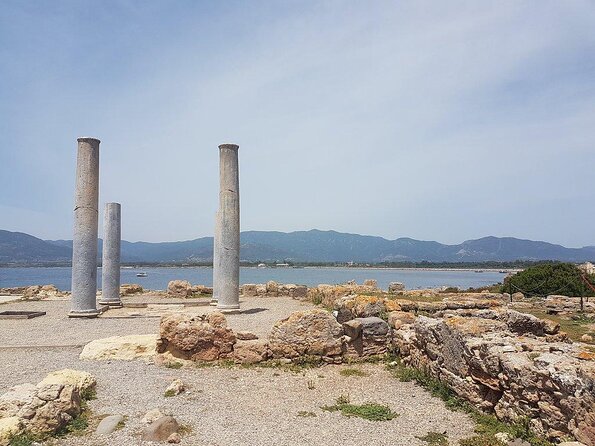
This is built for cruise schedules. You meet your guide in the Cagliari port area at Calata Azuni, then you’re off for a about 30-minute drive to Nora. That short, direct transit is a big deal when you’re working under ship time. Instead of searching for a bus, timing tickets, and negotiating transfers, you focus on the destination from minute one.
Expect the ride to be in an air-conditioned minivan. Wi‑Fi may be available depending on vehicle availability, but even without it, you’ll likely have a short window to get oriented. Your guide handles the pacing of the day, and the excursion is designed to finish back at the port meeting point so you can get back to the ship without drama.
You’re also not tied to a huge group system. The tour is capped at 8 travelers, and the operator mentions group discounts—which can help make private feel more reachable.
You can also read our reviews of more private tours in Sardinia
Nora archaeological site: where Phoenician, Carthaginian, and Roman stories show up in stones
Nora is an open-air site with a living backstory. It began as a Phoenician city and later became Roman—so your guide’s job is to keep those layers straight as you move through thermal baths, plazas, houses, and the big star: the theater. This is one of those tours where a good guide changes everything. Without context, ruins can look like scattered walls. With context, they start to act like a city map you can read.
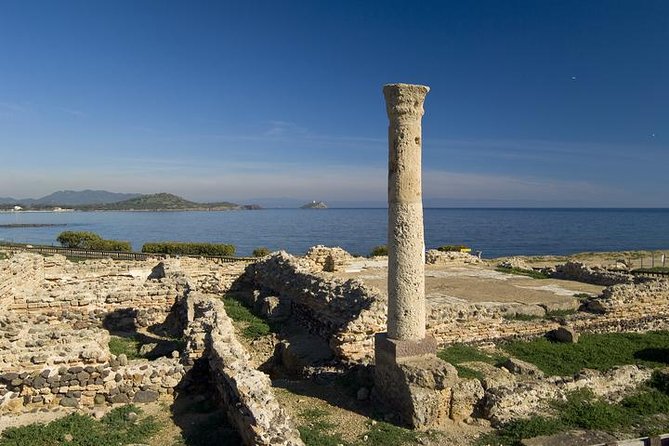
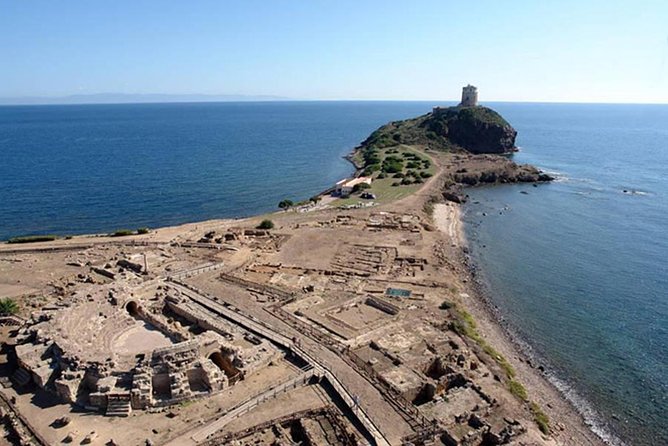
One of Nora’s most striking details is also a little sad: parts of the old town are submerged because southern Sardinia has been sinking into the Mediterranean. That means you’ll see evidence of a place that’s been altered by time and sea, not just by excavation. It gives the ruins extra emotional weight, and it also helps explain why some areas are only partially visible.
Your guided time in Nora is about 1.5 hours, and the visit is designed around the main areas you’d want on a first trip—especially Piazza del Foro, the Temple of Tanit, mosaics, and the theater viewpoint.
Thermal baths, cobbled streets, and the heart of the open-air museum
As you enter the archaeological zone, you’ll start near the thermal baths. It’s a useful warm-up, because baths explain daily life in a Roman-influenced city: spaces for routine, relaxation, and social time.
Then you follow a cobbled street toward the center: Piazza del Foro. This is the moment where the site feels like a town square rather than a ruin field. Around the plaza you’ll find the kinds of civic and religious structures that tell you what mattered.
Right in Piazza del Foro is the Temple of Tanit, tied to a Carthaginian goddess. That’s a key contrast point: Nora isn’t just Roman. It’s also part of a wider Mediterranean world where Phoenicians and Carthaginians helped shape local identity long before Roman rule.
Tophet discovery in 1889: why archaeology here started the way it did
A fascinating part of Nora’s story is the way it came to light. The site’s Phoenician Tophet—described as a cemetery for children—was uncovered after a storm in 1889 exposed it. That moment matters because it explains why excavations began and why Nora’s interpretation includes both legend and real evidence.
Your guide can help you make sense of what you’re seeing: where the sea disrupted the city, how the excavated areas connect to religious and civic life, and why some claims about the town’s origins are surrounded by colorful tradition. You don’t need to memorize dates. You just need a mental timeline, and your guide does that work for you.
Aqueduct, necropolis, and the third-century nobleman’s house with mosaics
Keep an eye out for the aqueduct and necropolis as you move through the site. These elements help fill out the city’s functioning—water access and burial practices—so the ruins feel less like isolated monuments.
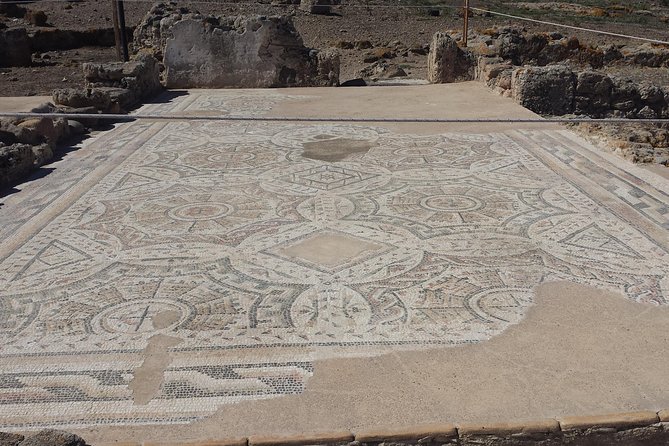
One of the most visually satisfying stops is the remains of a nobleman’s house from the third century, especially the mosaics in the rooms. Even if mosaics aren’t your main obsession, they’re the kind of detail that makes Nora feel real. It’s one thing to see a wall. It’s another to see decorative work meant to impress guests and reflect status.
A few more Sardinia tours and experiences worth a look
The theater at Nora: the best photo point and a clue to how crowds once worked
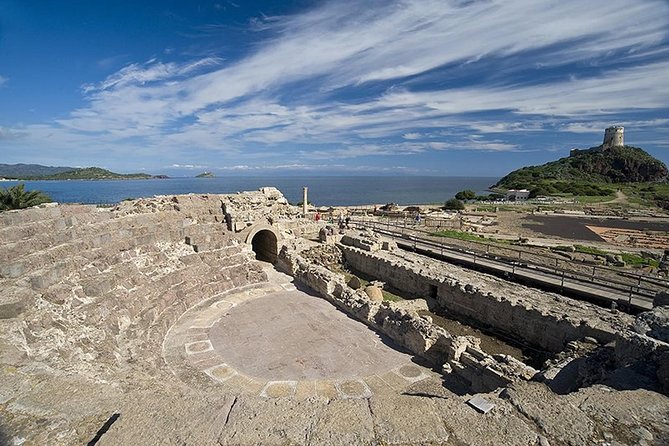
Nora’s headline is the theater, and it’s not a small one. In its day it was lined with marble and could seat about 1,000 people across 20 terraces. Now, much of the structure still stands, and the theater helps you picture Nora as an active trading city, not a place frozen in time.
This theater also has modern relevance. It hosts La Notte dei Poeti, a festival. There’s one practical note here: during festival periods, the theater is covered to protect the ruins. So if you’re visiting during festival season, you might see the theater differently than in a normal day.
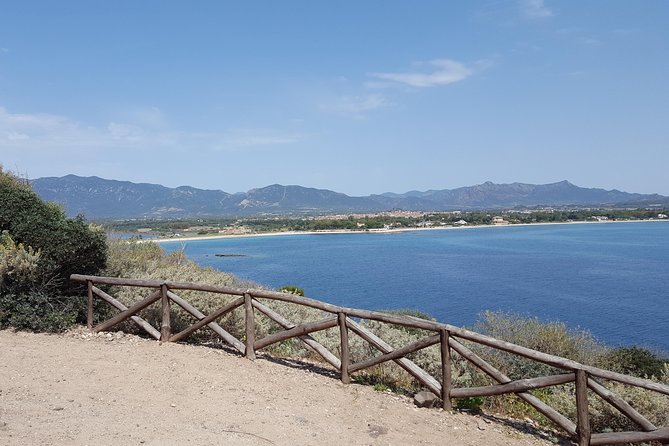
Even without the festival atmosphere, the viewpoint is powerful. Looking out toward the golden sands and the crystal waters nearby makes Nora feel like it’s holding two moments at once: ancient civic life and the Mediterranean present.
What you won’t see (and why that’s normal here)
Here’s a helpful expectation-set: even with a focused 1.5-hour guide walk, much of Nora remains unexcavated. That’s not a problem with your tour. It’s how archaeological sites work. Excavation takes time, funding, and careful preservation. The result is that Nora can feel “partial” in places, but your guide helps you connect the visible pieces into a bigger story.
The Pula town stop: quick, pleasant browsing between ruins
After Nora, you head to Pula, with about 90 minutes in town. This isn’t a long meal stop or a full shopping spree. It’s enough time to reset your legs and still enjoy the local vibe.
Pula is described as having charming alleys and patrician homes, plus craft shops where you can shop for souvenirs without feeling trapped in tourist-only retail. If your timing lines up, there may also be a chance to enter a traditional restaurant—but this depends on what’s left in the schedule.
This stop is worth it because it balances the day. You go from ancient stone to living streets. And if you’re the kind of traveler who likes to bring a place home with you, browsing the craft shops is a practical use of the time you have before heading back to the ship.
Transportation and pacing: private transfers that help you beat the cruise-day chaos
On a cruise, the biggest risk is not the ruins. It’s time. This tour is designed to keep the day on track with port pickup and drop-off and round-trip private transfers.
You’ll also see the language promise: the tour is offered in English. That matters here, because Nora’s story layers are not simple. You’ll get clear explanations about Phoenician origins, Carthaginian religious references (like Tanit), and Roman urban life. With a private guide, you can ask questions and get responses tied to specific places you’re standing in.
A final logistics win: the operator includes insurance and says they guarantee to skip the long lines. Line-skipping isn’t just convenience. It’s how you protect that last hour so you don’t end up rushing through the best parts.
Value check: what you’re paying for at $282.72 per person
At $282.72 per person, this is not a budget group tour. The value comes from the mix of:
- Private transfers with port pickup and drop-off
- A professional guide spending focused time in Nora
- Admission included for the archaeological area
- Skip-the-line handling, which is high-value on a cruise day
- A small group cap (max 8) that makes the day feel more personal
If you’re traveling with at least one other person, private often starts to feel more reasonable because the vehicle and guide time aren’t spread across dozens of strangers. If you’re a solo traveler, you still may find it competitive compared with other ways to do Nora + Pula effectively without wasting hours on independent logistics.
So the key question is: do you want a guide-led explanation in Nora? If yes, the price makes sense. If you’re comfortable exploring archaeology with minimal guidance and you’re okay managing tickets and timing on your own, then you might compare costs with self-guided options. But on a cruise schedule, this tour’s structure is its biggest selling point.
What to bring and how to get the most from the ruins
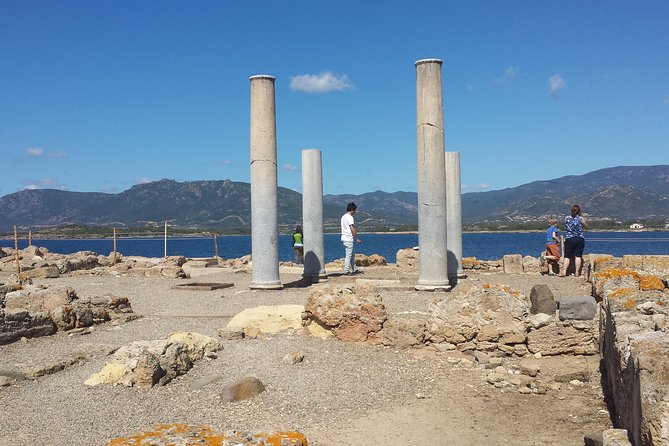
This part is simple but important. Nora is an open-air site with cobbled streets and uneven ground. Bring footwear that won’t slip on stone. Add sun protection, because Sardinia can be bright, even when it feels pleasant in the shade.
Also, you’ll be switching between heavy walking and a town stroll in Pula. Keep a light layer in case the coastal air cools off later in the day.
When it comes to photos, focus on these likely standouts:
- Piazza del Foro for the “city center” feel
- Temple of Tanit for religious-site context
- The theater for scale (and for imagining the terraces and audience)
- The view edges where the sea meets the ruins
And do yourself a favor: don’t treat Nora like a checklist. Let the guide’s story build your mental picture before you start shooting everything. It makes the whole site click.
Who should book this tour (and who might want a different plan)
This works best for you if:
- You want a private guide and a coherent explanation across multiple historical layers
- You’re on a cruise timetable and want low-risk logistics
- You prefer a smaller group and a calmer pace
- You want Nora’s big hits plus a quick, pleasant taste of Pula
You might skip it if:
- You only want the ruins at your own pace and don’t care about context
- You’re not interested in a guided stop in Pula
- You’re extremely sensitive to walking on uneven surfaces
Should you book the Cagliari shore excursion to Nora and Pula?
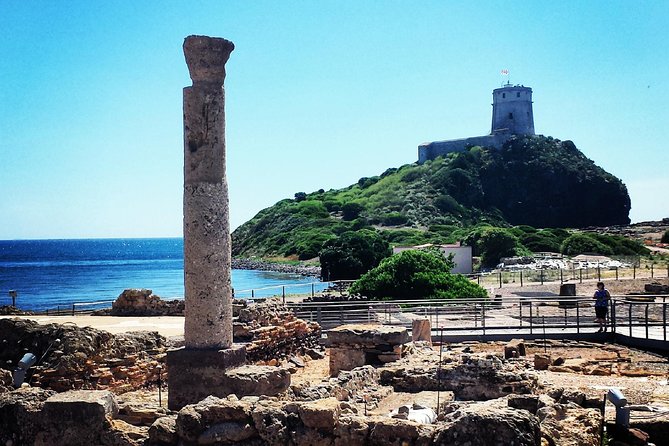
If you’re doing Nora in limited time, this is one of the more sensible ways to do it. The biggest payoff is the private-guide format: you’re not guessing what you’re looking at, and you’re not losing cruise hours to ticket lines or transfer confusion. Nora’s theater, the Temple of Tanit in Piazza del Foro, and the mosaic highlights in the nobleman’s house are the kind of experiences that feel far better when someone can connect the dots.
My quick decision rule: if you care about understanding what Nora was—Phoenician roots, later Carthaginian influence, then Roman urban life—book this. If you’d rather wander and read on your own, compare alternatives and decide based on how much guidance you personally want.
FAQ
How long is the excursion?
It runs about 5 to 6 hours total, depending on the day and cruise timing.
Where do we meet in Cagliari?
The meeting point is Calata Azuni, Cagliari CA, Italy.
Is pickup and drop-off included?
Yes. Port pickup and drop-off are included, and you return back to the meeting point.
Is this a private tour?
It’s a private shore excursion with a private transfer and a professional tour guide, with a maximum group size of 8 travelers.
What language is the tour in?
The tour is offered in English.
Do I need to buy admission tickets?
Admission for the Area Archeologica di Nora is listed as included. Other stops like the Cagliari and Pula segments are listed with admission ticket free.
Is there Wi‑Fi on the vehicle?
Wi‑Fi may be available on the air-conditioned minivan due to availability.
Does the tour skip long lines?
Yes. It includes a guarantee to skip the long lines.
What if my ship is late or I miss the tour?
The policy states that refunds will not be issued if the tour is missed due to late or non-arrival of the cruise ship.
Can I cancel for a full refund?
Yes. You can cancel up to 24 hours in advance for a full refund.
Do children need an adult?
Yes. Children must be accompanied by an adult.