REVIEW · CASABLANCA
Rabat and Casablanca Shore Excursion
Book on Viator →Operated by TOP TRIP MOROCCO · Bookable on Viator
Rabat and Casablanca in one day? Yes. This shore excursion is interesting because it pairs Morocco’s political capital feel with Casablanca’s ocean-side modern energy, all with a single day plan and a driver who keeps the day moving. I like that you get air-conditioned transport plus Wi‑Fi to manage comfort during the long drive.
I especially like the mix of big-name sights and quick, story-filled stops. You’ll see the Hassan II Mosque from the outside (a must in Casablanca), then shift to Rabat’s Kasbah des Oudaias and other UNESCO-listed places.
The main drawback is budgeting your timing and extra entries. The Hassan II Mosque entrance and the Chellah ticket are not included, and the day feels full because you’re combining two cities with up to 3 hours of travel between them.
In This Review
- Key things I’d plan around
- The big idea: why this Casablanca and Rabat day works
- Casablanca first (or Rabat first): how the day gets sequenced
- Hassan II Mosque and the Atlantic-facing approach
- Rick’s Café stop: short film-fan energy, no long detours
- Corniche and Ain Diab: sea air and the hotel strip vibe
- Notre-Dame de Lourdes Church: modern lines and huge stained glass
- Quartier Habous: older Casablanca feel with a shopping-and-culture pulse
- Square of Mohammed V: a quick pause with local energy
- Rabat’s Kasbah des Oudaias: river mouth views and UNESCO vibes
- Royal Palace of Rabat: you’ll see the seat of power from the outside
- Hassan Tower and the unfinished ambition of the 12th century
- Chellah (tickets extra): Roman ruins above a medieval necropolis
- Extra fees and the money math for this tour
- Service quality: what the best days usually feel like
- Who this shore excursion is best for
- Should you book Rabat and Casablanca Shore Excursion?
- FAQ
- What is the duration of the Rabat and Casablanca shore excursion?
- What time does the tour start?
- Where does the tour pick up and drop off?
- Are tickets for the Hassan II Mosque included?
- Is Chellah admission included?
- Is Royal Palace of Rabat admission included?
- What’s included in the price besides the tour itself?
Key things I’d plan around
- A true Casablanca-to-Rabat combo: the day is built to cover both cities without you juggling taxis.
- Comfort during the drive: A/C plus Wi‑Fi in a car or van with a multilingual driver.
- Hassan II Mosque exterior timing: you’ll see the ocean-facing setting, but entrance is extra.
- Rabat’s UNESCO hits: Kasbah des Oudaias and Chellah are the big Rabat anchors.
- Old medina and market texture: Habous gives you the older Casablanca feel beyond the waterfront views.
- Small groups: up to 20 travelers, which helps the pacing when you’re moving through crowded areas.
The big idea: why this Casablanca and Rabat day works
If your cruise stop gives you one day, this kind of routing is hard to beat. You’re not just seeing one city’s highlights. You’re getting a side-by-side view of how Morocco balances administration and heritage in Rabat, with Casablanca’s wide streets, sea air, and landmark architecture.
The logistics also matter. The tour starts at 8:00 am and runs about 9 hours, and you’re picked up and dropped back at the Casablanca port area. That reduces the usual stress of figuring out local transport while you’re on a cruise schedule. You also get unlimited fresh water, which sounds small until you’re walking in heat with a tight timeline.
The other reason it works is the driver setup. You’re traveling with a professional driver, and they’re multilingual. That helps when you’re trying to understand what you’re looking at—especially in Rabat, where sites often feel layered (Roman ruins below, medieval necropolis above).
A few more Casablanca tours and experiences worth a look


Casablanca first (or Rabat first): how the day gets sequenced
The excursion can start in either city. In practice, that means you should expect your first half day to be one city’s core sights, then you swap to the other city for the second half.
Given the drive time—up to 3 hours between Casablanca and Rabat—the key is not trying to “win” the day with extra sightseeing. Instead, let the schedule do the heavy lifting. Your best move is to wear comfortable shoes and treat this as a highlights day where your photos and impressions come first, then you build your return-trip ideas later.
Also, remember that some famous places here are visual first. For example, the Hassan II Mosque stop is an exterior experience. That’s actually useful for cruise days: you get the best setting and angles without turning your schedule into a ticket line battle.
Hassan II Mosque and the Atlantic-facing approach
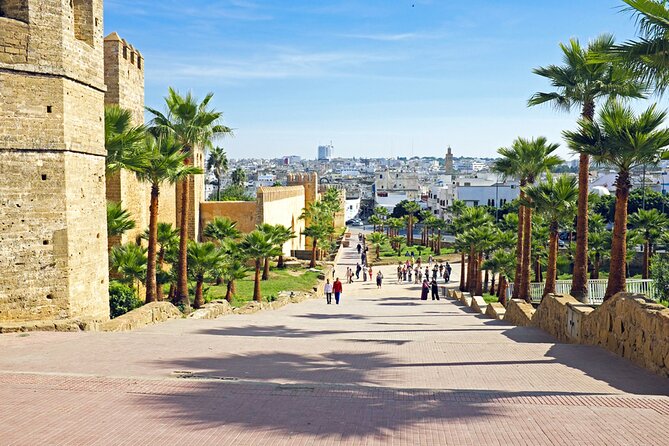
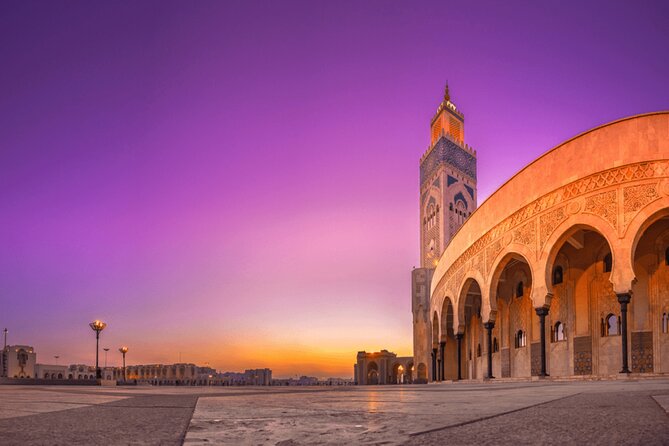
The star in Casablanca is the Hassan II Mosque. Even from the outside, it’s dramatic. It’s built on a promontory over the Atlantic Ocean, so the architecture feels tied to the sea instead of sitting inland. The mosque’s minaret reaches 210 meters, making it the second tallest functioning minaret in the world. Construction wrapped up in 1993, guided by King Hassan II and designed by Michel Pinseau.
One detail that helps you appreciate the scale: it was built by Moroccan artisans from across the country. The minaret also has a laser light element aimed toward Mecca. When you’re standing near it, that’s the kind of design choice that makes the mosque feel more like a national project than a local one.
Practical note: entrance tickets are not included, so plan to see the outside and enjoy the setting. If you want to go in, you’ll need to pay the entry fee separately. That’s the main way this stop can shift your timing, so ask your guide what the best approach is for your day.
Rick’s Café stop: short film-fan energy, no long detours
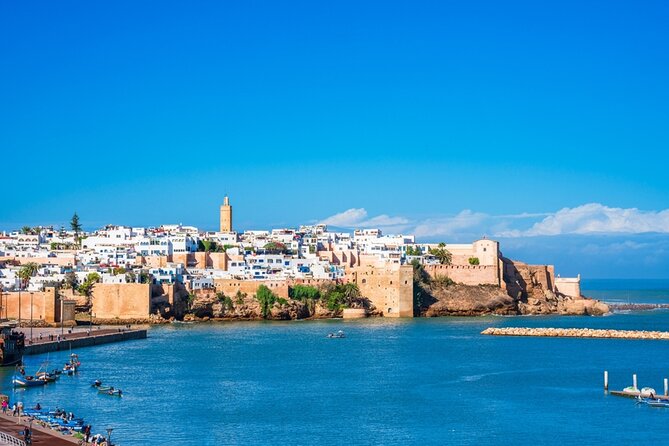
From the mosque, the itinerary includes a brief stop at Rick’s Café, designed to evoke the classic bar from the movie Casablanca. It opened March 1, 2004, and the idea here is less about food and more about the atmosphere.
This is the kind of stop I recommend treating like a photo and orientation moment. It’s quick enough that it doesn’t hijack your day, but it gives you a pop-culture pause in the middle of architectural touring. If you want to linger, just know you’ll be trading time from other sites.
If you’re traveling with people who love film trivia, this stop earns easy points. If you’re traveling purely for architecture, you can keep it brief and focus on the next real streetside neighborhoods.
Corniche and Ain Diab: sea air and the hotel strip vibe
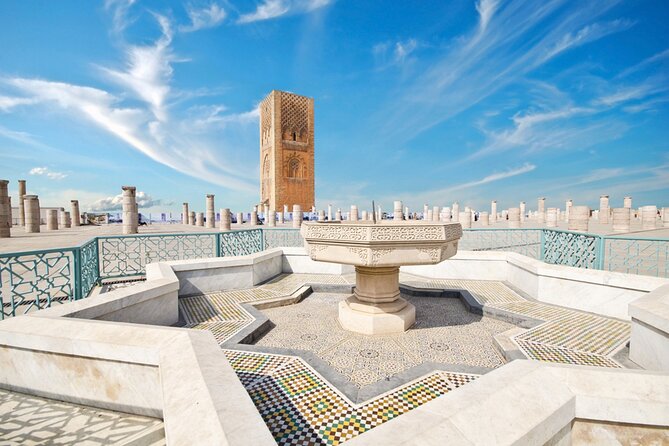
Next comes the Corniche, with stops along the Ain Diab area. This is where you see the Casablanca coastline as locals and visitors experience it—hotels, restaurants, and beach zones along the water.
There’s also a practical geographic detail worth knowing: there’s mention of the island of Sidi Abderrahman, connected to the mainland by a bridge. So while you’re not doing an island boat trip on this excursion, you are seeing how the city is arranged around water and reach.
This stop is usually best for photos and for a mental reset. On a long day, you want one part where you’re not scanning details of old stone architecture. The Corniche gives you that.
Notre-Dame de Lourdes Church: modern lines and huge stained glass
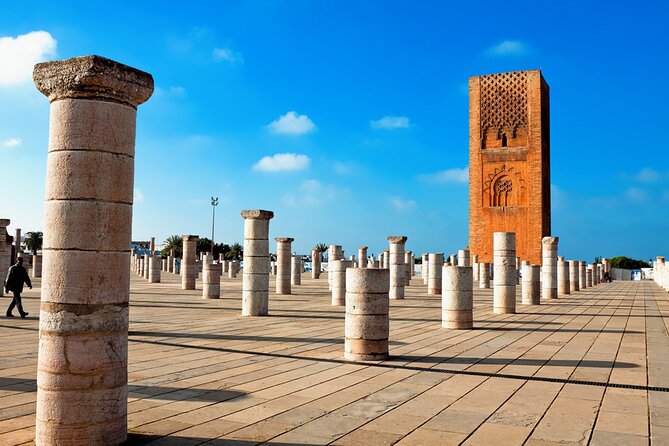
Casablanca also includes a stop at the Church of Notre-Dame de Lourdes. This one is a quick architectural break with a very specific visual payoff: large stained-glass windows totaling over 800 square meters.
The church’s construction is described as having a concrete exterior with a colorful interior contrast. Built in 1954, it’s also presented as a peaceful landmark. Even if you only spend a short time inside or near it, you get a change of pace from mosque architecture and market streets.
This stop is particularly handy if your group includes people who want a calm, indoor moment—just be ready for stained glass to draw attention fast, so keep your timing tight.
Quartier Habous: older Casablanca feel with a shopping-and-culture pulse
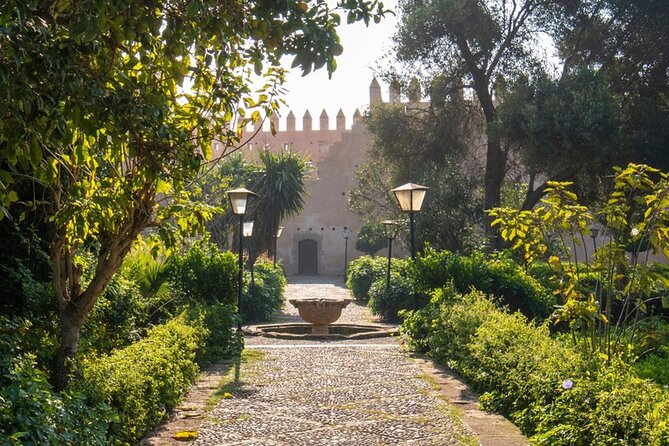
One of the best “not just monuments” stops is Quartier Habous (often called Hubous). The area developed starting around 1916, during the early French protectorate period. It’s described as a cultural and religious center, and it hosts the Moroccan Ministry of Islamic Affairs.
What you’ll notice quickly is the shopping-and-galleries rhythm: bookstores with important Moroccan and Arabic publishing houses, plus traditional historic buildings. This is the kind of place where you get to see everyday Casablanca texture, not only the city’s famous must-sees.
It also works well for photos because you’re walking through an actual neighborhood feel. The downside? It can be busy, and it’s easy to slow down. If you’re trying to stay on schedule, keep your “browse time” in your head.
Square of Mohammed V: a quick pause with local energy
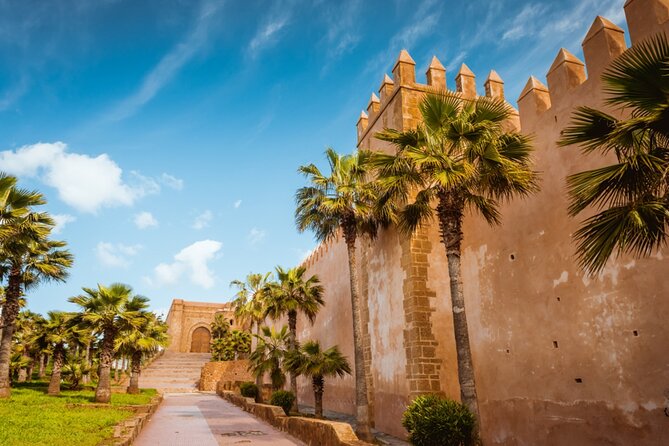
A short stop at Mohamed V square is part of the plan. It’s described as the heart of the city, with pigeons all around, which makes it a familiar, relaxed scene for photos.
This is a good break before the day turns more historic. Think of it as a place to drink water, check your bearings, and get ready for Rabat’s UNESCO-heavy stretch.
Rabat’s Kasbah des Oudaias: river mouth views and UNESCO vibes
Once the day shifts to Rabat, you’ll get the Kasbah des Oudaias, described as a UNESCO heritage site near the mouth of the Abu Regrag river. The positioning matters: this isn’t a random old neighborhood. It’s a river-and-ocean edge location, so the mood changes as you move through the area.
It’s also described as hiding a history shaped by events across time. For you, that means you’re not just ticking off a name. You’re walking in a setting that has a “port city at the edge” feel, even when you’re far from the ocean beach in pure distance.
The stop is free with no ticket listed, which is another scheduling win. When you can enjoy Rabat without paying another fee right away, your day stays under control.
Royal Palace of Rabat: you’ll see the seat of power from the outside
The excursion also includes a stop at the Royal Palace of Rabat. The official name given is El Mechouar Essaid, which translates to Venue of Happiness. It’s the primary official residence of the king of Morocco in Rabat.
This stop is marked as having admission included, so you’re not guessing whether you need separate entry money. You also get a sense of how Rabat reads as an administrative capital: the scale, the formality, and the way the area is organized.
A note on expectations: palace sights on a cruise day tend to be about exterior viewing and orientation. You’ll learn the importance of the place, even if you’re not exploring rooms.
Hassan Tower and the unfinished ambition of the 12th century
Then you’ll head to Hassan Tower, described as a historic building intended to be the greatest mosque of the 12th century in Rabat. The idea here is that you’re seeing a fragment of a larger plan—an architectural “what might have been” that gives the site emotional weight.
The tower is listed as a free admission stop, so it’s easy to fit into the day without adding a ticket step. It’s also the kind of place that benefits from slowing down for a minute. Look up, then look across. Even when you only stay briefly, the tower helps you understand Rabat’s historical intention.
Chellah (tickets extra): Roman ruins above a medieval necropolis
Chellah is the Rabat stop that brings the UNESCO weight. It’s described as a UNESCO World Heritage Site (listed in 2012), and it’s presented as Rabat’s most popular tourist attraction.
This is also where the layering shows up clearly: the site includes Roman ruins and a medieval Muslim necropolis. That combination is a big part of why Chellah works as a final “wow” stop in Rabat. You see how long people have been marking this land.
Here’s the main consideration: Chellah ticket fees are not included. So you’ll want to budget that cost and be ready for a line or entry step. Since the day is already full, the best move is to keep your phone charged and your time expectations realistic.
Extra fees and the money math for this tour
From the tour details you have, you should plan for at least two paid-entry possibilities:
- Hassan II Mosque entrance is not included.
- Chellah ticket fees are not included.
What is included:
- Royal Palace of Rabat admission is included.
- Other major sites listed (like Kasbah des Oudaias and Hassan Tower) are free in the tour’s stop notes.
So how does that affect value? The base price is $146.82 per person, and you’re getting big-ticket logistics: port pickup and drop-off, A/C vehicle with Wi‑Fi, a professional multilingual driver, plus a full-day combo schedule. For many cruise passengers, that’s the real cost advantage: you’re paying to avoid a day of private transport planning and timing risk.
But if you know you want to go inside Hassan II Mosque and spend extra time at Chellah, your final day cost will rise. Still, the tour’s price buys the structure, pacing, and translation support that would otherwise take planning time you might not have.
Service quality: what the best days usually feel like
The reviews included praise for the customer service approach and for how the guides handled real-life timing. One highlight was having an engaging guide named Mohammad, who reportedly stayed friendly and informative while making sure the group felt taken care of.
Another strong service detail was flexibility when plans changed. The operator adjusted the tour time when someone arrived later than expected, instead of treating it like a lost cause. That kind of attitude matters because cruise days are rarely perfect.
Also, the company response style in the reviews suggests you’ll get quick answers to questions before your tour date, which helps you decide with less stress. For your day, that translates into fewer surprises once you step off the ship.
Who this shore excursion is best for
This is a good fit if:
- You want a high-coverage day that combines two cities without organizing transport.
- You like architecture and big landmarks but still want at least one neighborhood stop like Habous.
- Your group values a guide who can explain what you’re seeing and keep the day moving.
It might be less ideal if:
- You prefer slow sightseeing with lots of free time in one place.
- You hate extra entry fees and would rather have everything fully included.
Should you book Rabat and Casablanca Shore Excursion?
I’d book it if your cruise schedule gives you one shot and you want both Casablanca and Rabat in a single, organized day. The included transport comfort (A/C plus Wi‑Fi), the small group size (max 20), and the port pickup/drop-off make it feel built for cruise realities.
The decision hinge is your entry preferences. If you’re fine with seeing the Hassan II Mosque from outside and adding budget for the mosque and Chellah tickets if you want more, this tour’s structure is a strong value. If you know you want an unbroken, ticket-free day, then look for a version that includes more entrances.
FAQ
What is the duration of the Rabat and Casablanca shore excursion?
It runs about 9 hours, with travel time of up to 3 hours between Casablanca and Rabat.
What time does the tour start?
The start time is 8:00 am.
Where does the tour pick up and drop off?
It includes Casablanca port pick-up and drop-off, and the meeting point is listed at Port de pêche Casablanca restaurant (JC58+735, Casablanca 20290, Morocco). The tour ends back at the meeting point.
Are tickets for the Hassan II Mosque included?
No. The Hassan II Mosque entrance ticket fees are not included.
Is Chellah admission included?
No. Chellah ticket fees are not included.
Is Royal Palace of Rabat admission included?
Yes. The Royal Palace of Rabat stop is listed as having admission included.
What’s included in the price besides the tour itself?
You get a Casablanca & Rabat combo tour, A/C with Wi‑Fi in a car or van with a multilingual driver, a professional driver, and unlimited fresh water. Food, tips, and the non-included admissions are not part of the package.