REVIEW · KOCHI
Kochi Offbeat Shore Excursion-4 Hour Old Kochi Heritage Tour with Private Guide
Book on Viator →Operated by Iris Holidays · Bookable on Viator
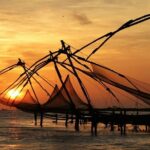
That morning light on the Fort Kochi coast sets the tone. This 4-hour Kochi heritage tour strings together sea, markets, temples, and everyday arts like kolam in a tight route that’s easy to pull off during a short stay.
I especially like how it mixes famous landmarks with the small, practical stuff you’d miss on your own: Chinese fishing nets up close (including a chance to try), and a hands-on kolam demonstration by women from a Brahmin ancestral home. The other big win is value for time—entrance fees are included, and you’re driven between stops with an English-speaking guide keeping the story clear.
One thing to consider: it’s not a long, slow linger. You’ll cover a lot in about four hours, so if you want extra time at places like St. Francis Church or the Dutch Palace, you may need to add it separately.
In This Review
- Key Things You Should Know Before You Go
- Getting Oriented Fast: Fort Kochi in 4 Hours
- The Chinese Fishing Nets: More Than Just a Photo Stop
- Dutch Cemetery and Fort Emmanuel: A Walk Through Colonial Footprints
- Manjal Bhagvati Temple Lane: Beachside Quiet and Temple Details
- Markets in Kochi: Watching Food Work Up Close
- Tirumala Devaswom Temple (Outside) and the Rice Granary Palace
- Sarpa Kavu Snake God Park: Respectful, Strange, and Memorable
- St George Orthodox Koonan Kurish Old Syrian Church: Relics and Architecture
- Mattancherry + Princess Street: Color, Walkability, and Layout Clues
- The Kolam Demonstration: The Art You’ll Notice Back in Your Own Photos
- Price and Value: Is $68.39 Worth It?
- Who This Tour Suits Best
- Should You Book This Kochi Shore Excursion?
- FAQ
- What is the duration of the Kochi Heritage tour?
- What time does the tour start?
- Where do I meet the guide?
- Is hotel pickup and drop-off included?
- Is this a private tour?
- How many people are in the group?
- What entrance fees are included?
- What is included in the experience besides sightseeing?
- Are food and drinks included?
- Which major attractions are not included automatically?
Key Things You Should Know Before You Go
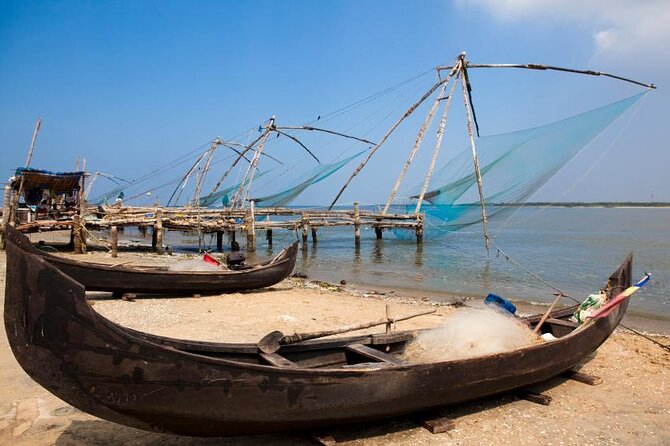
- Chinese fishing nets at Fort Kochi with history, views, and a try-it fishing moment
- Temples + relics at the St George Orthodox Koonan Kurish Old Syrian Church
- Food markets in Kochi where you’ll see how common items are made
- Kerala coconut tools demo for dehusking, winnowing, and everyday food work
- Sarpa Kavu snake deity park with representations of snake gods and a respectful visit
- Kolam making by women using colored rice flour patterns outside Hindu homes
Getting Oriented Fast: Fort Kochi in 4 Hours
Kochi can feel layered in a good way. One lane says Portuguese, another hints at Dutch rule, and then you’re right back in Hindu temple rhythm. This tour is designed for that “quick map + real experiences” problem: you start with a major visual anchor (the Chinese fishing nets) and then build outward.
The route also works well if you’re on a cruise. There’s pickup from the Cruise Ship Terminal, and you meet at Ernakulam Wharf (Willingdon Island). After the tour, you return to that same meeting area, or you can upgrade to hotel pickup and drop-off if you’re staying farther in town.
You don’t need to be an art buff or a temple expert. The guide translates what you’re seeing into plain language and ties it together with how multiple communities helped shape Kochi over time—Hindu, Christian, Arab, Dutch, and British influences show up in the way buildings, food culture, and religious sites all sit side by side.
You can also read our reviews of more tours and experiences in Kochi.
The Chinese Fishing Nets: More Than Just a Photo Stop
Your morning begins at the Chinese fishing nets in Fort Kochi. These aren’t just scenery. You get a short history lesson first, which matters because the nets make more sense when you know the story behind them and why they’re such a Kochi landmark.
Then comes the fun part: you watch how things work and you’re given the chance to try fishing in the nets. Even if you’ve never done it before, it’s one of those experiences that turns a “sight” into something you remember.
Time tip: this stop runs about 45 minutes. If you’re the type who always needs the best angle, arrive ready to move your feet quickly for photos. The best shots tend to be close to the action rather than far across the water.
Dutch Cemetery and Fort Emmanuel: A Walk Through Colonial Footprints
After the nets, the tour heads along the coastal history trail, including the Dutch Cemetery and Fort Emmanuel. You don’t need a deep background to enjoy this part, because the value here is visual and human.
Cemeteries and fort sites can feel heavy, but they also make the timeline real. You’ll see how Kochi’s maritime importance pulled European powers in, and why later architecture and street layout still echo those eras.
This segment is part of what makes the tour feel “heritage-focused” without turning into a lecture. You’re walking through layers of the city rather than only checking off names.
Manjal Bhagvati Temple Lane: Beachside Quiet and Temple Details
Next you’ll walk through a beach lane to the Manjal Bhagvati temple. This is one of those places where the atmosphere changes as you move from open seascape to a more local worship setting.
A standout here is that you get time to slow down enough to notice details. You’re not just passing by; you’re being shown what the spaces are for, and your guide helps connect the temple to the broader story of Kochi’s mix of cultures.
Henna note: there’s also a chance to get henna nearby if you want it, but that’s listed as own expense in the tour flow. Separately, the tour inclusions also mention henna for ladies in the group at a local house. So expect at least one henna opportunity as part of the day, with other options possibly costing extra if you choose them.
If henna is on your list, go early in the day so you don’t feel rushed later.
Markets in Kochi: Watching Food Work Up Close
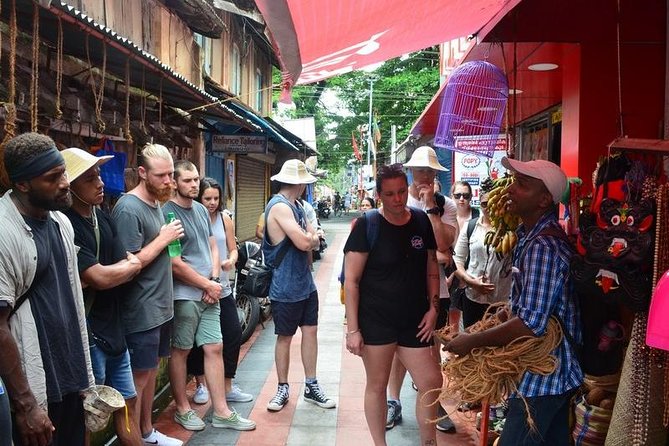
Then you’re into the heart of everyday Kochi with a local market stop. This is one of the most useful parts of the tour because it shows you food as a process, not just a product.
You’ll wander colorful stalls and see how some common foods are made. There’s also an emphasis on the tools and technique behind Kerala cuisine and food habits—this isn’t about tastings in a strict sense, but more about understanding the workflow.
A related stop includes a demonstration of tools used for coconut dehusking, winnowing, and other food-related tasks. That kind of practical demo makes the market visit feel grounded. You start recognizing ingredients and processes you’d otherwise ignore.
If you’re hungry: food and drinks are not included unless specifically stated, so plan to buy something you want rather than expecting the tour to feed you. The markets are a great place to pick a snack that fits your tastes.
You can also read our reviews of more private tours in Kochi
Tirumala Devaswom Temple (Outside) and the Rice Granary Palace
The tour then moves to Tirumala Devaswom Temple, viewed from the outside. You’re not expected to go deep into formal worship here, but you still get the context and the chance to understand why the temple matters to the area.
From there, you’ll see a palace area with large rice granaries. Grain storage is a practical marker of power and prosperity. It’s also a reminder that Kochi’s wealth didn’t come only from ships and spice trade—food security was huge too.
This combination—temple space plus food-storage architecture—keeps the day from becoming one-note sightseeing. You get to see religion and daily survival as part of the same city story.
Sarpa Kavu Snake God Park: Respectful, Strange, and Memorable
One of the most distinctive stops is Sarpa Kavu, the Abode of Snakes. The site includes representations of snake deities, and it’s believed to be inhabited by snakes.
Even if you don’t buy into the belief side, you can still appreciate the cultural purpose: this is a place where myth and local practice meet. It’s not presented as a thrill ride. Your guide frames it in a respectful, informative way, and you’ll want to treat the space accordingly—quiet, observant, and mindful of how people behave there.
Time at this kind of site can feel short because the experience isn’t about rides or big crowds. It’s about symbols, meaning, and atmosphere.
St George Orthodox Koonan Kurish Old Syrian Church: Relics and Architecture
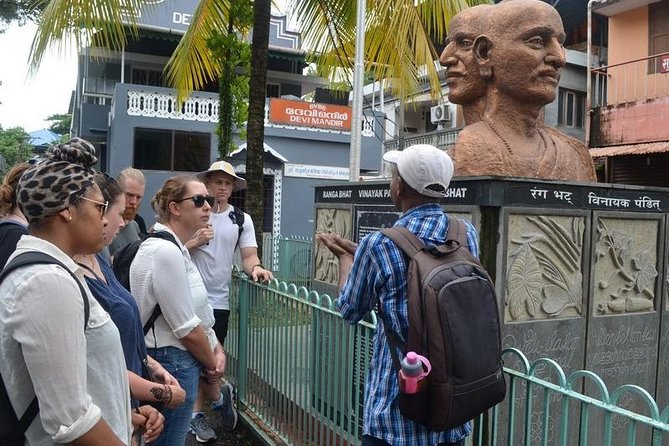
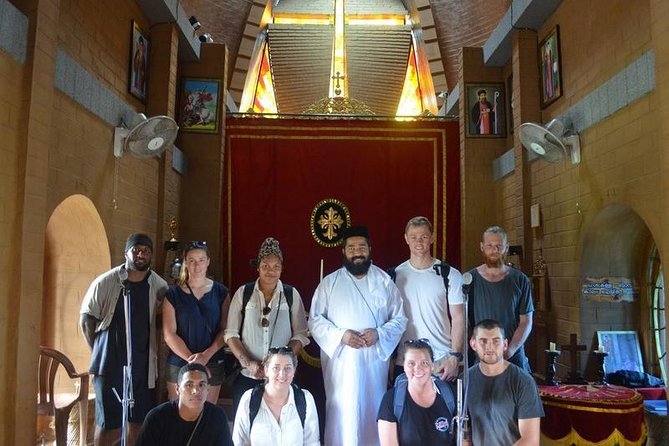
Next comes a major religious and historical highlight: the St George Orthodox Koonan Kurish Old Syrian Church (Koonankurishu Pally). This is a church visit where you’ll see architecture and learn the significance of the site.
A key detail: the church stores the relics of St. George. That alone makes it more than an old building. The atmosphere around relics tends to bring a different kind of attention from visitors and locals alike.
The tour also ties this church into the broader mixed-community story of Kochi. You’ll hear how Christian, Arab, and European influences intersected with local traditions over the years.
This stop is listed at about 30 minutes, which is enough to see the core and absorb the basics without feeling like you got dragged through on a schedule.
Mattancherry + Princess Street: Color, Walkability, and Layout Clues
After the church, you go into Mattancherry and walk through Princess Street in Fort Kochi. This part is valuable because it helps you connect the heritage you saw (nets, forts, temples) with how Kochi actually moves through daily life.
Princess Street is where you can feel the commercial and cultural pulse of the area—shops, foot traffic, and the kind of street texture that’s hard to recreate from a guidebook description.
It’s also a chance to reset. After temples and symbolic parks, a street walk feels lighter, and you get a small window to take photos, look at crafts, and get your bearings.
The Kolam Demonstration: The Art You’ll Notice Back in Your Own Photos
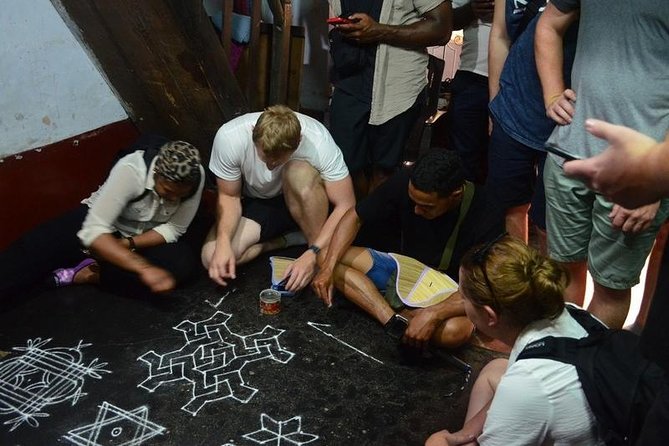
Your finale is the kolam making demonstration at a Brahmin Hindu Agraharam (ancestral home setting). Kolam is a type of geometric line drawing done with colored rice flour, traditionally placed in front of Hindu houses by female family members.
This is one of the best “wow” moments on the schedule because it’s slow enough to watch, detailed enough to appreciate, and tied to real household life. You’re not just seeing a finished piece—you’re learning the steps and the intention behind the pattern.
Why this matters: it’s easy to photograph architecture. It’s harder to capture a living practice. Kolam is a living practice, and you get to see it happen in real time.
Time tip: if you’re photographing, stand so you can see the lines forming without crowding the demonstrators. It’s one of those times where good manners also make the best photos.
The tour ends after about four hours around the Dutch Palace entrance area. Going inside big-ticket spots like the Dutch Palace or St. Francis Church isn’t automatically part of this route, but they can be added by special request at extra cost.
Price and Value: Is $68.39 Worth It?
At $68.39 per person for roughly 4 hours, the best way to judge this tour is by what it bundles.
You get:
- a private guide (English-speaking)
- air-conditioned travel by cab/van between key points
- entrance fees included
- several heritage sites that normally require separate planning
- demonstrations that go beyond “look, then leave” (kolam, coconut tools, and the fishing nets experience)
What you don’t get is food and drink. That means you should budget small purchases in the markets if you want snacks. But because the tour includes fees and guided movement, your time cost is controlled. In a city like Kochi, time saved is real money—especially if you’re on a cruise day or have limited hours.
If you like your travel with structure and meaning, this price feels fair. If you hate schedules and prefer wandering solo, you may feel the time pressure. In that case, you might only want parts of the route on your own.
Who This Tour Suits Best
This is a smart fit for:
- cruise passengers who need a focused heritage outing
- couples or families who want history without a full-day grind
- people who enjoy culture through everyday practices (markets, coconut tools, kolam)
- visitors who want temples and architecture, but also want local street texture
It may not be ideal if you want a full, independent Kochi day with lots of free time, or if you mainly want beaches and long museum-style stops.
Should You Book This Kochi Shore Excursion?
If your goal is a heritage-heavy, low-stress introduction to Fort Kochi and Mattancherry, I’d book it. The combination of Chinese fishing nets, two key religious sites, markets, and a real kolam demonstration is exactly the kind of mix that helps Kochi stick in your memory after you leave.
I’d skip or adjust if you already plan to spend lots of time inside the Dutch Palace area or you want long, unhurried pauses at a single attraction. This tour is built for coverage with guidance, not for wandering slowly.
My practical call: if you’re short on time and want the day to feel purposeful, this is the right kind of tour.
FAQ
What is the duration of the Kochi Heritage tour?
It’s about 4 hours.
What time does the tour start?
The start time is listed as 10:30 am.
Where do I meet the guide?
The meeting point is Ernakulam Wharf (Willingdon Island), Kochi. If you’re on a cruise, pickup is also arranged from the Cruise Ship Terminal.
Is hotel pickup and drop-off included?
Pickup and drop-off are included only if you select the hotel pickup and drop-off upgrade.
Is this a private tour?
It’s described as a private tour/activity, and only your group will participate.
How many people are in the group?
The tour runs with a minimum of 2 and a maximum of 12 people per day.
What entrance fees are included?
The tour states that all entrance fees are included.
What is included in the experience besides sightseeing?
You’ll have a professional English-speaking guide, air-conditioned travel between stops, and several demonstrations such as kolam making and tools used for coconut dehusking and winnowing. You’ll also get a henna opportunity for ladies in the group.
Are food and drinks included?
No. Food and drinks are not included, unless specifically stated.
Which major attractions are not included automatically?
The tour notes it does not include crowded tourist attractions like St. Francis Church and Dutch Palace unless added by special request at additional cost.