REVIEW · SAFAGA
Luxor Shore Excursion Tour to King Tut’s Tomb Valley of the Kings from Safaga
Book on Viator →Operated by Luxor Travels · Bookable on Viator
This is a full-on Luxor day built around Tutankhamun and the West Bank. You’ll move by air-conditioned vehicle from Safaga to the Necropolis of Thebes, with an Egyptologist guiding a private group so you spend less time herding and more time seeing.
What I like most is the private setup (so your pace is your own) and the practical touch of an included lunch mid-tour. One thing to keep in mind: entrance fees aren’t included, and Valley of the Kings ticketing can add extra cost on top of the $300 price.
In This Review
- Key points at a glance
- Why this Safaga-to-Luxor day makes sense on a cruise
- A private Egyptologist is the real upgrade (not just a guide with a badge)
- Tutankhamun’s tomb: why it’s so famous and what to watch for
- Valley of the Kings tomb-hopping: Tut plus Ramses III, Merenptah, Ramses IX
- Tombs you’ll likely see and what makes them different
- Why multiple tombs beat only Tut
- Deir el Bahari and Hatshepsut: a dynasty connection to Tut
- Colossi of Memnon: the family tree you can see from the outside
- Lunch on the West Bank: what’s included and how to time it
- Price and entrance fees: what the $300 really covers
- What the day feels like: pace, crowd comfort, and the reality of tombs
- Who this tour suits best (and who might want a different plan)
- Should you book this Luxor shore excursion to Tut’s Tomb Valley of the Kings?
- FAQ
- Is this a private tour?
- How long is the Luxor shore excursion from Safaga?
- What’s included in the price?
- Are entrance fees included?
- What sites are included in the itinerary?
- Is there a vegetarian meal option?
Key points at a glance
- Private Egyptologist for your group so explanations land where you are standing
- Safaga harbor pickup and drop-off with air-conditioned transport
- Prebooked access to the Valley of the Kings admission to cut down hassle
- Multiple royal tombs besides Tutankhamun, including Ramses III, Merenptah, and Ramses IX
- Stops at Deir el Bahari and the Colossi of Memnon for the big West Bank highlights
Why this Safaga-to-Luxor day makes sense on a cruise
If you’re docked at Port Safaga and want Luxor without losing half the day to planning, this tour is built for that exact problem. It’s timed as a shore excursion: pickup happens in the morning based on your ship’s arrival, and the day is set up to return you after a full circuit of the West Bank sites.
The duration is about 12 hours, which is long enough to feel like you actually did Luxor, but not so long that you’re basically living in a bus. That balance matters. On cruise days, the risk isn’t just exhaustion—it’s also missing your ship. A pre-arranged round trip with pickup at the harbor helps you avoid that last-minute stress spiral.
Also: this isn’t a “see one tomb and rush out” plan. The itinerary is structured around the Valley of the Kings, then adds Deir el Bahari and the Colossi of Memnon, so you get the Tutankhamun story and the context around the rulers of this region.
A few more Safaga tours and experiences worth a look
A private Egyptologist is the real upgrade (not just a guide with a badge)
The headline feature here is the Egyptologist guide just for your private group. That matters because the Valley of the Kings can look similar if you’re not sure what you’re looking at. With expert guidance, you’ll understand why certain tombs feel different—why one has specific decorative styles, what scenes mean, and how the royal burials connect across reigns.
You also avoid the big frustration of large tour groups: the constant waiting at gates, the clock pressure, and the “everyone move on” energy. With a private group, you can slow down where you care most. If Tutankhamun is your focus, the guide can steer the day so you get the story, not just photos.
One practical note: the tour includes transportation and lunch, but entrance fees to the sites are not included. So budget for tickets when you total the true cost. (The good news: the Valley of the Kings admission is described as prebooked, which typically means smoother timing on-site.)
Tutankhamun’s tomb: why it’s so famous and what to watch for
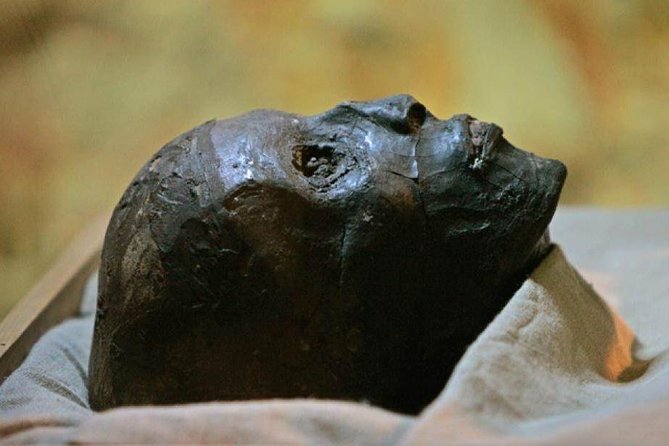
The tour’s first major stop is the Tomb of King Tutankhamun (Tut) in the Valley of the Kings. This is the one you’ve heard of for years, because it’s special in a very specific way: it’s the only tomb in the Valley of the Kings that was discovered nearly intact in 1922. The discoverer named here is Howard Carter.
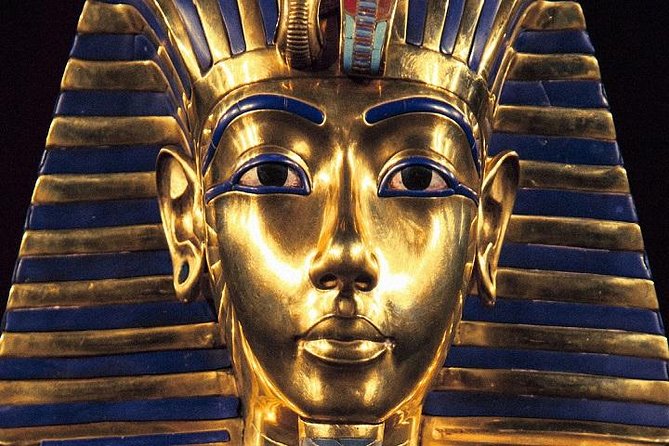
Now, here’s the key story detail that helps you appreciate the site when you arrive: Tut’s famous golden mask is displayed at the Egyptian Museum in Cairo, but at Luxor you’re seeing the young king’s burial context. In other words, the awe is different here. It’s not the famous object everyone knows—it’s the reality of where the burial itself took place.
At this stop you’ll spend about 25 minutes at the tomb. That’s enough time to see the space carefully without turning your day into a line-capture exercise. The main takeaway: go with the mindset that this is a burial chamber tied to a discovery moment in modern archaeology. Even if you’ve read about it, being at the tomb changes the scale and the emotions.
Also, remember that tomb interiors can be crowded at times. Keep your camera ready, but don’t let your phone become the only thing you notice. Give yourself a quick scan of the overall layout before you start zooming in.
Valley of the Kings tomb-hopping: Tut plus Ramses III, Merenptah, Ramses IX
The big block of the day is time in the Valley of the Kings, described as visiting four royal tombs, including the Tomb of King Tutankhamun. This is where your Egyptologist guide earns their keep. Multiple tombs can feel like a checklist, unless someone explains what makes each one distinct.
Tombs you’ll likely see and what makes them different
The itinerary highlights several tombs, including:
Ramses III (KV 11)
This tomb is called out as a complex system within the Valley of the Kings. The notes also emphasize its wall decoration: colorful painted sunken reliefs featuring ritual texts such as the Litany of Ra and the Book of Gates. Then comes one of the more interesting human details in the tomb story: secular scenes in side areas show foreign tributes—plus the royal armor—and the tomb has an alternate name connected to the blind harpists, called the Tomb of the Harpers.
If you like symbolism, this is a tomb where the guide can translate the “why” behind what you’re seeing. It’s also a good place to slow down. Those painted elements are exactly the kind of thing that get overlooked when you rush.
Merenptah (Tomb 8, often associated with KV 8 in Valley of the Kings context)
The notes describe it as the burial place of Pharaoh Merenptah and connect it to protection and journey themes. It’s also tied to Howard Carter in a different way: the information provided says the tomb was discovered by Carter in 1903. Another detail included is about how the number of lateral rooms decreases while corridors and room heights increase, which suggests an architectural shift compared with earlier designs.
This is a good tomb stop if you enjoy the “how builders solved problems” side of ancient sites—space, scale, and design choices.
Ramses IX
The itinerary lists a stop for the Tomb of Ramases IX as part of the Valley of the Kings portion. Even without extra description in the notes here, it’s valuable because it adds another reign to your understanding of how the West Bank burial landscape evolved over time.
Why multiple tombs beat only Tut
Tutankhamun is the star, but the Valley of the Kings becomes more meaningful when you see more than one burial site. You start noticing patterns—and you also notice exceptions. With four tombs in one day, you’ll get enough variety to connect the dots without feeling like you’re spending your whole vacation walking in circles.
Timing matters too. In the notes, individual tomb stops include short durations (often around 25 minutes for the major tomb visits). That’s realistic for a cruise day: you want your time to be enough for understanding, not enough to drain you.
Deir el Bahari and Hatshepsut: a dynasty connection to Tut
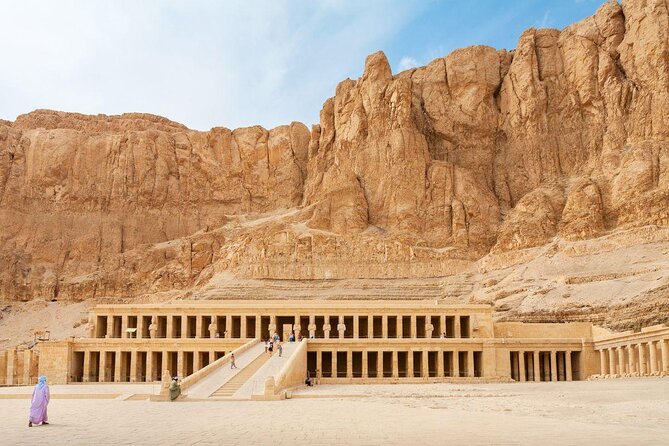
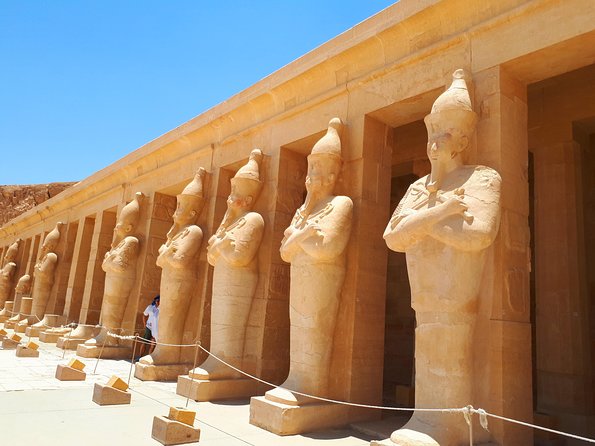
After the tombs, the itinerary shifts to Temple of Hatshepsut at Deir el Bahari. This stop is more than a pretty viewpoint. It’s where your day gets a powerful family link.
The notes highlight that Hatshepsut was the only woman ever to reign over Egypt as Pharaoh, and that she was an ancestor of King Tutankhamun, belonging to the same dynasty. That connection can turn the West Bank from a pile of impressive ruins into a story about succession, legitimacy, and dynastic memory.
You’ll be transported after visiting the tombs, with the Deir el Bahari stop described as about 1 hour in the itinerary details. Even with a shorter visit, the guide can connect the temple setting back to the wider “afterlife and rule” themes you’ve been learning in the tombs.
Practical advice: Deir el Bahari is the kind of place where you’ll want a few minutes just to look. Try to spot the temple’s placement and how it fits into the cliffs and the valley space. Then listen to the guide’s explanation. It’s one of those sites where the context makes the architecture feel logical.
Colossi of Memnon: the family tree you can see from the outside
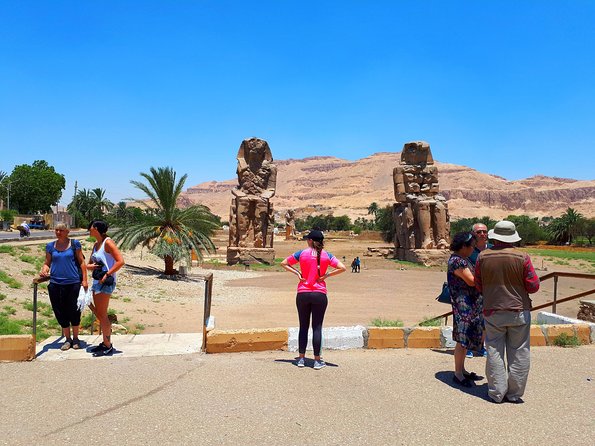
Next comes the Colossi of Memnon, described as the two largest ancient statues in Egypt dating back to the era of King Amenhotep III. The notes also give you a useful lineage fact: Amenhotep III was the father of Akhenaten and the grandfather of King Tut.
That’s a neat trick for making statues more than scenery. When you see the Colossi, you’re not just looking at two big stone figures. You’re looking at an earlier royal era tied to the people who come before Tutankhamun.
Your stop here is listed as about 1 hour, though your actual viewing time can depend on how the rest of the day runs. Still, this is a strong breather stop after tomb interiors. Outside sites also help you reset your eyes after darker, more enclosed spaces.
Lunch on the West Bank: what’s included and how to time it
Your tour includes Egyptian lunch, described as served at a restaurant on the West Bank. It’s placed after the Memnon stop in the highlights section, with a short stop time for the restaurant after you’ve seen the Colossi.
There’s also a vegetarian option available, which is a big deal in Egypt. If you have dietary needs, it’s worth planning ahead so your meal doesn’t become an awkward scramble mid-day.
How I’d plan your day: treat lunch as your energy checkpoint. Tomb sites mean walking, stairs, and heat. Before lunch, pace yourself. After lunch, keep your water and sun protection in mind (even if the tour includes lunch, it doesn’t automatically mean you’ll have everything you personally prefer for comfort).
Price and entrance fees: what the $300 really covers
The price is $300 per person, and it includes:
- Qualified Egyptologist guide
- Safaga harbor pickup and drop-off
- Lunch
- Transport by air-conditioned vehicle
That’s a lot included for a cruise shore excursion. Where you need to be smart is the line item that’s explicitly not included: entrance fees. Total your final budget with tickets for the tombs and sites on the itinerary.
So is it good value? For me, it’s strongest if you want a private guide rather than joining a larger group. When you’re paying for privacy, you’re paying for time saved (less crowd management) and for explanations that make the tombs make sense. If you’d be happy with a basic group tour, the cost might feel heavier. But if Tutankhamun is your main goal and you want the story told at the right stops, the included guide and lunch start to feel like more than “extra perks.”
Also, the provider is Luxor Travels, and the feedback summary highlights their service as honest and reliable, with an excellent driver and guide. That matters on cruise days, where timing and smooth transport are half the battle.
What the day feels like: pace, crowd comfort, and the reality of tombs
The structure is designed to keep the day moving without turning it into a sprint. You’ll do:
- Tutankhamun tomb visit
- A larger Valley of the Kings session with multiple royal tombs
- Deir el Bahari
- Colossi of Memnon
- Lunch mid-to-late day depending on the sequence
The biggest comfort win is that you’re not walking from stop to stop without support. The tour uses air-conditioned transport, and pickup is arranged at Safaga harbor.
The main downside to know about comes from how tombs work everywhere: they can be visually intense, physically tiring, and sometimes dim. The ticketed tomb time is short at each stop, so you’ll want to pay attention rather than trying to “see everything” in one go.
Who this tour suits best (and who might want a different plan)
I’d point you to this tour if:
- Tutankhamun is your priority and you want context, not just photos
- You prefer private group pacing over crowds
- You value an expert Egyptologist guide
- You want a cruise-friendly day that covers several top West Bank highlights
I’d consider a different option if:
- You’re very budget-focused and don’t want to add on entrance fees
- You hate longer travel days (about 12 hours total is a commitment)
- You’re expecting a museum-style, fully guided stop at every site (tombs are inherently more limited in space and time)
Should you book this Luxor shore excursion to Tut’s Tomb Valley of the Kings?
If you’re cruising through Safaga and you want a memorable Luxor day that mixes Tutankhamun’s burial story with the West Bank’s big monuments, I’d say yes—especially if you care about understanding what you’re seeing.
The sweet spot is the combination of private Egyptologist guidance, round-trip transport, and included lunch, which reduces the usual stress of cruise timing and on-the-ground logistics. Just remember to budget for entrance fees, and plan for a long, hot, very active day.
If Tutankhamun is what brought you to Luxor in the first place, this tour is a straight, practical way to make that happen.
FAQ
Is this a private tour?
Yes. This is listed as a private tour/activity, meaning only your group participates.
How long is the Luxor shore excursion from Safaga?
The duration is approximately 12 hours.
What’s included in the price?
Included are the qualified Egyptologist guide, Safaga harbor pickup and drop-off, lunch (including an included lunch), and transport by air-conditioned vehicle.
Are entrance fees included?
No. Entrance fees are not included, and you’ll need to plan for total entrance fees to the sites mentioned.
What sites are included in the itinerary?
The itinerary includes the Tomb of King Tutankhamun, Valley of the Kings tomb visits (including several royal tombs), Temple of Hatshepsut at Deir el Bahari, and the Colossi of Memnon, plus additional highlighted tomb stops such as those of Merenptah, Ramses III, and Ramses IX.
Is there a vegetarian meal option?
Yes. A vegetarian option is available.