REVIEW · KUSADASI
Private Ephesus Shore Excursion from Kusadasi with Ticket Option
Book on Viator →Operated by Moira Travel Agency · Bookable on Viator
Ephesus hits hard, even on limited time. This private Kusadasi shore trip mixes top UNESCO stops with a guide who keeps the day moving, not frantic. I like the cruise-port pickup (you’re not stuck figuring out transport) and the chance to skip long ticket lines if you pick the ticket option. One thing to keep in mind: the ancient city is huge, so even with planned stops, you’ll want comfortable shoes and realistic expectations about how much you can see.
The route is built for people who want the classics without wasting hours. You’ll see the Temple of Artemis area, the Basilica of St. John on Ayasoluk Hill, and the House of the Virgin Mary shrine, then you get extra time for Kuşadası’s Pigeon Island fortress and a stroll around Selçuk. Expect about 4 to 6 hours, guided in English, and only your group rides in the vehicle.
In This Review
- Key highlights worth your attention
- Cruise-port pickup in Kusadasi: the day starts with less stress
- Ephesus Ancient City: UNESCO ruins plus the story behind the stones
- Temple of Artemis: the cult, the legend, and why the Greeks and locals mixed
- Basilica of St. John on Ayasoluk Hill: Justinian’s church and the sleeping-John myth
- House of the Virgin Mary: the shrine story and the pilgrimage pull
- Kuşadası Pigeon Island fortress and a taste of Selçuk town life
- Packing and timing: how to make a 4 to 6 hour day actually work
- Price and ticket options: where the value really comes from
- Who should book this Ephesus shore excursion
- Should you book this private Ephesus shore excursion from Kusadasi?
Key highlights worth your attention
- Priority-style access with the ticket option so you spend more time walking and less time in lines
- Ephesus guided storytelling that explains how the city shifted locations over time, not just what’s in front of you
- Temple of Artemis context including why the site was chosen and how the cult connected with Artemis and older Anatolian traditions
- Ayasoluk Hill stops that layer Christian tradition and local legend in a way that feels surprisingly human
- House of the Virgin Mary shrine history tied to Catherine Emmerich’s visions and later archaeological findings
- Kuşadası and Selçuk add-ons so the day isn’t only ruins on repeat
Cruise-port pickup in Kusadasi: the day starts with less stress
If your ship docks in Kusadasi, this tour aims to remove the biggest headache: getting from the port to Ephesus on time. After booking, you coordinate a meeting time with the team, and your guide meets you at Kuşadası Cruise Port with a sign showing your name. The practical tip is timing: once you’re off the ship, you’re encouraged to meet the team within 30 to 45 minutes. That window usually means fewer crush moments, less searching, and a smoother handoff to the driver.
It’s also a true private tour in the sense that only your group participates. That matters in places like Ephesus, where a normal group bus day can feel like a stampede. Here, you can keep questions flowing and adjust pacing when you spot a viewpoint you want to linger at.
You can also read our reviews of more tours and experiences in Kusadasi.
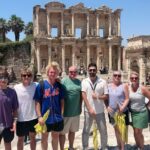
Ephesus Ancient City: UNESCO ruins plus the story behind the stones
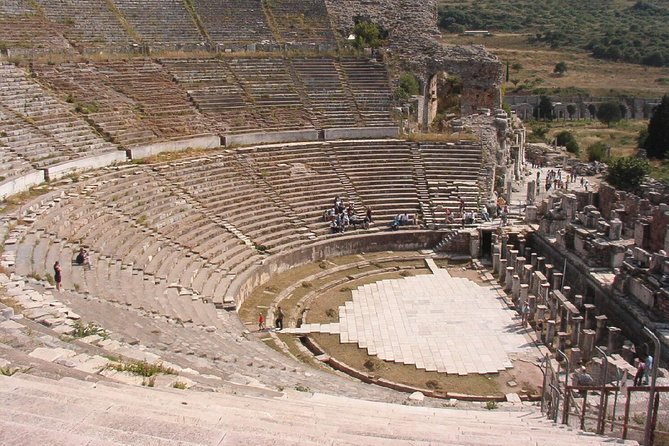
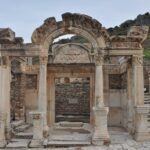
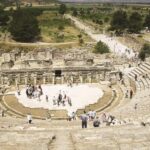
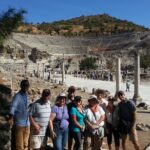
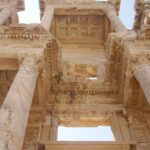
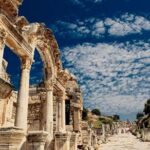
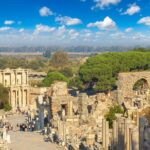
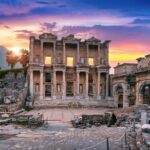
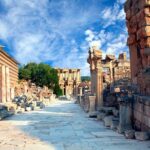
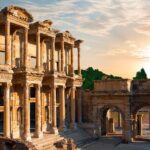
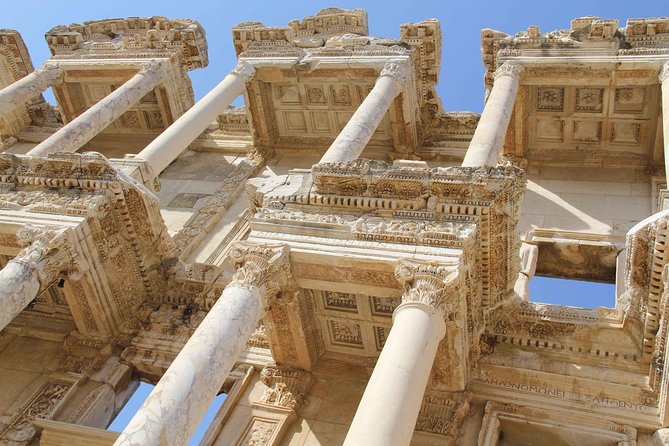
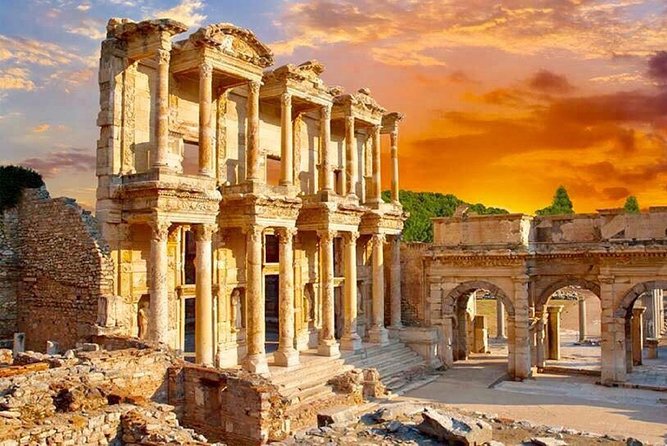
Ephesus is one of those sites where the guide’s job is not just pointing at columns. It’s helping you understand why the ruins look the way they do. The day’s first main stop focuses on the ancient city’s long timeline: early settlement on Ayasuluk Hill, later shifts north of Mount Panayır, then the “valley” settlement tied to Lysimachus, and finally the fourth move back toward Ayasoluk as the harbor silted up and raids changed the city’s fortunes.
Here’s what I think is most useful for you to know before you arrive: you’re not walking through one single “moment” of Ephesus. You’re seeing layers. The tour connects that idea with the name history too. Ephesus is mentioned in older tablets under Apassas, a name explained here as meaning honey bee. That kind of detail turns the site from a pile of ruins into a place with continuity.
You’re typically given about 2 hours in the ancient city area. With that amount of time, your guide will usually steer you through the highest-impact sections first. If you choose the ticket option, the tour emphasizes priority admission to help you avoid lines at the entrances. Even if you don’t choose ticket inclusion, the plan still aims to get Ephesus entry handled in a line-friendly way by arranging tickets in advance.
Practical advice: the marble surfaces can be uneven and sometimes slippery, so go with shoes that can handle both grime and smooth stone. And bring water. Ephesus is open, and shaded breaks are limited.
Temple of Artemis: the cult, the legend, and why the Greeks and locals mixed
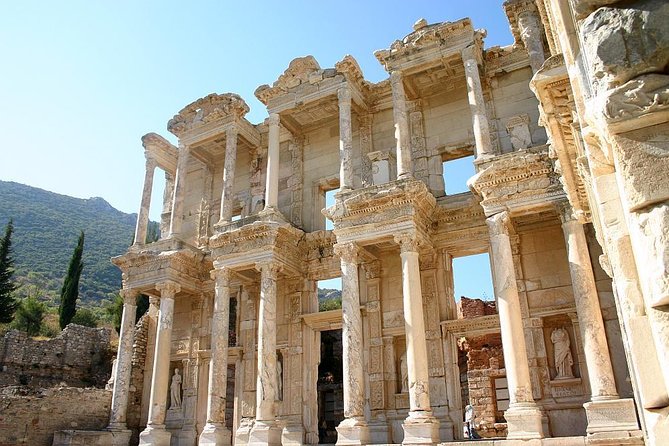
The Temple of Artemis stop is short and focused, about 30 minutes. That’s not enough for a museum visit, but it’s the right length if the guide is helping you understand what you’re looking at: why Artemis mattered locally and how the cult operated.
This tour frames Artemis of Ephesus as more than a Greek-style moon goddess. The veneration here is tied to an archaic icon that’s described as emphasizing fertility through its features, and the temple site is explained as sacred land connected with Cybele. You also get key building context: the temple’s construction is placed around 650 BC, and the financing is connected to the wealthy kingdom of Lydia. There’s even a practical-sounding reason given for the marshy building ground: it was chosen as protection against future earthquakes.
Then there’s the story everyone remembers: the temple fire on July 21, 356 BC, tied to the “herostratic fame” legend of Herostratus. Even if you’ve heard bits of this before, it lands better when your guide connects it to how later rulers and citizens reacted, including the episode where Alexander the Great offered to rebuild the temple and the Ephesians declined on theological grounds.
If you only have one small window to take in a giant idea, this stop is it. You’ll get enough context to appreciate why Artemis of Ephesus became a symbol people traveled to see.
Basilica of St. John on Ayasoluk Hill: Justinian’s church and the sleeping-John myth
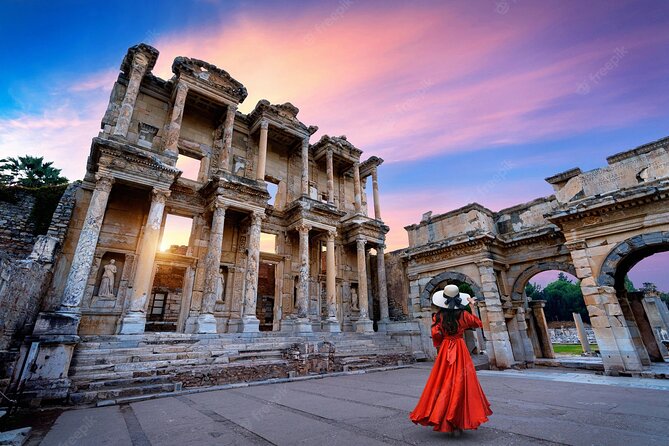
Next up is the Basilica of St. John, about 1 hour. This site sits on the slopes of Ayasoluk Hill near the fortress area in Selçuk (the location is about 3.5 km / 2 miles from Ephesus). The tour’s key point is the link between the basilica and the claimed burial site of St. John, identified as apostle, evangelist, and associated with Revelation.
The basilica’s construction gets dated here to the 6th century, credited to Emperor Justinian. What I like about this stop is how it brings together two layers: historical architecture and tradition. The guide also brings in the way the identity of “John” became associated with different biblical figures over time. Then the tour touches the local legend that John didn’t fully die, but was said to be sleeping, with the idea that dust might even move above his grave as if from breath.
Is every part of the legend something you can prove? No. But for a shore excursion day, it’s still valuable. You leave understanding how faith stories can shape what people build and where they expect meaning to be.
House of the Virgin Mary: the shrine story and the pilgrimage pull
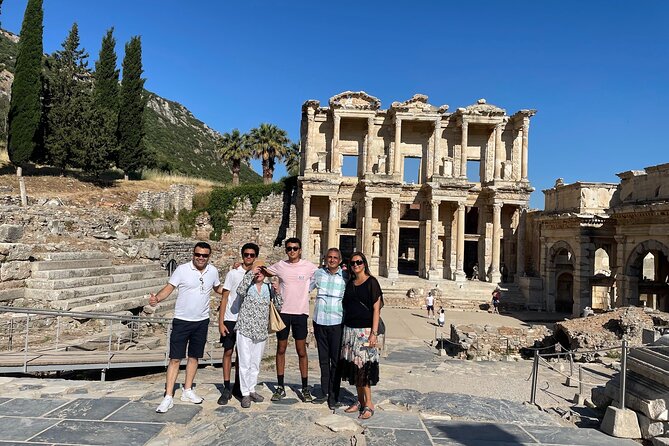
The House of the Virgin Mary stop is about 1 hour. This is one of the most moving stops on the route, even if you’re not religious in the formal sense. The tour frames the tradition in a way that’s easy to follow: it states as known with certainty that Mary went to Ephesus and lived there for some time, while the question of her later fate ties into visions described by Anne Catherine Emmerich.
Emmerich, a German nun, never visited Ephesus but described a small house in visions. Later, in 1891, Paul, superior of the Lazarists from Izmir, read about her accounts and found a building matching the descriptions. The archaeological detail given in this tour matters because it anchors the story: evidence shows the structure dates from around the 6th century AD, while the foundations are said to go back to the 1st century.
The tour also explains how the site became officially recognized as a shrine in 1896, and notes major papal visits: Pope Paul VI in 1967, Pope John Paul II in 1979, and Pope Benedict XVI in 2006. That’s a solid list, and it helps you see why the place became a pilgrimage magnet.
Ticketing note: entrance for the House of the Virgin Mary is included only if you select the ticket option. If you don’t, you’ll handle it separately on the day.
You can also read our reviews of more private tours in Kusadasi
Kuşadası Pigeon Island fortress and a taste of Selçuk town life
After the big historical stops, the tour adds two local-area breaks that are genuinely worth it if you don’t want the day to feel like a single long archaeological sprint.
First is Kuşadası’s Byzantine fortress on Güvercin Adası (Pigeon Island), connected by a causeway. The site is described as renovated and now part of a public park. You’ll walk a path that passes information boards and a small lighthouse for views over Kuşadası. Inside the fortress, the tour highlights a 14.5-meter fin whale skeleton plus models of sailing boats. It’s a quirky combo, but that’s the point: you get a different vibe than “ancient stones only.”
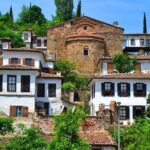
Then there’s Selçuk, positioned as a laid-back base near Ephesus. The time here is designed to give you a quick feel for a working town rather than only a tourist zone. You’ll get a chance to see the remains of a Roman aqueduct and ruins tied to a Byzantine citadel, plus a walk through the compact center. This is the kind of stop that helps your brain connect the dots between the past sites and the present-day life around them.
Packing and timing: how to make a 4 to 6 hour day actually work
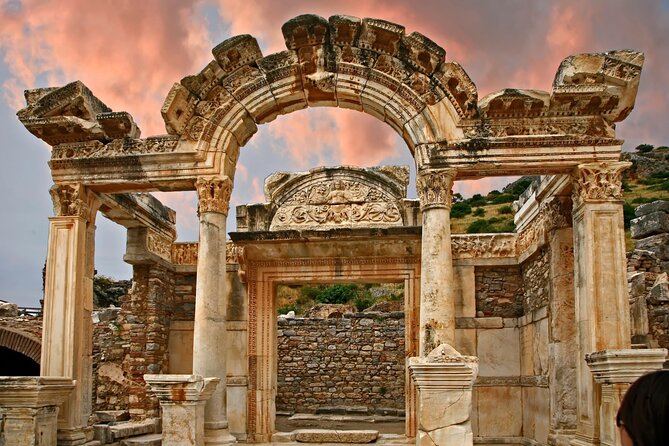
This excursion is set up for cruise schedules, so it’s usually about 4 to 6 hours total. That means the guide is moving you between key sites, and your best strategy is to travel light and ready.
From the practical feedback on the site conditions, I’d plan like this:
- Wear grippy, supportive shoes. Marble can be slippery and paths can be uneven.
- Bring water and expect limited chances to buy drinks once you’re inside the main ruin area.
- Use sun protection. There’s not much shade, and heat can hit hard even when you’re only walking for short periods.
If you’re someone who likes to take your time with every doorway detail, ask your guide early to prioritize what matters most to you. The tour’s structure is designed to hit the major story beats, so you’ll get the most satisfaction by choosing your focus rather than trying to see everything at once.
Price and ticket options: where the value really comes from
At $12.60 per person, this tour is priced to feel affordable for a cruise shore day with private transport, a licensed local guide, port pickup/drop-off, and parking covered. The biggest value driver is not the vehicle. It’s the guide and the way entry is managed.
Entrance fees are not included by default, but the tour offers a smarter choice:
- If you select the ticket option, entrance for Ephesus ruins and the House of the Virgin Mary is included.
- The tour also emphasizes priority admission to help you avoid long ticket lines at the sites (when the option is selected).
- Even when tickets aren’t included, the plan says Ephesus tickets are arranged in advance so you still skip the worst of the waiting.
So what should you do? If you want the cleanest, most predictable day—especially with ship departure pressure—choose the ticket option. If you’re traveling very light on budget and you’re comfortable handling one site’s entrance yourself, you can still keep the day efficient because Ephesus entry is arranged in advance.
Either way, you should treat food as extra. The tour doesn’t list lunch as an included item, and personal expenses are not included. In practice, the guide may suggest places to stop, and you’ll pay directly if you eat.
Who should book this Ephesus shore excursion
This is a great fit if:
- You want a guided UNESCO Ephesus day but don’t want the stress of organizing transport from the cruise port.
- You like history stories with specific details, like Ephesus’s shifting settlements and the cult background around Artemis of Ephesus.
- You want a “best-of” route that still adds Kuşadası and Selçuk so the day feels like more than one ticketed site.
It may be less ideal if:
- You dislike any shopping stops or timed transitions, because the route includes time in town and may include market-style stops.
- You prefer slow, unguided exploration. Ephesus is huge, and a guided schedule is designed for cruise time, not meandering.
Should you book this private Ephesus shore excursion from Kusadasi?
Yes, if your priority is a smoothly run cruise day with a guide and you’re happy to see the major sites in a focused window. The combination of Ephesus, the Temple of Artemis stop, Basilica of St. John, and the House of the Virgin Mary gives you a strong historical and cultural sweep without turning the day into chaos.
My final advice: pick the ticket option if you can. It’s the easiest way to protect your time and reduce line stress when the ship schedule is looming. Then pack for heat and uneven stone, and let the guide’s pacing do the heavy lifting.