REVIEW · KUSADASI
NEW: Private The Most Detailed Ephesus Shore Excursion / with Lunch
Book on Viator →Operated by OTTI Travel · Bookable on Viator
Ephesus, but with room to breathe. This private shore excursion gives you a guided route through Ephesus sites most tours skip, plus a Turkish lunch. The trade-off: you’ll still pay several major entrance fees on site, so budget ahead.
I like that the tour leans into story and context, not just photo stops. You’re driven in a Mercedes van with pickup and drop-off, and you get an English-speaking, licensed guide who can adjust the pace. One more consideration: some parts (especially the Terrace Houses) involve stairs and uneven ground, so moderate fitness helps.
In This Review
- Key takeaways before you go
- Why This Private Ephesus Shore Excursion Works So Well
- Getting There: Mercedes Van, Pickup Options, and Line-Skip Advantage
- Meryemana: Virgin Mary’s House at the Right Start
- Ancient Ephesus: More Than the Usual List of Ruins
- State Agora: Where Politics and Life Intersected
- Odeion: A Small Theatre With Two Roles
- Domitian, Hercules Gate, and Hadrian: Emperor Power in Stone
- Temple of Domitian
- Hercules Gate
- Temple of Hadrian
- Terrace Houses: Where Roman Family Life Actually Shows Up
- Library of Celsus: A Monument That Still Feels Like a Place
- Ephesus Great Theatre: Big Enough to Feel Loud
- Temple of Artemis and St. John Basilica: Two Ways to Be Moved
- Temple of Artemis
- Basilica of St. John
- Lunch Included: A Real Break, Not Just a Token Stop
- Shopping and Carpet Weaving Stops: Say Yes or Politely Say No
- Price Breakdown: What You’re Paying for at $79.20
- Tips to Get the Best Day From This Tour
- Who Should Book This Private Ephesus Day (and Who Might Skip It)
- Should You Book This Tour?
- FAQ
- Is lunch included in the tour?
- What admission fees are not included?
- How long is the tour?
- Do you get pickup for cruise ship passengers?
- Is this tour private?
- What language is the guide?
Key takeaways before you go
- Private, customized flow across Ephesus, rather than a rushed group sprint
- English licensed guide who can explain what you’re seeing at each stop
- Built-in skip-the-long-lines approach (and the Great Theatre ticket is included)
- Lunch is included, but drinks are not, so plan for that extra cost
- Expect extra entry fees for major sights like Ephesus, the Virgin Mary’s House, Terrace Houses, and St. John’s Basilica
Why This Private Ephesus Shore Excursion Works So Well
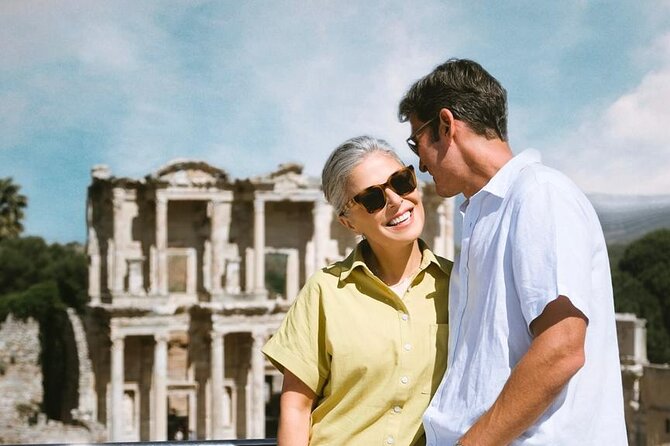
This tour fits the way most cruise days actually feel: limited time, lots of effort in the heat, and a strong desire to make every hour count. Instead of wandering between landmarks on your own, you get a dedicated guide and round-trip transport from Kusadasi area (or the port, if you’re on a ship).
Because it’s private, you’re not stuck with the slowest walker or the loudest talker controlling the day. The tour is described as customizable to your preferences, which matters at Ephesus—some people want architecture and inscriptions, others care more about what daily life looked like for Romans and early Christians.
The value is in the mix. You’re not only hitting the headline spots; you’re also seeing architectural and civic pieces that help Ephesus make sense as a working city: the State Agora, Odeion, Emperor Temples, and the Terrace Houses on the hill.
You can also read our reviews of more private tours in Kusadasi
Getting There: Mercedes Van, Pickup Options, and Line-Skip Advantage
Transport is handled in an air-conditioned Mercedes van, which is exactly what you want in Turkey in the daylight hours. Your pickup depends on where you’re starting:
- Cruise passengers: meet at the exit gate of the immigration terminal at the cruise port, holding a board with the OTTI TRAVEL sign.
- Hotel pickup: you meet your guide at the hotel reception.
The tour also includes parking fees and a mobile ticket, which helps keep the day moving.
The big practical benefit is the promise to skip the long lines. Ephesus can be slow even when you arrive early, so anything that reduces queue time makes the experience feel less like a checklist and more like a day out.
Meryemana: Virgin Mary’s House at the Right Start
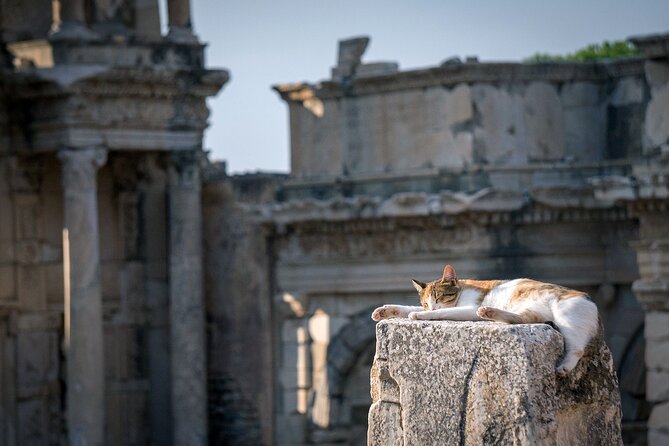
Your first stop is Meryemana (The Virgin Mary’s House), with about 30 minutes on site. Admission isn’t included here, so you’ll pay the separate ticket fee on the day.
What I find appealing about starting at Meryemana is the emotional shift. Instead of jumping straight into Roman civic monuments, you begin with a pilgrimage-style site. It’s often calmer than the main ruins, and it sets context for why people have cared about this region for centuries—not just because of marble, but because of belief and tradition.
Practical note: since this is a dedicated stop, you’ll want to be ready to walk a bit, stand where needed for views, and keep your time focused so you don’t rush the rest of the program.
Ancient Ephesus: More Than the Usual List of Ruins
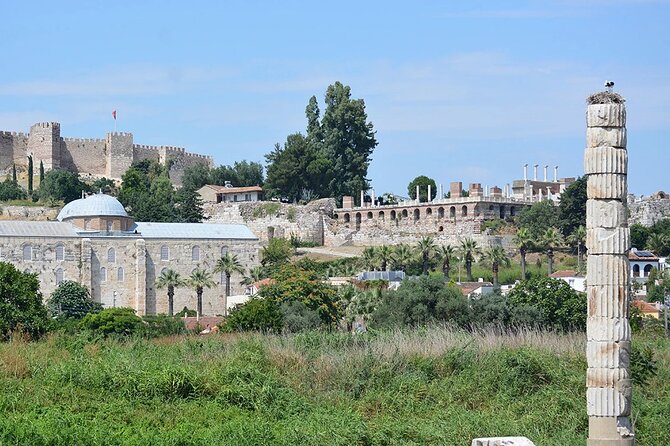
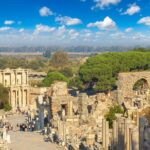
The heart of the day is the Ancient City of Ephesus, where you get around two hours exploring a long circuit of major structures. Admission is not included for the overall site ticket, so this is one of the big add-ons later.
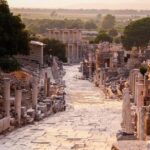
This tour’s description signals something important: it doesn’t just name buildings. It includes specific streets and civic areas such as Harbour Street, Marble Street, the Celsus area, the gate zones, Commercial Agora, latrina (ancient toilets), Hadrian Temple, the Scolastica Baths, Trajan Fountain, Curetes Street, Polio Fountain, Memnius Monument, the Temple of Domitian, the Prytaneion, Odeon, and the State Agora.
Why this matters: Ephesus can look like random piles of stone unless someone explains the city’s layout. When you connect street names, water systems, and where people gathered to talk and transact, the place stops being just impressive and starts becoming understandable.
A good guide makes the difference. Several guides connected to this tour in past experiences—like Selin, Nesli, Mehmet, Ahmet, and Özgür—are noted for being especially strong at turning ruins into stories. You may not meet the same person, but the format is clearly built for explanation, not just escorting.
State Agora: Where Politics and Life Intersected
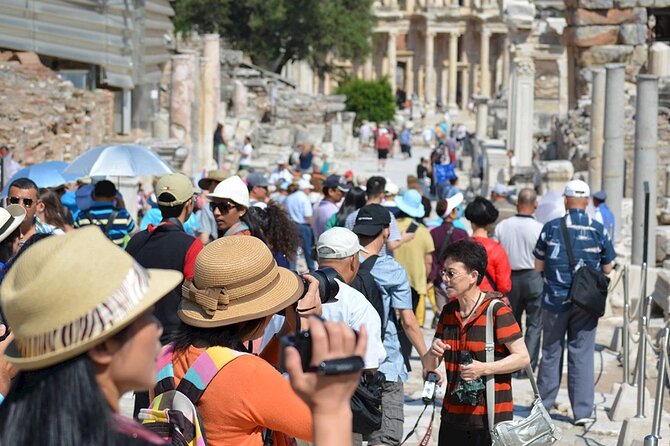
About 15 minutes is set aside for the State Agora. This is the kind of stop that’s easy to miss on shorter tours, and it’s also where you learn how Roman Ephesus worked as a governing center.
The State Agora on the southern side of the basilica is described as built in the Roman period, first century B.C., used not mainly for commerce but for governmental business and discussion. During excavations, archaeologists found graves from the 7th–6th centuries B.C in a corner area, plus a stone-paved road and a terra cotta archaic sarcophagus. The site also includes a water reservoir corner connected to the Pollio Aqueduct (remains are visible several kilometers away).
So what should you do with this info while you’re standing there? Look at the space as a conversation hub. The water reservoir detail is especially useful—cities weren’t just built for monuments. They were built for people to meet, debate, and get through daily life.
A few more Kusadasi tours and experiences worth a look
Odeion: A Small Theatre With Two Roles
Next, you visit the Odeion, again with about 15 minutes. This building is shaped like a small theatre, with stage building, seating, and an orchestra area.
Here’s the neat part: it had a double function. It was used as a Bouleuterion (for meetings of the Boules or senate) and also as an Odeum (a concert hall for performances). Built in the second century A.D by Publius Vedius Antonius and his wife Flavia Paiana, it could hold about 1,500 spectators.
Even if you only get a short window, the Odeion stop helps you see how flexible civic space was in Roman cities. Entertainment and governance weren’t separate worlds. They overlapped in the same structures.
Domitian, Hercules Gate, and Hadrian: Emperor Power in Stone
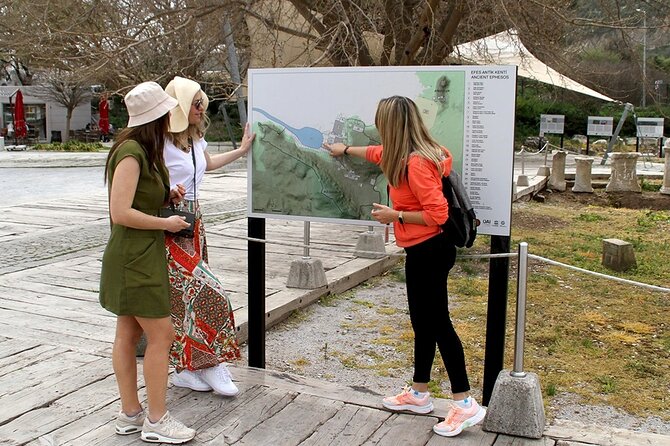
You’ll spend time on a cluster of emperor-related landmarks, each with around 10–15 minutes:
Temple of Domitian
The Temple of Domitian is described as the first Ephesus structure dedicated to an emperor, built on a large terrace with vaulted foundations. The design is pro-style, with eight columns on the short side and thirteen on the long side, plus additional columns in front of the cella. There’s also mention of an altar displayed in the Izmir Museum.
For many visitors, this is the moment where the tour starts feeling like architecture class—still fun, but with enough detail to appreciate why people cared about imperial permission and prestige (including the concept of neocoros).
Hercules Gate
The Hercules Gate sits toward the end of Curetes Street. It’s named for reliefs of Hercules, with parts relocated in the fourth century A.D but relief dating to the second century A.D. Only the column sides remain today, which makes it a good stop for learning to read fragments rather than expecting a fully preserved arch.
Temple of Hadrian
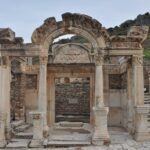
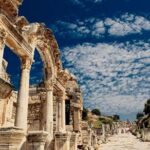
The Temple of Hadrian is one of the best-preserved and most beautiful structures on Curetes Street, about 10 minutes. Built before 138 A.D and dedicated to Hadrian, it has four Corinthian columns supporting a curved arch with a relief of Tyche in the center. In front, there are bases for statues of emperors from 293–305 CE (the originals are not found).
This is a great place to pause and look closely at the front facade. When you’ve only seen Ephesus ruins as silhouettes, this temple gives you a sense of what grandeur looked like when everything was intact.
Terrace Houses: Where Roman Family Life Actually Shows Up
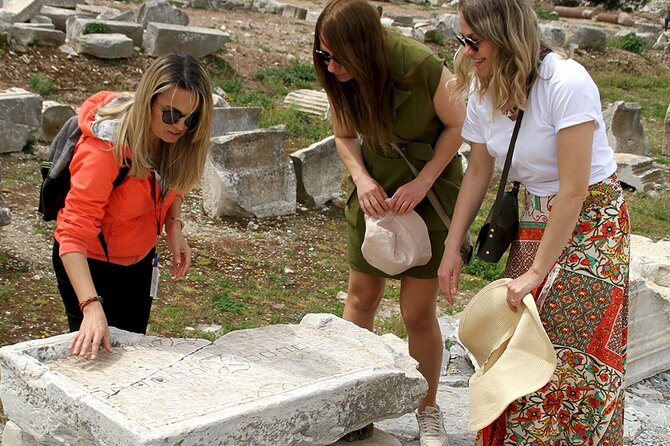
One of the most memorable parts of any Ephesus day is the Ephesus Terrace Houses, located on the hill opposite Hadrian Temple. You get about 30 minutes here, and admission isn’t included.
The explanation is what makes the site worth it: these homes belonged to wealthy Romans, and they help you understand family life during the Roman period. The houses were built on a grid-like Hippodamian city plan, and there were six residential units across three terraces on the slope of Bulbul Mountain. The oldest buildings date back to the 1st century B.C and continued as residences until the 7th century A.D.
Even better, the houses have protective roofing, consolidated mosaics and frescoes, and two houses opened to the public as a museum. That means you can experience private-space details without the ruins collapsing into dust.
The practical catch is movement. Terrace houses mean stairs and uneven footing. If you’re choosing this tour, it’s because you’re willing to climb a bit for real payoff.
Library of Celsus: A Monument That Still Feels Like a Place
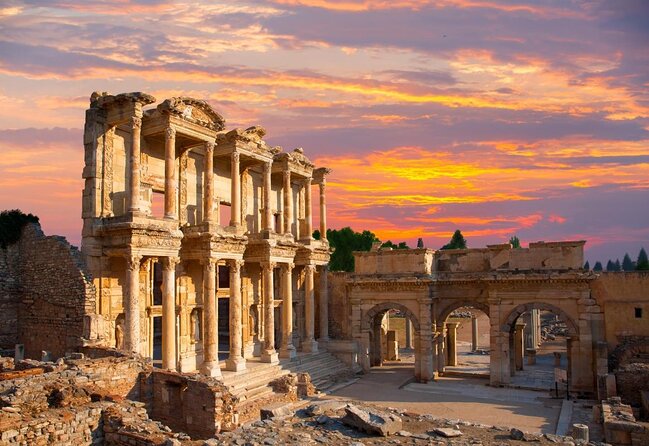
Next is the Library of Celsus, again about 30 minutes and not included in the base admission.
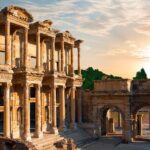
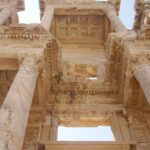
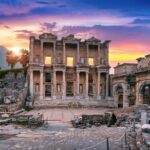
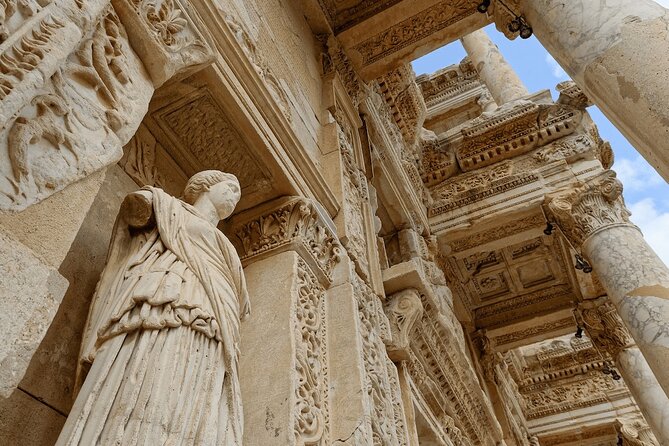
This is one of those sites where facts make the beauty make more sense. The library was built in 117 A.D as a monumental tomb for Gaius Julius Celsus Polemaeanus, with his son Galius Julius Aquila associated with the dedication. The grave is beneath the ground floor, across the entrance, with a statue of Athena over it (Athena as goddess of wisdom).
You’ll also learn about how the library was built to protect manuscripts: scrolls stored in wall niches, double walls behind the bookcases to manage temperature and humidity. The capacity is described as more than 12,000 scrolls, making it the third richest library in ancient times after those in Alexandria and Pergamum.
At ground level, you’re looking at architecture that was meant for knowledge and storage. It’s a reminder that cities were built for thinking and teaching, not only for worship.
Ephesus Great Theatre: Big Enough to Feel Loud
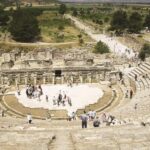
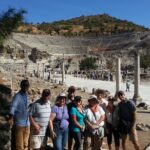
The Ephesus Ancient Greek Theatre is the performance space you can’t ignore. You get about 25 minutes, and the admission ticket here is included.
It’s described as the largest theatre in Anatolia, first constructed in the Hellenistic period in the third century B.C, then enlarged during the Roman period into its current style. The capacity is noted as 25,000 seats, with 66 rows and three seating sections. An emperor’s box area and marble pieces used for restoration were found.
The theatre wasn’t only for plays. The description says it was used for religious, political, and philosophical discussions, plus gladiator and animal fights.
If you want one takeaway, it’s this: when you stand in that space, you’re seeing a city’s communication system. It’s a giant room for public life.
Temple of Artemis and St. John Basilica: Two Ways to Be Moved
After the theatre, the day shifts from civic performance to spiritual meaning.
Temple of Artemis
You’ll spend about 40 minutes at the Temple of Artemis. Admission isn’t included. Today, you can mainly see ruins of the foundations, because the area turned into a swamp over centuries. The temple was once Hellenistic and made of marble, with sculptured capitals and shafts. Important pieces are said to be displayed at the British Museum in London.
This is worth the time if you like connecting what’s missing to what once was huge. The site is a lesson in change over time.
Basilica of St. John
You also get about 40 minutes at the Basilica of St. John. Admission isn’t included.
The site is tied to tradition: it’s believed St. John spent last years around Ephesus and was buried on the southern slope of Ayosolug Hill. A small chapel was built in the 4th century over the grave, later changed into a basilica during Emperor Justinian’s time (527–565 AD).
The tour explanation also mentions persecution in early Christianity and Paul’s execution in Rome, plus the tradition that John came to Ephesus with Mary. Even if you treat some elements as tradition, the building and its long history show how deeply the early Christian story is tied to this geography.
Lunch Included: A Real Break, Not Just a Token Stop
Lunch is included, and that’s a big part of why this tour feels fair. You’ll sit down before the afternoon finish and fuel up so you’re not trying to “ruin-hustle” through the last stops.
Drinks at lunch are not included, so expect to pay extra for sodas or water. If your guide likes to add local touches, past experiences connected to this tour have mentioned things like trying local figs and getting fresh squeezed pomegranate juice.
What I’d do: plan to keep your lunch simple. Eat what’s offered, sip what you want, and use this as your reset button before you tackle the later walking segments.
Shopping and Carpet Weaving Stops: Say Yes or Politely Say No
Some Ephesus days include a stop for carpet weaving or rug making demonstrations, and it often comes with a sales moment. One common pattern from past experiences is that the demonstration is interesting, but the selling can get intense unless you hold your boundaries.
If you’re buying a rug, great—watch how the work is done and ask real questions. If you’re not buying, be clear and calm. You can enjoy learning without needing to commit.
Price Breakdown: What You’re Paying for at $79.20
The price is listed at $79.20 per person for a private tour lasting about 5 to 7 hours. That’s for the guide, transport, line-skipping approach, parking fees, and lunch.
Here’s the part people need to plan for: major admissions are not included. Based on the fees listed:
- Ephesus Ancient City: €40.00 per person
- Virgin Mary House: €18.00 per person
- Terrace Houses: €15.00 per person
- St John Basilica: €6.00 per person
- (Great Theatre admission is included)
Add the main non-theatre site fees together: €40 + €18 + €15 + €6 = €79 of core admissions on top of the tour price. Then plan for drinks at lunch, which are extra.
So is it good value? Yes, if you want a private, explanation-forward day and you care about seeing more than the headline few stops. If you’re mostly chasing the quickest museum-hit version of Ephesus, the extra included guide time (and the terrace houses focus) may or may not feel worth it.
Tips to Get the Best Day From This Tour
This is a ruin day. It will ask for walking and sun tolerance.
- Bring comfortable shoes with grip. Ephesus paths and terrace areas can be uneven.
- If terrace houses are on your must-do list, treat it as the workout portion. Plan your pace.
- Use sunscreen and a hat. You’ll be outside for long stretches.
- Keep a small plan for money: admissions are paid separately where noted, and lunch drinks are extra.
- Ask your guide to point out where you’re standing in the city layout. It turns a list of ruins into a map in your head.
Who Should Book This Private Ephesus Day (and Who Might Skip It)
This tour is a strong fit if you:
- want a private experience with a licensed English-speaking guide
- have a cruise schedule and want pickup timing to be handled
- care about context, including places tied to governance, family life, and early Christian tradition
- are willing to pay separate entrance fees for the full set of major sights
It might be less ideal if you:
- dislike stairs or rough ground
- only want the smallest possible admissions bill and don’t care about Terrace Houses or the more detailed civic stops
Should You Book This Tour?
Yes—if you want Ephesus to feel explained, not just photographed. The private format, Mercedes van comfort, included lunch, and the focus on detailed city pieces (State Agora, Odeion, Terrace Houses, and the Library of Celsus) make the day feel like it has a point.
Book it especially if you’re on a cruise and time is tight. The practical line-skip approach can save you real energy, and the included Great Theatre ticket helps you avoid one more queue and one more payment.
If you’re cost-sensitive, do the math first: the big admissions add up to about €79 for the main non-theatre sites listed, plus lunch drinks. If that fits your budget, this is one of the better ways to experience Ephesus in a single day.
FAQ
Is lunch included in the tour?
Yes. Lunch is included, but drinks at lunch are not included.
What admission fees are not included?
Admission fees for Ephesus Ancient City, the Virgin Mary House, the Terrace Houses, and the St John Basilica are not included. The Great Theatre admission ticket is included.
How long is the tour?
The duration is listed as approximately 5 to 7 hours.
Do you get pickup for cruise ship passengers?
Yes. Cruise passengers meet at the exit gate of the immigration terminal of the cruise port, with a board showing the OTTI TRAVEL sign.
Is this tour private?
Yes. It is a private tour/activity, so only your group participates.
What language is the guide?
The tour is offered in English, with an English speaking professional licensed tour guide.