REVIEW · GRAN CANARIA
Private shore excursion in Gran Canaria the miniature continent
Book on Viator →Operated by Jörg Kroker · Bookable on Viator
Gran Canaria changes its face fast, like magic. This private mini-continent route takes you from Maspalomas dunes to Teror via viewpoints and mountain villages, all in one long but doable day. You get a real sense of how the island switches climates, from dry south to greener north.
I love the tight variety for the time you have. You’ll see desert sand, canyon-like views, whitewashed streets, and a church square with wooden balconies—without doing multiple transfers on your own. I also like the personal guide factor: Jörg Kroker runs the day and can explain in German and English (and also Spanish), which makes the whole route feel more alive than a checklist.
One drawback to plan around: it’s a full 7 to 8 hours of driving plus several quick stops. If you want long linger-time at just one place, this route may feel a bit “stop-and-go.” Also, baby seats aren’t available, so families with very small kids may need to think twice.
In This Review
- Key highlights at a glance
- A mini-continent day that makes sense of Gran Canaria
- Price and value for a group of up to 8
- The 9:00 start and the 7 to 8 hour pacing
- Stop 1: Maspalomas dunes and a quick promenade fix
- Mirador Degollada de la Yegua: the south’s canyon-style view
- Fataga village: white houses, narrow paths, and quiet time
- San Bartolomé: the south’s capital moment
- Tejeda: center-of-island village time plus almond specialties
- Cruz de Tejeda: switching from old crossroads to greener north
- Teror: pedestrian streets, wooden balconies, and a major church square
- Why the guide matters: Jörg Kroker’s style and language help
- What to bring so the day feels easy
- Is this tour active or easy?
- Who should book this private mini-continent route?
- Should you book it? My honest take
- FAQ
- How many people are in this private tour?
- What time does the excursion start?
- Is pickup included, and do I get a mobile ticket?
- Do any of the stops require paid admission?
- What happens if the weather is bad?
- Are baby seats available, and can I bring a service animal?
Key highlights at a glance
- Private for up to 8: your group only, so the pace can match your energy.
- From dunes to pine forests: the day shows how Gran Canaria flips climate zones.
- Tejeda almond moments: tasting local almond specialties and time for village wandering.
- Viewpoints that actually deliver: Degollada de la Yegua gives big-picture views over the south.
- Teror on foot: pedestrian streets, wooden balconies, and a major pilgrimage church square.
A mini-continent day that makes sense of Gran Canaria
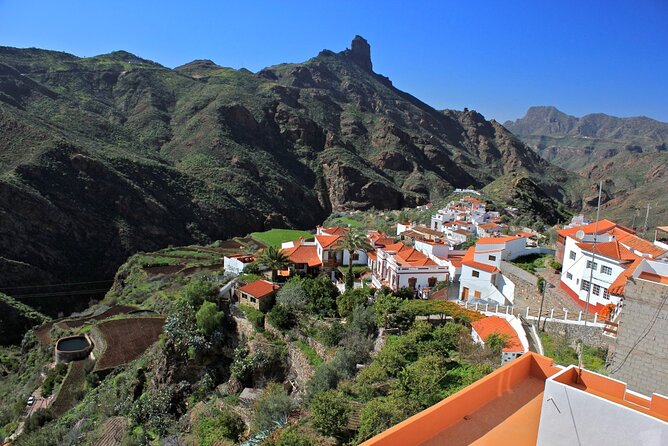
Gran Canaria earns its nickname for a reason. Within a single island day, you can go from sun-bleached dunes to mountain villages and then down into greener, cooler-looking areas. This tour is built for that. You’re not stuck in one zone. You’re sampling multiple “worlds,” and you’re doing it with one driver and one plan.
What I like most is that the route isn’t just pretty-photo tourism. It’s organized around how the island works: dry south, dramatic viewpoints, then the center, and finally the north-side areas where vegetation changes. When you see it in motion, the island’s differences start to feel obvious.
This is also a shore-excursion style day, which means time is managed. The stops are long enough to get your bearings and take photos, but short enough that you don’t miss the next viewpoint when the light changes.
You can also read our reviews of more private tours in Gran Canaria

Price and value for a group of up to 8
The price is $596.12 per group for up to 8 people. That’s the key number. In plain terms, this can be a strong value if you fill the group.
Here’s the quick math:
- At 8 people, it lands around $75 per person.
- At 4 people, it’s about $149 per person.
Is it worth it at smaller headcounts? It can be, if you care about:
- having pickup and not wrestling with buses,
- getting a guide who can talk through what you’re seeing,
- and getting a route that’s efficient for a single day.
If you’re traveling solo or as a couple and you’d rather go slow, compare this to independent car rental. But if you want the island “in one day” with minimal stress, private transport plus a local guide is often the easiest way to make that happen.
The 9:00 start and the 7 to 8 hour pacing
The day kicks off at 9:00 am. Plan on a long but structured day, roughly 7 to 8 hours total. The schedule works because the stops are spaced and timed, so you can rotate between driving time (when scenery opens up) and short walking blocks (when you actually explore).
You’ll likely spend a chunk of the day at:
- dunes and promenade walking,
- a viewpoint break,
- village time in Fataga and Tejeda,
- then Teror’s church-square atmosphere.
A good approach for this kind of day is to travel light and dress for quick changes in temperature. Even if the coast feels warm, the center and north-side areas can feel cooler once you’re higher up or out of the hottest sun.
Stop 1: Maspalomas dunes and a quick promenade fix
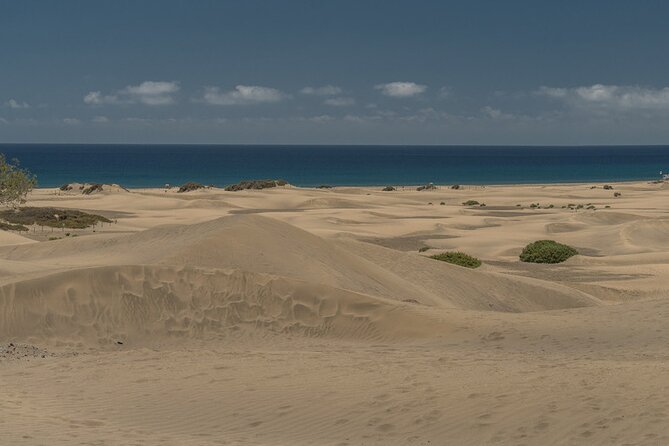
Maspalomas is one of those places you recognize even before you reach it. You get photo time plus a short walk along the promenade. The main win here is that you’re not only seeing sand from a bus window. You’re stepping into the scene long enough to feel the scale.
This also works as a warm-up stop. After that, the day moves straight into the viewpoints and mountain zones, so you’re mentally ready for the island’s “big moments.”
Timing here is about 20 minutes, and there’s no admission ticket required for this stop. So you’re paying for the guide and transport value, not entry fees.
Tip: bring a camera with a charged battery. Dune light can shift fast, and you’ll want at least a few shots from different angles.
Mirador Degollada de la Yegua: the south’s canyon-style view
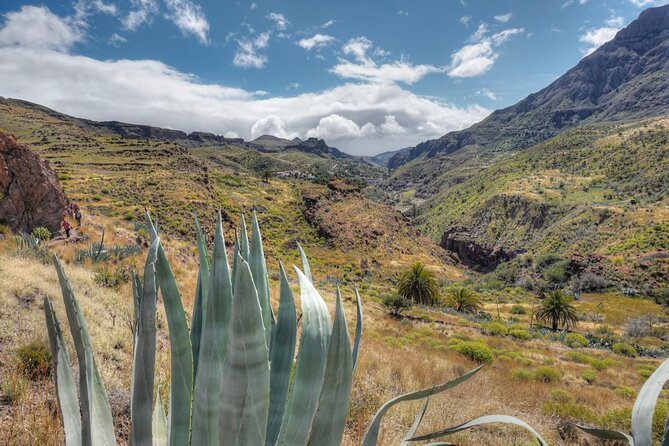
At Mirador Degollada de la Yegua, you stop for around 15 minutes. This is a lookout break, not a long hike, but it gives you something important: context.
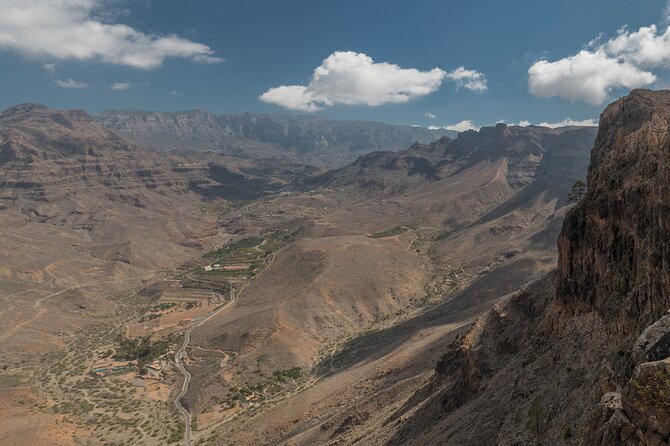
From here you can see the Fataga Valley and wide views toward the south—think Playa del Inglés and Maspalomas. It’s the kind of view that helps you connect everything later. Once you’ve seen where the valley sits, the villages and drives start to feel less random.
No admission ticket is required for the stop. You’re basically paying for timing and positioning: getting you to a “readable” viewpoint at a moment you can enjoy.
What to watch for: if clouds roll in, you may find yourself above or around them depending on the day. From the feedback I’ve seen from similar tours, those sky breaks can turn a regular viewpoint into a dramatic one.
Fataga village: white houses, narrow paths, and quiet time
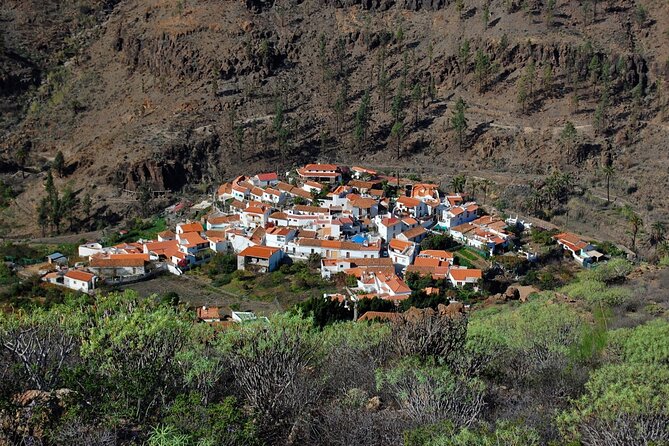
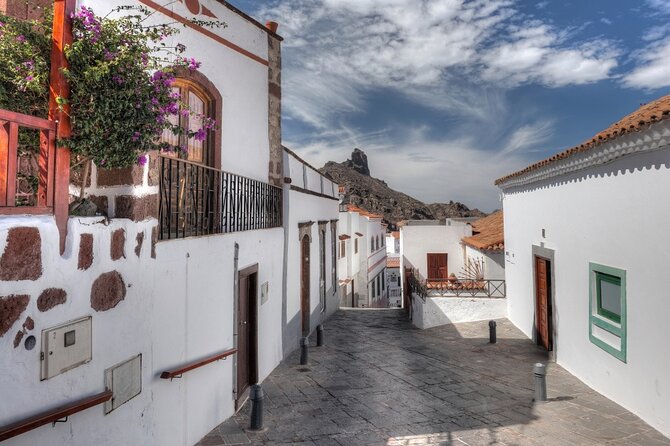
Fataga is where the day gets slower in a good way. You’ll spend about 30 minutes exploring the old mountain village: whitewashed small houses, narrow paths, and a calmer pace than the coast.
This stop matters because it adds human texture. Instead of only natural scenes, you get street geometry and quiet corners. Even a half hour is enough to walk a bit, take photos, and feel how village life hugs the terrain.
Another practical reason this stop works: it breaks up the driving intensity. You’re not only looking far away. You’re walking close, at eye level, so the day feels balanced.
No admission ticket required here either. So you can focus on wandering without thinking about timing for a paid entry.
San Bartolomé: the south’s capital moment
You also pass through San Bartolomé, described as the “capital” of the south. The schedule data doesn’t give a precise stop duration, so treat it as a situational stop—often a short break or a transit moment.
Still, it’s a helpful “between zones” place. Once you’ve seen dunes and viewpoints, coming through a town labeled as a regional capital gives your route a sense of place beyond nature photography.
If you want bathroom time, this is the part of the day where you can usually plan for it. Just keep an eye on timing so you don’t get caught sprinting back to the vehicle later.
Tejeda: center-of-island village time plus almond specialties
Tejeda is a highlight stop for a simple reason: it feels like the island’s center is talking back. You get about 45 minutes here, and it’s long enough to wander rather than just pose.
Tejeda is known as one of Spain’s most beautiful villages, and it also has a food identity tied to almonds. During your time there, you’ll have a chance to try local almond specialties. If you visit in early February, there’s an Almond Blossom Festival happening there, which can add extra color to the streets and timing.
No admission ticket required for the stop. So again, this is about the village experience and the guide-led route value, not ticketing.
If you want to make this stop enjoyable:
- aim to browse small lanes first,
- then slow down near the more open viewpoints,
- and leave space for a snack or almond tasting without rushing.
This is also a good place to buy small food souvenirs if you like edible gifts. Just be mindful of luggage space.
Cruz de Tejeda: switching from old crossroads to greener north
After Tejeda, you head via Cruz de Tejeda, past old crossroads, and toward the greener north side. This is another “route understanding” moment.
Crossroads points in the mountains often mark altitude change, and you’ll feel it in the air and light as you shift direction. Even if your time here is mostly driving and positioning, it helps you make sense of why Gran Canaria feels so different from one side to the other.
This part of the day is also where you’ll appreciate having a guide. Driving through mountain switchbacks is easier when you’re not guessing what’s next or why the turn makes sense.
Teror: pedestrian streets, wooden balconies, and a major church square
Teror is the payoff for the north-side shift. The vegetation changes a lot here compared to the dry south. You’re heading into pine forests, chestnut groves, and remnants of laurel forest—at least in terms of what the tour is showcasing.
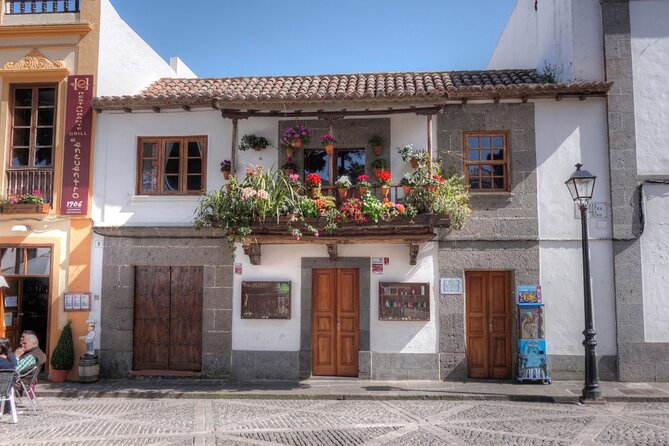
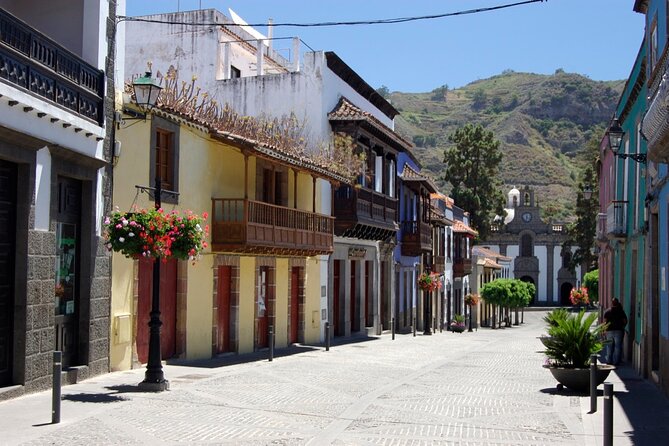
Teror itself is known for its pilgrimage site. Your time is about 30 minutes, and you’ll stroll around pedestrian streets near the church square. A standout detail is the traditional wooden balconies, which give the town a distinct look compared to the white village feel of places like Fataga.
No admission ticket required for the time in town. So you can treat it like a walkable cultural break rather than an “entry attraction.”
If you like church squares because they’re easy to orient yourself, Teror is that kind of place. You can stand, watch people move through the streets, take a few photos, and still feel you got something more than scenery.
Why the guide matters: Jörg Kroker’s style and language help
This tour runs with Jörg Kroker as the guide. The biggest difference between a private excursion that feels great and one that feels average is communication. Here, Jörg can run the day in German and English, and also Spanish, so you’re less likely to end up with vague explanations or long silence in the car.
From the way people describe his guiding, the pacing is organized but not stiff. He’s described as friendly and keeping things on time, which matters on a shore day when you don’t have infinite buffer.
There’s also a practical advantage to a guide who knows where to position you for views. When you only have 10 to 20 minutes at a lookout or a village, being off by a few minutes can cost you the best light.
If you prefer your day to feel like you’re with a local who cares, Jörg’s style is built for that. It’s not just driving you past places.
What to bring so the day feels easy
With stops like dunes, viewpoints, and old village streets, you’ll want to be ready for walking on uneven surfaces and steps. Comfort beats style today.
Pack:
- Comfortable shoes you trust on sidewalks and irregular pavement
- Sun protection (Gran Canaria sun can feel serious even when it’s not peak heat)
- Water, especially if you tend to get thirsty on drives
- A light layer for higher points and shaded church squares
Also, this experience requires good weather. If weather isn’t cooperating, your tour can be canceled or shifted, depending on what’s offered. So plan your schedule with one day that can absorb a change.
Is this tour active or easy?
This isn’t a hiking-only day. You’re mostly on short walks: dunes and a promenade segment, plus village strolls and a church-square loop. The walking is manageable for most people, and the tour notes say most travelers can participate.
Still, keep it realistic: it’s a full day with multiple stops. If you have mobility challenges, you’ll want to evaluate whether short repeated walks add up to something you can handle comfortably.
If you’re someone who wants minimal walking, you can still enjoy the big picture from viewpoints and car stops, but you’ll get the best experience by joining the short walks.
Who should book this private mini-continent route?
This tour is a strong fit if you:
- want to see multiple parts of Gran Canaria in one day,
- like villages and viewpoint breaks, not just beach time,
- prefer pickup and a guide over DIY navigation,
- and travel as a group that can fill up to 8 spots.
It’s also ideal for shore days when you want maximum results without the stress of public transport timing.
If you’re a family with an infant, double-check the baby seating issue. The tour notes say baby seats are not available, which can affect comfort and logistics.
Should you book it? My honest take
I’d book this if your priority is “variety with less hassle.” The route makes sense: dunes first to set the tone, then canyon-style views, then Fataga and Tejeda for village texture, and finally Teror for a north-side feel with a memorable church square.
It’s also a smart choice when you can spread the group price across 6 to 8 people. You’re buying efficiency—transport, timing, and interpretation—not just a few scenic photos.
Skip it only if you want a slow travel day with lots of free time in one place. This is a tour built for movement and quick impressions, not long lounging.
FAQ
How many people are in this private tour?
It’s private, meaning only your group participates. The group size is up to 8 people.
What time does the excursion start?
The start time is 9:00 am.
Is pickup included, and do I get a mobile ticket?
Pickup is offered, and the tour includes a mobile ticket.
Do any of the stops require paid admission?
For the listed stops, admission is marked as free.
What happens if the weather is bad?
The experience requires good weather. If it’s canceled due to poor weather, you’ll be offered a different date or a full refund.
Are baby seats available, and can I bring a service animal?
Service animals are allowed. Baby seats are not available.