REVIEW · QUEBEC CITY
Quebec City Shore Excursion: Private Walking Tour
Book on Viator →Operated by Tours Voir Quebec · Bookable on Viator
Cruise days need a plan. This private walking tour helps you get your bearings fast, from Upper Town viewpoints to Old Québec streets, with live stories as you go. You’ll focus on top sights like the Fortifications of Québec, Place Royale, and the view of Fairmont Le Château Frontenac—ideal when you’ve only got a few hours shore-side.
What I like most is the way the guide turns landmarks into meaning. You’ll get live commentary that connects what you’re seeing—walls, churches, courtyards—with how the city worked past and present. The only real catch is that it’s a walk with uneven footing, including cobblestones, so mobility limits may make some streets harder than you expect.
In This Review
- Key highlights worth your attention
- Why a private walking tour works so well on a cruise day
- Start in Upper Town and get oriented with your guide
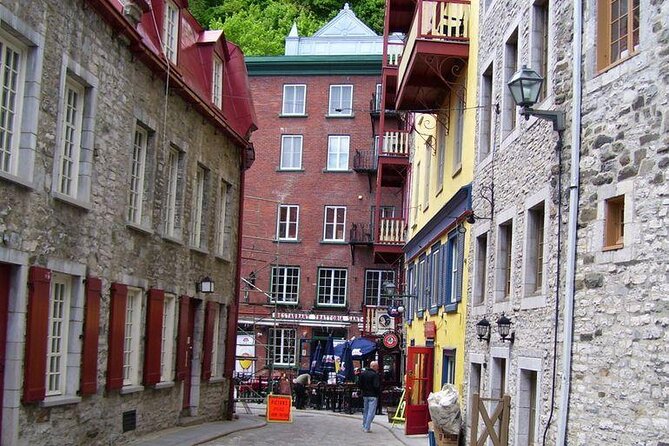
- Old Québec streets: where the stories connect to the stone
- Terrasse Dufferin and City Hall: the view stops that make the whole tour click
- Place Royale and Notre-Dame-des-Victoires: French America begins to feel tangible
- Chevalier House finish in Lower Town: a practical ending with optional flexibility
- What your guide actually brings to the tour (and why it changes the value)
- Price and value: what $99.28 buys you in real-world terms
- Shoes, weather, and the cobblestone reality you should plan for
- Quick itinerary walk-through, stop by stop
- Should you book this private Quebec City shore walk?
- FAQ
- How long is the Quebec City private walking tour?
- How much does the tour cost?
- Where does the tour start?
- Where does the tour end?
- Is the tour private?
- What language options are available for the guide?
- Is admission included for the stops?
- Is it easy to get to from the cruise port?
- Is service available for people traveling with a service animal?
- Is this covered by a worry-free policy?
Key highlights worth your attention
- Private guide, private pace: It’s only your group, so you can ask questions and adjust what you see.
- Upper Town to Lower Town flow: You’ll move through the city’s main “levels” instead of bouncing around.
- Photo-ready views built in: Terrasse Dufferin and Place d’Armes are timed for sightlines and quick stops.
- UNESCO World Heritage focus: You’ll talk about the walled-city layout and why it mattered.
- Guides who teach, not just narrate: Names like Manon, Richard Seguin, Pierre, Michael, Clarisse, Simon, and Marize come up for mixing stories with practical context.
Why a private walking tour works so well on a cruise day
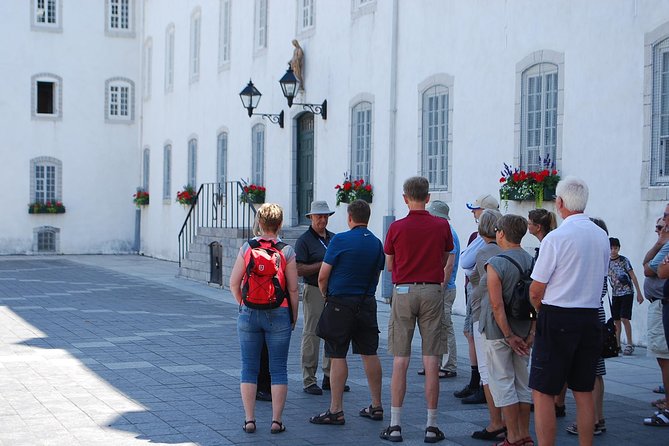
Quebec City can feel like two cities stacked together: Upper Town for history and views, and Lower Town for the older streets and harbor-side energy. On a cruise day, that’s exactly why a private walk shines. You’re not waiting for a bus, and you’re not hunting for the “right” entrance or the best photo angle—your guide leads a logical route on foot.
This tour is timed for shore reality. You start near the port area, then head into the historic core. Since the excursion is described as within about a 10-minute walk to the cruise port, you can decide when to head back—just don’t cut it close. I’d treat the full walk as your priority, then build cushion for crossing back to the ship.
Also, the booking window is a clue: this experience is often booked around 33 days in advance on average. That usually means popular guides and time slots can disappear. If you’re aiming for a specific language or you have strong preferences (especially around photo stops), reserve early.
You can also read our reviews of more walking tours in Quebec City
Start in Upper Town and get oriented with your guide
You meet your guide in the Upper Town area after a short walk from the ship zone. The listed start point is 12 Rue Sainte-Anne, Québec, QC G1R 3X3. From there, the tour kicks off with ongoing commentary right away, so you’re not standing around wondering what you’re looking at.
This first stretch matters more than it sounds. Upper Town is where the city’s defense, status, and “designed viewpoints” come into focus. Your guide can explain how the city’s layout shaped daily life—where people moved, where leaders lived, and why fortifications weren’t just for show.
If you’ve ever toured a city and felt like you saw places without understanding them, this is the fix. The tour is built as an educational walking experience, not a checklist sprint. Your guide can also customize the route with your requests, as long as you keep the time window in mind for your cruise schedule.
One small practical note: the itinerary mentions the stop at Upper Town with a free admission ticket, so you’re mostly paying in effort (walking) rather than paying in entry fees.
Old Québec streets: where the stories connect to the stone
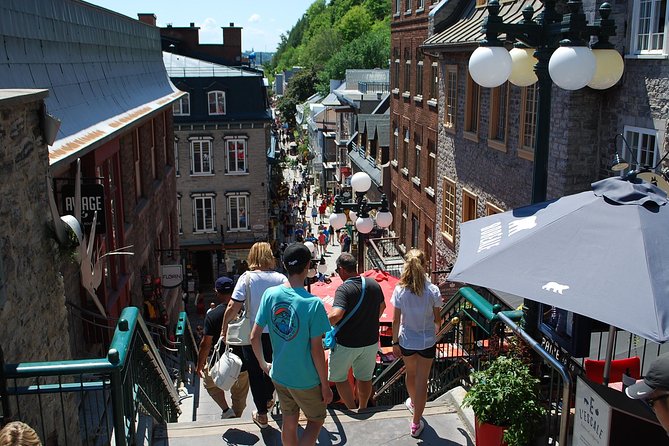
Once you’re in the historic heart of French Canada, the walking becomes the point. You’ll spend about 2 hours exploring Old Québec with flexible routing—either following your guide’s plan or adjusting based on what you want most.
In this part of the tour, you’re dealing with narrow streets, old stone buildings, and those little turns where it’s hard to see more than one thing at a time. That’s why a guide helps. They can explain what you’re seeing as you pass it, including how the city’s architecture reflects its history and culture.
A big theme here is the Fortifications of Québec. Your guide will talk about the city walls and why they mattered for the defense system of North America’s only remaining fortified city. You’ll also learn the striking detail that Québec City is the only walled city north of Mexico. It’s the kind of fact that suddenly makes the walls feel real, not just scenic.
This is also where your comfort and pace matter. Cobblestones and uneven pavement are part of Old Québec. If you’re carrying a backpack, wearing slick-soled shoes, or have a tight mobility situation, you’ll feel it here more than in the modern blocks.
Terrasse Dufferin and City Hall: the view stops that make the whole tour click
As you move through the route, you pass by La Terrasse Dufferin. This is one of those places where the city opens up visually. Your guide keeps it moving, but it’s still a built-in moment to pause, look, and frame the view.
Next comes Hotel De Ville de Quebec—the City Hall area. The itinerary highlights seeing the City Hall frontage and taking in the look of Place d’Dôtel de Ville. This section pairs nicely with nearby sightlines over the city core, including the Place d’Armes viewpoint.
Then you’ll get the kind of iconic photo angle that Quebec City is known for: the towering presence of Fairmont Le Château Frontenac. The tour description specifically calls it out, which is smart. If you’ve ever visited a famous hotel and tried to take a good photo while crowds and tour groups moved around you, you know why it helps when a guide picks the timing and the angle.
What’s valuable here isn’t only the view. It’s what the guide does with it. From these points, it’s easier to understand how Upper Town and the historic walls fit together—how the city’s defenses and status shaped what you see from below.
Place Royale and Notre-Dame-des-Victoires: French America begins to feel tangible
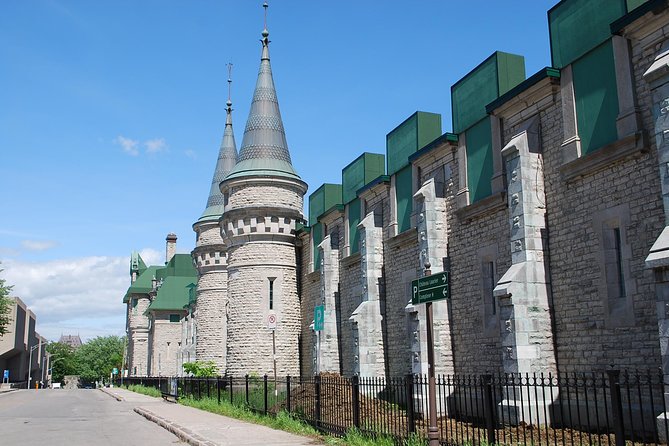
This is the part of the walk where Quebec City starts to feel like a living storybook, but without the fake museum vibe. Your route includes Place Royale, described as the birthplace of French America. That framing changes how you perceive the space. It’s not just a plaza; it’s a starting point that helped shape what came later.
The tour also notes passing through the courtyard area associated with Chateau Frontenac as part of the Place Royale stop. That gives you a sense of how power, hospitality, and history sit in the same visual space.
Then you’ll continue down Petit-Champlain street, which is where the vibe shifts toward the postcard streets of Lower Town. Here, your guide points out Notre-Dame-des-Victoires, one of the oldest stone churches in Canada, and located on the very spot where Québec began.
For me, this is where private guides really shine. You don’t just see a church door and move on. You get the story of why that location matters, and you can ask questions right on the spot—especially helpful if you’re curious about French vs. British influences and how they show up in the city today.
The itinerary also flags that parts of this final run are about “spotting” and quick stops rather than long waits. That’s a plus for a shore excursion.
Chevalier House finish in Lower Town: a practical ending with optional flexibility
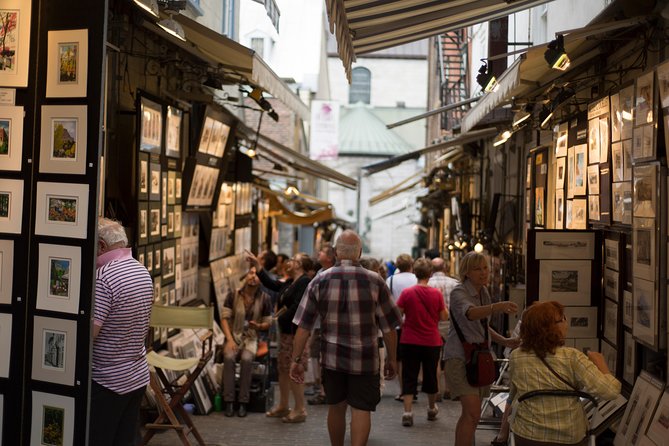
The tour concludes near Maison Chevalier, in Lower Town. The itinerary lists Chevalier House (Maison Chevalier) as a short stop, and it specifically notes that its admission ticket is not included.
That matters because it helps you plan your time. You can treat the finish as a final look at the area, and if you want to go inside, you’ll need to handle any entry cost yourself (since it’s not included). If you don’t, you still end in a historic pocket where you can wander a bit on your own.
One nice detail: the meeting points information says the tour finishes near Maison Chevalier, but you can ask your guide onsite to finish elsewhere within the historical district if it’s possible. That flexibility can be useful if you want to line up with a specific restaurant, viewpoint, or timing requirement for your ship.
What your guide actually brings to the tour (and why it changes the value)
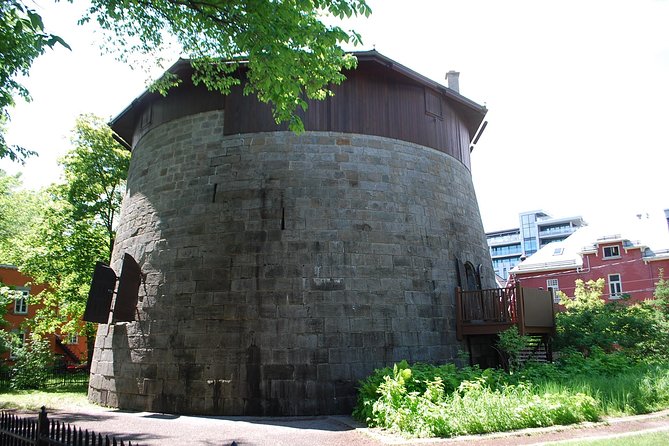
A private walking tour lives or dies based on the guide. In this experience, that’s not vague. The guide-led commentary is explicitly part of what you’re buying, and it’s offered in English or French—just specify your language when booking.
What I love about this setup is that the tour is designed to be story-driven while still grounded in real places. You’ll hear facts and interpretations about the city walls, the defense system, and major institutions like the Citadelle of Québec, which is described as an active military installation and official residence of the Canadian monarch and the Governor General of Canada. Even if you don’t enter everything, hearing what each site means gives your photos a backstory.
One review detail stands out as a good signal for what to look for in a guide: someone praised explanations tied to frescos and how those details connect to broader history, including connections to the USA. Whether that’s your exact interest or not, it points to a style you should seek: a guide who connects art, architecture, and events so the city doesn’t feel like memorized names.
In the same spirit, guide names like Manon, Richard Seguin, Pierre, Michael, Clarisse, Simon, and Marize show up as examples of people who handled the day with care and strong storytelling. If you have a choice, prioritize a guide who’s comfortable tailoring the walk and answering questions.
Price and value: what $99.28 buys you in real-world terms
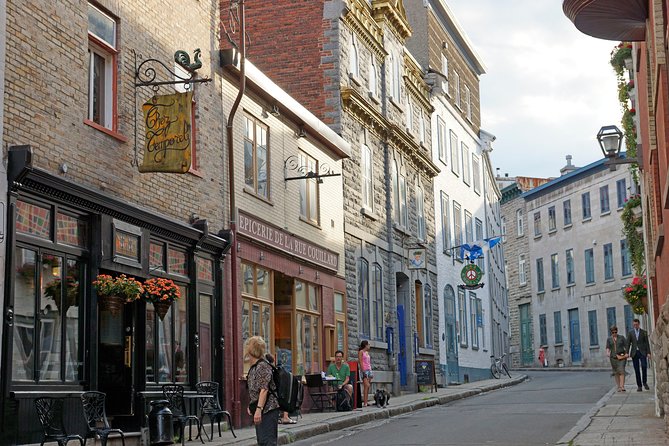
At $99.28 per person for about 2 hours 30 minutes, this isn’t a cheap “background walking tour.” But for a cruise day, private tours often make sense because they remove the two biggest costs: time and confusion.
Here’s what you’re getting for the money:
- A local guide with live English or French commentary.
- A route focused on major Upper Town and Old Québec anchors.
- A private format, meaning you can ask questions without getting cut off.
Group discounts are mentioned, too. If you’re traveling with friends or family and can fill the group, the per-person value tends to get stronger. I’d also think about what you’d pay for equivalent quality on your own—if you’re relying on a phone audio guide, you lose the chance to ask, and you may miss the meaning behind the walls and buildings.
So is it worth it? For most people who want structure and context, yes—especially if you’re the type who enjoys understanding why a street layout or fortification worked. If you’re the type who just wants to roam without stopping, you may find a self-guided plan works out cheaper. But if you want a guided explanation while you’re walking, this price lands in the fair zone.
Shoes, weather, and the cobblestone reality you should plan for
This tour recommends comfortable walking shoes and to dress for the weather. That’s not filler. Old Québec is not a smooth promenade. You’ll be on streets with uneven sections, and the walking is the main “activity” here.
There’s also a real-world consideration related to mobility. One experience described a situation with a motorized wheelchair. The group was told the tour could be adapted, but they found it too difficult to navigate the streets and ended up seeing much less of the city. The guide in that story was praised for doing their best, but the outcome is the key takeaway: don’t assume every curb, slope, and cobblestone is doable.
If mobility is a concern, your safest move is to ask direct questions before you book. Focus on whether you can avoid the rougher sections and how much of the route can be modified without losing the main sights.
If you’re simply worried about comfort and cold rain, it’s usually manageable if you wear good shoes and plan layers. Several guide names were praised for making the day work even in cold damp conditions, which suggests the tour is built for real weather rather than postcard weather.
Quick itinerary walk-through, stop by stop
Here’s how the day typically flows in plain terms:
- Upper Town meeting point: You walk to Upper Town and meet your guide.
- Old Québec exploration: You move through old streets and key sights with your guide’s commentary.
- Terrasse Dufferin pass-by: A brief but meaningful viewpoint moment.
- City Hall area: Stops around the Hotel De Ville de Quebec and photo-friendly city center sights.
- Place Royale: The birthplace framing, plus the courtyard area near Chateau Frontenac.
- Petit-Champlain and Notre-Dame-des-Victoires: Lower Town streets, the church’s location significance.
- Maison Chevalier finish: You end near Chevalier House in Lower Town, with entry not included.
Most stops list free admission in the tour description, which keeps the day simple. The one clear exception is the Chevalier House entry.
Should you book this private Quebec City shore walk?
Book it if you want a guided, story-based walk through the key sights without wasting time figuring things out yourself. It’s a strong fit for couples, solo travelers who like asking questions, and small groups who want the city to make sense in 2.5 hours.
Skip (or at least ask tough questions first) if you or someone in your group needs step-free, smooth pathways the whole way. The cobblestone issue isn’t theoretical—it can affect how much of the city you actually see.
I’d also lean toward booking if you’re the kind of traveler who cares about meaning. The tour’s focus on the walled city, the fortifications, and the major Upper Town institutions is exactly what turns photos into memories.
If you want a safe cruise-day win, this is the kind of private tour that helps you get oriented fast, then enjoy the details while you’re still near the ship.
FAQ
How long is the Quebec City private walking tour?
It runs for about 2 hours 30 minutes (approx.).
How much does the tour cost?
The price is $99.28 per person.
Where does the tour start?
The meeting point is listed as 12 Rue Sainte-Anne, Québec, QC G1R 3X3, Canada.
Where does the tour end?
The tour finishes near 50 Rue du Marché-Champlain, Québec, QC G1K 4E8, Canada, near Maison Chevalier. You can ask your guide onsite if finishing elsewhere within the historical district is possible.
Is the tour private?
Yes. It’s a private tour/activity, and only your group participates.
What language options are available for the guide?
The tour offers live commentary in English or French. You should specify your preferred language when booking.
Is admission included for the stops?
Most stops list admission tickets as free, but Chevalier House (Maison Chevalier) notes that admission is not included.
Is it easy to get to from the cruise port?
The excursion is described as being within about a 10-minute walk to the cruise port, and you determine when to return.
Is service available for people traveling with a service animal?
Yes. Service animals are allowed.
Is this covered by a worry-free policy?
No. This excursion is not covered by the worry-free policy.