
REVIEW · LUXOR
Shore Excursion from Safaga Port and Enjoy a full day tour in Luxor
Book on Viator →Operated by Luxortourguide · Bookable on Viator
Luxor hits hard in just one day. I love how the day pairs Karnak and the West Bank so you see both sides of ancient Thebes, and I also like that lunch is built in so you’re not scrambling in transit. One thing to plan for: entrance fees for the sites are not included, so you’ll want local cash ready.
This trip is designed for cruise-day reality. You get a morning pickup from the port, an air-conditioned ride out to Luxor, and a full circuit that still leaves you time to walk and look at your own pace. If you’re sensitive to early mornings, the 6:00 am start is the trade-off for fitting so much in.
The group stays small, capped at 20 people, which helps the Egyptologist keep things moving without turning the day into a cattle line. I also appreciate that the tour runs with a clear sequence and a sensible mix of guided moments plus short free-time windows at key monuments.
In This Review
- Key points to know before you go
- A 6:00 am Luxor start that actually works
- The drive from Safaga or Hurghada: comfort matters
- Karnak Temple: how the biggest ruins make sense
- Valley of the Kings: what you can see and what costs extra
- Temple of Hatshepsut: the story behind the courtyards
- Colossi of Memnon: a short stop with big scale
- Lunch and breaks: built in, but keep expectations realistic
- Price and value: where the $135 goes
- Group size and pacing: you get movement without total chaos
- Weather and timing: the one risk you should respect
- Who should book this Luxor day tour
- Should you book this shore excursion?
- FAQ
- What time does the tour start?
- How long is the tour?
- Does the tour include lunch?
- Are entrance fees included?
- Is the tomb of King Tutankhamun included?
- Can I cancel for a full refund?
Key points to know before you go
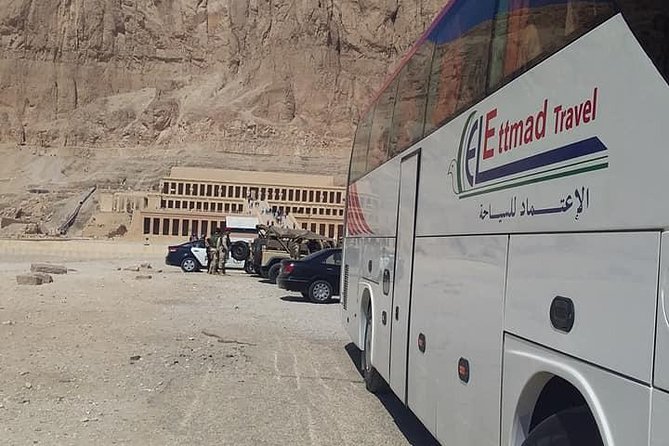
- Full-day East and West Bank circuit: Karnak plus the Valley of the Kings and Hatshepsut, then back with a West Bank stop at the Colossi of Memnon
- Lunch included: you don’t have to budget a separate meal day-of
- Egyptologist guidance: you’ll get explanations while you walk the big sights, not just at the entrance gate
- Valley of the Kings tomb rules: your guide talks you through what to look for, but guides aren’t allowed inside the tombs
- Entrance fees require local cash: you’ll need to cover entry on-site (Local Cash Needed: 450 Egyptian pound)
- Early 6:00 am departure: a long day, but it helps you see more before the heat and crowds build
A 6:00 am Luxor start that actually works
This is one of those shore excursions that only makes sense if you leave early. The start time is 6:00 am, and the full day runs about 12 hours, including transfers from Safaga or Hurghada Port.
What I like about this structure is simple: you’re not stuck staring at a long bus ride with nothing to show for it. Even with the drive, the day is packed enough that you’ll still experience the major monuments without feeling like you’re only scratching the surface.
The drive from Safaga or Hurghada: comfort matters
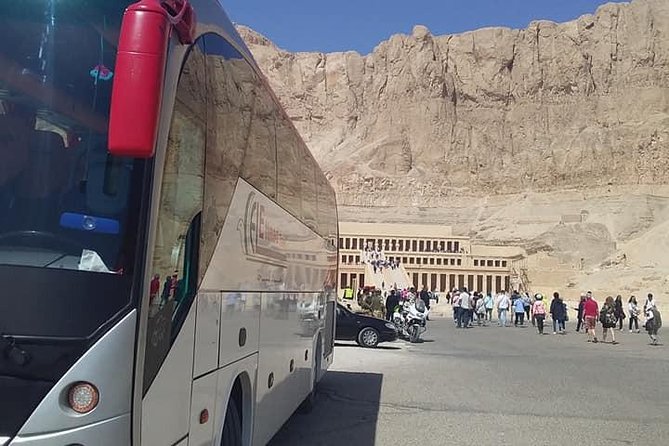
Pickup is offered from Safaga or Hurghada Port, and transport is in an air-conditioned vehicle. That sounds basic, but on a day this long, it can make the difference between enjoying the tour and just surviving the heat.
Also, this is set up for cruise logistics. Parking fees, fuel surcharge, driver service charges, and taxes are included, so you’re not hit with extra “surprise” bills just to get from the port to Luxor and back.
Karnak Temple: how the biggest ruins make sense
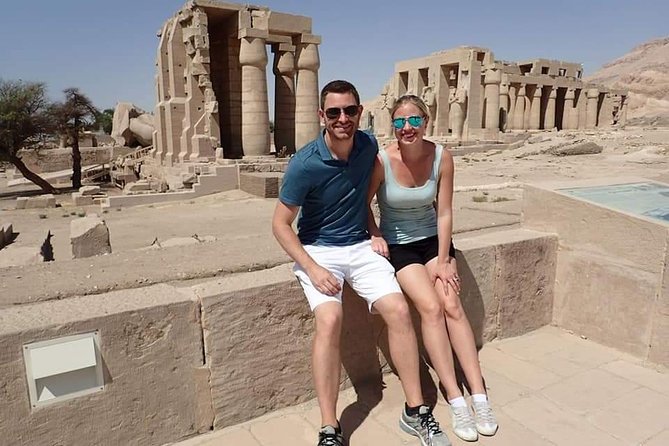
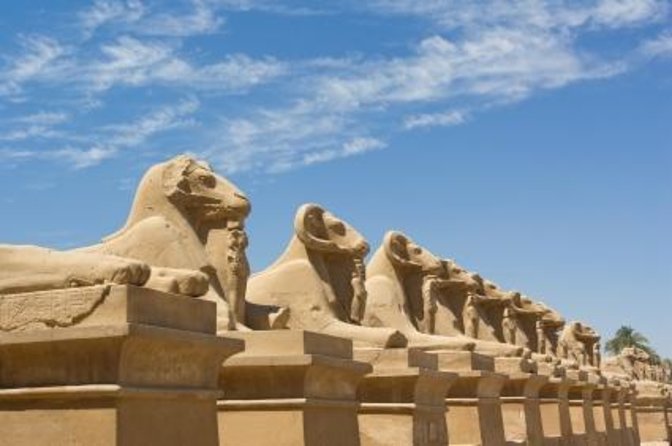
Karnak is the kind of place where your brain needs help to keep up. You enter walking along the Avenue of Sphinx, and your guide explains how the massive facade was constructed—meaning you don’t just see walls, you start to understand how it was built up over time.
The core Karnak experience is the scale. The Great Court leads into the Great Hypostyle Hall, where the ceiling rises above you and you face towering columns. You’ll hear why the hall is famous and what you’re looking at, including the detail that the hall has 134 columns.
What I find valuable here is the “time layering” effect. As you move deeper, you see how different pharaohs left their mark as the complex grew larger, and the oldest parts date back more than 3,000 years.
There’s also a sacred lake area at the rear of the complex, where purification and offerings were tied to religious practice. That’s not the headline moment for most people—but it rounds out the story so Karnak feels like a functioning sacred space, not only a pile of stone.
Practical note: Karnak stop time is about 1 hour 30 minutes, and admission is not included. You’ll get extra free time after the main tour segment, which is your window to wander, find viewpoints, and re-check details without rushing.
Valley of the Kings: what you can see and what costs extra

Next comes the Valley of the Kings, burial ground of the kings of Thebes (ancient Luxor). You’ll start with a brief stop at the visitors center, which helps set context before you head into the tomb area.
Here’s the most important thing to know for your expectations: guides are not permitted inside the tombs. Your guide will still help by telling you what to look for once you’re inside the elaborately decorated rooms—so you won’t be totally on your own, but you also won’t get the full guided walkthrough inside.
Time is about 1 hour 30 minutes for this stop. That usually means you can choose one tomb if you want a focused visit, and still have time to take in the overall setting.
If you want the tomb of King Tutankhamun, it’s an added cost paid directly. The key point: that extra ticket isn’t included in the base price, so plan your budget if Tut is your must-see.
Temple of Hatshepsut: the story behind the courtyards
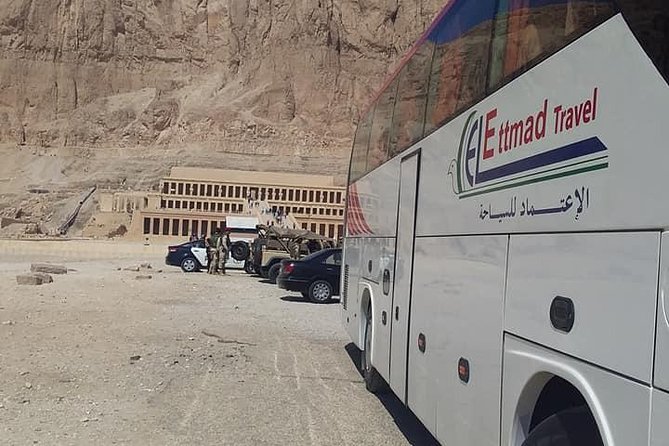
Hatshepsut is one of the stops where the monument and the biography link up fast. Your guide introduces the story of Queen Hatshepsut and how she ruled—specifically, the temple relates to her as a female ruler who took on the power symbolically associated with a male king to secure her position.
The stop is about 1 hour, and admission is not included. You also get free time to explore at your own pace, which matters here because the temple rewards slow looking: courtyards, large structures, and wall carvings that you can admire without needing to move every minute.
One more practical detail: plan to wear something comfortable. Even with time limits, you’ll be doing walking on temple floors and in open areas, and the surfaces can get hot depending on the day.
Colossi of Memnon: a short stop with big scale
On the West Bank, you’ll visit the Colossi of Memnon. These are two giant statues linked to the funerary temple of Amenhotep III, and what’s striking is that these two figures are what remains of a much larger complex.
This stop is only about 20 minutes. That can feel short until you realize that the value isn’t in a long museum-style visit. It’s a quick moment where you register the scale, take in how the statues sit in the landscape, and then you’re on your way.
If you want photos, this is the window. Just don’t plan to turn it into a long pause—time here is meant to keep the rest of the itinerary on track.
Lunch and breaks: built in, but keep expectations realistic
Lunch is provided with no extra cost during the tour. That’s a big plus for a day this tight, especially since food and drinks are not otherwise included unless specified.
So think of lunch as your anchor meal, then bring a strategy for water and any snacks you might want outside the provided meal. The tour covers the main time blocks, but it doesn’t promise drinks for the entire day.
Price and value: where the $135 goes
The price is $135.00 per person, and it includes a lot that people often end up paying separately on other shore excursions.
What’s included:
- Qualified Egyptologist guide
- Pickup and drop-off from Safaga or Hurghada port
- Lunch during the tour
- Transport by air-conditioned vehicle
- Parking fees, fuel surcharge, driver and all service charges, and taxes
What’s not included:
- Entrance fees for the sites (Local Cash Needed: 450 Egyptian pound)
- Food and drinks unless specified
- Gratuities (recommended)
- Personal expenses and anything not mentioned
Here’s how I think about value: the base price covers the hard parts—driver, timing, and expert guiding—so you’re not trying to assemble Luxor day-of from scratch. Then you pay site entry on top, which is normal in Egypt.
If Karnak, the Valley, and Hatshepsut are your top priorities, this price can be a good deal because you’re buying a structured plan with professional interpretation rather than relying on self-guiding while everyone else rushes ahead.
Group size and pacing: you get movement without total chaos
This tour runs with a maximum of 20 travelers. That’s small enough that you can usually hear the guide and follow the route without feeling lost in a crowd.
The pacing is also built around realistic stop lengths:
- Karnak gets more time because it’s layered and you’ll benefit from both guiding and wandering.
- Valley of the Kings has guidance before entry, then you choose how you’ll spend your time inside.
- Hatshepsut gives you a guided introduction and then time to look.
- Colossi of Memnon is a quick, scale-focused hit.
It’s not slow travel. It’s more like a smart playlist: each stop changes the pace and the kind of attention you’re giving.
Weather and timing: the one risk you should respect
This experience requires good weather. If it’s canceled due to poor weather, you’ll be offered a different date or a full refund.
That matters in Luxor because the plan depends on being able to visit outdoor monuments and walk temple grounds. If you’re booking during a season where conditions can shift fast, keep your flexibility in mind so you don’t feel stuck.
Who should book this Luxor day tour
This is a great fit if:
- You want the major Luxor highlights in one day without building your own plan
- You value an Egyptologist guide to explain what you’re looking at
- You’re okay with an early start and a long day
It might be less ideal if:
- You only want to linger slowly at one monument and skip the rest
- You hate paying entrance fees separately (cash is needed on-site)
- You strongly prefer tombs with full in-tomb guiding (your guide can explain what to look for, but they can’t go inside the tombs with you)
Should you book this shore excursion?
If your goal is to see Karnak, the Valley of the Kings, and Hatshepsut with a guide and a smooth round-trip from Safaga or Hurghada, I’d say book it. The mix of guided explanation plus short free time is exactly the balance most people need on a cruise day.
Just go in with two smart expectations: budget for entrance fees in local cash, and accept that the day starts at 6:00 am and runs about 12 hours. When you do that, you’ll come away with a full Luxor sample and a much clearer sense of how the sites connect.
FAQ
What time does the tour start?
Pickup and start time are set for 6:00 am.
How long is the tour?
The duration is about 12 hours.
Does the tour include lunch?
Yes. Lunch is provided during the tour at no extra cost.
Are entrance fees included?
No. Entrance fees for the sites are not included, and Local Cash Needed is listed as 450 Egyptian pound per person.
Is the tomb of King Tutankhamun included?
Visiting the tomb of King Tutankhamun isn’t included and requires an additional cost paid directly.
Can I cancel for a full refund?
Yes. You can cancel up to 24 hours in advance for a full refund. If you cancel less than 24 hours before the start time, the amount paid is not refunded.