REVIEW · RED SEA
Shore Excursion: Safaga Port Overnight Tour to Luxor
Book on Viator →Operated by Love Egypt Tours · Bookable on Viator
Safaga port is not exactly next door to Luxor. This 2-day Luxor overnight turns a long Red Sea transit into a full, well-paced temple visit, with a private Egyptologist guiding both the East and West Banks. I really like that you get an actual overnight stay at a 5-star hotel with breakfast, so you’re not trying to squeeze everything into one rushed day. I also like the tight focus on the big hitters like Karnak, the Valley of the Kings, and Hatshepsut. One thing to keep in mind: the road time is significant, with about a 3-hour transfer each way from Safaga.
Here’s the practical pitch: you show up at 7:00 am, your transportation and overnight are handled, and you’ll cover key monuments without doing the logistics math yourself. The small group size (max 8) helps the guide keep things moving, but it also means it’s still a busy schedule, especially with daytime temple walking and an early start.
In This Review
- Key Things You’ll Be Doing (and Why They Matter)
- Safaga to Luxor: the 3-hour drive you can’t ignore
- Karnak Open Air Museum: why this temple complex takes 2 hours
- Luxor Temple on the East Bank: the 3 km Sphinx Avenue connection
- Day 1 wrap: transferring to Luxor and settling in
- Overnight in a 5-star hotel with breakfast: the value of sleep
- Valley of the Kings: seeing 3 tombs without the “blink and miss it” feeling
- Temple of Hatshepsut at Deir el-Bahari: three terraces, one unforgettable layout
- Colossi of Memnon: a short stop that still earns its minutes
- Meals, water, and what to budget for temple entrances
- Private Egyptologist + small group: what you get in real terms
- Price check: is $699.76 per person good value?
- Who should book this Safaga overnight Luxor tour
- Should you book the Safaga Port Overnight Tour to Luxor?
- FAQ
- How long is the Safaga Port Overnight Tour to Luxor?
- What time does the tour start?
- Is the overnight hotel included?
- What’s included in the price?
- Are temple entrance fees included?
- How many people are in the group?
Key Things You’ll Be Doing (and Why They Matter)
- East Bank first, then the West Bank: you’ll see Luxor’s two sides with the Nile as your mental reset between stops.
- Karnak Temple Complex, plus Luxor Temple: two major temple zones with very different vibes and scale.
- Valley of the Kings with 3 tombs planned: not just a quick look—enough time to feel what you’re looking at.
- Deir el-Bahari and Hatshepsut’s terraces: a top-tier West Bank sight with a distinct layout.
- Colossi of Memnon included: a short stop that’s still worth your camera time.
- 5-star overnight with breakfast: sleep matters here, because Luxor is not a “do it all on one day” place.
Safaga to Luxor: the 3-hour drive you can’t ignore
Most Safaga-to-Luxor tours live and die on logistics. This one is honest about it: you’re collected from the port around the start time and then you’ll take an air-conditioned private vehicle to Luxor, about 3 hours each way.
Why I like this setup: that long ride is a better use of your time than it sounds. With an overnight plan, the tour doesn’t burn your daylight on endless transfers alone. Instead, you get a full Day 1 of East Bank temples and a Day 2 of West Bank monuments, with the hotel acting like a reset button.
What to consider: you’ll want to treat the drive like part of the tour, not a nuisance you can mentally skip. Plan your comfort—water is provided during the tour, but you’ll still be in a vehicle for a while. The schedule also depends on traffic and day timing, so treat the exact timing as flexible.
A few more Red Sea tours and experiences worth a look

Karnak Open Air Museum: why this temple complex takes 2 hours
Day 1 starts with the Karnak Temple Complex, often called an open-air museum because it sprawls across an enormous site. You’ll spend about 2 hours here, walking through a mixture of temples, chapels, pylons, and buildings from different periods.
This stop is special for two reasons. First, the scale is hard to absorb when you’re just looking at photos. Karnak has massive structures and dense symbolism—like the Great Hypostyle Hall with 134 columns—that you feel more than you can read about. Second, the guide matters. A private Egyptologist can help you connect the shapes and layout to the story of the temple and the rulers who built and rebuilt it over centuries.
A practical note: admission for Karnak is listed as not included, so you should expect to pay temple entrance fees on the spot (or as directed by your operator). The tour does include transportation, lunch, breakfast, and other comforts, but temple tickets are a separate cost.
Luxor Temple on the East Bank: the 3 km Sphinx Avenue connection
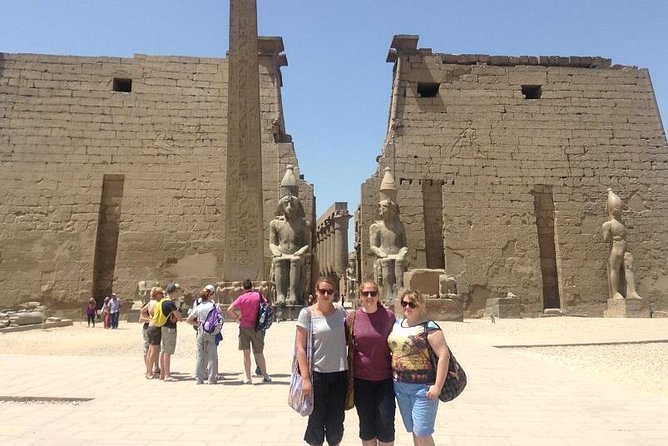
After Karnak, you’ll head to Luxor Temple, also on the East Bank, with about 1 hour there.
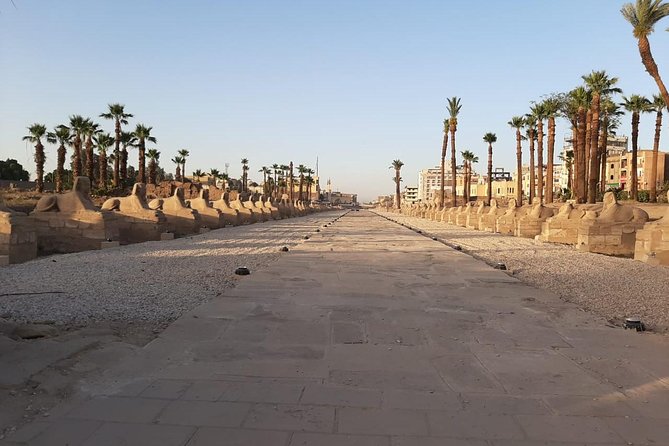
What’s worth paying attention to here is how Luxor Temple links visually and symbolically to the bigger site-world around it. Luxor Temple is part of a landscape of sacred space where the temples connect via the Great Sphinx Avenue, over 3 km. Even if you’re not walking the whole avenue, your guide can help you understand why this corridor matters—because it frames the movement between temple spaces and the way visitors experienced religious life in ancient Thebes.
Luxor Temple is also described as a place that bears witness to multiple eras—Pharaonic, Christian, and Islamic. That’s a useful reminder while you’re standing there: Egypt’s monumental sites were never frozen in time. People used them, adapted them, and left their marks.
As with Karnak, admission isn’t included for Luxor Temple. Plan for that.
Day 1 wrap: transferring to Luxor and settling in
Once Luxor Temple is done, you’ll be transferred to your hotel in Luxor, then you’re off the clock for the evening. That transfer is short—around 30 minutes.
This is where the overnight plan earns its keep. Luxor is not a “grab dinner and sprint for more ruins” kind of destination. With an overnight stay, you can actually rest and then wake up ready for the West Bank the next morning.
Overnight in a 5-star hotel with breakfast: the value of sleep
The big selling point isn’t just the hotel name. It’s that the tour includes accommodation for a night at a 5-star hotel with breakfast. For first-timers, this is a huge relief. You avoid the hard part of planning—finding a decent place, timing check-in, and making sure breakfast works with a morning start.
It also changes how you experience the sights. A lot of Luxor day trips run people ragged, then you hit the Valley of the Kings like you’re on a deadline. Here, you’ll start Day 2 after breakfast, with pickup from the hotel to cross the Nile and go West.
Reality check: you’re still doing a lot in two days. But at least you’re not paying for it with fatigue.
Valley of the Kings: seeing 3 tombs without the “blink and miss it” feeling
Day 2 begins with the Valley of the Kings on the West Bank. You’ll have about 3 hours, and the plan is to visit 3 tombs.
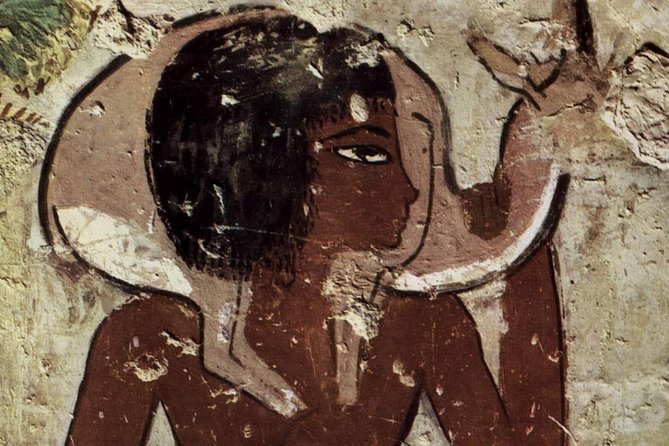
This is the stop that tends to be the whole reason people come. The Valley of the Kings is where rock-cut tombs were excavated for New Kingdom rulers, roughly from the 16th to the 11th century BC. It’s part of the Theban Necropolis and sits across from modern Luxor.
The most helpful idea here is not to treat the Valley of the Kings as a single “photo stop.” You’re moving between tomb entrances where each site carries its own wall decoration and story. With time allocated and a guide explaining what you’re looking at, you get more than a surface pass.
Drawback to plan for: admission fees are not included for the Valley of the Kings. Also, tomb interiors can feel crowded and cool compared to the outside air, so it helps to dress in layers.
Temple of Hatshepsut at Deir el-Bahari: three terraces, one unforgettable layout
Next up is the Temple of Hatshepsut at Deir el-Bahari, about 1 hour.
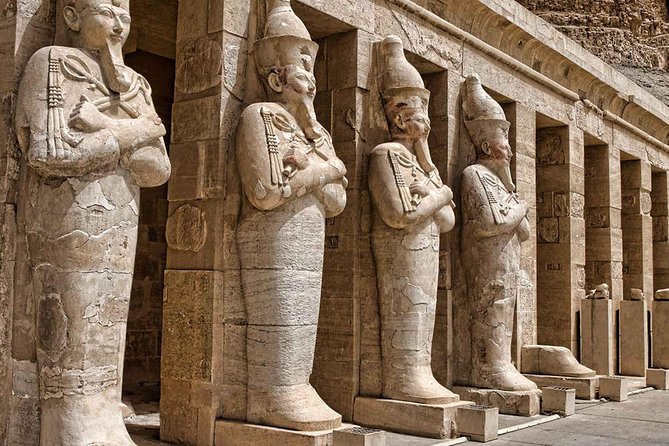
This temple is built into the cliffs and organized into three terraces, which is exactly why it’s so memorable. Even if you’re not an architecture nerd (no judgment), the terraces give you a visual rhythm that’s easier to understand than many straight-line temple approaches. The temple is the Mortuary Temple of Hatshepsut, dedicated to Amun and associated directly with her reign in the 18th Dynasty.
Why this stop fits well in a 2-day tour: it’s not just another tomb or another doorway. It gives you a different kind of encounter—open views, dramatic building placement, and a layout that makes sense quickly even if your ancient Egyptian vocabulary is still under construction.
Admission isn’t included here either, so budget for entrance fees.
Colossi of Memnon: a short stop that still earns its minutes
The last West Bank stop is the Colossi of Memnon, with about 30 minutes.
These are two massive stone statues of Amenhotep III, standing since around 1350 BCE in the Theban Necropolis area. Behind them are ruins connected to his former temple.
This is one of those “short but meaningful” stops. In 30 minutes, you can get the right perspective: the scale of the statues, how they relate to the site, and why they became a famous landmark for later visitors.
Admission for this stop is listed as free, which is nice—every little win helps when temple entrance fees start adding up.
Meals, water, and what to budget for temple entrances
This tour includes:
- Lunch and breakfast
- Water and soft drinks during your tour
- All taxes and service charges
- Air-conditioned transport plus your private Egyptologist
But it does not include entrance fees to temples. Depending on your timing and how your operator handles ticketing, you should expect to pay temple admissions for stops where the program lists tickets as not included.
A practical way to think about it: you’re paying for the “big package” items—transport, overnight, and expert guidance—while entrances are the modular add-on. That’s a common split in Egypt shore excursions.
Private Egyptologist + small group: what you get in real terms
The tour is described as a private Egyptologist tour with a max of 8 travelers. In plain language, that usually means fewer people competing for the guide’s attention and more chance to ask questions.
One detail from the experience that stands out is the name Abdul, mentioned as an amazing guide who made sure everyone had a great time and offered options. Even without knowing the exact on-the-ground choices made, it’s a good sign when a guide is able to adapt—especially in a schedule like this, where you’re balancing drive time, temple timing, and ticketing.
The biggest win from an Egyptologist on this kind of route is context. Karnak, Luxor Temple, the Valley of the Kings, and Deir el-Bahari all relate to different eras and different kinds of royal storytelling. With a guide, you’re not just collecting stops—you’re building a picture.
Price check: is $699.76 per person good value?
At $699.76 per person for a 2-day package, you’re paying for a lot that’s hard to DIY smoothly from Safaga:
- Round-trip transport from the port (about 3 hours each way)
- One night in a 5-star hotel
- Breakfast + lunch
- Private Egyptologist
- All transfers by air-conditioned vehicle
The main “extra” you should plan for is temple entrance fees, since they’re not included.
Is it cheap? No. But it can be good value because the tour handles the hardest parts: overnight logistics and the fact that you’re doing both sides of Luxor in a tight schedule. If you tried to build this independently, you’d likely spend time arranging drivers, hotels, and timed guide access—and you might still end up with a less efficient flow.
So I’d judge the price based on your priorities. If you want expert guidance and a low-stress plan that works with your cruise schedule, this pricing can make sense. If you’re the type who loves planning day-by-day and negotiating everything yourself, you might be able to spend less—but you’ll trade convenience and structure.
Who should book this Safaga overnight Luxor tour
This works best for:
- First-time Luxor visitors who want the highlights on both banks
- Cruise passengers who want planning handled and a real overnight in the middle
- People who prefer a guide to connect what they’re seeing at Karnak, the Valley of the Kings, and Hatshepsut
It might be a tougher fit if:
- You hate early mornings or long drives (start is 7:00 am, and transfers are about 3 hours)
- You prefer slow, independent wandering with no fixed schedule
- You strongly dislike paying entrance fees on top of a tour package
Should you book the Safaga Port Overnight Tour to Luxor?
If your goal is to maximize your time in Luxor without juggling details, I think this is a smart book. The combination of East Bank temples, a full West Bank day, and a 5-star overnight with breakfast is exactly what makes a two-day Luxor plan feel complete instead of frantic.
I’d book it if you want the big monuments—Karnak, Luxor Temple, the Valley of the Kings (3 tombs), Hatshepsut, and the Colossi of Memnon—with an Egyptologist steering the story.
I’d hesitate if you’d rather keep things flexible, skip certain sites, or you know you struggle with long travel days. In that case, you might prefer a different pace. But for most cruise-goers who want Luxor to feel like Luxor—not a blur—this package has the right ingredients.
FAQ
How long is the Safaga Port Overnight Tour to Luxor?
The tour runs for about 2 days.
What time does the tour start?
Pickup begins at 7:00 am.
Is the overnight hotel included?
Yes. You get accommodation for one night at a 5-star hotel, and breakfast is included.
What’s included in the price?
The price includes round-trip pickup from Safaga port, air-conditioned transfers, a private Egyptologist, lunch, breakfast, water/soft drinks, and all taxes and service charges.
Are temple entrance fees included?
No. Entrance fees to temples are not included.
How many people are in the group?
The tour has a maximum group size of 8 travelers.