REVIEW · RED SEA
Shore Excursion: Day tour to Luxor from Safaga port
Book on Viator →Operated by Love Egypt Tours · Bookable on Viator
A day in Luxor starts before the sun. This shore excursion is built for big-ticket ancient sites with a private Egyptologist guide, so you’re not just looking at stones—you’re getting the story behind them. I like that the plan hits Luxor’s east and west banks in one long day, and I especially liked how guide Abdul tied what we saw to life around Luxor as we traveled. One thing to consider: temple entrance fees aren’t included, so your day needs a little extra budgeting.
You’ll leave Safaga in the early morning, cross desert roads in an air-conditioned vehicle, and return after a full 12 hours. With a small maximum group size (up to 8), the pace stays human and questions don’t get lost in the shuffle—though it’s still a long day, so plan your stamina.
In This Review
- Key things I’d circle before you book
- Safaga to Luxor: why this trip works as a shore excursion
- Price and what you’re really paying for at $404.44
- The 6:00 am start: comfort, time, and how to plan your day
- Safaga pickup to Luxor arrival: the value of a real guide in transit
- Karnak Open Air Museum: where Luxor shows off its scale
- Crossing to the Valley of the Kings: switching from temples to tombs
- Hatshepsut Temple (El Deir El-Bahari): the female pharaoh stop
- Colossi of Memnon: finishing with a big, quiet wow
- Transport back to Safaga Port: making the ship deadline with less stress
- Group size and pacing: why up to 8 travelers matters
- What to wear, carry, and watch for (without ruining your photos)
- Best fit: who this tour suits (and who might want another option)
- Should you book this Safaga-to-Luxor day tour?
- FAQ
- What time does the Luxor shore tour start from Safaga?
- How long is the tour?
- Where do you get picked up in Safaga?
- Is round-trip transportation included?
- Is there an Egyptologist guide?
- Are temple entrance fees included?
- Is Karnak included in the tour?
- How many people are in the group?
- What is the cancellation policy?
Key things I’d circle before you book
- Small group size (max 8) keeps the day from feeling crowded
- Private Egyptologist guide makes the monuments more understandable
- Karnak + Valley of the Kings + Hatshepsut + Colossi covers Luxor’s greatest hits
- Round-trip port transfers from Safaga handle the logistics for you
- Air-conditioned transport helps a lot with the early start and desert heat
- Mobile ticket means less stress once you’re on the ground
Safaga to Luxor: why this trip works as a shore excursion
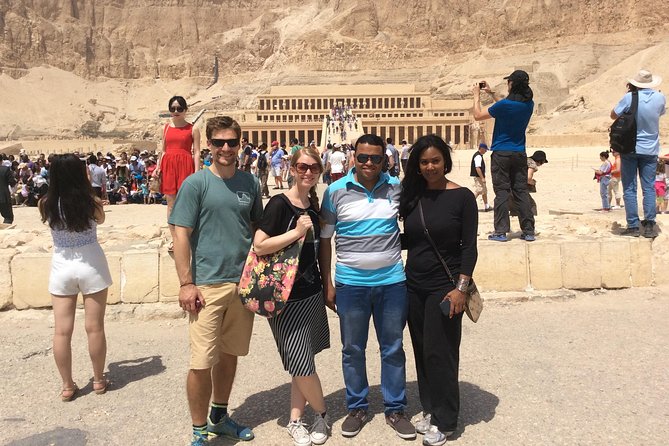
This is the kind of tour that makes sense for a cruise day: you get a single-driver plan, set pick-up and drop-off, and a route designed around Luxor’s must-see sites. The schedule is long (about 12 hours), but the structure is simple. You’re not bouncing between half-finished experiences or guessing how to connect things. You just travel, visit, and return.
The value is strongest when you want a real Luxor overview, not a museum-style sprint. Karnak alone can swallow half a day, and the Valley of the Kings area does the same if you wander. Putting them together with Hatshepsut Temple and the Colossi of Memnon is how you get a full-breadth picture of Luxor in one go.
And since this tour includes pickup and return from Safaga Port by air-conditioned vehicle, you don’t have to fight the clock when a ship is in port. That matters. In places like this, timing is everything.
A few more Red Sea tours and experiences worth a look

Price and what you’re really paying for at $404.44
At $404.44 per person, this isn’t a budget add-on. The best way to judge the price is to look at what’s covered versus what you’ll pay on the ground.
Included:
- Port pickup and return from Safaga
- Air-conditioned transport
- A private Egyptologist guide
- Water/soft drink during the tour
Not included:
- Entrance fees to the temples
So the cost is largely for the guide, the dedicated vehicle, and the day’s organization. If you’re traveling with a group or just want the comfort of a private guide rather than joining a large bus tour, it tends to feel more reasonable. Also, the small group limit (up to 8) makes the “guide cost” per person easier to swallow.
If you’re the type who wants to buy every entrance ticket yourself and skip guided interpretation, you may feel the price is higher than you expected. But if you’d rather understand what you’re seeing than just photograph it, this is the direction that usually pays off.
The 6:00 am start: comfort, time, and how to plan your day
The tour starts at 6:00 am. That early departure is not random—it’s how you fit Karnak and the west-bank monuments into one day and still make it back to Safaga Port. Expect a long stretch of travel and site time, with breaks that keep things moving.
Here’s how to make the day feel easier:
- Wear shoes that handle uneven temple surfaces.
- Bring sun protection even early in the day; Luxor can warm up fast.
- Keep your day bag light. You’ll be moving between sites and crossing between the Nile banks.
- If you’re prone to getting hungry, don’t rely on a miracle snack between stops. Your schedule includes a lunch break at Karnak, but the tour does not list lunch as included.
Since you’re on a shore schedule, build in patience for transport time. Roads can slow down, and your guide will be working against the clock to get you back to the port.
Safaga pickup to Luxor arrival: the value of a real guide in transit
The day begins with pickup from Safaga Port by the cruise exit door. From there, you ride to Luxor in an air-conditioned private vehicle.
I liked that the guide didn’t treat the drive as wasted time. With Egyptologist Abdul, the trip became part of the learning. In the car, he shared what life looks like around Luxor, including scenes like sugar cane farming and local housing you might not notice from a fast passing view. That kind of context makes the monuments feel less like distant postcards and more like something rooted in a living region.
This is also one reason I prefer a private guide for a single-day shore excursion. You’re not just “at the sights”—you’re building connections to what those sights meant.
Karnak Open Air Museum: where Luxor shows off its scale
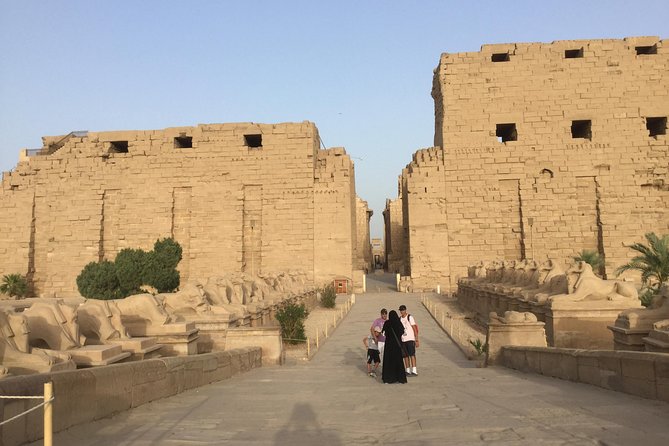
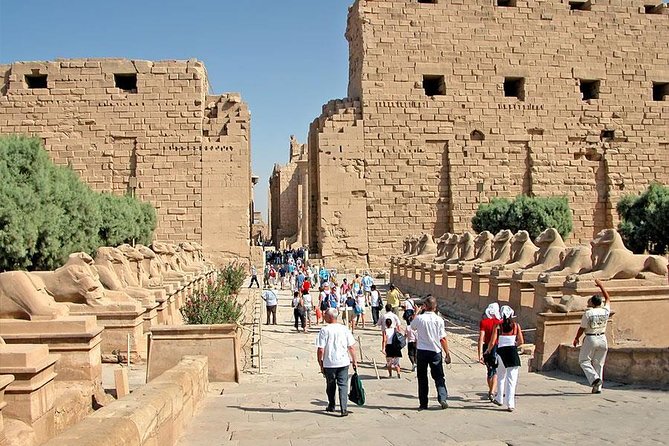
Karnak Temples is the big one. This stop is scheduled for about 3 hours, giving you time to take in the largest temple complex in Egypt. That “largest” label sounds like marketing, but on-site it’s a real feeling. You’re surrounded by the remains of power—massive halls, carved surfaces, and temple spaces meant to impress.
What I find useful here is that a guide can steer you through the overwhelming parts. Without interpretation, Karnak can blur into “more columns.” With a guide, you start noticing patterns: what you’re standing in, how the space was used, and why the site mattered beyond its beauty.
Practical note: entrance fees for Karnak are not included in the tour price, so plan for that. Also, the schedule includes lunch during this stop. If you want a smooth day, decide in advance whether you’ll budget for lunch during the visit.
Crossing to the Valley of the Kings: switching from temples to tombs
After Karnak, the tour shifts to the west bank side by crossing the Nile. This part of Luxor has a different tone. East bank sites feel ceremonial and public. West bank sites feel focused on the dead, the afterlife, and royal memory.
The Valley of the Kings stop is also about 3 hours. Here you visit the royal tombs area, known for being richly decorated. The main payoff is understanding that these tombs weren’t just “rooms.” They were part of a carefully planned belief system—designed to protect a king’s identity and help him in the afterlife.
The guide is especially helpful because the Valley can feel similar between tomb openings unless someone gives you landmarks: what you’re looking at, how the tombs are connected historically, and why certain features mattered.
Entrance fees for this section are also not included, so again: budget ahead.
Hatshepsut Temple (El Deir El-Bahari): the female pharaoh stop
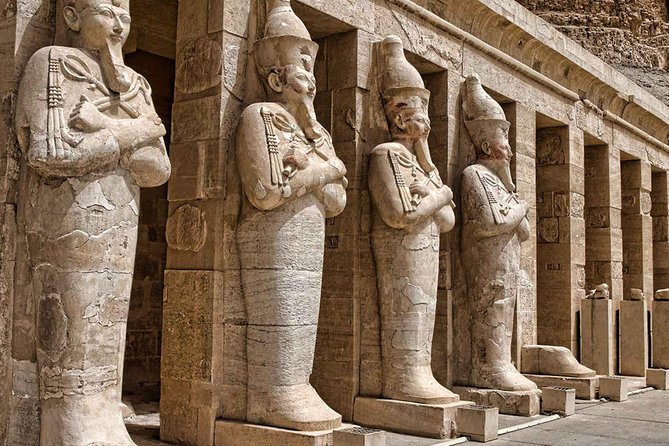
Next on the west bank is Hatshepsut Temple, often called El Deir El-Bahari. This is one of Luxor’s standout names because Hatshepsut wasn’t just any ruler—she was a female pharaoh who ruled for over 18 years, and the temple is linked to her strong authority.
The tour highlights the temple’s unique style, and I agree with that approach. Hatshepsut’s temple doesn’t feel like the same type of stone scene as every other stop. Its design choices give it a distinct presence, and when your guide explains what it represented, it lands better than a quick glance.
This is also a great moment to slow down slightly mentally. If your day has been moving fast, Hatshepsut is the kind of place where interpretation helps you appreciate the architecture without feeling rushed.
Colossi of Memnon: finishing with a big, quiet wow
After Hatshepsut, the tour ends with the Colossi of Memnon stone statues. This final west-bank stop brings you back to an iconic Luxor image: towering statues that have endured for thousands of years.
Even if you’ve seen photos before, the scale hits differently in person. These aren’t small carvings or background décor. They’re monumental figures built to be seen, approached, and remembered.
Finishing with the Colossi can be a smart choice. You wrap up the west bank with something visually strong and easy to process before you head back toward the port.
Transport back to Safaga Port: making the ship deadline with less stress
At the end of the tour, you drive back to your cruise ship in Safaga. The schedule shows about 3 hours for the return drive.
This is one of the biggest “hidden benefits” of a shore excursion like this: you’re paying for timing control. A ship doesn’t wait while you negotiate taxis, figure out ticket lines, or argue with bus schedules. A private car plus a guide managing the day reduces risk.
You’ll be tired by the time you return—this is a long 12-hour block—but you also won’t be stuck trying to translate ancient sites into a transportation plan before departure.
Group size and pacing: why up to 8 travelers matters
The tour caps at a maximum of 8 travelers. That’s not a huge detail on paper, but it changes the feel of your day.
With a small group:
- It’s easier to hear explanations.
- Your guide can adapt pacing if you have questions.
- You’re less likely to lose people during transitions between sites.
The day still follows the same core path, but it tends to feel more relaxed than major bus-style group tours.
What to wear, carry, and watch for (without ruining your photos)
This is practical advice that makes a real difference in Luxor:
- Sun and heat: You start at 6:00 am and still spend long hours outdoors. Bring sunglasses and a hat.
- Footwear: Karnak and the Valley of the Kings involve walking on uneven ground. Comfortable shoes matter.
- Tickets: Entrance fees are not included. Keep some cash or be ready to purchase where required.
- Hydration: You get water/soft drink during the tour, but you might still want your own water bottle depending on your habits.
- Passport details: You’ll need passport name, number, expiry, and country when booking—plan to have your details handy.
If you do these small things, the day runs smoother and you spend less time thinking about logistics.
Best fit: who this tour suits (and who might want another option)
I think this is a strong fit if you:
- Want a one-day Luxor highlights plan from Safaga
- Prefer a private Egyptologist guide rather than a big group audio tour
- Appreciate historical context, not just photos
- Can handle a long day and an early start
It may be less ideal if you:
- Hate early mornings or don’t handle long travel days well
- Don’t want to pay any extra costs on arrival (since entrance fees are not included)
- Expect a relaxed pace with lots of downtime between sites
Should you book this Safaga-to-Luxor day tour?
If you’re looking for a full Luxor hits run—Karnak, the Valley of the Kings, Hatshepsut Temple, and the Colossi of Memnon—this tour is built for that goal. I also like that you’re not going in blind: a private Egyptologist guide helps you connect the sites instead of treating them as separate photo stops. The guide name Abdul matters here because the best part of many days in Egypt is the human explanation, and this one leans into that.
If you do book, I’d plan for entrance fees in advance and bring a calm, early-day mindset. Do that, and this is the kind of shore excursion that feels worth your time—even with the long 12-hour commitment.
FAQ
What time does the Luxor shore tour start from Safaga?
The start time is 6:00 am.
How long is the tour?
The duration is about 12 hours.
Where do you get picked up in Safaga?
Pickup is from Safaga Port by the cruise exit door.
Is round-trip transportation included?
Yes. The tour includes pick-up services from Safaga Port and return, using an air-conditioned vehicle.
Is there an Egyptologist guide?
Yes. A private tour guide (Egyptologist) is included.
Are temple entrance fees included?
No. Entrance fees to the temples are not included.
Is Karnak included in the tour?
Yes. You visit Karnak Temples (Karnak Open Air Museum).
How many people are in the group?
The tour has a maximum of 8 travelers.
What is the cancellation policy?
Free cancellation is available. You must cancel up to 24 hours in advance for a full refund.