REVIEW · NAPLES
Shore tour of Pompeii, Vesuvius and Herculaneum.
Book on Viator →Operated by AmalfiTourCampania · Bookable on Viator
Ash and stone in one crowded day. This Naples shore tour strings together Pompeii, Vesuvius, and Herculaneum with practical timing, air-conditioned comfort, and enough guidance to keep you from getting swallowed by Pompeii’s streets. The big wins are that you get pickup (easy to find with the name sign) and you move between sites in a way that actually feels manageable.
I like how the day is built for real sightseeing time, not just driving. Pompeii gets a focused window, Vesuvius includes crater access with Gulf views, and Herculaneum is shorter but packed with that Roman “how did they preserve this?” feeling. One consideration: entrance tickets to the sites aren’t included, and Pompeii can feel like a labyrinth if you don’t plan your priorities.
In This Review
- Key highlights at a glance
- How the day flows: Pompeii, Vesuvius, then Herculaneum
- Pompeii: a smart 2-hour plan in a city that never ends
- Vesuvius National Park: crater ride and Gulf views
- Herculaneum: shorter stop, stronger wow factor
- The optional wine-cellar lunch on Vesuvius
- Price and value: what $307.56 really covers
- Getting picked up smoothly in Naples
- Who this tour suits best (and who may want to adjust expectations)
- The human factor: guides and drivers that make it feel easy
- Practical tips so you enjoy every stop
- Should you book this Pompeii–Vesuvius–Herculaneum day?
Key highlights at a glance
- Private-group feel with an expert local driver who handles the route and keeps you comfortable
- Skip-the-stress Pompeii strategy via a professional guide you can request (line help not included)
- Crater-time at Vesuvius plus Gulf-of-Naples panoramas
- Herculaneum with UNESCO-level excavation drama in a shorter stop
- Optional wine-cellar lunch on Vesuvius slopes, paid separately
How the day flows: Pompeii, Vesuvius, then Herculaneum
This is an 8 to 9 hour shore-style day that hits three major Roman sites plus a Vesuvius food stop if you want it. The rhythm matters. You start with Pompeii while your brain is still fresh, then you climb to Vesuvius for views and crater time, and you finish at Herculaneum, which tends to feel less overwhelming than Pompeii even though it’s just as significant.
You’ll be in an air-conditioned vehicle with bottled water and Wi‑Fi on board. That sounds like “nice-to-have” until you’re doing it in summer. Heat and walking add up quickly across all three locations, and having water ready for the long stretches really helps.
This is also a private tour/activity in the sense that it’s only for your group. That often makes it easier to get your pace right, ask questions, and adjust your stop priorities—especially if you’re balancing photos, shaded breaks, and viewpoints.
You can also read our reviews of more tours and experiences in Naples.
Pompeii: a smart 2-hour plan in a city that never ends
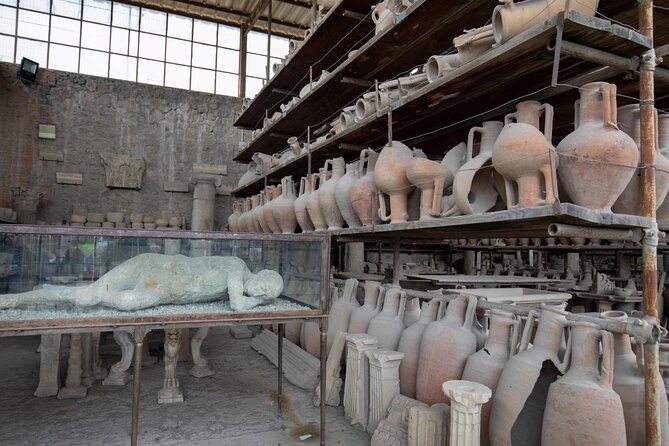
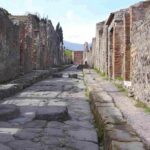
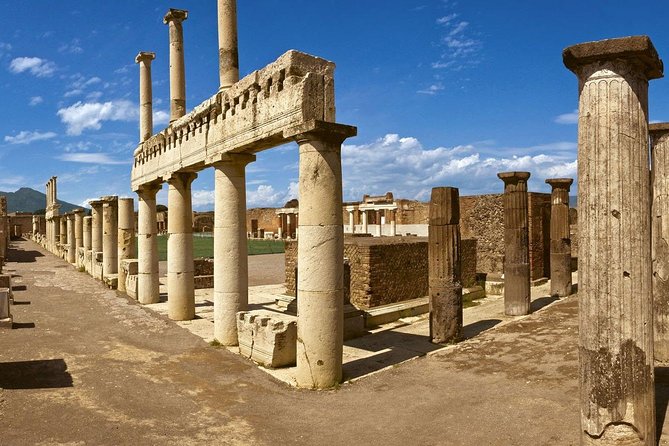
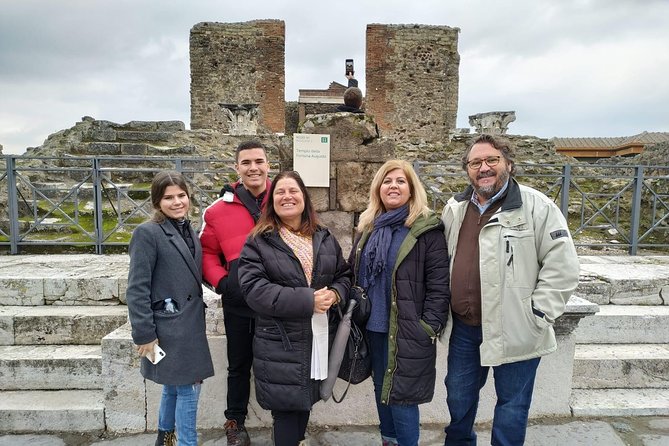
Pompeii is famous for a reason: it’s not just ruins, it’s a whole town frozen in time after the eruption of Mount Vesuvius in 79 AD. It’s also huge. Without a plan, you can wander for an hour and feel like you saw almost nothing.
That’s why a 2-hour stop works best when you think “high impact, not completion.” You’re there to understand the big story—eruption, burial under ash and pumice, daily life—and to pick a few areas that match your interests. Even if you’re not an archaeology nerd, Pompeii hits because the street layout and building remains make it easy to picture how people lived.
One practical advantage: a professional private guide is highly recommended, and you can arrange one on request to help you skip the long lines at the ticket office. This guide help isn’t included in the tour price, but it can be worth it if your group wants structure instead of aimless roaming.
If you want a “what should I ask?” moment, here’s what helps: ask your guide to point out how the ash and pumice preserved certain details, and then choose a few key streets/buildings to anchor your understanding. Pompeii rewards focus.
Vesuvius National Park: crater ride and Gulf views
After Pompeii, you shift from ruins to altitude. At Vesuvius National Park, you get time to ride up to the crater area with panoramic views over the Gulf of Naples and the islands.
This stop is listed as about 2 hours. That’s a workable window for the crater experience plus the photos and the breathing room you’ll want at viewpoints. In real life, you can’t control weather or how crowded the area feels, so having a bit of extra time is a good buffer.
Temperature can be tricky here. Even on “nice” days around Naples, the slopes can feel hot and sun-heavy. The tour’s bottled water and the air-conditioned transport between stops help, but you’ll still want to come prepared with sun protection and breathable layers.
Herculaneum: shorter stop, stronger wow factor
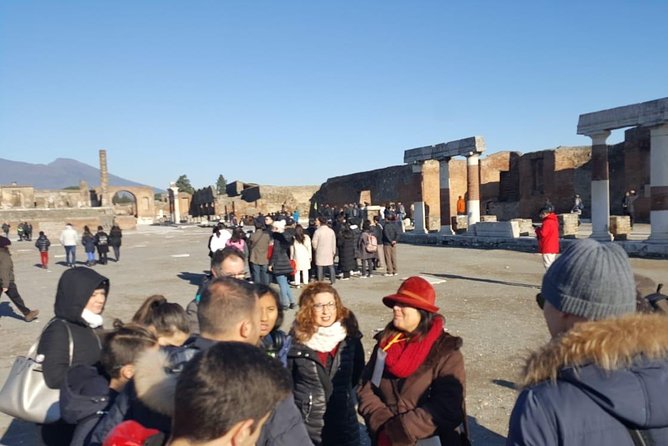
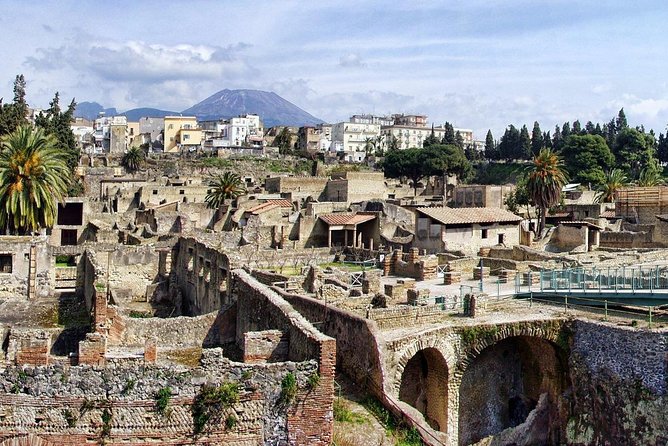
Finish at Parco Acheologico di Ercolano (Herculaneum), where the excavations are world famous for their Roman city remains. The story overlaps with Pompeii: Herculaneum was founded according to legend by Hercules and destroyed by the same Vesuvius eruption in 79 AD. Together with Pompeii and Oplontis, these sites are part of the UNESCO World Heritage listing.
You get about 1 hour here. That’s not “long,” but Herculaneum often feels efficient because the site can feel more intimate than Pompeii. You don’t need to try to see everything. Instead, treat it like a guided “make it click” hour: look for the preserved structures, street remnants, and the way the eruption impacted the city.
If you like your ruins with a side of human detail, Herculaneum tends to deliver that. It’s the kind of place where, after you move along one section, you start connecting the dots about how the eruption changed daily life and building use.
The optional wine-cellar lunch on Vesuvius
There’s an extra 1-hour stop for lunch in the wine cellars of Vesuvius. You can taste wines and eat quality food made by the family winery.
Important: the lunch option is not included in the tour price. It’s listed as a €30 all-inclusive menu per person, and it only happens on customer request. If you’re the type who likes taking a food break before you get cranky, this is a solid add-on.
If you’re traveling with people who prefer to keep things lean, you can skip it and use that hour for more viewpoints or rest time in the shade (as available on site). The tour structure gives you the choice rather than forcing a meal on everyone.




Price and value: what $307.56 really covers
At $307.56 per person, this tour is priced for a full, organized day across three major sites. You’re paying for the moving parts that visitors often struggle with: air-conditioned transportation, parking fees, fuel, bottled water, and Wi‑Fi.
What’s not included is the part that varies depending on your travel day: admission tickets to Pompeii, Vesuvius National Park, and Herculaneum. Plan for that extra cost so you’re not surprised when you arrive.
Then there’s the optional layer. If you want the lunch in the wine cellar world, you’ll pay the €30 menu separately. If you also want a private guide for Pompeii to help with line time and deeper context, that’s also not included.
So is it good value? For many groups, yes—especially if you want a stress-free route and someone else handles logistics. If you’re a DIY traveler who already knows how you want to move between sites, you could probably do it cheaper. But you’ll likely spend that savings on time, transport planning, and decision fatigue. This tour buys you a smoother day.
Getting picked up smoothly in Naples
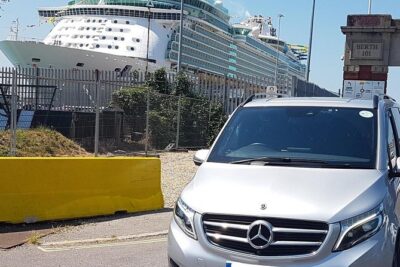
This tour offers pickup, and the meeting point detail is simple: you’ll look for the reservation name on a sign displayed by the driver. That matters because Naples meeting points can be chaotic on foot.
The tour description also notes that the meeting point is near public transportation, which is useful if you need to reposition yourself before pickup time. You should plan to be ready at the agreed time, since the day’s timing depends on moving quickly between three sites.
It’s also offered in English, which makes a difference for how much you’ll get out of the guidance—especially at Pompeii, where the details are the whole game.
Who this tour suits best (and who may want to adjust expectations)
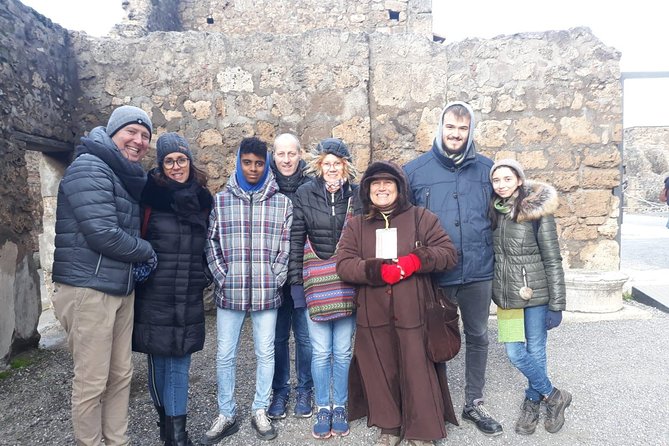
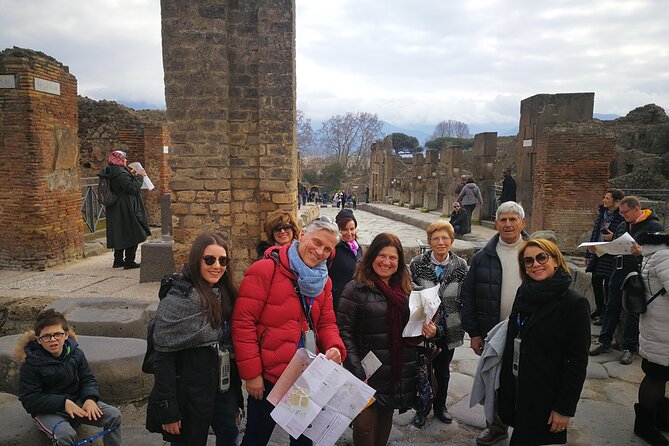
This day is best for people with moderate physical fitness and the patience to do significant walking at historic sites. You’re moving through large archaeological areas, plus there’s time up on Vesuvius where walking and sun can be real factors.
If your group loves structure—clear stops, a driver who knows where to go, and help getting the most from each location—this tour style tends to fit perfectly. It’s also a good choice if you’re on a shore schedule and you want a big-hit itinerary without building it yourself.
If you’re a slow, “I want to sit and soak it in for hours” traveler, the site time may feel short, especially at Pompeii. In that case, you might want a slower version that gives more time per site, or you’ll need to come with a strict plan of what you most want to see.
The human factor: guides and drivers that make it feel easy
The strongest compliments tied to this experience are about the people driving and guiding the day. Names came up often: Vincenzo (operating with AmalfiTourCampania), along with Andrea for transfer assistance for some visitors, and Fabio Lianza as a driver who kept the day comfortable on a hot schedule. One memorable detail: fruit at the end of the day, plus staying well-watered, which is exactly the kind of small kindness that makes a long day feel less punishing.
On the Pompeii side, a professional guide named Marinella stood out for being very knowledgeable. That matters because Pompeii isn’t a place where random wandering automatically turns into understanding. A good guide turns “I saw buildings” into “I understand what I’m looking at.”
There’s also the customization angle. I like the fact that the day can be adapted to match what you want to prioritize. When you’re spending one day on three sites, that flexibility is not a luxury—it’s the difference between a day that feels full versus one that feels rushed.
Practical tips so you enjoy every stop
A day like this works best when you come prepared for heat and walking. Bring:
- Sun protection (hat and sunscreen)
- Comfortable shoes with decent grip
- A light layer for sun and shade shifts
- A small habit of refilling water when you can
At Pompeii and Herculaneum, pace yourself. It’s easy to overdo it at stop one and then feel low-energy at stop three. If you want the best odds of enjoying all three, decide what “success” means early. For example: “I want to understand how the eruption affected daily life, and I want enough photos to remember it later,” rather than “I must see every corner.”
Also, if you’re considering the Pompeii guide help, think of it as time insurance. Pompeii’s scale is the real challenge. Anything that reduces confusion and speeds up your line/wait energy is worth considering.
Should you book this Pompeii–Vesuvius–Herculaneum day?
Book it if you want a big, classic Campania day with organized transport and clear stop structure. It’s especially good value if your group hates the logistics headache—figuring out timing, transfers, and how to manage a hot day between three major sites.
Consider another option if you know you need long, unhurried site time. With 2 hours at Pompeii and 1 hour at Herculaneum, you’ll get the essentials, not the full-meal-of-every-detail experience.
One last point: this experience is weather-dependent. If conditions aren’t right, it can be rescheduled or refunded.
If you want a day that feels like you used your shore hours well—and you want someone else to handle the driving and timing—this is a strong pick.