REVIEW · BERLIN
Group Driving Tour 1 to 6 people. Berlin Shore Excursion incl pick-up at Port
Book on Viator →Operated by Private Tour Berlin · Bookable on Viator
Berlin, organized and explained in one long day. This private shore excursion turns a high-stakes cruise schedule into a smooth day of Berlin’s key landmarks with a local English guide and a car waiting at your cruise terminal exit.
I love the way the route gives you both big postcard sights and the Wall story in real places, from the East Side Gallery to Checkpoint Charlie. Guides like Harald and Claudia also bring personal, human details (not just dates), which is why this feels more like Berlin in motion than a photo stop list. One possible drawback: it’s an 11–12 hour sprint with short stops, and there are no personal headsets outdoors, so you’ll want to stay close to the guide.
In This Review
- Key highlights worth your attention
- Berlin Shore Excursion Setup: Private Car Meets Cruise Timing
- What You’re Paying For: Private Guide, Air-Conditioned Vehicle, and Admission Strategy
- Route That Moves: How the Day Is Structured Across 11 Landmarks
- Brandenburg Gate to Kaiser Wilhelm Memorial Church: Symbols With Context
- Kurfürstendamm and the East Side Gallery: A Boulevard and a Wall That Refuses to Disappear
- Checkpoint Charlie: Where Tension Became a Place
- Gendarmenmarkt and the Holocaust Memorial: Beauty, Then Weight
- Museum Island and the Reichstag: UNESCO-Era Culture Meets Parliament Power
- Gropius Bau and the Wall’s Remaining Traces
- Alexanderplatz: East Berlin’s Center and the View of Now
- How the Guides Make It Feel Personal (Not Just Efficient)
- Tips to Get the Most From a Full-Day Driving Tour
- Should You Book This Tour for a Cruise Day in Berlin?
- FAQ
- FAQ
- How many people are in the group?
- Do you get picked up from the cruise port?
- Is the tour duration 11 or 12 hours?
- Is lunch included?
- Are tickets included for every stop?
- Is there a lot of walking?
- Can I cancel or change the booking?
Key highlights worth your attention
- Cruise port pickup on the spot with a driver holding a sign right at the terminal exit
- Private group feel (up to 6 people) with separate guide + driver setup
- Most major stops are admission-free, with Museum Island and the Reichstag not included
- Wall-focused storytelling across the East Side Gallery and Checkpoint Charlie, plus more traces of the Wall later
- Harald and Claudia’s style: factual, structured, and heavy on personal context
- Comfort over chaos thanks to an air-conditioned late-model vehicle and local driving pros
Berlin Shore Excursion Setup: Private Car Meets Cruise Timing
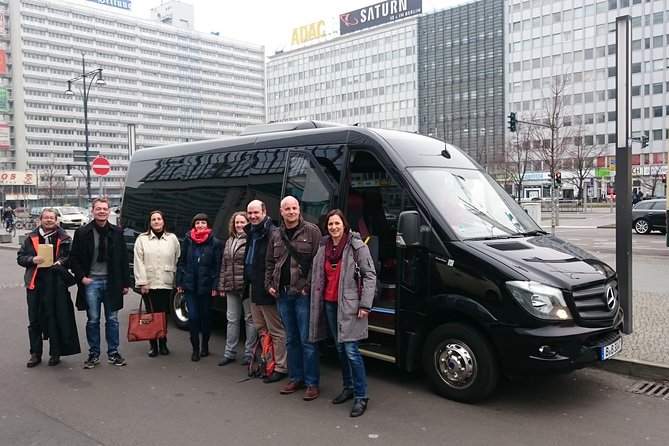
This is the kind of Berlin day you book when you want the city without the stress. You’re not trying to decode transit schedules with luggage rules and cruise deadlines. Instead, you get a driver who meets you in front of the cruise terminal exit and holds a sign with your group name. That alone removes a huge chunk of “what if we’re late” anxiety.
The tour runs about 11 to 12 hours, and it’s built for cruise timing. In one set of cruise-day experiences, the drive from the port area into Berlin was around two hours, and the driver handled logistics like bathroom stops when asked. Still, plan your day like it’s one big block: you’ll likely spend more time moving between sights than wandering slowly like you would on a land trip.
This is also a private driving tour for groups up to 6. That matters. You can ask questions, pivot your interests, and move as a unit rather than being squeezed into a bus choreography.
A few more Berlin tours and experiences worth a look

What You’re Paying For: Private Guide, Air-Conditioned Vehicle, and Admission Strategy
The price is $1,920.56 per group (up to 6). If you fill all six seats, that’s roughly $320 per person. If you’re fewer people, the per-person cost rises fast, so this one makes the most sense when your group is sized well.
What you’re actually buying is not just “a car and a list of places.” You’re buying:
- A local English guide (members of the Berlin Guides Association)
- A professional driver used to cruise schedules and city traffic
- Air-conditioned, late-model vehicle standards and passenger accident insurance coverage
- A tight route that hits key landmarks with explanation built in
A practical detail: most stops in the itinerary have admission marked as free. But Museum Island and the Reichstag Building do not include tickets. That’s normal for many private tours in big capitals, but it does change how you experience those stops. You’ll want to factor in time and possible extra cost for those specific entries.
Also, there’s one sound-related consideration: no personal headsets are used when you’re out with the guide on the street. The benefit is you’re not stuck wearing gear. The downside is you’ll hear best when you’re near the guide and paying attention, especially in busier areas.
Route That Moves: How the Day Is Structured Across 11 Landmarks
The itinerary is arranged like a guided loop that balances:
- Germany’s most famous symbols (Brandenburg Gate)
- The layers of Berlin’s 20th-century story (Memorial Church, Wall sites, division-era checkpoints)
- Powerful memory spaces (Holocaust Memorial)
- “Now” Berlin settings (Reichstag, Alexanderplatz)
- Architecture-and-history stops that help you see the city’s changes in place (Gendarmenmarkt, Museum Island, Gropius Bau)
The stop times are short—often 10 to 20 minutes—so the tour feels more like guided orientation with memorable anchors than like an all-day museum crawl. That’s a feature, not a bug, for a cruise shore day. You get the big picture quickly, and you can decide later what deserves a longer return trip.
Brandenburg Gate to Kaiser Wilhelm Memorial Church: Symbols With Context
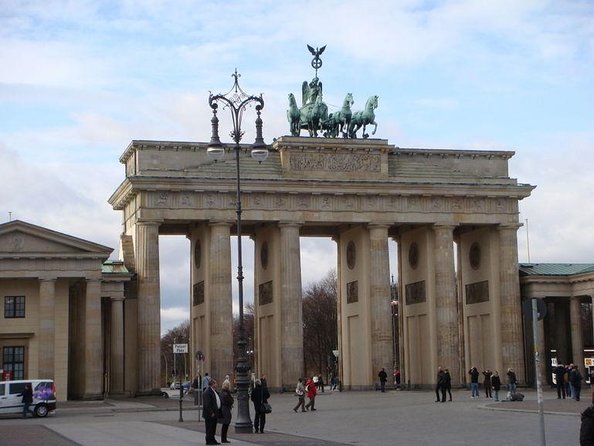
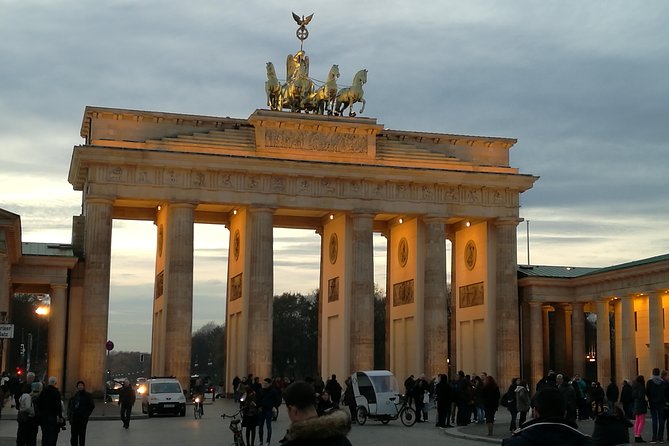
You start at the Brandenburg Gate, Germany’s best-known landmark. On a typical day, it’s easy to take a quick photo and move on. Here, your guide uses it as a reference point: why this structure became an icon for German history and what it represents in the city’s changing political identity.
Next is the Kaiser Wilhelm Memorial Church. You’ll see both the original WWII ruin and the modern church built beside it. This is where Berlin stops feeling like a set of monuments and starts feeling like a city that chose to remember. The contrast between damaged and rebuilt architecture gives you an immediate lesson: the past isn’t just behind glass here.
If you like clear, guided meaning, these two stops set the tone. If you’re hoping for long sit-down time or deep museum-style immersion, these are more “see it, understand it, move on” than “linger.”
Kurfürstendamm and the East Side Gallery: A Boulevard and a Wall That Refuses to Disappear
Then you’re sent to Kurfürstendamm, one of Europe’s famous boulevards. The point isn’t only to admire the street. It’s to understand how West Berlin’s everyday urban energy contrasted with the city’s division. Even a short stop helps you get your bearings for how people live, shop, and move there now.
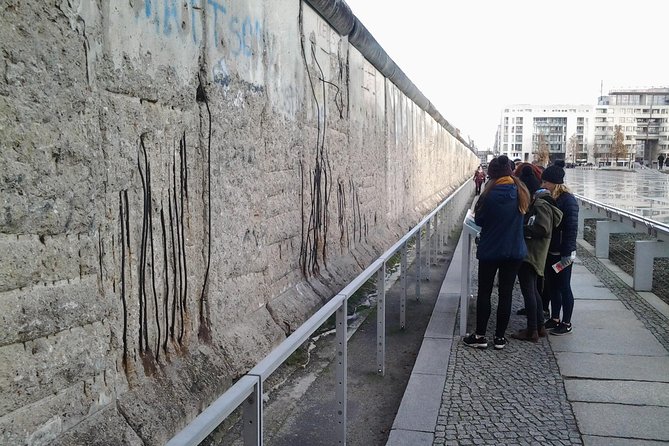
From there you hit the East Side Gallery, the longest remaining stretch of the Berlin Wall, now transformed into an open-air art canvas. This stop is one of the most memorable in the day because you’re not looking at a Wall replica or a distant museum display. You’re seeing the Wall’s physical presence—then the way it was repurposed into something public and interpretive.
A small timing reality: 15 minutes is enough for first impressions and a guided explanation, but if you’re an art lover, you may wish you had more time to look closely. Still, as a shore-day sampler, this works well.
Checkpoint Charlie: Where Tension Became a Place
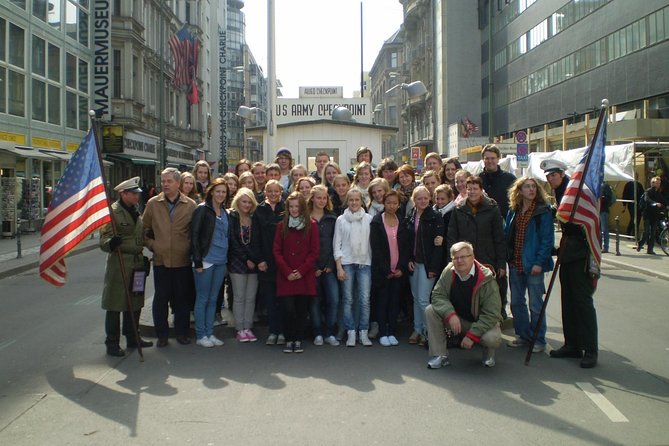
Checkpoint Charlie is next, and your guide frames it as more than a tourist site. It was a point where the world felt close to escalation—an edge where people’s lives were shaped by the politics of the time.
This is also where a good guide shines. One of the strongest notes from past cruise guests was that the explanation didn’t freeze on WWII alone. Instead, the tour centered on the Wall and the division between East and West Germany, using personal context to make the Cold War feel less abstract.
Fifteen minutes can feel fast for a place with so much symbolism. But the tour’s pacing keeps it from bogging down the rest of the day. If you want, you can always build a longer, separate visit later—this tour is about giving you the essential orientation first.
Gendarmenmarkt and the Holocaust Memorial: Beauty, Then Weight
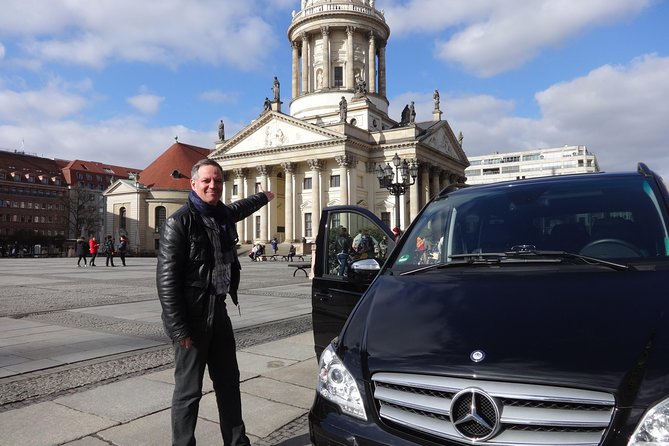
You arrive at Gendarmenmarkt, described as Berlin’s most beautiful baroque plaza. This is a breather in the route, visually and emotionally. Plazas are where you feel the city’s scale and layout, and you also get a sense of Berlin as an elegant capital, not only a war story.
Then you walk into the Holocaust Memorial (Memorial to the Murdered Jews of Europe). This is the kind of stop that changes the tone of the entire tour. It’s a walkable sculpture built as a field-like space. The guide’s job here is to help you understand what you’re seeing and why the design matters—without turning it into a “quick stop and forget” moment.
Fifteen minutes at the Holocaust Memorial is not a lot, and that can be hard if you prefer to think slowly. But for most cruise-day schedules, this still lands well because the guide gives you structure right away so you don’t feel lost.
Museum Island and the Reichstag: UNESCO-Era Culture Meets Parliament Power
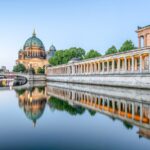
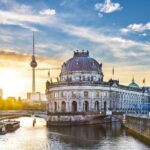
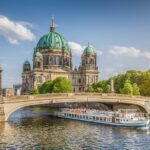
Next comes Museum Island, a UNESCO cultural heritage site. Here, the itinerary keeps you moving—about 10 minutes. You’re not doing full museum hours on a cruise day. Instead, you’re getting the setting: why this cluster matters and how it fits into Berlin’s self-image as a place of learning and culture.
Important practical note: Museum Island admission is not included. That means you can either do a view-focused stop, or you might choose to pay for additional entry if time allows. Either way, plan for the day to keep moving after this moment.
Then you reach the Reichstag Building, historically significant as the first German parliament and heavily damaged in WWII. Your guide explains how the building fits into reunited Germany’s later political story. Admission is also not included here.
This is a stop where anticipation can run ahead of time. The best approach on a tour like this is to treat it as a guided orientation: take in the setting, ask your questions, and avoid expecting a full “parliament tour” experience unless your schedule supports it.
Gropius Bau and the Wall’s Remaining Traces
After the big political sights, the tour lands at Gropius Bau, right near one of the longest remaining stretches of the Wall. This stop helps connect earlier Wall sites to what’s still there physically today.
Gropius Bau also gives you a contrast: you’ve been moving through history with a heavy emotional charge, and then you get an architectural marker that shows Berlin’s timeline continuing in layers.
Fifteen minutes is enough to grasp the Wall trace location and get the guide’s explanation. If you’re the type who loves street-level history, this is a good moment to slow your walking and take it in, even if you don’t get long lingering time.
Alexanderplatz: East Berlin’s Center and the View of Now
You wrap up at Alexanderplatz, the former center of communist Berlin, with the famous TV tower nearby. This stop is about reading the present-day skyline as a result of past planning and past priorities.
Ten minutes here can work surprisingly well because it gives you a sense of scale. It’s the moment you start to connect Berlin’s division-era planning to the city’s current movement patterns and public space.
If you’ve been emotionally focused earlier in the day, this stop often feels like the return to everyday life. It also helps you understand why guides time the day so you’re ready to head back toward your ship.
How the Guides Make It Feel Personal (Not Just Efficient)
What really lifts this tour above a simple highlights loop is the guide style. Two names came up strongly in cruise-day experiences: Harald and Claudia.
Harald’s approach is described as prompt, organized, and passionate about history. One strong detail: he’s known for giving an unvarnished factual account of Berlin’s changes over WWII, the Cold War, and the architecture that survived. He also used an album of before-and-after pictures, which helps your brain “place” the damage and rebuilding in a way that plain explanations can’t.
Claudia’s storytelling is different but equally effective. She shared personal connections from West Berlin during the Wall’s fall era. Instead of focusing only on WWII or only on big-name political figures, she anchored the day in division and the Wall’s human impact, ending with a particularly memorable Holocaust Memorial experience.
Either way, the value is clear: you’re not just moving from monument to monument—you’re learning how Berlin thinks, remembers, and rebuilds.
Tips to Get the Most From a Full-Day Driving Tour
This is a lot of ground in one day, and the goal is efficient understanding, not leisurely wandering. Here’s how you make it feel smoother:
- Wear shoes you can walk in. The tour notes moderate walking may be involved, but not absolutely necessary. Still, you’ll be on uneven pavement and doing quick transitions.
- Stay close for the best audio. Since there are no personal headsets on the street, you’ll hear best by keeping near the guide, especially at busy crossings.
- Plan your lunch expectations. Food and drinks are not included, so you’ll need to handle meals on your own. On a cruise day, that often means you’ll either grab something quick or plan for a longer meal break if your guide’s schedule allows.
- Bring your questions. This kind of tour works best when you treat it like a conversation. Ask about what you’re seeing right then, not only what you read beforehand.
- Don’t overpack the day in your head. Short stops are the design. If you try to “do everything” visually, you may feel rushed. Let the guide’s explanation do some of the heavy lifting.
Also, there’s mention that an optional Jewish heritage tour can be added. If that’s important to you, ask your guide if there’s an appropriate way to integrate it into the day based on timing.
Should You Book This Tour for a Cruise Day in Berlin?
Yes—if you’re arriving by cruise and you want a high-confidence Berlin highlights day without spending your time figuring out logistics. This tour is especially strong for first-timers who want the big landmarks plus the city’s core story: Wall, division, rebuilding, and remembrance.
I’d skip it if:
- You want long museum hours at multiple sites, since Museum Island and the Reichstag have limited on-tour time and ticket entry isn’t included.
- You strongly prefer slow travel with lots of free time, because the itinerary is intentionally tight.
- You don’t like emotional, serious sites. The Holocaust Memorial stop is a real moment, not a quick photo.
If your group size can approach the full six, the per-person value gets better fast. With an experienced driver, a private guide, and a route that balances iconic stops with the Wall narrative, it’s one of the more practical ways to see Berlin in a single day.
FAQ
FAQ
How many people are in the group?
This is a private tour, and it’s set up for groups of up to 6 people, with only your group participating.
Do you get picked up from the cruise port?
Yes. The driver picks you up right in front of the cruise terminal exit and holds a sign with your group name.
Is the tour duration 11 or 12 hours?
It runs about 11 to 12 hours (approx.), depending on timing.
Is lunch included?
No. Food and drinks, including lunch, are not included.
Are tickets included for every stop?
Most stops list admission as free, but Museum Island and the Reichstag Building have admission marked as not included.
Is there a lot of walking?
There may be moderate walking, but it’s not absolutely necessary.
Can I cancel or change the booking?
This experience is non-refundable and cannot be changed for any reason.