REVIEW · KWAZULU NATAL
Richards Bay Shore Excursion: Private Small Group Hluhluwe Safari
Book on Viator →Operated by Cullinan Guided Journeys · Bookable on Viator
Two game drives, one legendary reserve. This morning-and-afternoon safari setup lets you watch wildlife behavior change through the day, and the small-group guides focus on getting you meaningful sightings. The park is also one of South Africa’s best places to spot white rhino, plus the spiral-horned Nyala.
One drawback to plan for is the early schedule. Game-drive timing can shift with your ship arrival and departure, and cruise guests need to be disembarked by 07h30.
In This Review
- Key things to know before you go
- Hluhluwe iMfolozi National Park: why this reserve matters
- Getting to the park from Richards Bay: early start, real-time timing
- Morning game drive: your best window for lion, leopard, elephant, buffalo, and rhino
- Picnic lunch inside the reserve: a break that still feels like safari
- Afternoon game drive: the change of mood that boosts your odds
- Small-group format with up to 14 people: better attention, calmer pace
- Price and value: what $327.59 includes for a Big Five day
- Practical tips for a smoother safari day in Zululand
- Who this safari fits best (and who should rethink it)
- Should you book this Hluhluwe iMfolozi shore excursion?
- FAQ
- How long is the Hluhluwe Safari shore excursion from Richards Bay?
- What time does the tour start in Richards Bay?
- What’s included in the price?
- Is lunch included and where do you eat?
- What animals can I expect to see?
- How large is the group?
- Do I ride in an open or closed safari vehicle?
Key things to know before you go
- Two game drives, not one: you get a morning push and an afternoon follow-up for better odds.
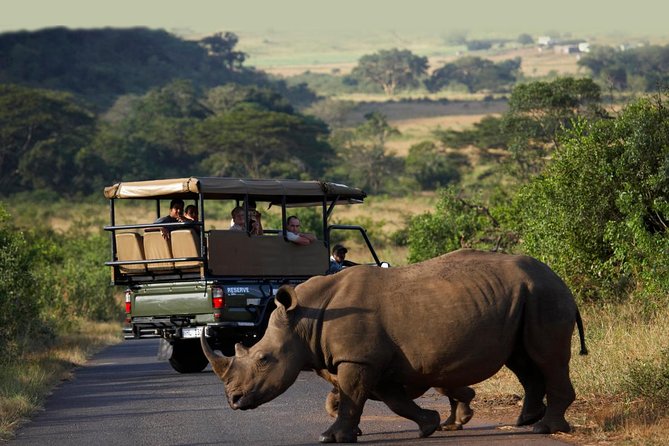
- White rhino conservation at work: Hluhluwe iMfolozi is known for major white rhino success.
- Nyala is a specific target: look for the spiral-horn antelope native to the region.
- Picnic lunch inside the reserve: a real break, still in safari country.
- Limited to 14 people: small group size helps keep the day personal and focused.
- Port-timed flexibility: departure times can be tailored to your Richards Bay cruise call.
Hluhluwe iMfolozi National Park: why this reserve matters
Hluhluwe iMfolozi is South Africa’s oldest game reserve, and that gives it a long track record of conservation work. The big reason you’re here is wildlife—especially the chance to see the Big Five (lion, leopard, elephant, buffalo, and rhino) in one concentrated itinerary.
What I like about this park is that it isn’t just about headline animals. Guides also point out species that many people miss elsewhere. Nyala, with its distinctive spiral horns, is specifically highlighted here, and it’s a great example of why a return visit inside the same day can pay off. You’re not only waiting for the rare moments; you’re also learning how the ecosystem looks and acts.
And because the reserve is famous for successful conservation efforts, you’re visiting a place where rhino numbers have been actively supported. That context changes how you experience the safari—you’re not just scanning for animals, you’re seeing the results of long-term protection.
You can also read our reviews of more tours and experiences in KwaZulu Natal.
Getting to the park from Richards Bay: early start, real-time timing
This shore excursion is built for a port day, so the rhythm matters. You start with pickup in the Richards Bay area (with the main meeting point at Richards Bay Harbour, Richards Bay, with a start time of 8:00 am), then you head about 75 km (47 miles) into Zululand toward the reserve.
The transport is in an air-conditioned vehicle, which you’ll appreciate if you’re coming in warm weather or if your ship’s schedule has you up too early. It’s also a day where you may feel the time pressure: the game-drive time is subject to ship arrival and departure.
If you’re on a cruise, the operator’s rules are strict: you must be disembarked by 07h30, and the ship departure time should not be before 20h00. The departure time can be tailored to port times, which is useful, but it also means you should double-check the exact pickup window you’re assigned.
One more practical note: vehicle type can vary by option. You might ride in an open or closed game-drive vehicle depending on what you selected, and that affects comfort and photography. Open vehicles are great for views, while closed vehicles can be a relief if conditions are windy or cool.
Morning game drive: your best window for lion, leopard, elephant, buffalo, and rhino
Your first safari block starts at Hluhluwe iMfolozi in the park wilderness area. The morning drive is scheduled for 3 hours, and that’s usually a sweet spot for active wildlife movement—before the day heats up and before animals tuck into quieter rhythms.
This is where the Big Five planning shows up. The goal is to find lion, leopard, elephant, buffalo, and rhino, with your guide doing the scanning and clue-reading that turns random spotting into real luck-and-skill. In this kind of habitat, animals often appear after you understand where to look: water sources, open patches, thick cover edges, and travel routes animals choose.
If you’re hoping for leopard, remember this can be the hardest Big Five target. Even so, a two-drive format improves your odds because you’re not betting everything on one morning scan. By the time your afternoon drive rolls around, animal activity often shifts, and that means your guide has a second chance to match you with different sightings.
The morning also sets expectations for what you’ll learn through the day. You’ll get context on the species you see, plus how conservation efforts have shaped the park. If you like safari days that feel like more than just driving and hoping, you’ll enjoy the way the guide information is aimed at both animals and South Africa’s broader reality.
Picnic lunch inside the reserve: a break that still feels like safari
Between drives, you’ll stop for a picnic lunch inside the reserve. That detail sounds simple, but it matters more than you’d think. Eating inside the park keeps you out of traffic and helps you preserve the safari mood. It also gives you a calmer moment to reset—no stressful scramble to find food on the road.
You’re not dealing with a formal restaurant schedule. This is light lunch, timed so you can get back out for the second drive without feeling rushed. One of the best parts of a well-planned safari day is having a break that doesn’t break the experience.
Also, lunch time is a sneaky wildlife moment. Even if you’re not on the move, you’re still in animal country. You might notice tracks, calls in the distance, or even the same animals returning to a known spot later.
If you tend to get hangry on long days, this is one reason I call the lunch “smart value.” It’s included, it’s timed to your itinerary, and it prevents the common cruise-shore-excursion problem of spending your best hours chasing lunch instead of chasing animals.
Afternoon game drive: the change of mood that boosts your odds
After lunch, you head out again for an afternoon drive. The big point here is timing: the park feels different in the afternoon. Animals change their visible patterns as temperatures shift, light angles change, and their comfort with activity changes too.
The guides are actively searching again, but the target list can feel broader because the park starts revealing different behavior. That’s when you may have a strong chance to spot species that were less visible earlier, including Nyala if conditions line up.
This second drive is also where you get the “second chance” feeling in the best way. If your morning wasn’t the perfect sighting parade, the afternoon can correct the story—sometimes with rhino, sometimes with buffalo, sometimes with lion sightings that happen later than you’d expect.
I like the structure of this day because it avoids the all-or-nothing feeling of a single-drive safari. You’re giving the reserve time to show different scenes, and you’re working with wildlife behavior instead of against it.
Small-group format with up to 14 people: better attention, calmer pace
This safari is limited to 14 people, which is a big deal for safari quality. With a smaller group, your guide can pay closer attention to where people are positioned, who needs a clearer view, and how the group moves when something is spotted.
The guide experience is part of the value. You’re not just shown animals; you’re guided through the meaning behind them. In particular, the emphasis tends to be on how wildlife connects to life in the region—animal habits and the social side of South Africa’s reality. If you want your safari day to feel like learning (without turning it into a lecture), this format delivers.
One logistical wrinkle for cruise days: the operator notes small-group tours may be joined by other guests who are on the same cruise ship. That doesn’t necessarily ruin the experience, but it does mean you should expect your final group size may vary slightly on your departure day.
Also, because you’re on a shore schedule, pickup coordination matters. If you’re traveling with a group and you want the smoothest start, confirm your exact pickup time the moment you receive it. There can be different pickup windows even when everyone is from the same ship, and that’s the kind of detail that can create avoidable stress if you assume you’ll be picked up together.
Price and value: what $327.59 includes for a Big Five day
At $327.59 per person, this isn’t a budget safari. But it is a very specific kind of value: you’re paying for a tight, port-day schedule plus the costs that often add up on your own.
Here’s what’s included in the essentials:
- Return transfers from the Richards Bay port area
- Park entrance fees
- Lunch (listed as light lunch / picnic lunch inside the reserve)
- A qualified guide
- Transport in an air-conditioned vehicle
On a shore excursion, entrance fees and park access are not the kind of thing you want to hunt down at the last minute. The fact that it’s bundled means you’re spending your limited time on the safari itself.
Another value point is the duration. About 6 hours total fits a typical cruise call without turning the day into a marathon drive-and-wait session. And because you get both morning and afternoon drives, you’re buying more “search time” for Big Five sightings than you would with many shorter tours.
Two things to keep in mind when weighing the price:
- This is non-refundable and can’t be changed, so you need a plan you’re comfortable committing to.
- The day is tied to ship timing, so if your port call is stressful, your safari schedule will be too.
Practical tips for a smoother safari day in Zululand
This is where I’d prepare like a pro, because safari days reward the calm traveler.
Dress for shifting conditions. Morning starts early, and even in warm regions, mornings can feel cool once you’re in the open or semi-open air. Bring light layers you can peel off later.
Bring safari essentials you’ll actually use. Think camera, sunscreen, hat, and comfortable shoes. Even if you’re mostly riding, you may want the option to stand when safe and when your guide directs it.
Stay flexible with timing. Since game-drive time can shift based on ship arrival and departure, don’t plan a tight second commitment after the excursion. The tour ends with return drop-off in Richards Bay, timed to let you get back safely.
Confirm your vehicle option if that matters to you. Open vehicles can feel more immersive for spotting, while closed vehicles can make the ride easier if the weather turns.
If you’re cruising, verify pickup details. The day starts early, and the operator indicates cruise disembarkation rules and tailored departure times. Treat your pickup time like a flight time: check it, write it down, and don’t assume it matches what your group expects.
Health and safety check. The operator follows SA Government approved TBCSA health and safety COVID-19 protocols. If you have symptoms, testing and quarantine are at your own cost, so consider trip insurance that can handle health-related disruptions.
Who this safari fits best (and who should rethink it)
I’d put this in the “best for most people” category if you:
- Want the Big Five goal but only have one shore day
- Prefer a small group with a guide who can keep attention on sightings
- Like the idea of a picnic lunch inside the reserve rather than eating off-site
- Are okay with an early start tied to cruise schedules
You might rethink it if:
- You hate early mornings and long scheduled drives
- Your travel plans are fragile and you can’t commit to a non-refundable itinerary
- You want a longer safari experience with more drives beyond morning and afternoon
Should you book this Hluhluwe iMfolozi shore excursion?
If you’re looking for one organized, high-effort safari day from Richards Bay, this is a strong pick. The two-game-drive structure, the small-group cap of up to 14, and the fact that entrance fees and lunch are included make it feel practical rather than pie-in-the-sky.
I’d book it if your priority is maximizing your odds in limited time, especially for white rhino and the Big Five experience. I’d double-check your cruise timing needs and your pickup window, and then go in ready to be patient. In game reserves, the best sightings often show up when you stop rushing them.
FAQ
How long is the Hluhluwe Safari shore excursion from Richards Bay?
The tour lasts about 6 hours.
What time does the tour start in Richards Bay?
The start time is 8:00 am, with early pickup from hotels depending on your arrangement.
What’s included in the price?
The price includes return transfers from Richards Bay port, a qualified guide, transport in an air-conditioned vehicle, park entrance fees, and lunch (light picnic lunch inside the reserve).
Is lunch included and where do you eat?
Yes. You have a picnic lunch inside Hluhluwe iMfolozi National Park.
What animals can I expect to see?
The safari aims for the Big Five: lion, leopard, elephant, buffalo, and rhino. Nyala (spiral-horned antelope) and white rhino are specifically highlighted.
How large is the group?
It’s a small-group experience limited to 14 people. On cruise departures, you may also be joined by other guests from the same cruise ship.
Do I ride in an open or closed safari vehicle?
That depends on the option you select; drives can be done in open or closed vehicles depending on the option chosen.