REVIEW · LAKE BRACCIANO
Rome Private Full Day Shore Excursion 9 hours
Book on Viator →Operated by AIM LIMO ROME · Bookable on Viator
Your Rome day starts before Rome does. This private full-day shore trip runs you from Civitavecchia into the city in a smart loop, with a Mercedes car, live English commentary from the driver, and enough flexibility to adjust to real cruise timing. You get a packed highlights mix—early Christian Rome, the old civic core, and the biggest “wow” monuments—without the hassle of figuring out buses and trains on your own.
I really like two things here. First, the on-time cruise logistics are taken seriously; in the feedback I saw, drivers such as Claudio and Daniele handled tough traffic and still got people back with time to spare. Second, you have room to steer the day a bit, including lunch guidance and occasional add-ons like Santa Croce when someone asked for it.
One drawback to plan for: this isn’t an official walking guide tour. Your driver isn’t a licensed guide, so outside the vehicle they can’t go deep on explanations, and entrance tickets are not included for several of the major stops.
In This Review
- Key highlights you’ll care about
- Cruise-Day Rome: Why This Private 9-Hour Plan Works
- Mercedes Pickup and On-Board Commentary: The Smart Way to Start
- Stop 1 in Civitavecchia: 10 Minutes That Set the Tone
- San Paolo Fuori le Mura (30 Minutes): Early Christian Rome You Can Feel
- Circus Maximus (10 Minutes): Rome’s Big Games, In a Very Big Space
- Priorato dei Cavalieri di Malta (10 Minutes): Fortress Roots Above the Tiber
- Piazza del Campidoglio + Capitol Hill Views (20 Minutes): Rome’s Civic Spine
- Vittoriano + Trevi Fountain (15 Minutes): Risorgimento Italy Meets the Old Water Supply
- Pantheon (20 Minutes): The Dome Trick That Still Feels Like Magic
- Foro Romano (10 Minutes): Quick Glimpses of the Ancient Government Grid
- Colosseum (15 Minutes): The World’s Most Famous Amphitheater in One Shot
- Terrazza del Gianicolo (10 Minutes): A Viewpoint Stop That Helps You Breathe
- St. Peter’s Basilica (10 Minutes): Vatican-Scale Rome Before You Leave
- Tickets, Fees, and What to Budget Without Surprises
- Price and Value: Is $566+ Per Person Fair for a 9-Hour Day?
- Who This Tour Fits Best (and Who Might Want Another Option)
- Should You Book This Rome Shore Excursion?
- FAQ
- Is pickup and drop-off from the cruise ship included?
- How long is the Rome shore excursion?
- Is the tour private and offered in English?
- Are entrance tickets included for the sites?
- Can the driver provide explanations outside the vehicle?
- Are Vatican Museums open on Sundays?
Key highlights you’ll care about
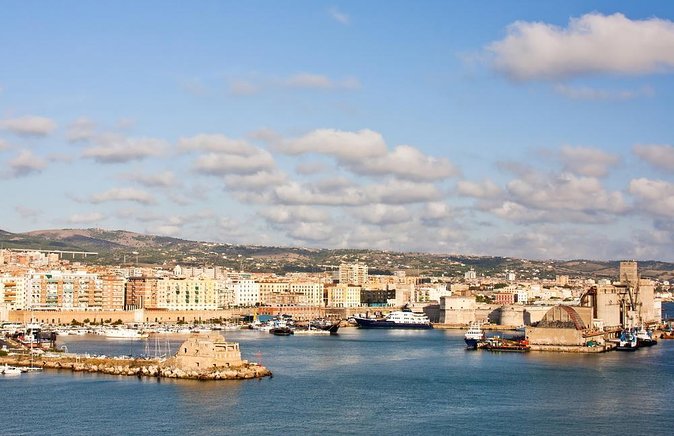
- Name-sign pickup right by your ship at Civitavecchia, so you’re not wandering at the wrong dock
- Live English commentary from inside the Mercedes, with a driver who keeps the day moving
- A practical, Rome-hit-list route from San Paolo Fuori le Mura to St. Peter’s Basilica
- Free stops mixed in (like San Paolo and Circus Maximus) to help your budget
- Short, timed viewing windows that help you see a lot without losing the whole day to traffic
- Real flexibility on the day, including lunch recommendations and possible walking-distance tweaks
Cruise-Day Rome: Why This Private 9-Hour Plan Works
If you’re docking in Civitavecchia, you already know the big challenge: time. Rome traffic can turn a simple trip into a long, exhausting slog. This tour is built around the reality that cruise passengers need structure—pickup under the ship, a fixed start time, and a route that hits major sites without forcing you to do transit math.
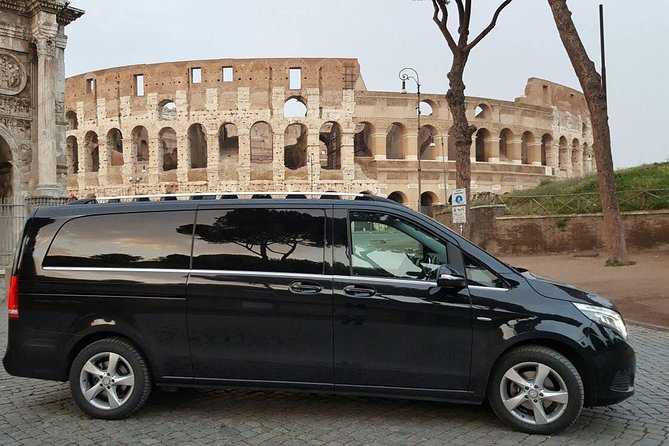
The other reason this works is comfort. You’re in a full equipped Mercedes with your own group, which matters when you’re spending most of your day outside. You also get mobile ticketing and English commentary on board, so you’re not stuck staring out the window wondering what you’re looking at.
And yes, it’s a fast day. Many stops are around 10–20 minutes. That’s not “slow travel.” But it is an efficient way to get your bearings fast and see the big anchors of Rome.
You can also read our reviews of more private tours in Lake Bracciano
Mercedes Pickup and On-Board Commentary: The Smart Way to Start
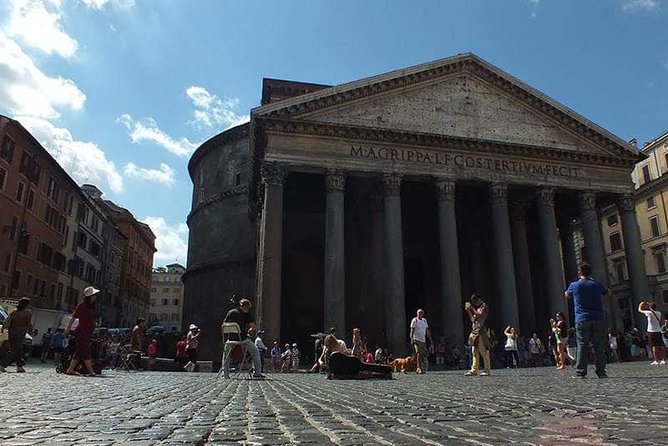
Pickup is at Civitavecchia Port. Your driver waits right in front of the ship holding a sign with your name, and the tour includes pickup/drop-off under the ship. Meeting point details are Piazza Vittorio Emanuele, 19, 00053 Civitavecchia RM, so you can sanity-check where you’ll need to meet if anything changes at the dock.
The car part is more than comfort. The driver provides live commentary from inside the vehicle. That matters because Italian regulations limit what drivers can explain once they’re outside. So during the drive you’ll get the story beats, and then at each stop you’ll get a quick visual orientation.
This also helps with logistics. In Rome, the best parking spot can change minute to minute. A private driver can drop you at a convenient viewing area, then pick you up again where it’s easiest—especially useful if your group has mobility constraints. One group noted that Manuel adjusted the walking effort and still got close to major sights.
Stop 1 in Civitavecchia: 10 Minutes That Set the Tone
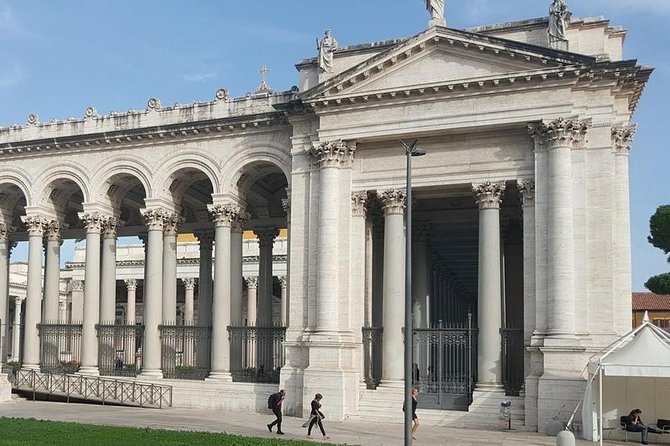
The day begins with a short time block at the port area. It’s a small start, but it sets the pattern: confirm you’re together, get your bearings, and move. For cruise passengers, that’s a win. You’re not starting the city day already stressed about where everyone is supposed to be.
You’ll want to have your shoes and your energy ready for a long day. Even if your first stop is quick, Rome ramps up fast once you’re in the core.
San Paolo Fuori le Mura (30 Minutes): Early Christian Rome You Can Feel
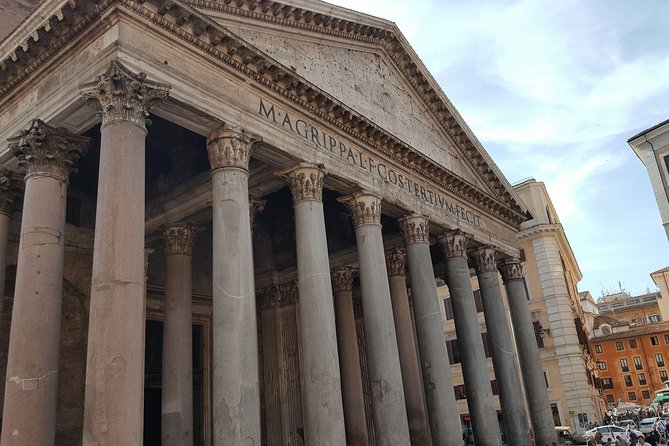
This is the kind of basilica stop that adds depth to your “greatest hits” day. Basilica Papale di San Paolo Fuori le Mura is tied directly to the burial place of St. Paul, and the story layers over centuries are part of what makes it powerful.
Here’s what you’re seeing when you walk around the site: the church began with Constantine I honoring Paul’s burial area, then was expanded under Theodosius I into a larger basilica. Later, repairs and changes continued—especially after roof damage—and the tomb area and altar positions evolved across papacies. The impression you get is of a living monument, repeatedly rebuilt and reinterpreted.
Timing is 30 minutes. That’s not a full slow church visit, but it’s enough to understand the big idea: the site isn’t just ancient; it has been cared for, repaired, and redesigned repeatedly.
Also, admission here is marked as free in the tour details. That helps your budget and lets you focus on what matters: getting inside and taking in the scale.
Circus Maximus (10 Minutes): Rome’s Big Games, In a Very Big Space
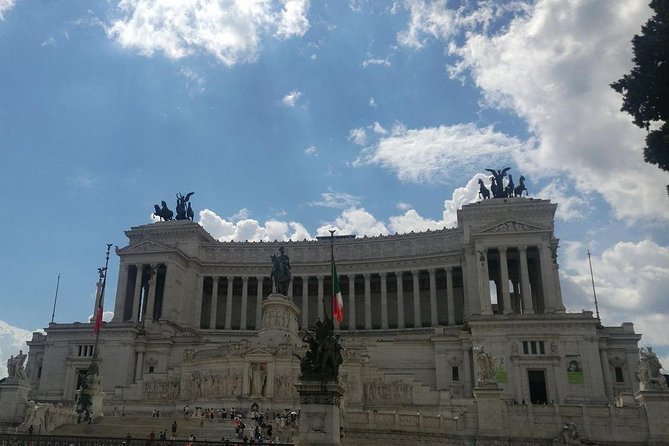
Circus Maximus was Rome’s largest venue for public games tied to religious festivals. Even if you can’t see everything at once, this stop gives context for how Romans spent time together—parades, horse and chariot racing, athletics, and the state-sponsored show of power and faith.
The big value of a short stop here is orientation. You’re standing in a space that shaped Roman public life, not just Roman architecture. It also helps your later visits make sense, because the Forum and Colosseum aren’t isolated—Rome was a system of public events, civic spaces, and monumental storytelling.
Admission is listed as free. Expect a quick look and move on, because the clock is always moving on a shore day.
Priorato dei Cavalieri di Malta (10 Minutes): Fortress Roots Above the Tiber
This stop is quick, but it’s interesting in a different way: it’s a site shaped by changing religious orders and military history. The Priory overlooks the Tiber and connects to the area near the ancient Pons Sublicius.
What you’re told to notice is the timeline of ownership and rebuilding. It began as a fortified Benedictine monastery in the 10th century, then passed to the Templars, and after their destruction, to the Knights Hospitallers, the predecessors of the Order of Malta. Rebuilding happened in the 15th through 17th centuries, and the property later received extraterritoriality in 1869. The piano nobile is noted for portraits of Grand Masters.
Because this is a short stop and admission is listed as not included, you may mostly get exterior and nearby viewing rather than a long museum-style visit. Still, it’s a good “pause” between the heavy hitters.
Piazza del Campidoglio + Capitol Hill Views (20 Minutes): Rome’s Civic Spine
Piazza del Campidoglio sits on Capitoline Hill. This is ancient Rome’s civic heart area, between the Forum and the Campus Martius. The hill’s name connects to the temple of Jupiter Optimus Maximus, and the wider area later became known as Capitolium—so you’re in a place that carries meaning far beyond the view.
A 20-minute stop is enough to do two things well: take in the hill layout and walk to a viewpoint where you can understand how Rome’s spaces connect. Think of it as “map time.” If you’ve never been to Rome, this is where the city starts to click.
Admission is listed as not included for this stop. That doesn’t mean you can’t enjoy the square—it means you shouldn’t assume any paid access is wrapped into your ticket.
Vittoriano + Trevi Fountain (15 Minutes): Risorgimento Italy Meets the Old Water Supply
The Vittorio Emanuele II Monument—the Vittoriano, also called Altare della Patria—is a 19th-century monument built to honor Victor Emmanuel II and the unification story. It’s a big architectural statement designed by Giuseppe Sacconi, inaugurated in 1911 and completed in 1935.
Why it belongs on a shore day: it gives you a different Rome than the ancient stops. It’s Italy’s modern identity placed right next to ancient-looking geometry and civic scale. The base includes a museum of Italian unification, and the monument has a panoramic lift that’s listed as added in 2007 for roof views. If you want the top views, that likely means planning for additional access fees, since entrance is listed as not included for this tour’s stop.
Then you shift to Fontana di Trevi, which has its own special pull. The fountain marks the terminal point of the revived Aqua Vergine aqueduct system, originally brought into Rome centuries earlier. There’s also the Baroque art story: the project developed through competitions, with work beginning in 1732, and finishing in 1762 with the final design. You’ll see how the façade points to the aqueduct source and how multiple sculptors contributed to the decorations.
Trevi is listed as free. So this is a good place for a photo moment without paying an entry fee. Just know: 15 minutes goes fast, and it can get crowded. If your goal is photos, be ready to move quickly when you spot a gap.
Pantheon (20 Minutes): The Dome Trick That Still Feels Like Magic
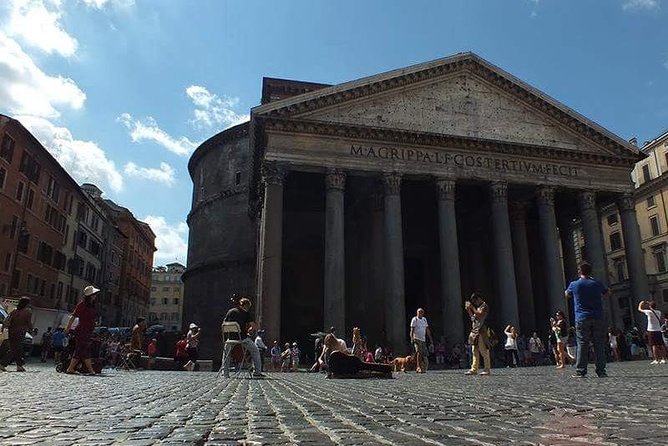
The Pantheon is a “yes, you need to see it” stop even if you only have 20 minutes. It’s a former Roman temple now a church, completed under Hadrian around 126 AD, with an iconic circular rotunda under a massive dome. The wow factor is simple: the dome’s oculus opens to the sky, and the interior proportions are balanced so that the height to the oculus matches the diameter of the interior circle—both 43 meters.
You’ll also notice the portico with large Corinthian columns and the coffered concrete dome. This is Roman engineering you can sense with your body, not just admire from a distance.
Admission is listed as not included, so you should be ready to pay if you want interior access. A 20-minute slot is enough for a quick look, but if you want slow time inside, this tour is more about seeing than lingering.
Foro Romano (10 Minutes): Quick Glimpses of the Ancient Government Grid
The Roman Forum is where the ancient city ran its civic and public life. It’s a rectangular plaza surrounded by ruins of major government buildings—so it’s not one monument. It’s a whole system.
A 10-minute stop won’t let you “read” the Forum like a textbook. But it does let you stand in the right space and understand what you’re looking at later. If you’ve ever wondered why people call it the center of Rome—this is where the idea becomes real.
Admission is listed as not included, so plan for any access or ticket needs if you want to enter specific areas.
Colosseum (15 Minutes): The World’s Most Famous Amphitheater in One Shot
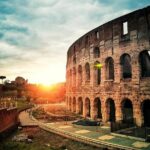
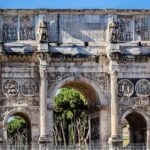
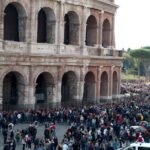
The Colosseum is the big one. It’s an oval amphitheatre built of travertine, tuff, and brick-faced concrete, with construction starting under Vespasian in AD 72 and completed under Titus in AD 80. Later modifications continued during Domitian’s reign.
Fifteen minutes gives you the basics: scale, shape, and the immediacy of being near a monument that defined Roman entertainment. You can take in the exterior and choose your angles for photos.
Admission is listed as not included. If your priority is entering the Colosseum itself, you’ll likely want to budget extra time and pay any site fees separately, since this tour’s time at the stop is short.
Terrazza del Gianicolo (10 Minutes): A Viewpoint Stop That Helps You Breathe
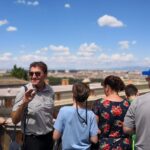
After the heavy monuments, the Janiculum terrace is a relief. Janiculum (Gianicolo) is a hill west of the Tiber, outside the ancient city boundaries and not part of the Seven Hills of Rome. That difference makes it feel like a viewpoint you reach, not just another ancient hill stop.
This 10-minute window is about perspective. You look back at the city and stop feeling like you’re stuck in a museum lineup. It’s also a good moment to regroup: water, photos, and a quick check that your group stays together before you head to Vatican territory.
St. Peter’s Basilica (10 Minutes): Vatican-Scale Rome Before You Leave
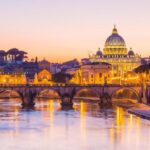
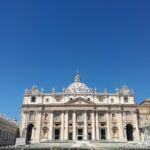
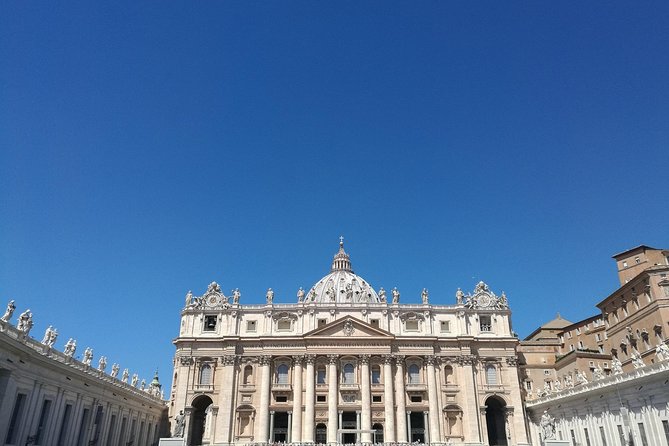
St. Peter’s Basilica in Vatican City is one of the planet’s strongest visual statements. This is the Papal Basilica of San Pietro in Vaticano, described here as an Italian Renaissance church in the Vatican.
Ten minutes is short, but it’s still a strong finish because it turns your day from ancient + civic Rome into religious Rome. Even a quick entrance-and-look moment can change how you interpret the rest of the day.
Admission is listed as not included for this stop, so you’ll want to be ready for any entry requirements on the day. Also note the tour’s additional warning: Vatican Museums are closed on Sunday. Even though your stop is the basilica, that closure matters if you’re hoping to add museum time on your own.
Tickets, Fees, and What to Budget Without Surprises
In the tour details, some stops are free (San Paolo Fuori le Mura, Circus Maximus, and Trevi Fountain). Others are marked as not included, meaning entrances may cost extra.
Since the tour itself includes transportation and onboard commentary, your best budgeting approach is: treat attractions as separate line items. If your heart is set on interior access at Pantheon, Colosseum, or St. Peter’s, plan for paid entry on those days.
Also, food and drinks are not included. The feedback I saw often mentioned lunch help and a restaurant recommendation from the driver. That’s not the same as included lunch, but it’s a useful support when you’re on a schedule.
Price and Value: Is $566+ Per Person Fair for a 9-Hour Day?
At $566.46 per person, this is not a cheap “hop on a bus” excursion. It’s priced like what it is: private transport, English onboard commentary, and cruise-ready handling.
Where the value comes from:
- You’re not paying for an official walking guide (so the product is mainly logistics + interpretation from the car).
- You get a private Mercedes vehicle plus pickup/drop-off under the ship, which is usually the biggest headache to solve on your own.
- The day includes flexibility, and that flexibility can turn wasted time into useful time. If you need shorter walks, a good driver can adjust drop points so you still get the monument experience.
Where you might feel the pinch:
- Because entrance tickets aren’t included for many stops, you’ll still spend on site access if you want to go inside.
- Many locations are brief. If you want long guided explanations at each monument, a different style of tour (with an official guide or more time per stop) might match your expectations better.
For families, couples, or small groups splitting the cost, the private factor often makes the price feel more reasonable. For solo travelers, it’s still workable if you strongly value convenience and a tight schedule.
Who This Tour Fits Best (and Who Might Want Another Option)
This tour is ideal if you:
- Want a one-day highlights sweep from a cruise port without stress.
- Prefer seeing the big monuments with a driver who handles Rome logistics and keeps you on time.
- Appreciate a plan that’s adjustable, especially if you need to manage walking distance.
You might want a different option if you:
- Want a fully guided, outside-the-car explanation at every stop.
- Expect entrance fees to be covered for all major sites.
- Are hoping for a slow, deep visit where you spend 45–90 minutes at each interior space.
Should You Book This Rome Shore Excursion?
I’d book this if your priorities are timing, comfort, and seeing the essentials in one go—especially if you’re docking in Civitavecchia and you don’t want to gamble with trains, taxis, and traffic. The best part is the way the day is structured: pickup is clear, the car commentary helps you understand what you’re looking at, and the driver handling makes it more likely you’ll finish with time to spare.
I wouldn’t book it as your only “learning” tool if you’re a hardcore history person who wants constant on-foot interpretation at each monument. Since your driver isn’t a licensed guide and many entrances are not included, you’ll get the outline and context, but not a deep guided tour inside every site.
If you’re undecided, there’s also low-risk comfort: the tour offers free cancellation up to 24 hours in advance. Use that to book confidently, then decide once you’ve mapped your own must-see interiors.
FAQ
Is pickup and drop-off from the cruise ship included?
Yes. The tour includes pickup and drop-off under the ship, with the driver meeting you right at the port with a sign.
How long is the Rome shore excursion?
It runs about 9 hours (approx.).
Is the tour private and offered in English?
Yes. It’s private (only your group) and offered in English.
Are entrance tickets included for the sites?
No. The tour details list tickets as not included, though some specific stops are marked free (like San Paolo Fuori le Mura, Circus Maximus, and Trevi Fountain).
Can the driver provide explanations outside the vehicle?
Your driver isn’t a licensed tour guide. Commentary and explanations are provided from inside the vehicle, since Italian rules limit what can be said when outside.
Are Vatican Museums open on Sundays?
No. Vatican Museums are closed on Sunday, according to the tour’s additional information.