Rome in one cruise stop sounds rushed, but this private van tour keeps it efficient without feeling like cattle. You’ll see big hits fast, starting with ancient landmarks like the Triumphal Arch for Constantine and the Pantheon, then moving through baroque Rome to St. Peter’s Square.
I like that you’re not stuck on a long bus where you’re stuck far from the action. With a vehicle limited to 8 passengers, you can get closer to many sights and keep the day moving at a cruise-friendly pace. I also like that the team behind the tour includes guides who genuinely enjoy explaining what you’re seeing, and I’ve heard praise for Roman-native storytelling from guides such as Andrea, with team support from Leonardo.
One thing to consider: the stop times are brief (think quick photo windows), and Vatican Museums and the Sistine Chapel are not included unless you arrange that add-on.
In This Review
- Key moments worth planning for
- A Private Cruise-Day Route That Gets You Close
- Price for a Private Van: What You Really Get
- Constantine’s Arch to Circo Massimo: Ancient Rome in Fast Focus
- Palatine Hill and Piazza Venezia: Two Views That Explain Rome
- Pantheon to Trevi Fountain: Free-Entry Icons You Can Still Enjoy
- St. Peter’s Square: A Short Visit With Big Atmosphere
- Fontana dell’Acqua Paola: A Worthwhile Detour Older Than Trevi
- Optional Vatican Museums and Sistine Chapel: When to Add Them
- What the Guides Add (Andrea and Leonardo’s Reputation)
- Who This Tour Suits Best From Civitavecchia
- Should You Book This Rome Private Shore Excursion?
- FAQ
- How long is the Rome private shore excursion?
- Is this tour private?
- Where does it start?
- What vehicle size should I expect?
- Is pickup offered?
- Are admission tickets included?
- Does the tour include a guided visit inside museums?
- Can I visit Vatican Museums and the Sistine Chapel?
- Is free cancellation available?
Key moments worth planning for
- Small-vehicle access (max 8 seats) means shorter walks from the drop-off and better chances for close views
- Cruise-port realism: the day is built around a limited time window, with a driver who’s used to schedule pressure
- Icon stops with free entry at places like the Pantheon, Trevi Fountain, and Spanish Steps mean fewer surprise costs
- Ancient Rome to baroque Rome in one loop, so first-timers don’t have to choose between eras
- St. Peter’s Square timing is short, so you’ll want a plan for whether you add Vatican Museums
- A bonus fountain stop at Fontana dell’Acqua Paola gives you a quieter “other Trevi” moment
A Private Cruise-Day Route That Gets You Close
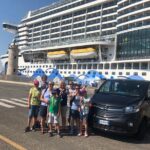
This is a private shore excursion from the Civitavecchia Port Cruise Terminal that runs about 9 hours. It’s designed for a single-day rhythm: arrive, hit the main sights with smart routing, and keep enough breathing room for photos and walking.
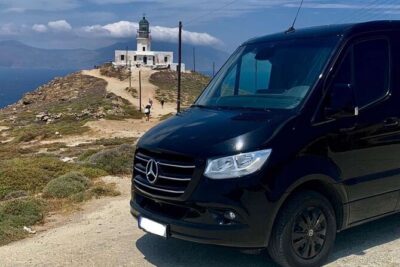
The biggest practical difference here is the vehicle size. Your group rides in an air-conditioned car or van sized for up to 8 passengers, which usually means easier access to central streets than you get with larger buses. That matters in Rome, where traffic, narrow roads, and curb-side drop zones can turn “close by” into “a long hike.”
You’ll also have an English-speaking tour driver guiding the experience. I like that it’s not just you looking at monuments from a distance—this tour is built around explanation: what you’re seeing, why it matters, and what to notice quickly.
Finally, this kind of cruise-day outing works best when you treat it like a guided “greatest hits” map. If you’re expecting museum-deep time, you may feel the schedule squeeze. If you want orientation plus iconic Rome, you’ll probably come away with a clear sense of where everything fits together.
You can also read our reviews of more tours and experiences in Vatican City.
Price for a Private Van: What You Really Get
At $554.32 per person, this is not a budget option. The value equation comes down to two things: time and group size.
Because it’s private, you’re paying for your own vehicle and your own driver, not shared public tours. If you’re traveling with a small group (up to 8), the per-person price can start to make more sense compared with piecing together multiple public tickets and guided options—especially on a cruise day where you’re unlikely to improvise well.
Also, notice what’s not included: entrance fees and tour guides inside sites, plus meals and tips. That’s important. Even though several major stops are free to enter (Pantheon, Trevi Fountain area, Spanish Steps area), the overall cost of a day out in Rome still depends on how much you want to add. If you decide to include Vatican Museums and the Sistine Chapel, you’ll likely be layering in additional admissions and the time they require.
So here’s the honest bottom line: I’d book this if you want a guided, close-access Rome day that fits a cruise timetable and you’d rather pay for convenience than spend your day chasing logistics. If you already know you want a long museum slog and don’t need a private car, you can often find cheaper ways to cover individual sights.
Constantine’s Arch to Circo Massimo: Ancient Rome in Fast Focus
The tour kicks off at one of Rome’s triumphal arches, built in 315 AD to celebrate Emperor Constantine. It’s a strong opening because it places you right inside the story of Rome as an empire—big statements in stone, built to outlast any single ruler.
From there, you head to Circo Massimo (Circus Maximus), the legendary chariot-racing venue that was already important even after Rome’s old imperial era. With only about 5 minutes, you’re not going to “tour” the whole site. Instead, you’ll get the key context—what this space was built for—and then you’ll move on.
Here’s what I think you’ll enjoy most: Rome looks different once you understand what used to happen in the same spaces you’re photographing today. Circo Massimo isn’t just grass and ruins; it’s about speed, noise, crowds, and spectacle—the kind of public life that made Rome feel enormous.
Possible drawback: since the stop is short, you’ll want your camera ready and your questions ready too. If you ask at the right moment, a good driver can turn a quick viewing window into a memorable mini-lesson.
Palatine Hill and Piazza Venezia: Two Views That Explain Rome
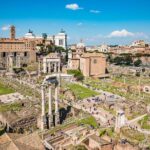
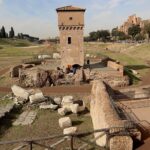
Next comes Palatine Hill, often tied to the legendary foundation of Rome, with roots described as far back as 753 BC. You’ll see it from the side of Circus Maximus, looking toward the ruins of the Palatine Palace and other imperial palaces.
Even if you’re not going inside, this stop can click your mental map. Palatine is one of those places where Rome’s “today on top of yesterday” feeling becomes obvious. You see how the emperors literally lived above the city—power stacked on top of power.
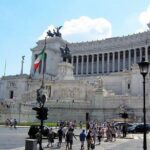
After Palatine, the tour heads to Piazza Venezia, one of the most dramatic modern-era civic spaces in the center. There you’ll see the monument building started in 1885 to celebrate the unification of Italy and its first king, Vittorio Emanuele II. Since 1921, the same area has also included the Monument to the Unknown Soldier, adding another layer of meaning beyond Roman antiquity.
This is a smart pacing choice. Early in the day you get the ancient empire, then you get a window into modern Italy’s national identity—so the city doesn’t feel frozen in time. And for photos, Piazza Venezia gives you strong angles and clear sight lines.
Time is still tight, though. With Rome’s crowds and the realities of cruise-day timing, you’ll get a view and quick context rather than a slow wander.
Pantheon to Trevi Fountain: Free-Entry Icons You Can Still Enjoy
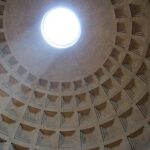
At the heart of this route is the Pantheon, described as the best-preserved ancient building in Rome. It was built in the 3rd decade of the 2nd century AD under Emperor Hadrian. You’ll have about 15 minutes, and that’s enough time to stand back, take in the scale, and notice the classic details you’ve seen in pictures a hundred times.
The Pantheon is also where you learn the value of a quick guided stop. Even in a short window, a good driver can point out what to look for so you don’t just rush past awe.
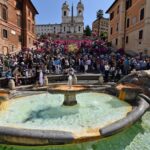
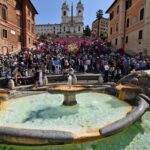
Then you move to Trevi Fountain, the monumental baroque fountain built in the 1700s. It’s tied to the ancient aqueduct system—water restored and emphasized by popes to serve the people. You’ll get roughly 10 minutes here, which sounds short until you remember Trevi is one of the busiest photo spots in the city. You’re not meant to linger for hours; you’re meant to get the shot, learn the story, and keep the flow.
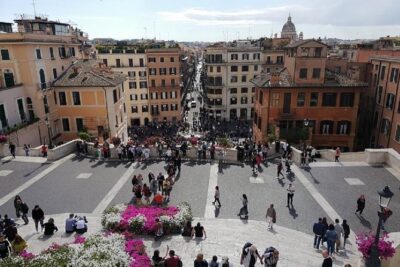
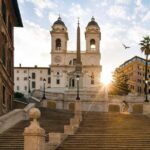
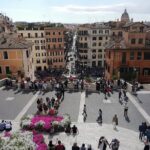
After Trevi, you’ll head to the Spanish Steps, with about 10 minutes at this famous stairway and the squares at the top and bottom. I like this stop because it gives you a change of pace. Rome shifts from stone engineering (Pantheon, aqueduct-era water systems) into theatrical street life. It’s a place where you can actually watch people move and feel how Rome “works” at human speed.
One practical note: Trevi and the Spanish Steps are classic crowd magnets. The tour timing helps, but you’ll still be sharing space with lots of other visitors. The best way to enjoy it is to treat it like a quick “Rome moment” rather than a calm museum visit.
You can also read our reviews of more private tours in Vatican City
St. Peter’s Square: A Short Visit With Big Atmosphere
Next is St. Peter’s Square—about 30 minutes. Even without stepping into the Vatican Museums or the Sistine Chapel, this stop can land emotionally because it’s designed to gather and focus people. It’s described as the center of Christianity, and the sheer scale does a lot of the explaining for you.
This is also where the tour becomes flexible. The tour notes that if you want to visit the Vatican Museums and the Sistine Chapel, you should let them know. That’s important because those sites require time and admissions, and they’re not included automatically.
So if you’re the type who wants the Vatican highlights but you also want to keep momentum for other sights, plan ahead. Ask for the add-on early and align it with how much walking you can handle on a cruise schedule.
If you choose not to add the museums, you’ll still leave with a strong St. Peter’s Square experience. But you should go in with realistic expectations: 30 minutes is a look, a feel, and a few key photos—not a full Vatican day.
Fontana dell’Acqua Paola: A Worthwhile Detour Older Than Trevi
After St. Peter’s Square, the route includes Fontana dell’Acqua Paola, a fountain described as older than Trevi and placed on one of Rome’s most beautiful hills. You’ll have about 10 minutes.
I love this kind of stop because it breaks the pattern. A lot of Rome days focus only on the most famous fountain. Here, you get a reminder that Rome’s water story is bigger than one icon shot. It also gives you a slightly quieter moment to pause, take a breath, and enjoy a different view.
Because the timing is short, you’ll want to focus on one or two things rather than trying to “do everything.” Look at the placement on the hill, the way water meets the urban scene, and the contrast with the baroque spectacle you saw at Trevi.
Optional Vatican Museums and Sistine Chapel: When to Add Them
The tour can include the Vatican Museums and the Sistine Chapel, but only if you request it. Admissions are not included, and that matters for two reasons: cost and time.
I’d think of the Vatican add-on as the choice that changes the whole tone of the day. Without it, your route stays more balanced: ancient Rome, central landmarks, fountains, and St. Peter’s Square as the spiritual anchor. With it, you’re committing to a longer internal museum experience where pacing is different, and crowds inside can affect how much you see.
So ask yourself what you actually came for on this cruise stop:
- If your priority is the iconic Rome street scenes and quick comprehension of the city, skip the add-on and savor St. Peter’s Square.
- If you want the Sistine Chapel experience and are okay with less time outside the Vatican walls, add the museums and plan your day around it.
Either way, tell the tour team ahead of time so they can align the route. Cruise days are all about friction management: the less you improvise last minute, the better the outcome.
What the Guides Add (Andrea and Leonardo’s Reputation)
Even with a tight schedule, the tour’s success depends heavily on the human part: interpretation. I’ve seen strong praise for guides like Andrea, described as a native Roman whose love for the city comes through while sharing history and architecture. That’s the difference between seeing monuments and understanding why you’re looking at them.
There’s also been praise for the team’s support style, with Leonardo mentioned in feedback connected to handling timing issues. That’s useful to remember on cruises, where schedules can shift. If your day starts to wobble, the ability to adapt politely and quickly is not a small thing.
You don’t need a “perfect itinerary.” You need a driver who can help you make good decisions with limited time. That’s what this tour is built around.
Who This Tour Suits Best From Civitavecchia
This Rome private shore excursion is a strong fit if you:
- Want a first-time Rome orientation in one day
- Prefer a private van over a big group bus
- Have limited time from a cruise and want the day structured
- Like a mix of ancient Rome plus classic baroque landmarks
- Travel with a small group (up to 8 seats) and want closer, easier access
It may be less ideal if you:
- Want a slow, deep museum day without rushing between neighborhoods
- Plan to spend a large portion of your day inside the Vatican Museums without understanding that admission and time must be added
- Are trying to keep the day as cheap as possible; private transport plus admissions can add up
For most cruise passengers who want to hit the main icons and leave with a clear sense of Rome, this works well.
Should You Book This Rome Private Shore Excursion?
If your cruise stop gives you one day and you want the big names—Pantheon, Trevi, Spanish Steps, St. Peter’s Square, plus ancient stops like Palatine Hill and Circo Massimo—this is one of the more sensible ways to do it. The price isn’t small, but you’re paying for structure, private transport, and a driver who can help the hour you have in each place feel meaningful.
Book it if you value convenience and understanding over DIY wandering. Skip it if you’re craving long museum time as your main goal, or if you’re comfortable building your own day from public transportation and timed ticket planning.
My practical advice: make the decision based on how you want your Rome day to feel. If you want a guided “greatest hits” that gets you oriented fast, this is the kind of tour that saves your cruise stop. If you want to go deep in only one area for hours, you may be happier choosing a more museum-focused plan.
FAQ
How long is the Rome private shore excursion?
The tour is approximately 9 hours.
Is this tour private?
Yes. It’s a private tour/activity, with only your group participating.
Where does it start?
It’s a shore excursion from the Civitavecchia Port Cruise Terminal.
What vehicle size should I expect?
The tour uses a vehicle with no more than 8 passenger seats.
Is pickup offered?
Yes, pickup is offered.
Are admission tickets included?
Entrance fees are not included. However, the itinerary notes free admission for several stops.
Does the tour include a guided visit inside museums?
Tour guides inside sites or museums are not included, and entrance fees are not included.
Can I visit Vatican Museums and the Sistine Chapel?
You can visit them if you let the tour know, but admission is not included.
Is free cancellation available?
Yes. You can cancel up to 24 hours in advance for a full refund.