REVIEW · VATICAN CITY
Shore Excursion From Civitavecchia Port
Book on Viator →Operated by 23 ROME LIMO SERVICE · Bookable on Viator
Rome looks different from a minivan window. This full-day small-group shore excursion links Civitavecchia with Rome’s biggest sights, using an air-conditioned minivan and port transfers so you’re not juggling taxis on a tight ship day. It’s built for a smooth overview day: quick orientation, key landmarks, and a long-enough look at Vatican City.
What I like most is the mix of viewpoints and classic stops. You start with a panoramic break at Colle del Gianicolo, then move through central Rome for time at Trevi Fountain, the Pantheon, and Piazza Navona before finishing with St. Peter’s Square in Vatican City. The pacing works when you’re seeing Rome for the first time and you want your bearings fast.
One thing to plan for: this is an overview route with short on-and-off time at each stop. Also, the dress code is real for places of worship—no shorts or sleeveless tops, and knees plus shoulders must be covered, or entry can be refused.
In This Review
- Key things to know before you go
- Port-to-Rome Day Trips: Why This One Makes Sense
- Staying On Time: The Real Logistics That Protect Your Day
- Colle del Gianicolo: Where Rome Gets a Spine
- Piazza Venezia and the Ancient City Center: Your Orientation Moment
- Trevi Fountain: Coin Toss Time Without the Endless Wait
- Pantheon: An Old Temple Stop That Still Feels Current
- Piazza Navona: The Square That Works as a Walking Break
- St. Peter’s Square in Vatican City: The Big Finale
- Lunch and Timing: How to Keep This Day Comfortable
- Price and Value: What You’re Paying For
- Guides, Languages, and How to Get the Most Out of the Day
- Who Should Book This Rome Shore Excursion
- Should You Book This Civitavecchia to Rome Shore Excursion?
- FAQ
- How long is the shore excursion from Civitavecchia to Rome?
- What is included in the tour price?
- Is lunch included?
- How many people are in the group?
- What sites do you visit?
- Do I need to follow a dress code?
- Can I cancel or change the booking?
Key things to know before you go
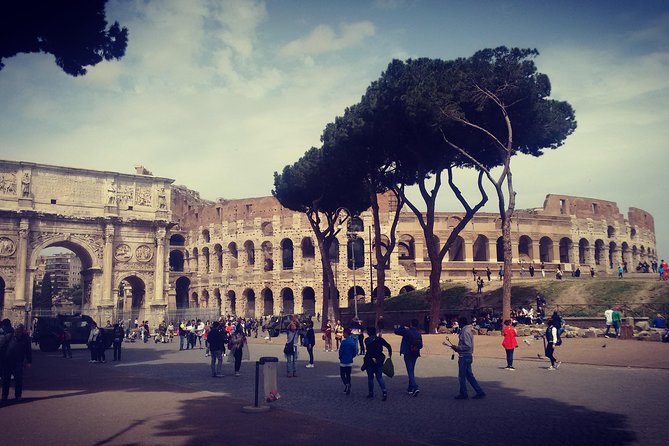
- Max group size of 8 means more attention and less crowd chaos during your ship-day window
- Port transfer setup saves time and nerves when you’re managing disembarkation and re-boarding
- Colle del Gianicolo first gives you an instant Rome skyline to anchor everything you’ll see later
- Icon circuit without long breaks fits an 8-hour day when you’re short on time
- Vatican City stop is focused on St. Peter’s Square (great for the grand arrival feeling)
- Dress code applies at worship sites and selected museums so pack accordingly
Port-to-Rome Day Trips: Why This One Makes Sense
If you’re docking at Civitavecchia, Rome can feel far in practice, not just on the map. This tour is designed around that reality with transport by air-conditioned minivan and a “stay with us” flow from the port. That matters because on cruise days, time is the currency.
This isn’t a slow sightseeing crawl. You’re doing an efficient circuit built to hit top landmarks in one go: you pass major names on the route, then you get hands-on time at several core stops once you’re in the center. If your goal is a first-round Rome overview—especially for photos and orientation—this kind of structure can be a win.
Small-group also changes the feel. With a maximum of 8 travelers, you’re less likely to feel like a dot in a bus wave. You can ask quick questions, and the guide can keep you on track without dragging the whole group.
A few more Vatican City tours and experiences worth a look

Staying On Time: The Real Logistics That Protect Your Day
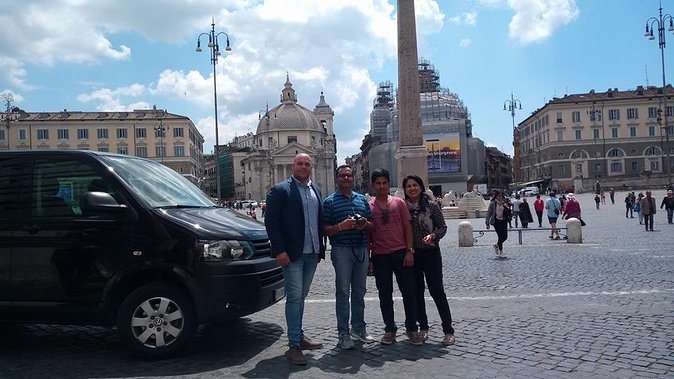
This is a shore excursion, which means your day has hard edges: docking time, disembarkation, and re-boarding. The tour asks you for your ship details at booking, and that’s not busywork—it helps the operator time the plan around the ship schedule.
You’ll also want to treat communication like part of the tour. In at least one documented situation, a driver waited at the set appointment time and then moved on when the passenger couldn’t be reached. The takeaway is simple: answer calls and keep your phone working on the morning you’re meeting the group, and double-check you know the meeting spot at the port.
One more practical point: you get a mobile ticket. That usually makes it easier to show up cleanly at the start, without hunting through paper confirmation while a line of cruise passengers is doing the same.
Colle del Gianicolo: Where Rome Gets a Spine
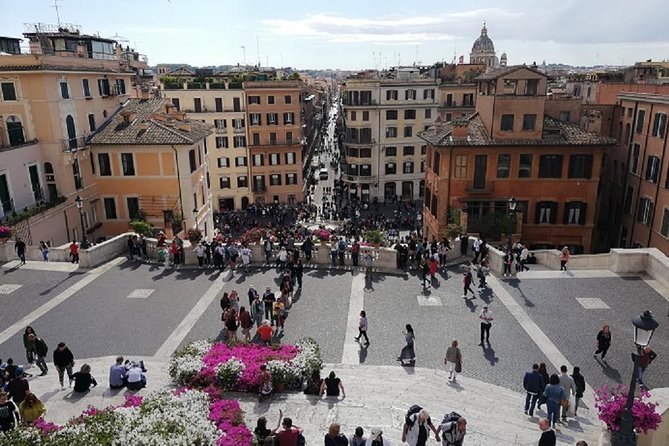
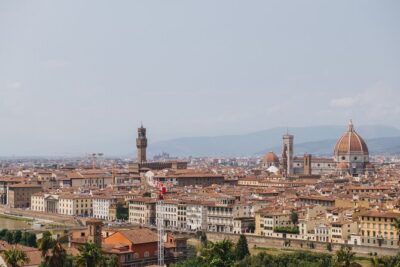
The first stop is Colle del Gianicolo, which is exactly what you want early. You’re up high, and suddenly Rome stops being a collection of monuments and starts looking like a city with rhythm—hills, lines of sight, and that unmistakable sprawl.
Even with limited time, this kind of viewpoint helps everything later “click.” When you see Trevi, the Pantheon, and Piazza Navona afterward, you’re not just collecting famous addresses. You’re matching them to the big picture you formed from above.
The main drawback here is also the nature of a view stop: you’ll likely do more standing than roaming, and time is capped. Wear shoes you can stand in comfortably, and if it’s warm, bring water—your schedule won’t slow down just because you’re thirsty.
Piazza Venezia and the Ancient City Center: Your Orientation Moment
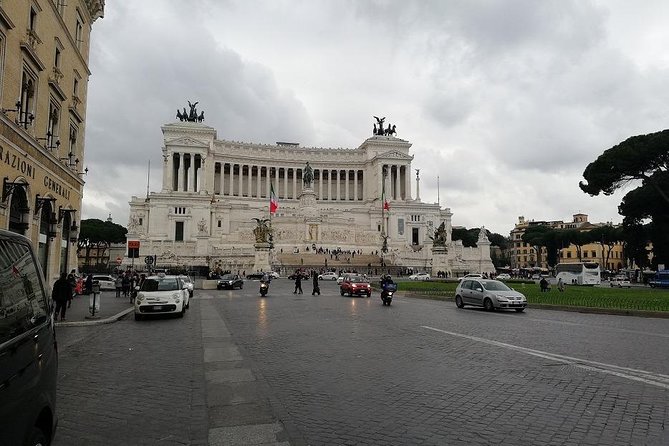
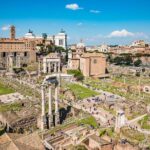
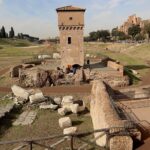
Next you’re in the heart of central Rome around Piazza Venezia—a strong starting point because it sits right in the thick of what you recognize from postcards and movies. The tour plan notes that you can be dropped off from the van for a walk, which is useful.
This is where you can reset your sense of direction. In a day packed with stops, a quick walking segment does two things:
- it helps you navigate future streets more easily, and
- it gives your brain a break from sitting in traffic.
There’s a trade-off: you’re not doing a long, deep historical walk here. You’re getting a “center of the map” orientation so your later landmarks feel connected instead of random.
Trevi Fountain: Coin Toss Time Without the Endless Wait
Fontana di Trevi is the kind of place where, even when it’s crowded, it still feels magical. The tradition is straightforward: toss a coin in the water. You’ll have around 30 minutes here, which is enough to get a clean look and capture the classic angle.
But Trevi has a catch: it’s popular for a reason, which means you’ll need to move with the crowd. With a fixed time window, you shouldn’t count on slow wandering. If you’re picky about photos, aim to arrive ready: pick your main shots quickly, then enjoy the fountain from a couple of angles.
Also, treat this stop like a reset. After Trevi, you’ll be in another classic zone, so use the time at the fountain to decide what you want most from the next couple of stops: dome-and-geometry (Pantheon) or open-square energy (Piazza Navona).
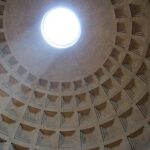
Pantheon: An Old Temple Stop That Still Feels Current
The Pantheon is one of those places that changes your sense of scale. It’s listed as one of the oldest Roman temples, and that age shows in the structure and proportions. Even in a short window, it’s a high-impact stop.
With about 30 minutes, I’d treat it as a “see it, look up, and move” location. When you’re inside or right up at the entry area, don’t rush past the dome details. The dramatic interior effect is part of why the building still draws people today.
Potential drawback: you’ll be balancing your time between actually taking it in and staying with the group. If you’re the type who likes long museum-style pace, this stop might feel a bit short. Still, as a first-time anchor in Rome, it’s an excellent use of time.
Piazza Navona: The Square That Works as a Walking Break
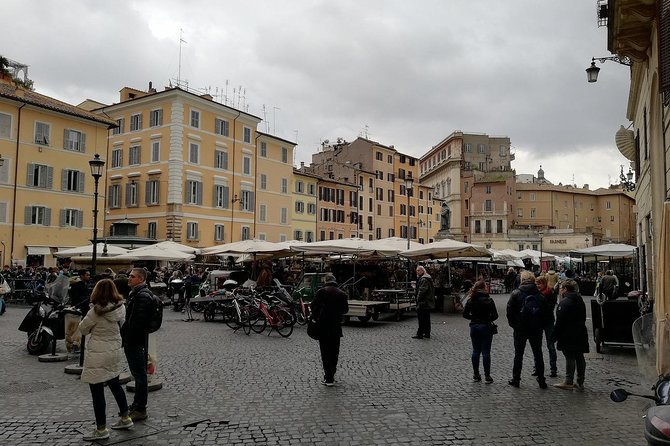
From the Pantheon zone, you head to Piazza Navona. This is another one of those “you’ll recognize it even if you don’t know its name” places. The tour gives you time for a walk, about 30 minutes, which is perfect for breathing and absorbing the street-life feel around a famous square.
Navona is especially helpful after more structured monuments, because a square invites you to slow down for a moment. You can take in the space, watch street scenes, and line up photos without the same entry-rules pressure as some other stops.
Still, don’t expect a long sit-down break. You’re on an 8-hour plan, and time is allocated. If you want a snack, it’s smart to plan for it here since lunch is on your own later.
St. Peter’s Square in Vatican City: The Big Finale
The last major sight is Vatican City, with a focus on St. Peter’s Square in front of the Basilica. This is where the day lands with the most “wow” scale, because the space feels grand even from a single viewpoint.
You’ll have about 1 hour, which is decent for seeing the square, taking photos, and getting the atmosphere without feeling like you’re sprinting. If you’re watching for something specific—composition, the façade, the sense of symmetry—this is the kind of stop where time matters more than extra walking.
One more practical note: the dress code applies here too. The requirement is clear—no shorts or sleeveless tops, and knees and shoulders must be covered for both men and women. If you’re traveling in warm weather, plan clothing that still meets the rule so you don’t lose time at the last moment.
If your guide is strong, you can also get a better sense of what you’re actually seeing rather than just where to stand. Max, one of the guides tied to this tour, has been described as warm and attentive—exactly the kind of energy that helps on a big finale like this.
Lunch and Timing: How to Keep This Day Comfortable
Lunch isn’t included, and that affects your strategy. You have your sightseeing blocks and you’ll be busy, so you’ll want a lunch plan that doesn’t cost you a long search.
A good approach is to treat lunch as a “grab and go” or a quick sit-down near where you’ll already be walking. You’ll be in the central historic area for most of the day, so you can usually find something without doubling back. The tour time is structured, so avoid plans that require reservations or long lines.
Also, remember: in a day like this, bathroom timing matters more than you’d think. If there’s an opportunity near a major stop, use it. A small time miss later can ripple through the rest of the schedule.
Price and Value: What You’re Paying For
The price is $191.57 per person, and that’s not a budget number. But it can still be good value depending on what you’d otherwise do on your own.
Here’s what you’re buying:
- Air-conditioned minivan transport between the port and Rome
- Port transfers so you’re not coordinating taxis during a cruise schedule
- A small-group format (max 8) that can reduce stress and confusion
- Timed access to key sights with short, focused stops
If you were to DIY, you’d likely spend time figuring out transport, then lose extra hours navigating meeting points and regrouping with a ship clock ticking in the background. For many cruise passengers, the main value isn’t comfort—it’s avoiding mistakes.
Is it overpriced? Not necessarily, but it’s worth comparing against your priorities. If you want deep time inside museums or long guided explanations at each stop, this price may feel steep because your time per location is limited. If your goal is a compact “greatest hits” day with logistics handled, the cost starts to look more reasonable.
Booking also tends to happen fairly far in advance (the tour is often booked about 103 days ahead on average). That’s a sign the supply isn’t infinite for this route during cruise season, so waiting too long can limit options.
Guides, Languages, and How to Get the Most Out of the Day
This tour is described as multi-lingual, and guides can vary by day. That can be great if you’re flexible. If you’re counting on a very specific language for explanations, it’s smart to be realistic: communication quality can shift if a guide changes.
In one situation, a guide was described as not speaking English as expected. In another, Max stood out for warmth and attention. The practical advice is simple: if language matters a lot to you, you should confirm what language support you’ll have before you commit, and come prepared with a few notes or apps so you can still enjoy the sights even if your guide isn’t your perfect match.
Also, your best results come from active participation. Ask quick questions during the walking time, and use the viewpoint stops to ground your understanding. Short explanations still help when the day is packed.
Who Should Book This Rome Shore Excursion
This tour fits best if you:
- are a first-time Rome visitor and want a fast orientation
- want a structured day that handles transport from Civitavecchia
- prefer small-group pacing over long bus tours
- want to see major highlights without committing to a full day of museum-level exploration
You might skip it if you:
- want long, unhurried time inside major sites
- need guaranteed high-level English commentary (language can vary)
- hate dress-code requirements and don’t want to plan outfits
Should You Book This Civitavecchia to Rome Shore Excursion?
If you’re docking in Civitavecchia and you want a one-day Rome map you can carry with you, I think this is a solid pick. Small-group size, port transfers, and a tight icon route make it a practical match for cruise schedules, especially when you want Trevi, the Pantheon area, Piazza Navona, and St. Peter’s Square all in one shot.
Book it if you can do the basics: wear the right clothes for worship sites, keep your phone ready at meeting time, and accept that each stop is a focused visit, not a long deep dive. If you want the full Rome experience at an unhurried pace, you’ll do better with a multi-day plan. For a cruise-day overview, this is one of the most efficient ways to make the time count.
FAQ
How long is the shore excursion from Civitavecchia to Rome?
The tour is listed at about 8 hours.
What is included in the tour price?
You get transport by air-conditioned minivan, and the stops listed have admission tickets marked as free.
Is lunch included?
No. Food and drinks are not included, and lunch is listed as not included.
How many people are in the group?
This activity has a maximum of 8 travelers.
What sites do you visit?
The stops include Colle del Gianicolo, Piazza Venezia/Ancient City, Fontana di Trevi, the Pantheon, Piazza Navona, and Vatican City with St. Peter’s Square.
Do I need to follow a dress code?
Yes. No shorts or sleeveless tops are allowed. Knees and shoulders must be covered for both men and women for places of worship and selected museums.
Can I cancel or change the booking?
No. This experience is non-refundable and cannot be changed for any reason.
If you want, tell me your cruise docking time and re-boarding time, and I’ll help you judge whether an 8-hour overview like this fits your exact ship-day pace.