REVIEW · CARTAGENA
Shore Excursion: Cartagena Half-Day Private Tour with transport
Book on Viator →Operated by Quality Guided Tours · Bookable on Viator
Cartagena rewards good pacing. I love the private guide setup that lets you move at your speed, and I love the way the tour stitches together sea views and ancient walls like the Punic Wall. The only real catch is that four hours goes fast, so you’ll want comfortable shoes and a willingness to walk a bit between stops.
This is built for cruise days. You get port pickup and drop-off right near Mare Nostrum, plus live commentary in English, which keeps the history from feeling like a textbook. And because it’s a group of up to six, you’re not stuck listening through a crowd.
The value angle is simple: you’re paying for convenience and a guide who can tailor the tempo. At $698.39 per group (up to 6), it can be a smart move if you’re traveling with family or friends who like structured sightseeing without the stress of buses and schedules.
In This Review
- Key things that make this Cartagena tour a standout
- Setting off with a La Manga and Cabo de Palos scenic drive
- The Punic Wall: 3rd-century BC defenses and why the €5 ticket matters
- Castillo de la Concepción: panoramic views over the Roman theatre and Royal Harbour
- Calle Mayor near the port: a walk for buildings, people, and shopping
- Museo Naval and Isaac Peral: the electric-propulsion submarine story
- A quick stop for the Spanish-American War memorial
- Private transport and guide flexibility: what you’re really buying
- Timing and tickets: what to plan so the day doesn’t feel stressful
- What this tour does best (and where it might not fit)
- Who should book this Cartagena half-day private tour
- Should you book it?
- FAQ
- How long is the Cartagena half-day private tour?
- What is the price and group size?
- Is this a private tour?
- What languages are offered?
- Where do we meet and where does the tour end?
- Is mobile ticketing included?
- What are the entrance fees for the stops?
- What’s included in the tour price?
- Are food and drinks included?
- What information do cruise passengers need to provide?
- What’s the cancellation policy?
Key things that make this Cartagena tour a standout
- Private transport for up to 6 means fewer logistics headaches and more time actually looking around
- La Manga drive + Cabo de Palos lighthouse adds an easy, scenic start before the ruins
- Punic Wall stop focuses on one of Spain’s rare surviving Punic defensive remains
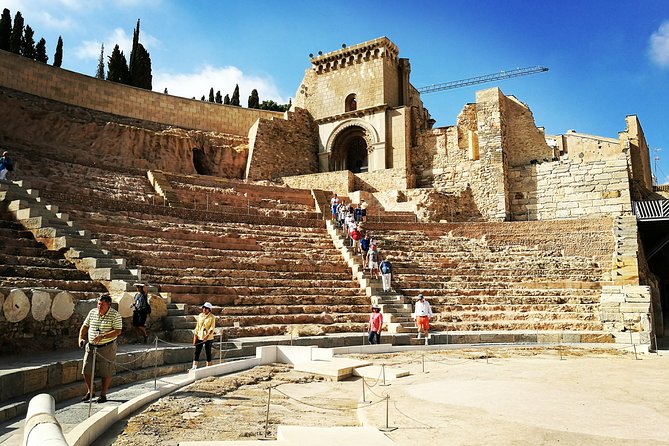
- Castillo de la Concepción viewpoints let you see the Roman theatre/amphitheatre area and the Royal Harbour from above
- Calle Mayor near the port is timed for a comfortable stroll and shopping
- Museo Naval + Isaac Peral gives you the story behind Spain’s electric-propulsion submarine prototype
Setting off with a La Manga and Cabo de Palos scenic drive
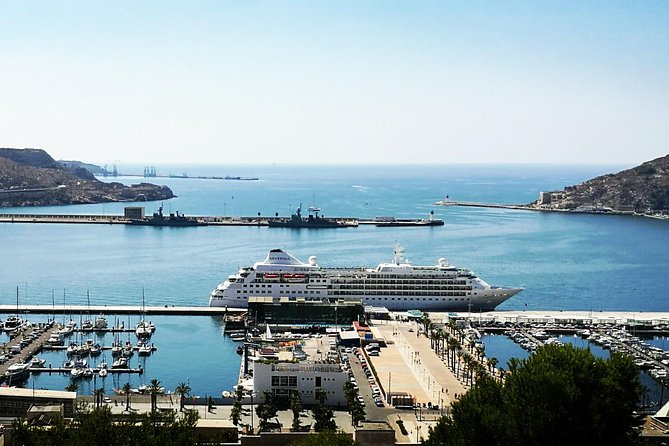
One of the nicest parts is that you don’t jump straight into ruins. You start with a drive out along La Manga, then you get a look at the Cabo de Palos lighthouse area. Even if you mostly came for Roman Cartagena, this kind of “change of scenery” helps your brain reset. It also makes the later stops feel more connected to the place—this city has always been shaped by sea traffic, ports, and defense.
You’ll be riding in a private car or mini-van for up to six people, with the same person acting as driver and guide. That matters more than it sounds. You’re less likely to lose time coordinating with a second driver or waiting for transfers, and your guide can keep explaining while you’re moving.
This tour runs about four hours, so the pacing has to stay tight. My advice: treat it like a curated walk-through rather than an all-day museum marathon.
You can also read our reviews of more private tours in Cartagena


The Punic Wall: 3rd-century BC defenses and why the €5 ticket matters
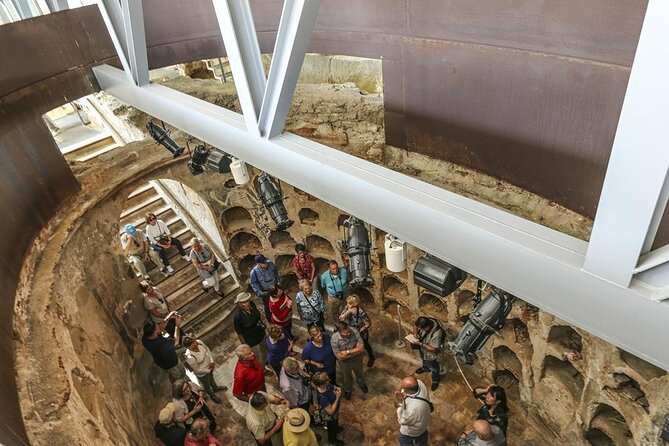
Stop one is the Punic Wall, an archaeological site from the 3rd century BC in Cartagena. This is one of the few remaining Punic defensive constructions that still exists in Spain. That’s a big deal: you’re not just seeing Roman leftovers. You’re seeing an earlier layer—Phoenician/Punic power and planning—before Rome dominates the story.
You’ll get around 45 minutes here. Entrance is not included, and it costs €5.00 per person. If you’re deciding whether to pay it, here’s the practical take: this site is short enough that the ticket won’t eat your day, but it gives you context for why the later Roman settlement was able to flourish in a strategic location.
What I like about how this stop is usually taught (based on how guides have explained it) is that you come away with the sense of what defense meant back then. You might hear descriptions of a substantial Punic wall—big enough to picture soldiers and even animals moving inside the defensive structure. That kind of visualization makes the stones easier to understand, instead of feeling like random rocks in a modern city.
Also, if you’re photo-happy, this is a good stop to slow down. The wall is an archaeology site, not just a viewpoint, so you get the best payoff when you stand still long enough to read what you’re looking at.
Castillo de la Concepción: panoramic views over the Roman theatre and Royal Harbour
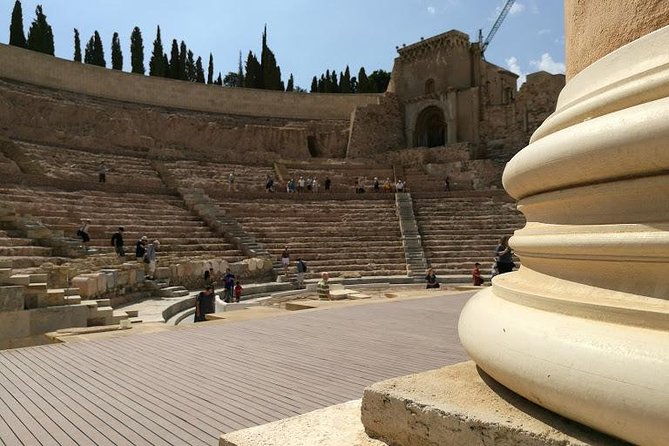
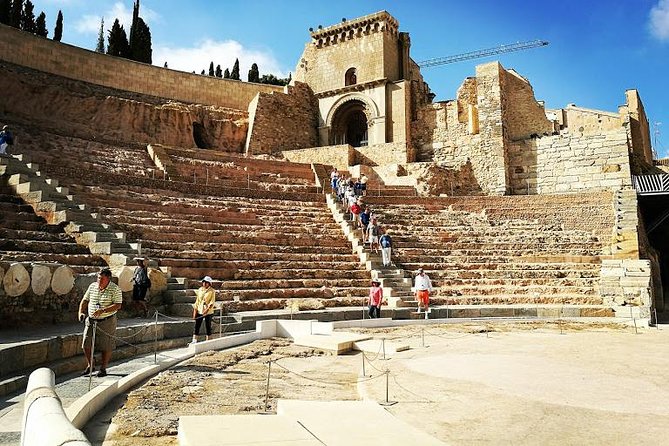
Next up is Castillo de la Concepción. It’s one of those places where you feel the scale instantly. From the castle explanade, you get panoramic views over the Roman theatre and amphitheatre area, and you’ll also see the Royal Harbour.
You’ll have about 45 minutes here, and the castle itself is listed as free. There’s also mention of a panoramic lift/elevator with an extra €3.00 per person fee. Translation: if you want the easiest route up (or you’re trying to save energy), expect that optional add-on. If you’re okay with walking, you may still enjoy the climb, but if you’re optimizing for time and comfort, plan that elevator cost.
This stop is valuable because it links architecture to geography. Roman spaces weren’t built in a vacuum; they were placed where people could gather, watch, and move through the city. From the hill, it becomes easier to understand why the theatre complex mattered so much and how the harbour shaped everyday life.
Calle Mayor near the port: a walk for buildings, people, and shopping
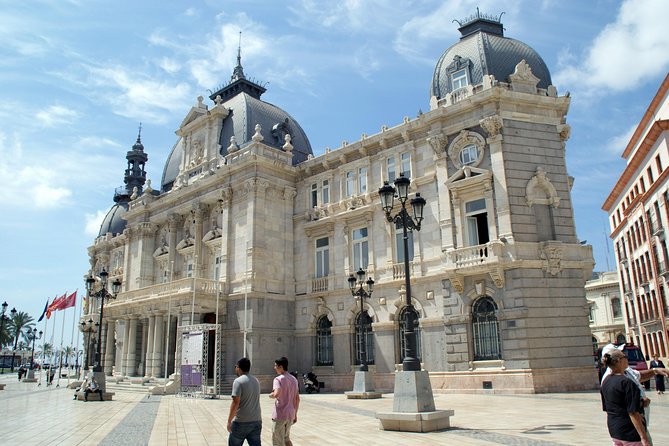
Stop three is Calle Mayor, a major pedestrian street close to the port. The timing is about 30 minutes, and it’s listed as free.
This isn’t a “standing still for a lecture” stop. It’s a breather. You get to reset after archaeological sights and enjoy modern Cartagena’s street life. The draw here is two-fold: you’ll see imposing buildings from the 20th century, and you can also browse shops right near the waterfront energy.
If you’re trying to shop without turning your half-day into a long errand run, this is a good place to do it. You’re already in the right district, and you don’t need to navigate transit or figure out how to get back.
My practical tip: decide quickly what you’re looking for—small food gifts, a magnet, local crafts, whatever—then spend your time doing that. Otherwise, Calle Mayor can turn into an unplanned wandering loop.
Museo Naval and Isaac Peral: the electric-propulsion submarine story
The final main cultural stop is the Museo Naval. You’ll have about 15 minutes and it’s free.
This is a short stop, so treat it as a snapshot rather than a full museum visit. The highlight is a view linked to Isaac Peral Submarine, described as a prototype with electric propulsion made by the Spanish Navy, based on Isaac Peral’s project. It’s noted as the first military submarine in history.
Even with only 15 minutes, this can be a memorable moment because it shifts the timeline forward—from ancient defense to modern military innovation. And it helps you understand that Cartagena’s maritime identity isn’t just a Roman theme. The sea has been central to the city for centuries.
One more practical note: because your time here is limited, if you care deeply about the technology angle, be ready to choose what you want to read quickly. Don’t expect to absorb everything. Pick the most interesting part and enjoy the story you can actually finish.




A quick stop for the Spanish-American War memorial
There’s also a stop for a sculptural group commemorating Spaniards who died in the Spanish-American War. It’s not given a long time slot, so think of it as a brief but meaningful punctuation mark to the route: Cartagena isn’t only ancient and maritime. It’s also tied to more recent national memory.
In a half-day tour, these short memorial moments can feel like they carry extra weight—especially when the rest of your day is about walls, theatres, harbours, and movement.
Private transport and guide flexibility: what you’re really buying
You’re not just paying for a list of sights. You’re paying for control: control of pace, control of questions, and control of how much time you want to spend at a viewpoint versus a stone you want to examine.
The tour is designed for a private group of up to six, and the driver and guide are the same person. That often leads to smoother transitions—less waiting, fewer awkward pauses, and a clearer flow.
The other thing that comes through in how guides handle this route is flexibility. Past experiences with guides like Jordi Linares Domínguez, Jorge, and Ana highlight the same pattern: they adjust walking and pacing when someone needs a slower tempo, and they keep the explanations moving without steamrolling your preferences. One guide set is even described as strongly person-friendly and able to adapt for people with mobility needs.
If you’re the type who hates the feeling of being rushed, this is one of those setups that can genuinely improve your day.
Also, because the tour is aimed at a moderate physical fitness level, expect some walking and time outdoors—so plan for sun and comfortable footwear.
Timing and tickets: what to plan so the day doesn’t feel stressful
Here’s the practical rhythm. You’ll start at Mare Nostrum Puerto deportivo de, P.º Alfonso XII (in Cartagena) and end back there. The tour is listed at about four hours, so your schedule will feel like a series of short-to-medium stops rather than one long museum session.
Entrance costs you should plan for:
- Punic Wall: €5.00 per person (45 minutes, admission not included)
- Panoramic lift/elevator: €3.00 per person (listed as an additional entrance fee)
Everything else mentioned is free: Castillo de la Concepción, Calle Mayor, Museo Naval.
Food and drinks are not included, so decide beforehand what you’ll do after the tour. Since the day ends back near the port area, you’ll likely have plenty of nearby options—just don’t plan anything too far away immediately after, because you may still want time to decompress.
If you’re sensitive to heat, I’d think about timing. Cartagena can feel intense in the sun, and the tour involves outdoor viewpoints and pedestrian streets. Bring water and wear a hat if you get sun easily.
What this tour does best (and where it might not fit)
This tour is best if you want:
- A guided overview of Cartagena that covers ancient layers and modern street life
- A tight, well-timed half-day with clear stops
- Port convenience without hunting for buses
- Explanations that connect sites—walls, theatres, harbour views—into one story
It might be less ideal if:
- You want a lot of time inside major museums. The Museo Naval time is short, and the Punic Wall time is about 45 minutes.
- You dislike any walking. It’s moderate, but it’s not a sit-and-smell-the-views kind of outing.
- You’re traveling solo and want the lowest possible cost; private tours tend to be pricier per person.
Who should book this Cartagena half-day private tour
I’d steer you toward this option if you’re:
- A couple or small group (up to six) who can split the cost
- Interested in Roman and Punic Cartagena, not just one era
- Visiting on a cruise day and need everything to start and end near the port
- The kind of traveler who likes asking questions in real time (private guiding helps a lot here)
If you’re a family, this style can work well because you can slow down when needed and you’re not stuck with one fixed pacing for everyone.
Should you book it?
Yes, if you value port convenience, guided context, and a smart mix of sea views and ancient sites in just a few hours. The price can look high at first glance, but the math changes when you’re splitting it among up to six people and you’re getting private transport plus both a driver and live commentary.
If you’re the type who prefers longer museum time or you’re trying to keep costs ultra-low, you might choose a cheaper group tour or focus on a self-guided walking route around the centre. But for a half-day with less hassle and better pacing control, this private format is exactly the kind of cruise-friendly plan that feels worth it.
If you book, do two things: wear comfy shoes for a compact route, and bring a couple of questions you genuinely care about (why those walls mattered, how the theatre fit the harbour, how Isaac Peral’s submarine fits into Cartagena’s maritime story). You’ll get more out of the time you have.
FAQ
How long is the Cartagena half-day private tour?
The tour is listed at approximately 4 hours.
What is the price and group size?
It costs $698.39 per group, up to 6 people.
Is this a private tour?
Yes, it’s private. Only your group participates.
What languages are offered?
The tour is offered in English, and it includes live commentary.
Where do we meet and where does the tour end?
Pickup starts at Mare Nostrum Puerto deportivo de, P.º Alfonso XII, 30202 Cartagena, Murcia, Spain. The tour ends back at the meeting point.
Is mobile ticketing included?
Yes, the tour includes a mobile ticket.
What are the entrance fees for the stops?
Punic Wall has an admission fee of €5.00 per person (not included). The panoramic lift/elevator is listed at €3.00 per person. Other mentioned stops are listed as free.
What’s included in the tour price?
It includes a driver/guide, live commentary, a local guide and professional guide, port pickup and drop-off, and transport by private car or mini-van for up to 6 people (driver and guide are the same person).
Are food and drinks included?
No, food and drinks are not included.
What information do cruise passengers need to provide?
Cruise ship passengers must provide the ship name, docking time, disembarkation time, and re-boarding time at booking.
What’s the cancellation policy?
Free cancellation is available up to 24 hours in advance for a full refund. If you cancel less than 24 hours before the start time, the amount paid is not refunded.