REVIEW · ROSTOCK
Warnemünde Shore Excursion: Private Tour of Berlin’s World War II and Cold War Sites
Book on Viator →Operated by Insider Tour Berlin · Bookable on Viator
Berlin hits different at street level.
This private, full-day trip strings together World War II and Cold War landmarks in one tight route, so you see how the city’s darkest chapters connect to the Cold War’s concrete and checkpoints. I especially love that you can tailor your balance of WWII vs Cold War once you’re already on the move, and I like the practical port pickup and return that keeps the day from feeling like a stressful scramble. One drawback to plan for: it’s a long, heavy day—lots of walking, lots of emotion, and you’re spending serious time on the road from Rostock/Warnemünde.
In practice, the format works because you’re not stuck in a one-size-fits-all group loop. You get a private vehicle, a local guide for six hours, and then that guide helps you turn big monuments into understandable stories—sometimes with old photos, sometimes with local angles that make the history stick. In the feedback I saw, guides like Nicholais, Glen, Cian, Anne, Ashleigh, Uly, Nigel, and Brian stood out for doing exactly that, and drivers like Peter, Olaf, Herbert, and Hoger were praised for smooth timing and comfort on the long transfer.
Just keep expectations honest: lunch is on you, and the day is packed with stops that ask you to slow down. If you want museum-style depth at every site, this will feel more like a powerful guided highlight sprint than a relaxed roam.
In This Review
- Key Things I’d Bet On With This Shore Tour
- Getting There From Warnemünde Port: Private Van, Long Transfer, Smooth Timing
- How the Guide Shapes Your Day: WWII vs Cold War on Demand
- Iconic Landmarks You’ll Actually Understand: Reichstag, Brandenburg Gate, Checkpoint Charlie
- Reichstag building and the glass dome
- Brandenburg Gate: from symbol to message
- Checkpoint Charlie: the border made real
- The Harder Stops: Führerbunker, Holocaust Memorial, and Resistance on the Same Map
- Führerbunker: where key decisions happened
- Memorial to the Murdered Jews of Europe
- German Resistance Memorial Center in Bendlerblock
- Walking the Wall’s Afterlife: Berlin Wall Memorial, Bernauer Straße, East Side Gallery
- Bernauer Straße and the Wall Memorial
- East Side Gallery murals
- After 1945: Soviet Memorial, Tiergarten, and an NKVD/Stasi Prison Site
- Soviet War Memorial in Tiergarten
- Prenzlauer Berg: NKVD and Stasi prison on Fröbelstraße
- Time, Food, and Comfort: What to Plan for During This 12-Hour Day
- Price and Value: Is $919.02 Per Person Fair?
- Should You Book This Warnemünde to Berlin Shore Excursion?
- FAQ
- FAQ
- Is port pickup and drop-off included?
- How long is the tour?
- Is this a private tour?
- Can I customize the WWII vs Cold War focus?
- Are food and drinks included?
- Do I need to buy admission tickets at the stops?
- What if my ship is delayed or leaves early?
Key Things I’d Bet On With This Shore Tour
- Port-to-Berlin logistics that actually work, including return timing back to Warnemünde
- A customizable focus: WWII, Cold War, or a mix decided after the drive south
- Strong emotional pacing, with stops like the Holocaust Memorial and Wall Memorial designed to be understood, not just photographed
- Iconic set pieces with context, from Checkpoint Charlie to the Reichstag dome and views
- Local-route variety, including East Side Gallery murals and Cold War prison history in Prenzlauer Berg
- Real guide talent, reflected in multiple standout guide names mentioned in reviews
Getting There From Warnemünde Port: Private Van, Long Transfer, Smooth Timing
The big thing about Berlin from Warnemünde is distance. You’re looking at roughly a 2.5-hour drive each way, so the day starts and ends with road time. The upside is that it’s done in a private vehicle, so you don’t waste the transfer figuring out trains, tickets, or who’s where. The transfer is also part of the experience: your guide’s job starts early, helping you frame what you’ll see in the city.
What I like most for a shore excursion is the emphasis on timing. The tour is built to get you back to Warnemünde Port with a dedicated return drive, not a vague maybe. In reviews, several people singled out the driver’s calm professionalism and punctuality—names like Peter and Olaf came up for being on schedule and keeping the plan moving ahead of time.
One consideration: depending on who your driver is, you may not get narration during the car ride. A review noted a hiccup when a driver spoke only German, which meant the three-hour drive didn’t offer much history until the guide met the group in Berlin. If you care about every minute being meaningful, ask in advance how narration is handled and plan to focus on listening once your guide is with you.
Practical comfort note: this is a full day with multiple short stops and a few longer walks. Wear shoes you can handle for several hours of uneven streets and memorial grounds.
You can also read our reviews of more private tours in Rostock

How the Guide Shapes Your Day: WWII vs Cold War on Demand
This is billed as a private shore excursion, and that matters because the guide isn’t just moving you through a checklist. After your pickup at Warnemünde, there’s a drive south of about 2.5 hours, and you can decide whether to focus more on WWII or Cold War history—or do both. That flexibility is a real value add, especially if your group has mixed interests.
The tour’s structure also supports that personalization. You’re not handed a rigid script where you feel bad asking to swap one stop for another. You’re encouraged to give a wish list at booking. Several reviews praised guides for using those requests successfully, with people reporting they saw most or all of what they wanted. For example, Ashleigh was noted for accommodating requests and even recommending a favorite spot for bratwurst and beer—the kind of practical, local touch that makes a long day feel easier.
So what does this mean for you?
- If your family loves WWII history, you’ll see the city’s Nazi-era sites and the way Berlin was battered at the end.
- If you’re more drawn to the Cold War, you’ll get checkpoints, border geography, Wall remnants, and the systems that controlled daily life in East Berlin.
- If you’re undecided, you’ll still get a coherent throughline connecting war to division.
The watchword here is context. Instead of treating the past like a set of photo backdrops, the guide ties each stop to the larger story: how governments used violence, how borders were enforced, and how people tried to escape.
Iconic Landmarks You’ll Actually Understand: Reichstag, Brandenburg Gate, Checkpoint Charlie
Berlin’s famous buildings can feel like props unless someone gives you the story behind the walls. That’s where this tour helps.
Reichstag building and the glass dome
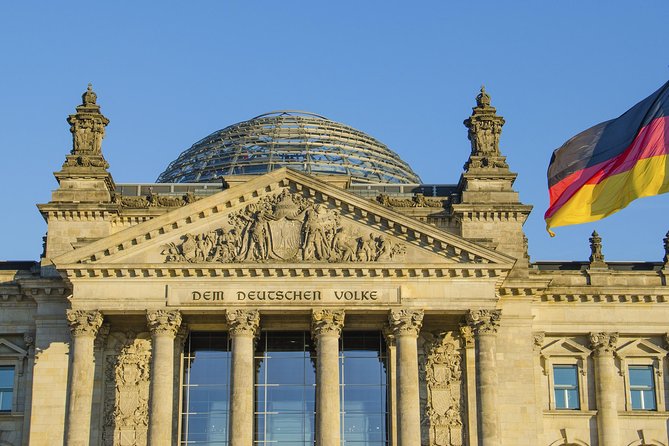
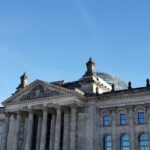
You’ll see the Reichstag building, Germany’s modern parliamentary meeting place, and you’ll get the arc from its early role as the parliament seat, to damage during the Nazi era, and to its later restoration. One highlight is the iconic glass dome design by Sir Norman Foster, which is there not just for drama but to signal transparency in democratic governance.
Even if you only get a short window, the guide’s explanation helps you notice what the building is trying to say about Germany after the fall of the Wall.
Brandenburg Gate: from symbol to message
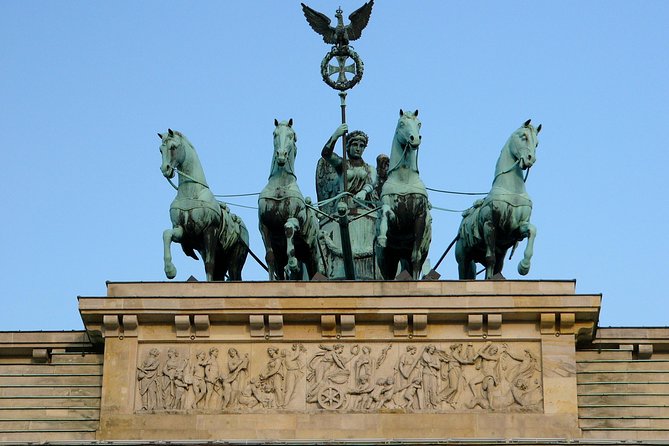
You’ll also walk under the Brandenburg Gate, which sits at the center of Berlin symbolism. It’s framed in this tour as a marker of division in the Cold War—and later as a national symbol of peace and unity. This stop works best when the guide connects the monument to the political reality of Berlin’s split city.
A few more Rostock tours and experiences worth a look
Checkpoint Charlie: the border made real
Checkpoint Charlie is the Cold War set piece most people recognize, but the key is how it’s explained. You’ll visit the checkpoint area with a guide walking you through why it became such a high-stakes crossing. One sharp historical detail that’s part of the tour story: the October 1961 standoff when American and Soviet tanks faced off, pushing the world close to nuclear brinkmanship.
You’ll also see original markers and reconstructions of the border structures. That makes a huge difference. Instead of treating it like a photo stop, you’ll understand how border design worked—where guards stood, why crossings mattered, and how tensions turned into daily risk.
The Harder Stops: Führerbunker, Holocaust Memorial, and Resistance on the Same Map
This part of Berlin isn’t easy, but that’s exactly why a guided, well-timed route matters. You’re visiting sites tied to murder, persecution, and resistance—then you’re learning what those places mean in modern memory.
Führerbunker: where key decisions happened
Stop by the site associated with Hitler’s Führerbunker (also called the Führerbunker). The actual bunker isn’t accessible anymore, but the tour still treats it with seriousness. Your guide explains the layout and how this underground shelter fit into a larger bunker complex designed to protect Nazi leadership from Allied air raids.
This stop is especially powerful when your guide connects it to the end of 1945—how Berlin’s collapse played out underground, and how that final period shaped the story history tells about the war’s conclusion.
Memorial to the Murdered Jews of Europe
Next comes the Memorial to the Murdered Jews of Europe—the one with the field of gray stelae. This is a memorial that doesn’t need theatrics. The guide’s job is to give you historical context and help you understand the symbolism behind the design.
What I appreciate is the time you’re given for quiet processing. You walk among the uneven blocks, and your guide shares meaning as you go, so you’re not left guessing what you’re looking at. Expect this stop to slow the day down. You should.
German Resistance Memorial Center in Bendlerblock
Then you shift from victims and perpetrators to people who resisted. The tour includes the German Resistance Memorial Center at the Bendlerblock, honoring men and women who opposed the Nazi regime—including those linked to the 1944 assassination attempt involving Claus von Stauffenberg.
This is where Berlin’s story gains moral complexity. Instead of only focusing on what the regime did, you learn how resistance worked inside Germany and what the consequences were. It’s emotionally heavy, but it’s also grounding because it answers a question visitors often have: what did people do when they had a chance to fight back?
Walking the Wall’s Afterlife: Berlin Wall Memorial, Bernauer Straße, East Side Gallery
If WWII is about devastation and Cold War Berlin is about borders, the Berlin Wall sites are where it becomes physical.
Bernauer Straße and the Wall Memorial
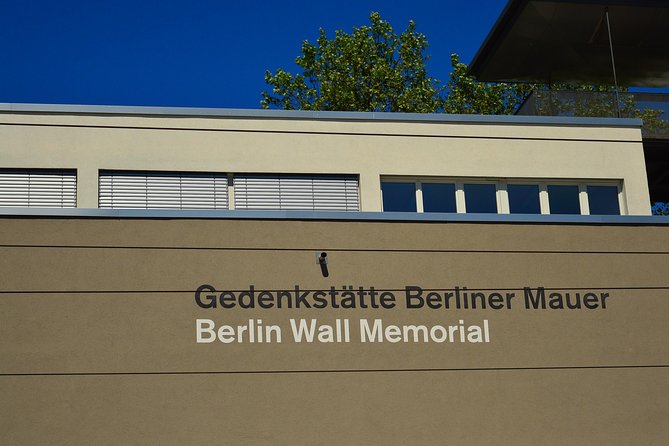
You’ll visit the Berlin Wall Memorial area at Bernauer Strasse, described here as a must-see for Cold War history. This is one of the best places in Berlin to understand what border control meant for families. The tour includes reminders of the Wall remnants, a watchtower, and preserved parts of the death strip—the area that separated people and limited escape.
Two named escape stories are part of the experience: Tunnel 29 and Tunnel 57. Even with a short visit, hearing how people risked everything for freedom changes how you read the site. It stops being a line in history and becomes a map of choices—who tried, who got caught, and why the Wall mattered day to day.
East Side Gallery murals
Later, you’ll walk the East Side Gallery, a 1.3-kilometer stretch of Wall covered with over 100 murals by artists worldwide. This stop balances the earlier memorial seriousness with a public art message: freedom, unity, and the Wall’s fall.
A short walk here can do a lot if your guide connects the murals to the political shift that made them possible. It’s not just color; it’s a post-division narrative.
After 1945: Soviet Memorial, Tiergarten, and an NKVD/Stasi Prison Site
Berlin’s layers are never fully gone. The tour keeps moving beyond the Wall into post-war power and surveillance.
Soviet War Memorial in Tiergarten
You’ll stop at the Soviet War Memorial in Tiergarten, built in 1945 to honor Soviet soldiers who fell during the Battle of Berlin. The tour frames it as both commemoration and reminder of Soviet presence during the division period.
This stop works for you if you want a more balanced view of Cold War history. It helps explain why Berlin’s story wasn’t only a West-vs-East headline—it involved armies, occupation realities, and shifting control.
Prenzlauer Berg: NKVD and Stasi prison on Fröbelstraße
Finally, the tour heads toward Prenzlauer Berg for a haunting reminder of surveillance and repression. You visit the site tied to the former NKVD and Stasi prison on Fröbelstrasse.
The tour story explains that the NKVD used the prison in the late 1940s, and later it came under East German Stasi control. Political prisoners were interrogated and detained there. You’ll learn how fear and control worked as part of daily life under the Iron Curtain—and why escape attempts were so dangerous.
This is a fitting ending because it ties together the Wall’s physical border with the Cold War’s internal borders: people’s movement, access to information, and the risks of being seen as a threat.
Time, Food, and Comfort: What to Plan for During This 12-Hour Day
The day runs about 12 hours, which is long even without taking shore logistics into account. Your pacing will be stop-and-go: multiple sites with short durations, plus walking and transit time between them.
Food is the main thing you’ll need to handle yourself. The tour notes that when hunger hits, your guide suggests lunch options, and depending on preference you might find something like a traditional German beer garden. In one review, Ashleigh was praised for sharing a favorite spot for bratwurst and beer, which highlights a key benefit: you’re not left hunting for food while everyone’s tired.
Bring water, especially if your ship day is warm. Also consider a small layer for wind around memorial areas and the open-air gallery stretch.
One more practical reality: the emotional sites require mental bandwidth. If your group includes teens or anyone easily overwhelmed by dark history, tell your guide early. A good guide will adjust pacing—still covering the stops, but keeping the day manageable.
Price and Value: Is $919.02 Per Person Fair?
At $919.02 per person for a private full-day excursion, this is not a bargain. But it may be fair value if you compare what’s included and what you avoid.
Here’s what you’re paying for:
- Private vehicle transport between Warnemünde and Berlin, plus movement around the city
- Port pickup and drop-off, which is usually where shore tours either shine or fail
- Local guide time for six hours, focused on WWII and Cold War interpretation
- A route built around major sites that many visitors find hard to string together efficiently
Also, many stops in the itinerary are listed as admission ticket free, which can reduce surprises on the ground. The value isn’t only entry fees though—it’s the guidance that turns a pile of famous names into a map of cause-and-effect.
This price starts making more sense if you’re traveling with a family group that wants privacy, flexible pacing, and fewer logistics headaches than a cruise ship bus tour. Several reviews specifically noted that the private plan allowed them to see more aligned highlights than what the ship’s group tours delivered.
Should You Book This Warnemünde to Berlin Shore Excursion?
Book it if:
- you want a private WWII + Cold War Berlin overview without the stress of building your own route from scratch
- your group includes history-minded people who will appreciate context at Checkpoints, Wall sites, and memorials
- you care about timing and want a guide-led plan that returns you to the port reliably
Skip it or reconsider if:
- you want a relaxed day with long museum dwell time at every site
- your group struggles with heavy content, since the route includes the Holocaust Memorial and sites tied to imprisonment and persecution
- you’re traveling with specific accessibility needs and you need guaranteed arrangements—if that applies, ask detailed questions early and confirm how your needs will be communicated to both guide and driver
FAQ
FAQ
Is port pickup and drop-off included?
Yes. The tour includes pickup and drop-off between Warnemünde Port and Berlin by private vehicle.
How long is the tour?
It runs about 12 hours.
Is this a private tour?
Yes. It’s a private tour/activity with only your group participating.
Can I customize the WWII vs Cold War focus?
Yes. After the drive from the port, you can decide to focus more on WWII or Cold War history, or request a combination. You can also request specific attractions when booking.
Are food and drinks included?
No. Food and drinks are not included. Your guide can suggest lunch options.
Do I need to buy admission tickets at the stops?
Many stops are listed as admission ticket free in the itinerary. If you’re concerned about any specific site, ask before you go.
What if my ship is delayed or leaves early?
The tour includes a worry-free excursion guarantee. If your ship departs, the provider will arrange transportation to the next port-of-call. If the ship is delayed and you can’t attend, you’ll receive a refund according to the terms.