REVIEW · TRUJILLO
Shore Excursion from Salaverry port
Book on GetYourGuide →Operated by JD ADVENTURE TRAVEL · Bookable on GetYourGuide
A shore day that feels like a history lesson with legs. You’ll go from Moche temples (Huaca del Sol and Huaca de la Luna) to UNESCO-listed Chan Chan, all with a bilingual guide who connects the dots between empires, rituals, and everyday power. I especially love the guided explanations tied to what you’re looking at, and the way the route hits the big names without wasting time.
One thing to plan for: entrance fees aren’t included, so you’ll want some cash ready for site entries, plus you’ll be on your feet for several stops.
In This Review
- Key highlights you’ll actually feel
- 5 hours from Salaverry: timing and how not to stress
- Huaca del Sol and Huaca de la Luna: Moche adobe power, explained in plain language
- Huacas de Moche Museum: the “why” behind the “what”
- Huaca Arcos Iris (Rainbow Temple / El Dragon): carved panels, niches, and myth
- Chan Chan UNESCO: the largest adobe city, and why scale matters
- Guides make or break this one: Alfredo, William, and the structured approach
- Price and value: is $80 worth it for a ship-day?
- What to bring (and what to leave behind)
- Getting it right: meeting point, ship times, and WhatsApp
- Who this tour suits best (and who should skip it)
- A note about food and the ocean-view finish
- Should you book this shore excursion?
- FAQ
- What time does the tour start from Salaverry port?
- How long is the shore excursion?
- Where do we meet for the tour?
- Is pickup and drop-off included?
- What languages are the guides?
- Are entrance fees included in the price?
- Is transportation included?
- What should I bring?
- Is the tour suitable for people with mobility impairments?
Key highlights you’ll actually feel
- Bilingual guide (English and Spanish) with a clear, organized way of explaining the sites
- Huaca del Sol and Huaca de la Luna: massive adobe platforms built and rebuilt over centuries
- Huacas de Moche Museum: context that makes the temples easier to understand
- Huaca Arcos Iris (Rainbow Temple/El Dragon): Chimú-era construction with niches and carved panels
- Chan Chan (UNESCO): the largest pre-Columbian adobe city in the Americas
- Hassle-free round-trip transport from Salaverry port and back
5 hours from Salaverry: timing and how not to stress
This is a focused 5-hour shore excursion that starts at 08:30am from Salaverry port. The whole point is to get you into the archaeological zone fast, with round-trip transport sorted so you’re not playing taxi roulette before your ship leaves.
The day runs on port-time, so you’ll need to stay switched-on with updates. You’re asked to provide a valid mobile number so the team can contact you through WhatsApp, and to keep checking your email for any departure-time changes. If you’re the type who likes a buffer, bring a calm mindset. The schedule is tight, but it’s built around a ship day.
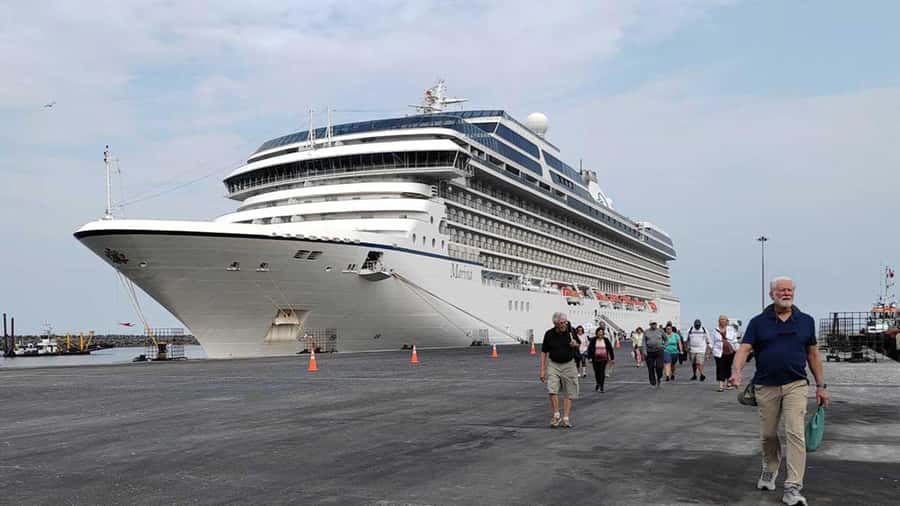
Practical meeting detail: when you arrive, you take the cruise ship shuttle to get to Salaverry Plaza (about a 10-minute ride). Look for the sign JD ADVENTURE, and if anything feels unclear, you’re told to contact them. Final meeting point details are shared two days before.
A few more Trujillo tours and experiences worth a look
Huaca del Sol and Huaca de la Luna: Moche adobe power, explained in plain language
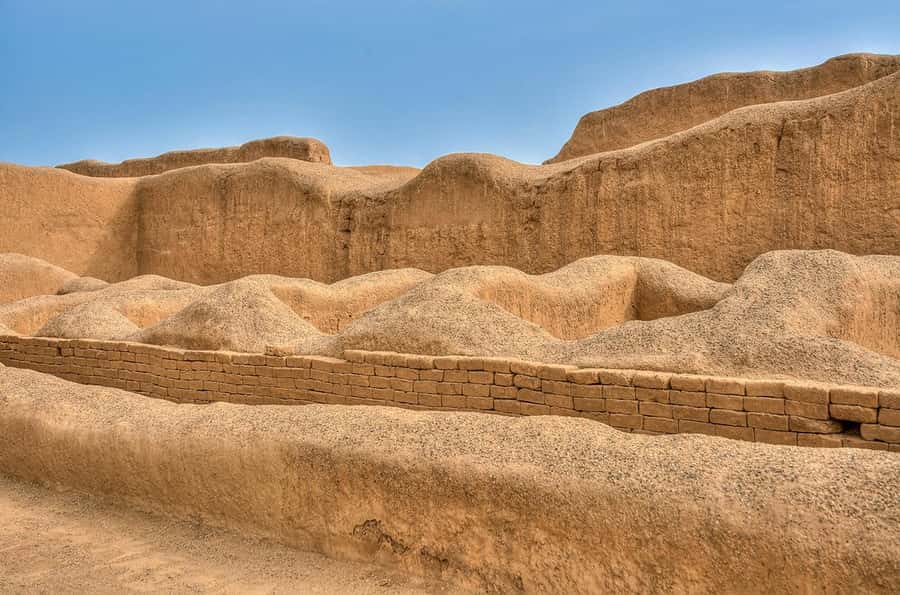
Your first major stops are the Sun and Moon Huacas—Huaca del Sol (Temple of the Sun) and Huaca de la Luna (Temple of the Moon). These aren’t small ruins. They’re huge adobe mounds that grew over time, like the physical record of a long-running political and religious system.
Here’s what makes them worth your time: the tour explains how each complex had a different role. Huaca de la Luna functioned as a religious complex, while Huaca del Sol served as an administrative center. That contrast matters, because it turns what could feel like two piles of old brick into two parts of the same machine.
Even more impressive is the way the temples were rebuilt. The temples were constructed over centuries on platforms, and every century the Moche sealed the bodies of their dead rulers into the temple and then covered the platform with a new one. Over about 700 years, the result is a stepped pyramid you can literally read as layers of time.
A small drawback to note: you’ll cover several sites in one morning, so you’ll want to wear shoes that handle uneven ground. This isn’t a stroll where you can take endless photo detours without feeling the clock.
Huacas de Moche Museum: the “why” behind the “what”
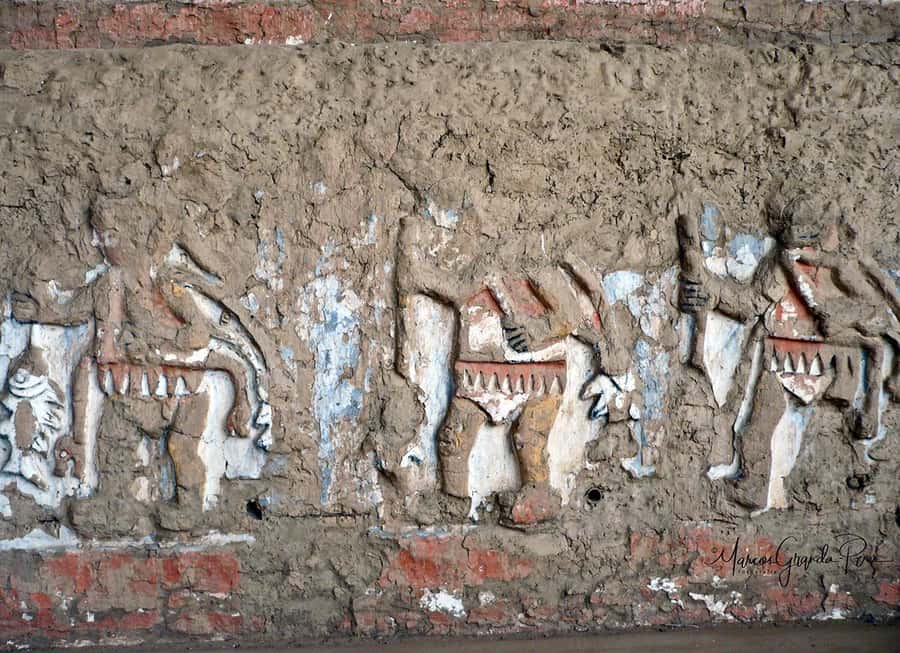
Between the big outdoor ruins, the tour stops at the Huacas de Moche Museum. The value here is that it gives you context that outdoor ruins alone often don’t provide. Instead of looking at architecture without meaning, you get artifacts and details tied to what people used and how they lived.
The museum houses a mix of artifacts, ceramics, utensils, and tomb-related materials. That collection helps you connect the temples to real practices—religion, ritual, and leadership—rather than treating them like distant monuments.
If you’ve ever had the experience of touring ruins and thinking, Okay, but what am I supposed to notice, this museum break is the antidote. It helps your eyes start catching the clues the guide points out later.
Huaca Arcos Iris (Rainbow Temple / El Dragon): carved panels, niches, and myth
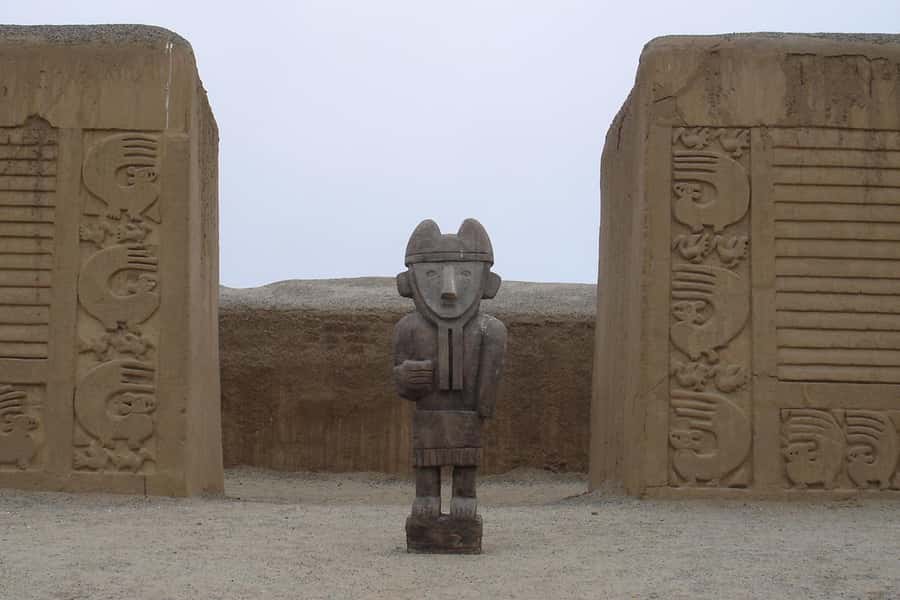
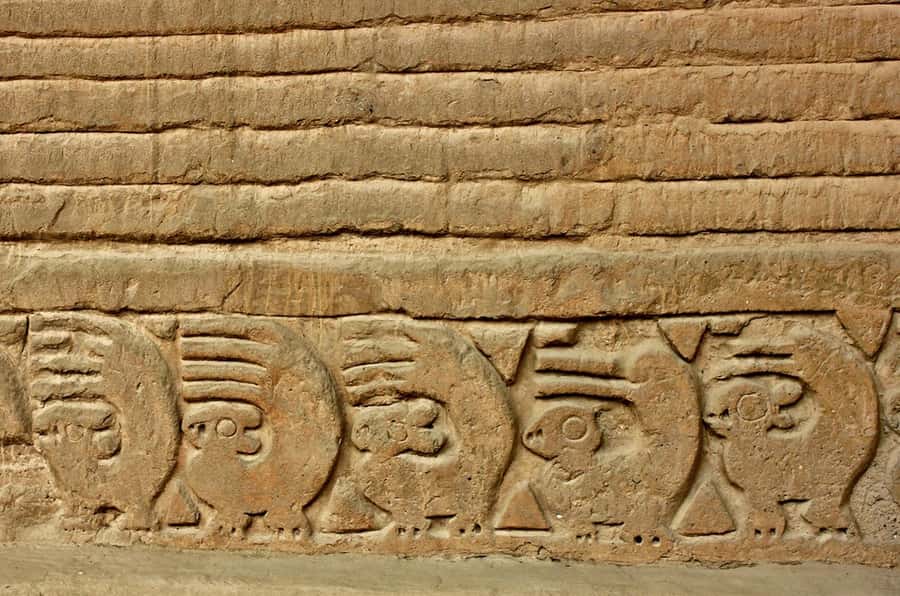
Next up is Huaca Arcos Iris, also called the Rainbow Temple or El Dragon. This one was built by the Chimú around A.D. 1200, which adds a useful shift in perspective. You’re moving from Moche temple logic into Chimú-era style and storytelling.
The tour focuses on two practical details you can actually see: the temples’ two platforms and the visible carved adobe panels and niches. Those niches weren’t random. They were once used to store ritual objects, which makes the architecture feel intentional rather than decorative.
Then there’s the legend layer. Local stories describe Huaca Arcos Iris as the home of Takaynamo, a mythical man believed to have founded Chan Chan. You don’t have to buy every myth as literal history to enjoy it. The real payoff is understanding how different cultures used stories to give meaning to places.
Chan Chan UNESCO: the largest adobe city, and why scale matters
The day ends at Chan Chan, the Chimú capital. This is the big finale: the archaeological complex is the largest pre-Columbian adobe city in America and was declared a UNESCO World Heritage Site in 1986.
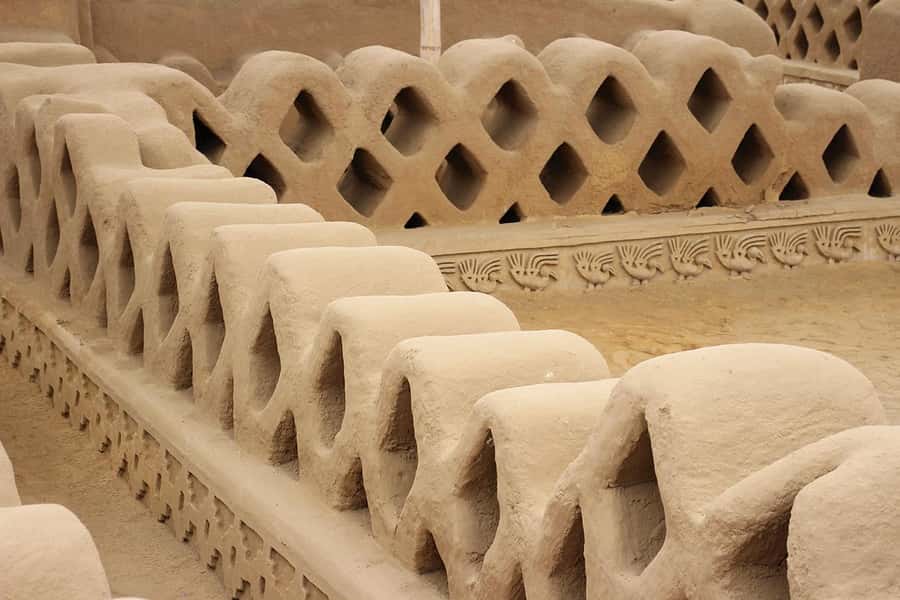
Chan Chan once held an impressive urban setup—courtyards, terraces, palaces, and gardens—not just temple structures. The idea of scale really sticks here, since estimates suggest 30,000–60,000 people lived there. When you’re standing in the remains, it’s easier to imagine a city with rhythm, not just a collection of walls.
You’ll want to slow down for Chan Chan, even though the tour is time-managed. Think of it like this: earlier stops teach you how rulers and ritual shaped structures; Chan Chan shows what happens when an empire turns those ideas into an entire city plan.
One consideration: Chan Chan is outdoor archaeology. Even in morning light, the sun can do its job. If you’re sensitive to heat, plan to use any shade whenever you can and keep water handy on your own time (food and drinks are not included).
Guides make or break this one: Alfredo, William, and the structured approach
This tour’s standout is the guide. Multiple English-speaking guides are mentioned by name, including Alfredo and William, and the pattern in the feedback is clear: the best guides here give you an explanation when it helps, not a long monologue that eats up your time.
I like the way the guide role is described as more than translation. The guide connects the Chimu and Moche story to the specific parts of each site you’re seeing. If you’ve got questions about how leadership and religion shaped architecture, this is the kind of day where the answers show up at the right moment.
As for English quality, at least one guide is noted for having quite good English. If you’re Spanish-speaking, the bilingual format also works because the tour guide can keep the flow in both languages.
Price and value: is $80 worth it for a ship-day?
At $80 per person for a 5-hour shore excursion, the value depends on what you compare it to. Here’s what you get that matters:
- Round-trip pickup/drop-off from Salaverry port (you don’t have to coordinate transport)
- Small group transportation
- English and Spanish speaking guide
- Skip the ticket line
- You also get an efficient route that covers multiple major sites
What’s not included: entrance fees, food, drinks, and travel insurance. That’s normal for many excursions, but it’s the piece that changes the real total cost. Because entrance fees are separate, your best move is to carry enough cash to cover site entries and any small purchases.
If your priority is maximum archaeology per ship-day, this pricing fits that goal. If you prefer slow travel with long breaks and meals included, you might find it feels a bit packed. But for a port stop, it’s a solid, time-efficient plan.
What to bring (and what to leave behind)
The tour asks you to bring cash. That’s a clue that entrance fees and any on-the-ground extras will be on you.
Also note the restrictions:
- Not allowed: pets, backpacks, alcohol and drugs
- Practical implication: travel light. If you’re bringing a small day bag, make sure it meets what’s allowed by the operator. Backpacks are explicitly out.
Comfort matters because you’ll hop between ruins. Bring sun protection, wear closed-toe shoes, and pack for walking on uneven surfaces.
Getting it right: meeting point, ship times, and WhatsApp
Shore excursions are mostly logistics, and this one is pretty clear—if you follow directions.
1) On arrival, take the cruise ship shuttle to Salaverry Plaza (about 10 minutes).
2) Find the JD ADVENTURE sign at the meeting point.
3) Keep checking email for updates to the departure time.
4) Provide a valid mobile number for WhatsApp contact.
5) Provide complete arrival/departure timing and your ship name so the team can coordinate.
If you’re traveling with friends, make sure everyone is on the same page for meeting time and location. The tour is designed for ship schedules, so delays can become stressful fast.
Who this tour suits best (and who should skip it)
This experience is designed for a broad audience, but it’s not for everyone. It’s listed as not suitable for:
- Pregnant women
- People with mobility impairments
- People with altitude sickness
- People with pre-existing medical conditions
- People over 95 years
If you fit those restrictions, you’ll likely feel safer choosing a more flexible option with fewer walking demands and a slower pace. For the rest, it’s a strong choice if you want a structured archaeological day with a guide who explains the connections between Moche and Chimú.
It’s also a good match if you like learning history without drowning in it. The way the temples are tied to how they were built—especially the layered platform rebuilding at Huaca de la Luna and Huaca del Sol—turns facts into something you can picture.
A note about food and the ocean-view finish
Food and drinks are not included, so you’ll want to plan your own timing. Still, one detail from the experience stands out: the tour can end at a restaurant where you might get ceviche with an ocean view. That’s not guaranteed in your own booking details, but it’s a helpful idea when you’re thinking about what happens right after the tour ends.
If you care about a meal, ask the guide or check your day-of instructions about whether there’s a stop where you can eat.
Should you book this shore excursion?
Book it if:
- You want big archaeological sites in one efficient ship-day.
- You care about understanding why temples look the way they do (not just seeing them).
- You like a structured guide who explains at the right time, such as the experience shared with Alfredo and William.
Skip it or look for alternatives if:
- You’d rather have a longer pace or built-in meals.
- You’re sensitive to walking across outdoor ruins.
- Entrance fees and cash logistics would stress you more than you want on a port day.
Overall, at $80 with a bilingual guide, round-trip transport, and a route that hits Moche temples, a museum stop, a Chimú temple with myth, and UNESCO Chan Chan, this is a strong value for a limited time window. It’s the kind of day that makes the archaeological site names stick, because the guide connects the story to the stone (and the mud brick).
FAQ
What time does the tour start from Salaverry port?
It starts at 08:30am from Salaverry port.
How long is the shore excursion?
The total duration is 5 hours.
Where do we meet for the tour?
After you arrive, take the cruise ship shuttle bus to Salaverry Plaza (about 10 minutes). Look for the sign JD ADVENTURE. You’ll receive full meeting point details two days before your arrival.
Is pickup and drop-off included?
Yes. Pickup and drop-off from/to Salaverry port are included.
What languages are the guides?
The tour offers guides who speak English and Spanish.
Are entrance fees included in the price?
No. Entrance fees are not included.
Is transportation included?
Yes. It includes transportation (small group) between stops.
What should I bring?
You should bring cash.
Is the tour suitable for people with mobility impairments?
No. It is listed as not suitable for people with mobility impairments.