REVIEW · TRUJILLO
Trujillo Shore Excursion from Salaverry Port
Book on GetYourGuide →Operated by TOURS EN TRUJILLO -NORTE EXPEDITION · Bookable on GetYourGuide
Ancient Peru, right off your ship. This Trujillo shore excursion strings together Moche and Chimú sites plus a beach-fishing stop, all in one tight 6-hour run. If you like history that you can actually stand inside and look up at, this day has that feel.
I especially love how the tour treats the Huacas Sol y Luna as more than a quick photo stop. You’ll also get a real sense of scale at Chan Chan, which is famous for a reason: it’s massive and still very much an adobe city.
One thing to plan for: the pacing is efficient. If you’re slow-moving or you hate walking, you’ll feel it, and the tour isn’t suitable for people over 95.
In This Review
- Key things to know before you go
- Huacas Sol y Luna: Moche pyramids you can read with your eyes
- Trujillo’s Plaza de Armas: best photos in a focused 20 minutes
- Chan Chan: the largest adobe city in the Americas, with real “wow” scale
- Huanchaco fishing village: caballitos de totora and a seafood lunch option
- Getting back to Salaverry on time without stress
- Price and value: what $95 covers (and what it doesn’t)
- Who should book this Trujillo shore day
- Should you book this Salaverry-to-Trujillo excursion?
- FAQ
- How long is the Trujillo shore excursion from Salaverry Port?
- What’s included in the price?
- Are meals included?
- Which stops are included in the itinerary?
- Do I need to buy tickets for the sites?
- Where do I meet the tour staff at Salaverry?
- Is there an English guide?
- Is it suitable for elderly passengers?
- Can I cancel for a full refund?
- Is there an option to pay later?
Key things to know before you go
- Huacas Sol y Luna context: Moche religious center dating to about 100–900 AD, with those flat-topped pyramids called huacas
- Plaza de Armas photo window: free time of 20 minutes in the colonial center to grab your best shots
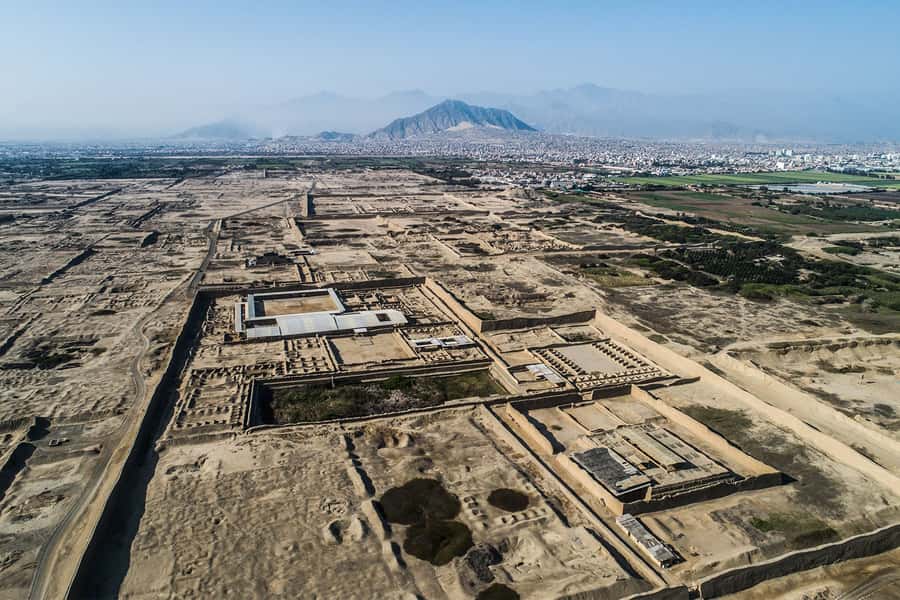
- Chan Chan, not a drive-by: the largest adobe city in America, covering about 20 square kilometers
- Huanchaco fishing village: see the traditional caballitos de totora boats still in use
- Lunch depends on time: you may choose seafood lunch or spend more time photographing, based on the schedule
Huacas Sol y Luna: Moche pyramids you can read with your eyes
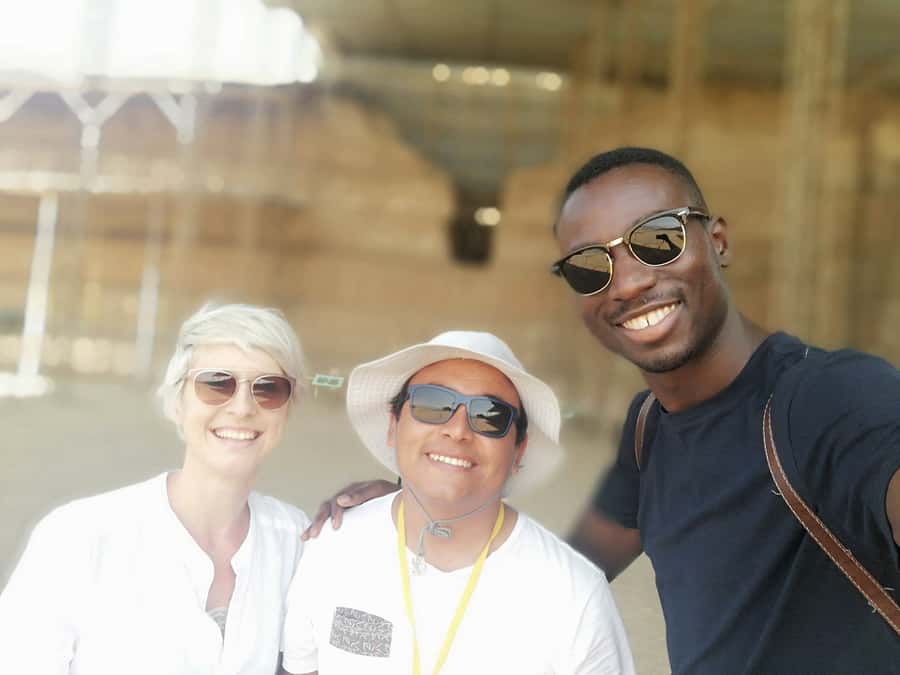
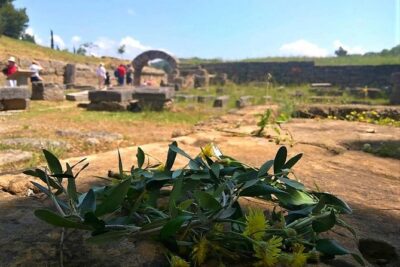
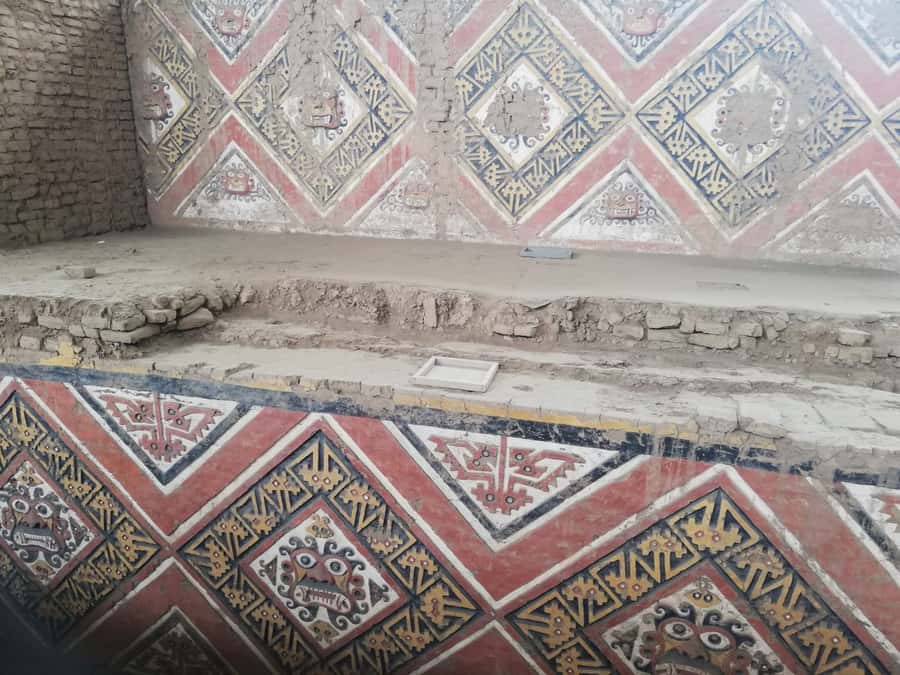
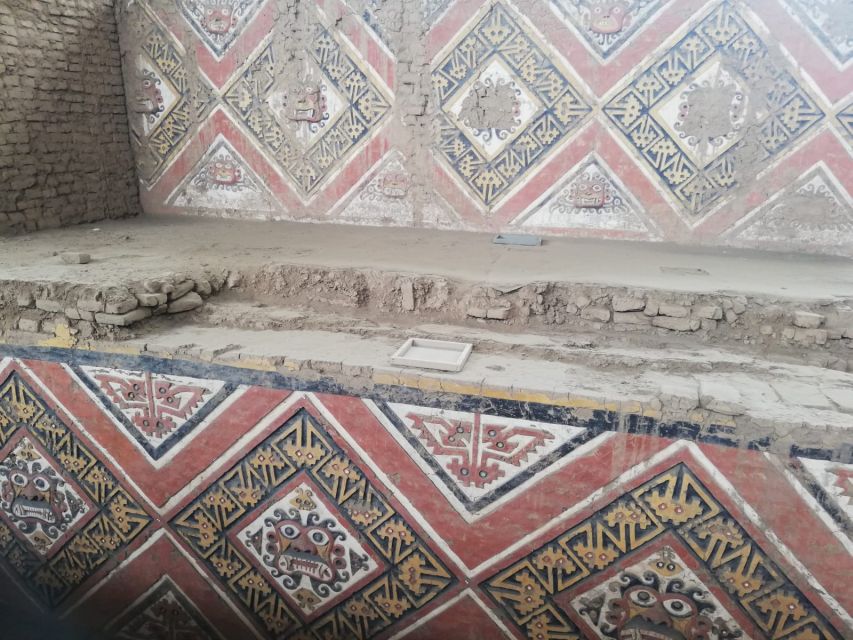
The day kicks off at the Temples of the Sun and the Moon (Huacas Sol y Luna). This is a religious center for the Moche culture, active from roughly 100 to 900 AD. What I like about starting here is that it sets the theme for everything else: Peru’s past wasn’t just buildings, it was beliefs, power, and urban life.
At the complex, you’ll see two big pyramids with flat tops—those huacas. Don’t rush past them. Even from your first viewpoint, try to notice how they dominate the space. That’s the point: these structures were built to communicate importance, long before anyone cared about Instagram.
Your English guide does a real job turning it into something you can picture. In past groups, guides like Wilmer (and Edwin on other runs) have used descriptions and supporting pictures to make the story easier to follow. That matters because ruins can feel vague if nobody gives you a mental map.
Practical tip: wear comfortable shoes and be ready for uneven ground. The temples are outdoors, and you’re on a shore schedule—so you want your feet ready for steady walking.
A few more Trujillo tours and experiences worth a look
Trujillo’s Plaza de Armas: best photos in a focused 20 minutes
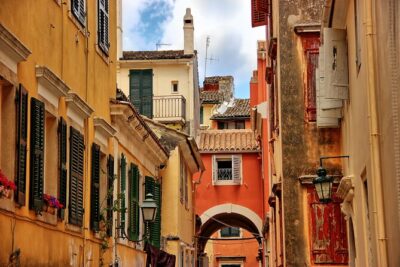
Next comes the colonial heart of Trujillo. You’ll visit the center of town, with attention on the best-preserved mansions and the photo-friendly core around Plaza de Armas. You get 20 minutes of free time, which is short, but not random. It’s designed for getting your bearings and capturing key shots without running late.
Here’s how I’d use those 20 minutes: move quickly toward the plaza, take your wide overview first, then circle for angles on the buildings. If you want one hero photo, make it your first priority. The goal is to walk away with images that feel like Trujillo, not just a blur of quick stops.
This is also a helpful mental reset. After pyramids and archaeology, a stroll through colonial streets gives you contrast—different materials, different styles, and a different pace.
Chan Chan: the largest adobe city in the Americas, with real “wow” scale
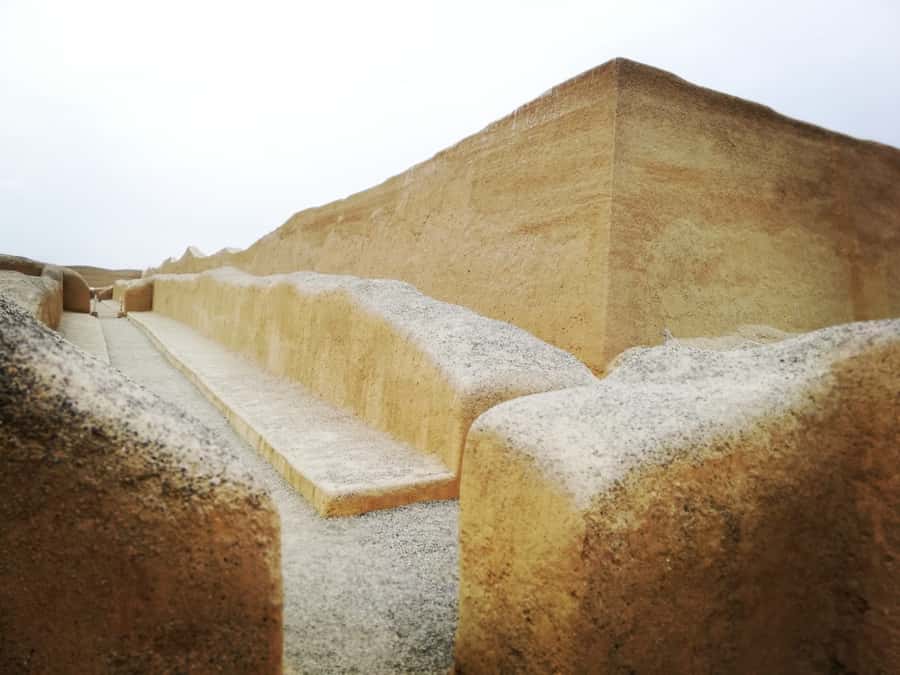
Then you head to Chan Chan, described as the largest adobe city in America, built by the Chimú. It covers about 20 square kilometers, so this stop can feel bigger than you expect from a shore excursion. The trick is to accept that you won’t see every corner. Instead, you focus on understanding what kind of city it was and why adobe matters.
Adobe is fragile compared to stone, which is exactly why ruins like Chan Chan still feel extraordinary. They survive because of careful handling over time, but the material also shows how the Chimú lived—how they shaped daily life with clay, sun, and skill. When you’re standing amid the remains, you can start to imagine neighborhoods, ceremonial areas, and the logic of an organized city.
What’s valuable here is the guidance. In one highlight from prior tours, guides were praised for clearly speaking English and for bringing history to life with explanations (even if one guide at times was a bit fast and needed slower pacing). So if you’re sensitive to speed, it helps to ask simple follow-up questions at the start so you’re not playing catch-up mid-walk.
Practical tip: expect sun and open space at Chan Chan. Bring your hat and keep your camera ready, because the best light for photos often comes when you’re already in the thick of it.
Huanchaco fishing village: caballitos de totora and a seafood lunch option
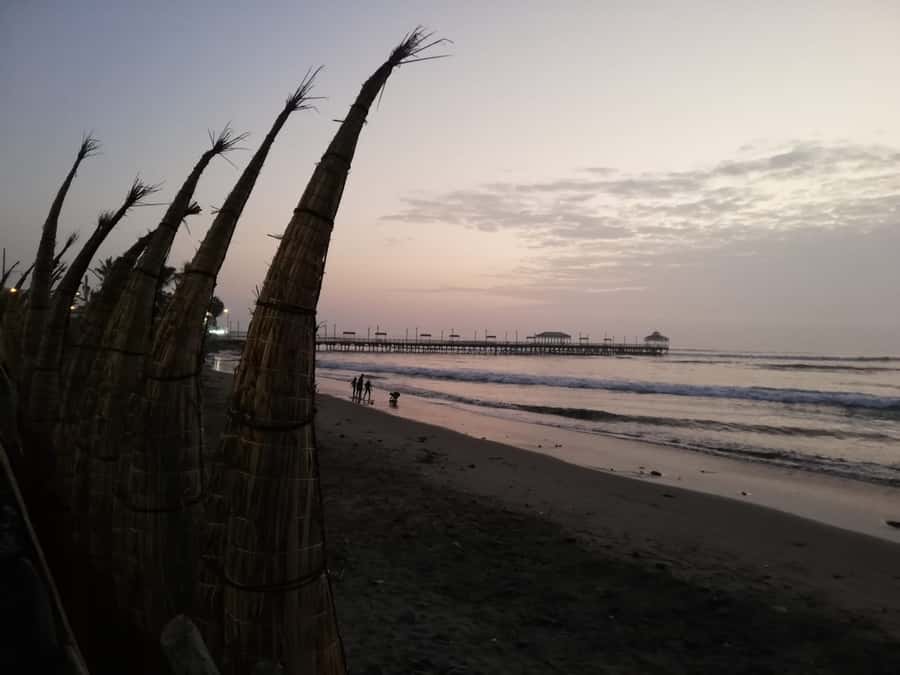
After Chan Chan, the route continues to Huanchaco, an ancient fishing village known for its traditional beach scene. This is where you see the famous caballitos de totora—the classic fishing boats made from totora reed—and they’re still used today. That detail is powerful. It’s not a museum object. It’s a working tradition.
Huanchaco is also one of Peru’s well-known beach areas, which means your stop isn’t just archaeological. It has atmosphere: sea air, boats, and the kind of views that make you pause even if you’re on a tight schedule.
Lunch is part of the experience, but it’s time-dependent. Depending on the schedule, you’ll either get a good lunch based on seafood or shift more toward photos. Either way, you should treat Huanchaco as both a taste moment and a visual moment. If time allows the meal, it’s a solid chance to eat something local without turning the day into a long detour.
If you’re choosing photos over lunch, aim for the waterfront scenes and the boats. The caballitos de totora are the recognizable anchor for this area, and they work well for both wide shots and close details.
Getting back to Salaverry on time without stress
This is a shore excursion built around port timing. You’re picked up and dropped off from Salaverry Port Gate, with pickup happening inside the port from the bus parking area. You only need to walk about 20 meters from the ship to the buses parking.
A small but important detail: you should inform the ship captain that you’re with a company registered and authorized by Salaverry. Then rely on the tour staff—your guides and buses are identified with the NORTE EXPEDITION logo. This reduces the usual last-minute confusion that can happen in port setups.
You’ll also be added to a WhatsApp group 24 hours before for pickup coordination. That’s useful because it helps you confirm where to go inside the port and what to expect on arrival.
The tour ends back inside Salaverry with enough buffer before departure, following captaincy orders. Translation: you shouldn’t be sprinting at the end, which is exactly what you want on a ship day.
Price and value: what $95 covers (and what it doesn’t)
At $95 per person for about 6 hours, the value comes from a few clear things that are usually extra costs elsewhere: pickup/drop-off from Salaverry, an English live guide, and entrance tickets. On top of that, there’s skip the ticket line, which saves real time when you only have hours.
What’s not included is also straightforward: meals and drinks (and of course hotels, since you’re on a shore day). That matters for budgeting. If seafood lunch is on the menu for your group timing, you’ll pay separately. If time shifts toward photos, you’ll have fewer spending pressure moments—but you still need to plan how you’ll handle food for a long-ish day off the ship.
For me, the best “value math” is this: you’re paying for transportation + guiding + entrances across multiple locations. You’re not just buying a ride to one site. You’re buying a full sequence—Huacas, Plaza de Armas, Chan Chan, then Huanchaco—done efficiently.
Who should book this Trujillo shore day
This excursion is a strong fit if you want:
- A history-focused day that covers Moche and Chimú sites
- A mix of architecture ruins (huacas), city center photos (Plaza de Armas), and working coastal culture (Huanchaco fishing)
- An English guide who helps you understand what you’re seeing
It’s also a good choice if you’re working with limited time from Salaverry and you don’t want to figure out separate transport for each stop.
It’s not for everyone. The tour notes it isn’t suitable for people over 95, and anyone who struggles with walking over uneven outdoor ground should think carefully. The day is packed by design.
Should you book this Salaverry-to-Trujillo excursion?
I’d book it if your ideal shore day is clear: see major Peru cultural sites, get meaningful guide explanations in English, and still have time for classic photo stops. The combo of Huacas Sol y Luna plus Chan Chan is the core, and the Huanchaco add-on gives your day a lived-in feeling with the caballitos de totora still in use.
I’d hesitate if you hate tight schedules, or if you want long free time for browsing—because the Plaza de Armas break is only 20 minutes, and Huanchaco’s lunch vs photos depends on timing.
If you’re a photo-minded, culture-minded person who values time efficiency and hates ticket-line delays, this one is a practical choice.
FAQ
How long is the Trujillo shore excursion from Salaverry Port?
It runs for about 6 hours.
What’s included in the price?
Pickup and drop-off from Salaverry Port Gate, an English live tour guide, and entrance tickets. There is also a skip-the-ticket-line setup.
Are meals included?
No. Meals and drinks are not included, though lunch may be available in Huanchaco based on time.
Which stops are included in the itinerary?
You visit Huacas Sol y Luna, the center of Trujillo with time around Plaza de Armas, Chan Chan, and the fishing village of Huanchaco.
Do I need to buy tickets for the sites?
Entrance tickets are included, and the tour is set up to skip the ticket line.
Where do I meet the tour staff at Salaverry?
Pickup is inside the port at the bus parking area. You should walk about 20 meters from the ship to reach the buses parking.
Is there an English guide?
Yes. The tour includes a live English guide and Spanish guide information as part of the setup.
Is it suitable for elderly passengers?
The tour is not suitable for people over 95 years.
Can I cancel for a full refund?
Yes. You can cancel up to 24 hours in advance for a full refund.
Is there an option to pay later?
Yes. It offers a reserve now & pay later option to keep plans flexible.