REVIEW · ATHENS
The Best Of Athens With The Acropolis 4-Hour Shore Excursion
Book on GetYourGuide →Operated by Athens Shore Excursion · Bookable on GetYourGuide
Four hours, two worlds of Athens. This private shore excursion mixes the Acropolis with the city’s Roman and modern highlights, with pickup right at Piraeus.
I love how time-efficient it is: a 4-hour morning plan plus a quick 20-minute drive means you get the big sights without stressing cruise schedules. I also like the personal service from an English-speaking driver, and one standout example is Eduardo, who was commended for strong historical explanations and professional service.
One consideration: entrance fees aren’t included, and if you want an English-speaking licensed guide for the sites, that’s an extra cost. Still, it’s a manageable trade-off for the convenience of a private plan.
In This Review
- Key Things That Make This Athens Shore Excursion Worth Your Time
- Why This 4-Hour Athens Plan Works So Well for Cruise Days
- Piraeus Pickup to Acropolis: A Smooth Start Without Transit Headaches
- Entering the Acropolis: Propylaea, Erechtheum, Nike, and the Parthenon
- Beyond the Acropolis: Olympian Zeus and Hadrian’s Arch Tell a Real Story
- Plaka, Roman Agora, Monastiraki-Area Stops, and the Temple of Vulcan
- Panathenaic Stadium and the First Modern Olympics Connection
- A Farewell View From Lycabettus Before Returning to Piraeus
- Price and Value: $330 Per Group, What That Buys You
- What You’ll Need to Know Before You Go
- Should You Book This Acropolis-Focused Shore Excursion?
- FAQ
- How long is the Best Of Athens With The Acropolis shore excursion?
- What is the price for the tour?
- What is included in the price?
- Are entrance fees included?
- Is an English-speaking licensed tour guide included?
- Where does the tour pickup if I arrive by cruise ship?
- Is the tour wheelchair accessible?
Key Things That Make This Athens Shore Excursion Worth Your Time
- Piraeus pier pickup and drop-off so you don’t waste energy figuring out transit on limited time.
- 4 hours in the morning designed for cruise days, with a tight route that hits the classics.
- Acropolis focus on Propylaea, Erechtheum, Temple of Wingless Victory, and the Parthenon.
- Olympian Zeus and Hadrian’s Arch for the old-versus-new Athens story in one stop-and-stare session.
- Roman Agora, Plaka, and Monastiraki-area sights like the Temple of Vulcan on the way through the center.
- Lycabettus viewpoint at the end to send you back to the ship with city views, not just ruins.
Why This 4-Hour Athens Plan Works So Well for Cruise Days
Athens is big, and cruise time is short. What I like about this experience is the structure: a half-day private outing that’s clearly built around getting you from Piraeus to the must-sees and back with minimal hassle.
You’ll also feel a practical rhythm. First you go upward and ancient (Acropolis). Then you move outward through Athens’ layers—Roman, modern, and everything in between. By the time you finish, you’re not just collecting photos; you’re getting the sense of how the city keeps building on itself.
Because it’s private, you’re not stuck waiting on a big group to shuffle off an air-conditioned bus. That matters when you’re on a cruise schedule and when walking routes around major sites can slow down fast.
A few more Athens tours and experiences worth a look

Piraeus Pickup to Acropolis: A Smooth Start Without Transit Headaches
Your day begins at Piraeus Port with pickup and drop-off. There are two cruise terminals—Terminal A (Gate E11) and Terminal B (Gate E12)—so you’ll want to confirm which one your ship uses before you disembark. After that, it’s simply a matter of walking out to the terminal exit area where the driver waits with your name on a sign.
Then comes the drive: about 20 minutes through scenic suburbs of Athens before you hit the Acropolis area. This short transit window is a big deal for value. Instead of spending your limited shore time on buses and metro connections, you’re already in motion toward the main event.
The vehicle is air-conditioned Mercedes Benz (or similar depending on group size). That’s not a small point in summer or when you’re walking under strong sun. The comfort helps you arrive feeling ready to stand still, look closely, and absorb what you came for.
If you’re traveling with mobility needs, the tour is listed as wheelchair accessible, which you’ll be glad to know if you want a plan that doesn’t force you into too many awkward transfers.
Entering the Acropolis: Propylaea, Erechtheum, Nike, and the Parthenon
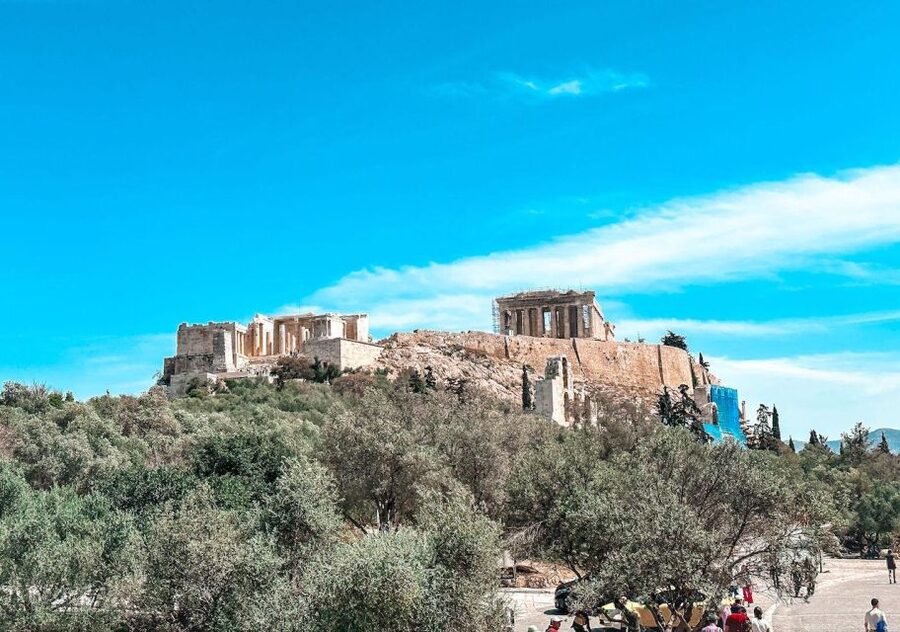
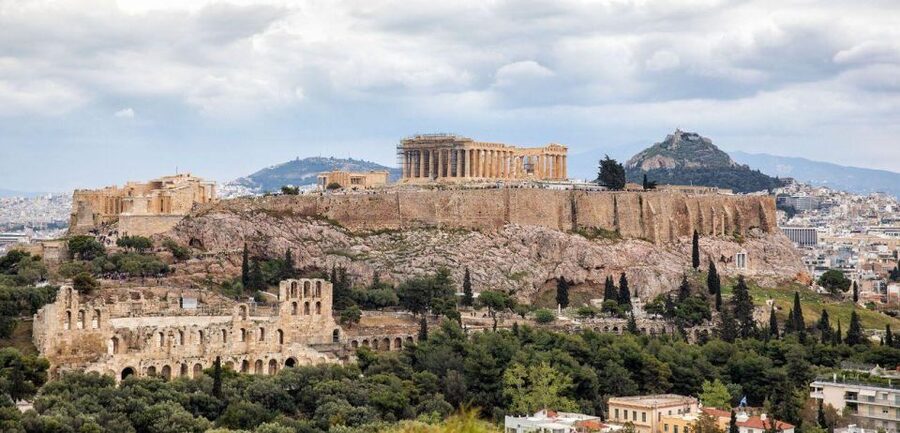
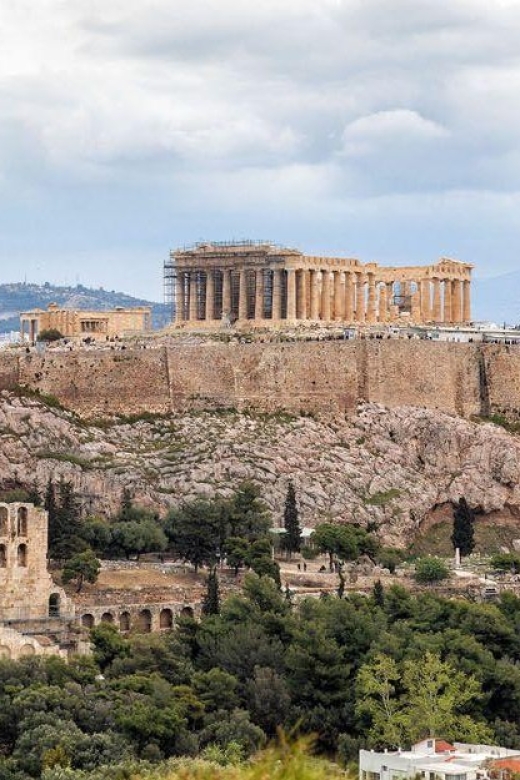
The Acropolis visit is the heart of this half-day. You’ll go up and spend time exploring the top of the hill, where Athens shows off its Golden Age architecture.
Here’s what you should focus on as you move through the complex:
Propylaea
This is your monumental gateway moment. Even if you know the myths, the scale hits first. You’ll likely get a quick orientation on how the space is designed to guide your movement—like the buildings are already choreographing your steps.
Erechtheum
This temple area is famous for its irregular shape and layered details. It’s the kind of stop where looking up matters as much as looking around. If you love learning why things were built the way they were, this is one of the best places to do it on the Acropolis.
Temple of Wingless Victory (Nike)
This site is smaller than the Parthenon, but it’s memorable. It’s a good moment to slow down and notice how the lines and placement shape what you see from nearby angles—especially if you’re trying to capture clean photos without rushing.
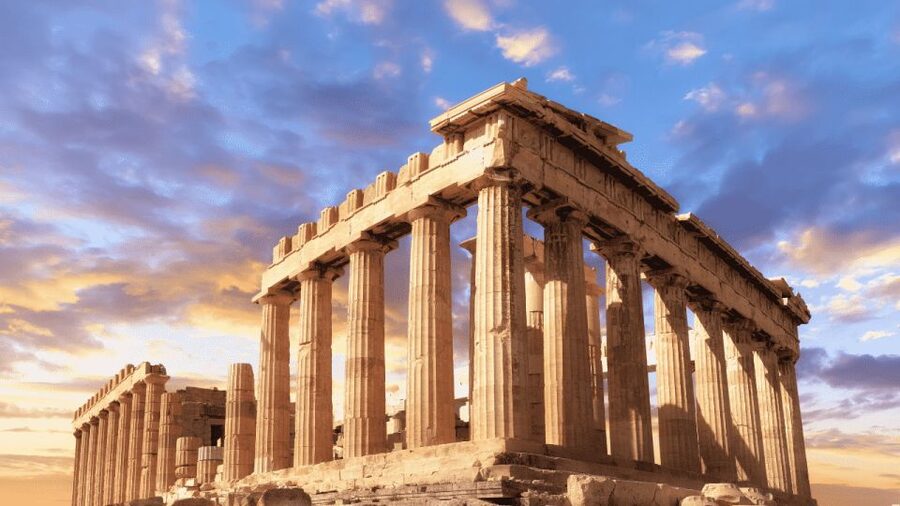
The Parthenon
The Parthenon is the headline, but what makes it worth your attention is the surrounding context. Stand in the right spots and you start to understand why so many later empires used Athens as a reference point. It also helps to have your driver explain what you’re seeing in real language, not just a list of names.
A key practical detail: entrance fees are not included. The good news is that the operator can buy tickets for you in advance for a small service fee. That’s a classic shore-excursion saver—you reduce time spent figuring it out and you protect your walking schedule.
Beyond the Acropolis: Olympian Zeus and Hadrian’s Arch Tell a Real Story
After the Acropolis, the tour shifts into “Athens layers” mode, and two stops do most of the storytelling.
Temple of Olympian Zeus
You’ll visit the Corinthian-style marvel built in the 3rd century BC. It’s described as the largest temple in all of ancient Greece, and even if the full grandeur isn’t intact, the size and presence are still impressive. This is a strong stop if you like comparing eras: the Acropolis feels like a civic-religious statement, while Olympian Zeus feels more like a grand, empire-scale ambition.
Hadrian’s Arch
Right after, you’ll encounter Hadrian’s Arch, a monumental symbol of the divide between old and new parts of the city during the Roman era. That’s a helpful concept to keep in your head as you continue, because you start noticing how Athens changes character from one neighborhood-feeling area to another.
This pair works well for cruise travelers because you’re not just bouncing between famous names. You’re learning how one period reframes the city for the next.
Plaka, Roman Agora, Monastiraki-Area Stops, and the Temple of Vulcan
Next you’ll move through central Athens with a series of key stops that shape the modern experience of ancient places.
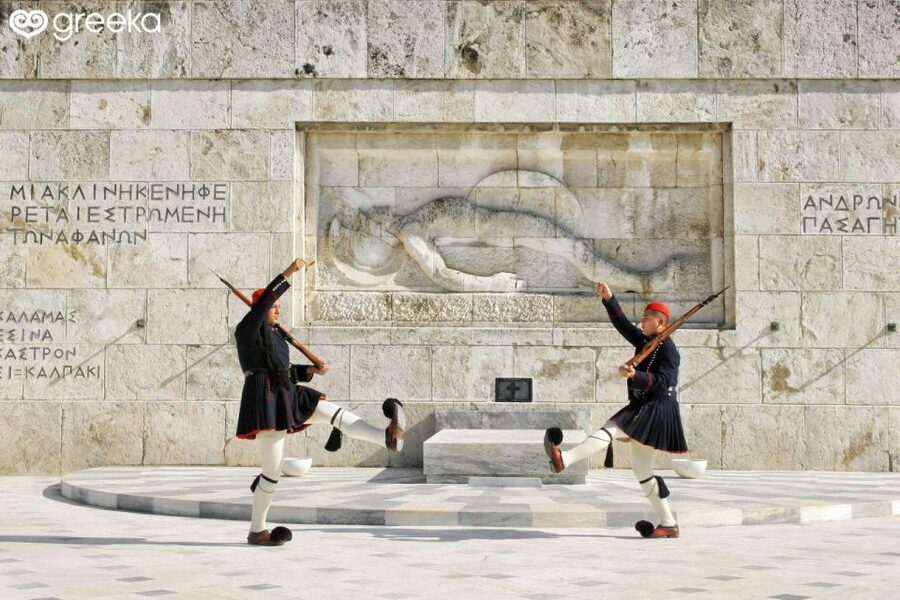
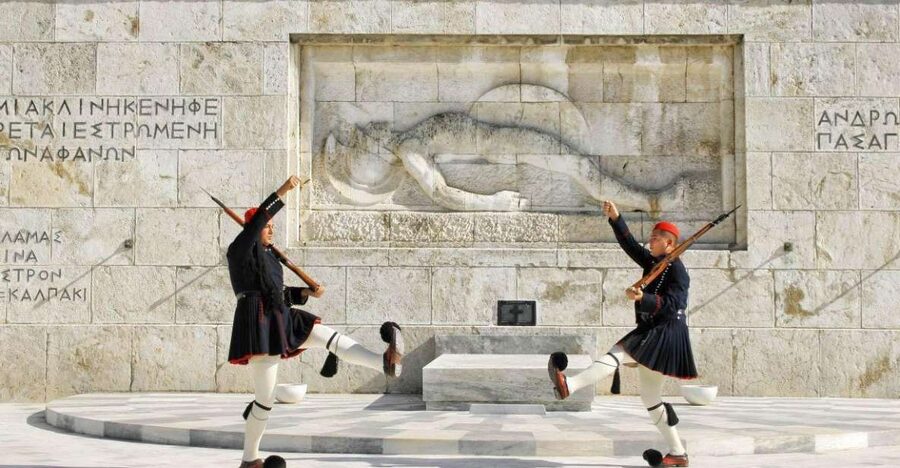
You’ll see areas and landmarks including National Gardens, National Library, Parliament Building, and the ex-Royal Palace. Even if you don’t go inside, these stops matter because they show where Athens’ modern identity sits—right next to the ancient footprint.
Then you’ll roll into older neighborhoods such as Plaka and the Roman Agora, including Monastiraki. These are the zones where you can feel the city’s shopping-and-street-life energy, even if your time on foot is limited.
One stop I’d be sure to keep your eyes on is the Temple of Vulcan. It’s a major ancient temple that tends to feel more complete than many ruins. That can make your whole day “click” because you’re not always looking at fragments; sometimes you’re looking at a structure that still communicates its original form clearly.




Panathenaic Stadium and the First Modern Olympics Connection
This tour includes a visit to the area connected to the Ancient Olympic Stadium and explains the significance of the later modern stadium.
The Panathenaic Stadium is reserved for special events today, but the reason it lands on your itinerary is the story: the current stadium was built in 1894 and hosted the first modern Olympic Games in 1896. That’s a rare bridge point between ancient Greece and modern global culture, and it’s one of the easiest stops to explain to someone who thinks Athens is only about ruins.
What’s also cool is the mention that earlier versions existed earlier too. You’re standing in a place associated with Pentelic marble and with the fact that an older stadium stood there back in the 4th century BC. So you’re not only seeing a sports venue—you’re standing on repeated layers of meaning.
If you’re the type who enjoys connecting dots, this is where you’ll feel the day making sense: Acropolis civic power, Olympian-scale religious ambition, Roman urban planning, and then Greece reinvented for the modern Olympics.
A Farewell View From Lycabettus Before Returning to Piraeus
To wrap things up, the tour includes a journey up to Lycabettus for city views. This is a smart finale for cruise travelers. You’ve spent the morning in specific monuments, and now you get the broader picture—Athens spread out, not as a set of isolated stops but as one working city.
From a practical standpoint, ending with a viewpoint is easier than ending with another long walk. You can look, take photos, and enjoy the wrap-up without needing to squeeze in another complex site visit before heading back.
Then it’s back down and back to Piraeus Port. The goal is simple: memories first, stress last.
Price and Value: $330 Per Group, What That Buys You
The price listed is $330 per group up to 3, for a 4-hour private tour. That can feel steep until you factor in what you’re actually buying: private transportation from your cruise pier plus an English-speaking driver with history and culture context.
Here’s the value math that usually helps:
- If you’re traveling as a small group, the per-person cost can drop quickly.
- You’re paying for convenience (pier pickup/drop-off) and time efficiency (a tight half-day plan).
- Entrance fees aren’t included, so the final total depends on ticket costs and whether you add an English-speaking licensed guide.
If you’re the kind of traveler who wants a structured route and doesn’t want to negotiate your own transport, you’ll likely feel the value immediately. If you’re traveling solo or as a group that wants lots of independent time wandering beyond set stops, you might decide a different format makes more sense.
For most cruise passengers, though, private is the point: you protect your schedule, avoid decision fatigue, and get a driver who can explain what you’re seeing as you go. Eduardo being singled out for professional service and excellent knowledge is a good sign that the human factor matters here.
What You’ll Need to Know Before You Go
This tour is wheelchair accessible and uses an air-conditioned vehicle, which is great. The driver is English-speaking, but a separate English-speaking licensed tour guide is not included by default.
So ask yourself: do you want deep site narration beyond what a driver can cover? If yes, you can arrange an English-speaking licensed tour guide for an extra cost. If no, you’ll still get explanations through the English-speaking driver, and you can enjoy the sites at your own pace within the time limits.
Also remember: entrance fees are not included. If you want less waiting on arrival, take advantage of the option to have tickets bought in advance under a small service fee.
Because the tour is 4 hours, you’ll get highlights rather than unlimited time at every stop. That can be perfect for cruise days. Just don’t plan on turning it into a slow, wandering museum crawl.
Should You Book This Acropolis-Focused Shore Excursion?
Book it if you want the easiest path to the classics from Piraeus—especially the Acropolis—and you like the idea of a private driver who can explain what you’re seeing in clear English. It’s also a strong pick if your cruise day is tight and you’d rather spend your time looking than planning.
I’d hesitate if you’re traveling as a solo passenger and price sensitivity is a big deal, or if you strongly prefer a separate licensed archaeological guide for the sites rather than learning through a driver-led narrative. Also, if you want lots of free time to wander independently in neighborhoods like Plaka and Monastiraki, this format will feel more structured than loose.
Overall, the mix is practical: Acropolis first, then Zeus and Roman Athens, then the stadium story, and finally Lycabettus views to close it out. If that’s your kind of half-day, this is a smart way to use your limited port time.
FAQ
How long is the Best Of Athens With The Acropolis shore excursion?
It lasts 4 hours.
What is the price for the tour?
The price is $330 per group up to 3.
What is included in the price?
Pickup and drop-off at Piraeus Port, transportation in an air-conditioned Mercedes Benz vehicle (or similar for your group size), and a professional English-speaking tour driver.
Are entrance fees included?
No. Entrance fees to the archaeological sites are not included, but the operator can buy tickets in advance for a small service fee.
Is an English-speaking licensed tour guide included?
An English-speaking licensed tour guide is not included, but you can arrange one for an extra cost.
Where does the tour pickup if I arrive by cruise ship?
Pickup is at Piraeus Port, with cruise terminals A (Gate E11) and B (Gate E12). The driver will wait outside the terminal exit with a sign showing your name.
Is the tour wheelchair accessible?
Yes, the tour is listed as wheelchair accessible.