REVIEW · ATHENS
The Highlights of Athens Private Shore Excursion 8 Hours
Book on Viator →Operated by Athens Tours Greece · Bookable on Viator
One day, three centuries of Athens. This private shore excursion strings together the Acropolis, the new Acropolis Museum, and classic Athens streets with breaks for major modern sights like Syntagma Square and the Changing of the Guard.
I especially like the undivided attention you get from a guide who can pace the day around your group, and the fact that you’re not just driven between photo stops—you’re taken through the key monuments with context. The other win is the routing: you start at Piraeus, make it to the Acropolis area efficiently, then finish with Plaka and viewpoints while you still have energy.
One possible drawback: entrance tickets aren’t included, and you’ll do plenty of walking on uneven ground, including steps and marble surfaces at the Acropolis sites. If you’re bringing a stroller or you’re sensitive to slippery stone, plan carefully.
In This Review
- Key things I’d circle before you book
- From cruise terminal to coastal drive: the Piraeus start that saves daylight
- Acropolis time: Parthenon first, then the details around it
- Propylaea, Athena Nike, and Erechtheion: why the “smaller” stops matter
- Propylaea: gates, gates, gates
- Athena Nike: the wingless idea
- Erechtheion and the Caryatids
- The Acropolis Museum: where the puzzle pieces finally connect
- Syntagma Square and the Evzones: a modern ritual with serious attention to detail
- Plaka lunch time: your best chance to slow down and smell Athens
- Ancient Agora: the city’s old marketplace still shapes the map
- Olympeion, Kallimarmaro, and the marble-optimist payoff
- Lycabettus Hill: your view window over the city
- Price and value: what $407.41 per group gets you (and what it doesn’t)
- Who this Athens 8-hour private shore tour fits best
- Should you book it? My honest call
- FAQ
- FAQ
- How long is the Athens private shore excursion?
- What is the price and group size?
- What’s included in the tour price?
- Are entrance fees to the Acropolis sites and museums included?
- Does the tour operate in English?
- Where do cruise passengers meet for pickup at Piraeus?
- How much walking should I expect?
- Can the driver go inside the archaeological sites with me?
Key things I’d circle before you book
- Private guide time: You get flexibility instead of being marched to the same pace as everyone else.
- Acropolis + Museum in one day: It helps the “what am I looking at?” question click into place.
- Plaka with real free time: Lunch and wandering are built into the schedule.
- Parliament and the Evzones ceremony: The Tomb of the Unknown Soldier and guards add a very Athens moment.
- Views at Lycabettus: A payoff stop that turns Athens from ruins into a living city.
- Stadium photo break at Kallimarmaro: Marble-and-Olympics nostalgia without a big detour.
From cruise terminal to coastal drive: the Piraeus start that saves daylight
If your ship docks at Piraeus, this tour gets you out fast. You meet at Port of Piraeus, Terminal A (Port E11), and your driver is waiting outside the terminal exit holding a sign with your name. It’s a small thing, but it matters when you’re on a cruise schedule and every delay feels personal.
From there, you ride along the Saronic Gulf coastline toward Athens. That coastal road angle gives you an early sense of the city: ports, water, and then the long rise toward the Acropolis area. You also get a quick orientation stop at the Port-to-Acropolis approach—time built in to settle your bearings before the day turns into stairs, viewpoints, and marble.
The practical upside for you: fewer headaches. You’re not figuring out trains, bus transfers, or where to park. The private car handles traffic and drop-offs so you can focus on the sights.
You can also read our reviews of more private tours in Athens

Acropolis time: Parthenon first, then the details around it
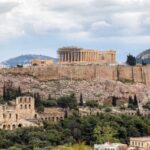
The heart of the day is the Acropolis itself, including the Parthenon. You’re given a structured visit through the major stops on the sacred rock: Propylaea (the monumental entrance), the Temple of Athena Nike, the Parthenon, and the Erechtheion, plus the surrounding viewpoints that make the whole complex feel dramatic even if you’ve seen photos before.
Here’s how I think about the Acropolis when you’re short on time: don’t try to “read it all.” Try to see the main story beats clearly.
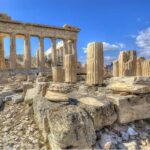
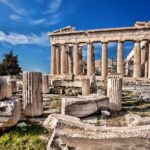
- Parthenon viewpoint and core monument: You’ll get time at the Parthenon itself to take in scale and design. It’s built in the Periclean era (447–438 BC), and it sits like the anchor for everything else you’ll notice—columns, proportions, and why the building has such influence in how the West thinks about classical architecture.
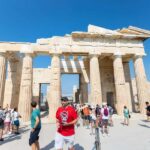
- Propylaea as the threshold: The entry system is part of the experience. Even if you never study ancient engineering, it’s obvious this wasn’t just a doorway—it was a statement.
- Temple of Athena Nike: Small in footprint, big in meaning. This stop helps you see that the Acropolis wasn’t one giant building; it was a whole set of religious and political messages carved into stone.
A tip for your comfort: wear shoes with traction. One review called out slippery marble, and at these angles, slipping is more than an inconvenience. Also bring water; even on days that feel cool early, the sun can catch you fast.
Propylaea, Athena Nike, and Erechtheion: why the “smaller” stops matter
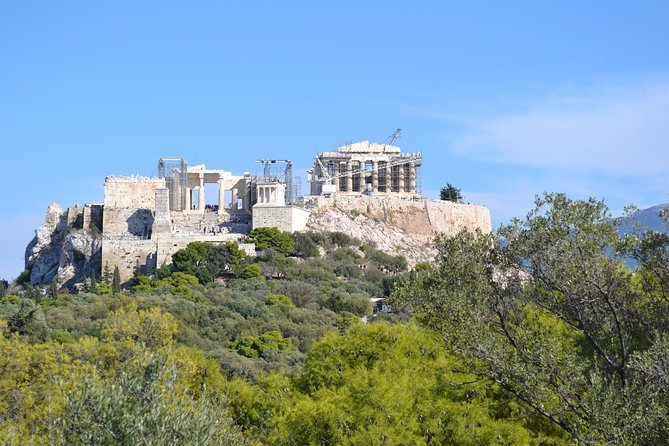
If you only had time for the Parthenon, the day would still be worth it. But the real satisfaction comes when you look at the edges of the Acropolis and see what’s easy to miss.
Propylaea: gates, gates, gates
Propylaea was built as a new monumental gate system in the Periclean building program. The history here is layered: earlier gates existed, damage happened during conflict, and the final version is tied to the ambitious plan that never fully completed as originally designed. Standing at the entrance area, you can feel why it worked: it guides your eyes up and in.
Athena Nike: the wingless idea
Athena Nike sits at the southeast edge of the sacred rock. It’s tied to the idea of the “wingless victory,” connected to the cult statue that had no wings so the goddess would not leave Athens. That kind of story detail turns a quick photo stop into a moment with meaning.
A few more Athens tours and experiences worth a look




Erechtheion and the Caryatids
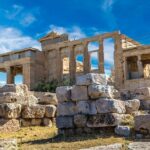
The Erechtheion is where the Acropolis gets human and strange—in a good way. Instead of normal columns, the most famous support feature is the Porch of the Caryatids, with six female statues supporting the roof. Even if you can’t linger long, you’ll recognize why this building keeps getting attention. It’s one thing to know the name. It’s another to see the execution up close.
One more practical note: these are not flat walks. Plan on steps, uneven stone, and short bursts of standing in sun. That’s normal for Athens. It’s also why private pacing helps—you’re not stuck behind a group moving slower or faster than your needs.
The Acropolis Museum: where the puzzle pieces finally connect
After the monuments, you head to the Acropolis Museum for about 1.5 hours. This stop can be the difference between a “great photos” day and a “I get it now” day.
The museum was created to house artifacts from the Acropolis and surrounding slopes, from Bronze Age through Roman and Byzantine periods. It’s built about 300 meters from the Acropolis site, so the setting works with what you just saw.
Here’s what you’ll likely enjoy most:
- Seeing sculpture and artifacts in a calmer setting after the sprint around the rock.
- Understanding that the Acropolis was not static—it changed over time, and the museum helps show that continuity and transformation.
- Making sense of details you noticed outside—like why certain shapes or themes show up across multiple structures.
The timing is smart for you if you’re on a one-day schedule. You’re not rushing out of the museum because you still have a full afternoon ahead in Plaka and central Athens.
Syntagma Square and the Evzones: a modern ritual with serious attention to detail
Once you’re off the Acropolis hill, the day shifts gears into modern Athens. You’ll visit the Hellenic Parliament area and the Tomb of the Unknown Soldier, plus time around the Presidential Mansion for Changing of the Guard moments.
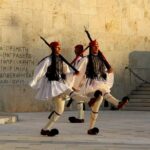
This is one of those experiences that’s easy to dismiss as touristy—until you watch it carefully. The Evzones are the ceremonial infantry unit guarding the memorial and presidential sites. Their uniform has the fustanella kilt-like garment with 400 pleats representing years under Turkish occupation, and the slow-motion sentry change is a big part of the show.
Two schedule details matter for your planning:
- The Changing of the Guard happens every day at the top of the hour.
- At the Tomb of the Unknown Soldier, there’s also a Sunday change of guards at 11:00.
Even if you don’t catch the exact moment perfectly, being in Syntagma Square puts you at the center of Athens’ political and historical stage—Old Royal Palace in front, Parliament building looming, and the Tomb right there with the guards.
Plaka lunch time: your best chance to slow down and smell Athens
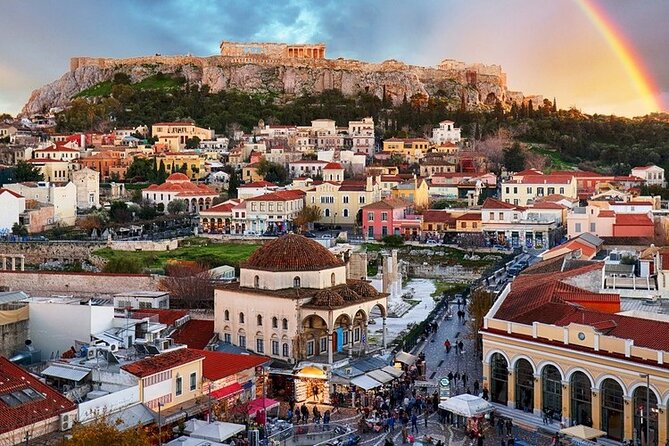
Plaka is where the city feels like it’s wearing its best old clothes. You get about 1.5 hours there with free time for lunch and wandering. Think narrow cobblestone streets, small shops (jewelry, clothes, local ceramics), and sidewalk taverns that tend to stay open late.
This neighborhood sits under the Acropolis slope, and it connects to Anafiotika for that whitewashed, island-ish feel. It’s a great place to do something simple: stop, pick a street, and walk without a plan for a bit.
A real-world consideration: if weather hits, your guide can adjust. One review described arriving during heavy rain and pivoting—seeing more from the car instead of forcing a foot tour through wet marble streets and slick sidewalks.
Ancient Agora: the city’s old marketplace still shapes the map
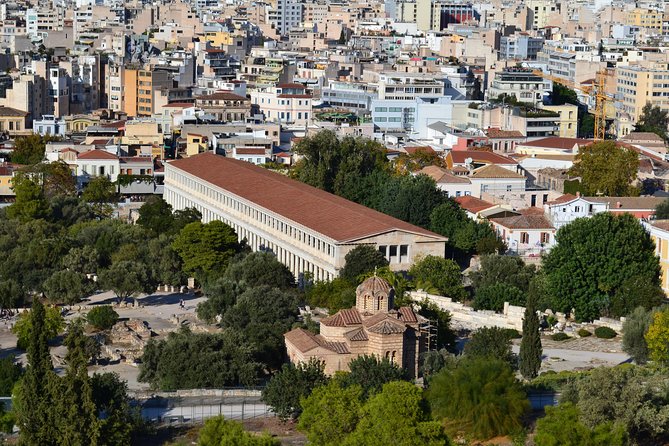
Next comes the Ancient Agora of Athens, around 40 minutes. This is not just a ruin field. It was an assembly and gathering place—then a marketplace, then something used again and again through centuries. Excavations show layers from Archaic to Greco-Roman and Byzantine times.
You’ll get the sense of how Athens worked: public life wasn’t hidden away in special buildings. It happened here, near the Areopagus hill and bounded by Market Hill areas.
It’s a smart inclusion for you because it balances the Acropolis. One site is the power and religion vibe. Agora is where everyday civic life lived.
Olympeion, Kallimarmaro, and the marble-optimist payoff
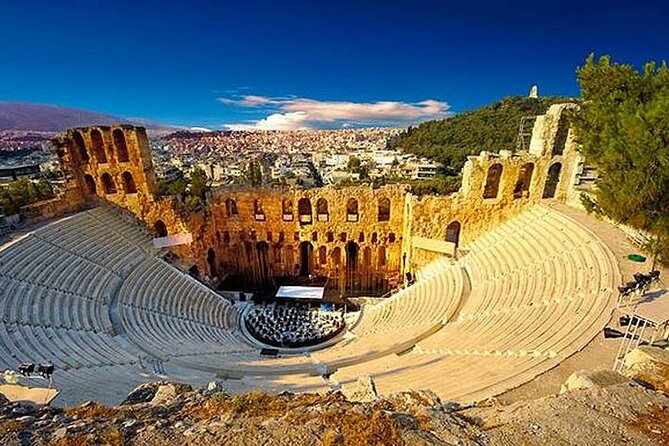
The day also includes a stop by the area of the sanctuary of Olympian Zeus (Olympeion), plus time at Kallimarmaro Stadium.
Kallimarmaro is one of those Athens moments that feels almost too on-the-nose in the best way: it’s made of marble (Pentelic marble), and the color shifts with daylight—cooler in the morning, more bone-gold later. Even a short visit here feels like a nod to how Athens keeps reusing its own symbols.
These stops aren’t meant to replace big monuments. They’re meant to keep the day varied and visual, so you don’t feel like you’re trapped in a single kind of scenery.
Lycabettus Hill: your view window over the city
You finish with a climb-or-ride option at Mount Lycabettus (Lykavitos Hill), about 1 hour 10 minutes. It’s the highest point in central Athens, at 277 meters, and it offers wide city views plus coastline in clear weather.
It’s also one of the best places in the day to step away from the heavy monument schedule. You’re not walking through history as much as you’re watching present-day Athens stretch out below.
Even better: you can get there on foot, by funicular railway, or by car, and the tour ends by dropping you back at the same pickup point for this stop.
Price and value: what $407.41 per group gets you (and what it doesn’t)
This is priced at $407.41 per group for up to 3 people for an approximately 8-hour private day. That sounds like a lot until you compare it to what you’d pay for:
- private transport with door-to-door pickup from port,
- a driver who knows how to handle Athens road quirks,
- and a plan that hits both major ancient sites and top modern sights.
What you do get:
- round-trip transportation (hotel or port pickup and drop-off),
- a professional English-speaking tour driver,
- and the structure of a private day so you’re not stuck waiting on group logistics.
What you don’t get:
- entrance tickets to archaeological sites and museum,
- food and drinks,
- and (if you want) an English-speaking licensed tour guide inside sites. Your driver can guide you through the day up to entry points, but state-licensed museum/site accompaniment is a separate add-on subject to availability.
My practical advice for value: buy your entry tickets in advance. Multiple review notes pointed out how much easier it is to skip ticket chaos. If you arrive without tickets during a busy season, your “8 hours” can quietly turn into “8 hours plus waiting.”
Who this Athens 8-hour private shore tour fits best
This tour is ideal if you:
- have one day in Athens after docking at Piraeus and want maximum highlights,
- prefer a private plan over trying to DIY bus and train timing,
- want both the Acropolis complex and the Acropolis Museum in the same day,
- and enjoy a blend of ancient monuments plus modern sights like the Parliament and guard ceremony.
It may not be the best match if you:
- hate walking on stairs and uneven stone,
- need a fully accessible stroller-friendly route at Acropolis sites (one review specifically flagged stroller trouble at Temple of Athena due to steps and slippery marble),
- or want a slow, deep museum-only day. This is a packed highlights route by design.
Should you book it? My honest call
I’d book this if your goal is a smart, private Athens hits-all-the-big-stops day with a guide who can adjust pacing and keep you on schedule. The Acropolis + Museum pairing alone is a strong reason, and the Syntagma area ritual adds a distinctly modern Athens flavor you can’t replicate by museum hopping.
If you do book, do two things and your day will feel smoother:
- pre-purchase your entrance tickets,
- and wear traction shoes plus bring water.
With the right expectations—this is a highlight day with stairs—it’s a very satisfying way to see Athens before your ship calls your name again.
FAQ
FAQ
How long is the Athens private shore excursion?
It runs about 8 hours.
What is the price and group size?
The price is $407.41 per group, up to 3 people.
What’s included in the tour price?
Pickup and drop-off from your hotel or port (Piraeus pickup is included), transportation in an air-conditioned vehicle, and a professional English-speaking tour driver.
Are entrance fees to the Acropolis sites and museums included?
No. Entrance fees are not included for archaeological sites and the museum. Food and drinks are also not included.
Does the tour operate in English?
Yes. The tour is offered in English, and your driver provides English.
Where do cruise passengers meet for pickup at Piraeus?
Port of Piraeus, Terminal A, Port E11, at 28 Akti Xaveriou Street. You disembark and walk outside the terminal exit where the driver/guide waits with your name sign.
How much walking should I expect?
Expect moderate walking with stairs and marble surfaces, especially around the Acropolis monuments. The tour requires moderate physical fitness.
Can the driver go inside the archaeological sites with me?
Your tour driver can guide you up to the entrance points, but drivers are not licensed to accompany you inside archaeological sites and museums. You can request a state-licensed guide for an extra cost depending on availability.
You Might Also Enjoy
 Cochin Shore Excursion Kerala Houseboat Trip(with Lunch, Pickup &Drop from Pier)
 Kusadasi Shore Excursion: Private Tour to Ephesus including House of Virgin Mary and Temple of Artemis
 Corfu Shore Excursion: Private Island Tour Including Achillion Palace
 Haifa Port Shore Excursion: Nazareth and Sea of Galilee Day Tour from Haifa Port