REVIEW · ATHENS
The best of Athens Piraeus Full-Day Private Shore Excursion
Book on Viator →Operated by Athens Shore Excursions · Bookable on Viator
A private day in Athens starts on the sea. This shore excursion is private (up to 3) and you can customize your itinerary, not just march through set stops. The big win is the easy air-conditioned ride from Piraeus to the Acropolis area, and a real pro in the driver seat, with guides like Michael keeping everything moving on schedule.
I like the way it covers famous Athens and the surrounding neighborhoods in one long, efficient day. One key consideration: entrance fees for archaeological sites and museums are not included, so you’ll want to plan for ticket costs once you decide what you want to go inside.
In This Review
- Key things to know before you go
- A Piraeus pickup that turns waiting into sightseeing
- The ride from Piraeus to Acropolis: a fast orientation tour
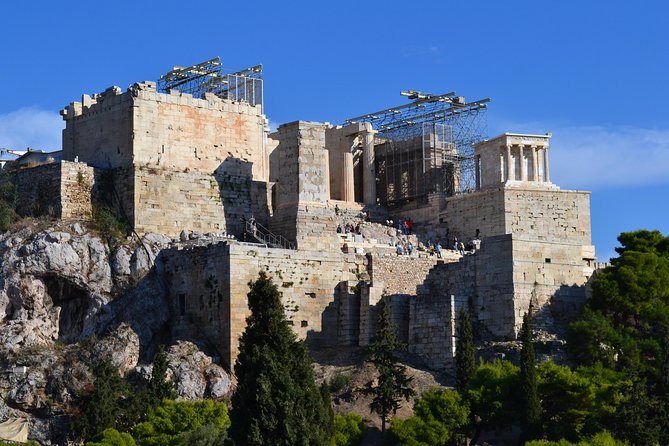
- Entering the Acropolis the smart way: Propylaea first
- Temple of Athena Nike: the detail stop people usually skip
- Parthenon: the must-see, but don’t treat it like a photo wall
- Erechtheion and the Caryatids: where the hill turns human
- Changing of the Greek Guards at Syntagma: theatrics with history
- The Hellenic Parliament and Syntagma Square: the city’s living center
- A breather in the National Garden, then back to learning
- Old Parliament Museum and the story of modern Greece
- Plaka: where you handle the day like locals do
- Ancient Agora and Acropolis Museum: plan your ticket strategy
- Olympieion and Kallimarmaro: the Athens between the headlines
- Lycabettus views: the best finish when you want space
- Price, pace, and the real value for up to 3 people
- Should you book this shore excursion?
- FAQ
- FAQ
- What time does the tour start, and how long is it?
- Is this a private tour?
- Where do cruise passengers meet the driver?
- Does the tour include hotel pickup in Athens?
- Are entrance fees to archaeological sites and museums included?
- Can the itinerary be customized?
- Will I have a licensed tour guide inside museums and archaeological sites?
Key things to know before you go
- Private, small-group pace: you’re not shared with strangers, so you can adjust timing to your interests
- Cruise-friendly pickup: meet at Port of Piraeus Terminal A (Port E11), and your day starts at 8:00am
- Acropolis route that makes sense: Propylaea, Temple of Athena Nike, Parthenon, and the Erechtheion are built into one logical path
- The Evzones show is timed: the changing of the Greek guards happens every day at the top of the hour
- More than ruins: Plaka free time, Ancient Agora, Acropolis Museum, Olympieion, Kallimarmaro, and Lycabettus keep the day varied
- A driver isn’t a site guide: the driver can guide until entry, but inside-museum accompaniment requires a state-licensed guide for an extra cost
A Piraeus pickup that turns waiting into sightseeing
If you’re docking in Athens, time can disappear fast. This tour starts at 8:00am and links your cruise stop to the city quickly, with a drive along the coastal road of the Saronic Gulf. You get to see the Piraeus and Athens riviera before the day turns into stone, steps, and views.
Because it’s private, you don’t get stuck with the slowest person in a large group. The vehicle is air-conditioned and matched to your group size, so the ride stays comfortable even if the morning turns warm. On top of that, you get hotel pickup/dropoff in Athens, so the same experience works whether you start from port or lodging.
You can also read our reviews of more private tours in Athens

The ride from Piraeus to Acropolis: a fast orientation tour
Your first real moment isn’t a ruin. It’s the coastal drive and the shift from ship scale to city scale. Piraeus is Athens’s major seaport, and it’s huge—Europe’s biggest passenger port, with ships pulling in from all over. The good news is that Athens sits close: the port and the city are only about 12 kilometers (roughly 7 miles) apart.
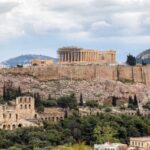
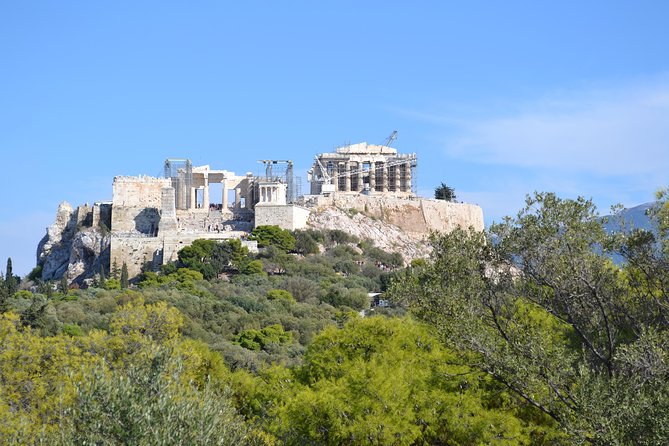
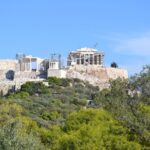
From there, you head toward the Acropolis area to see the Temple of Democracy viewpoint (entry details depend on your exact timing and ticket needs). Even if you’ve visited Athens before, this segment works because it gives you geography. You start to understand where the Acropolis sits, why the hill was defensible, and how the city stretches around it.
Entering the Acropolis the smart way: Propylaea first
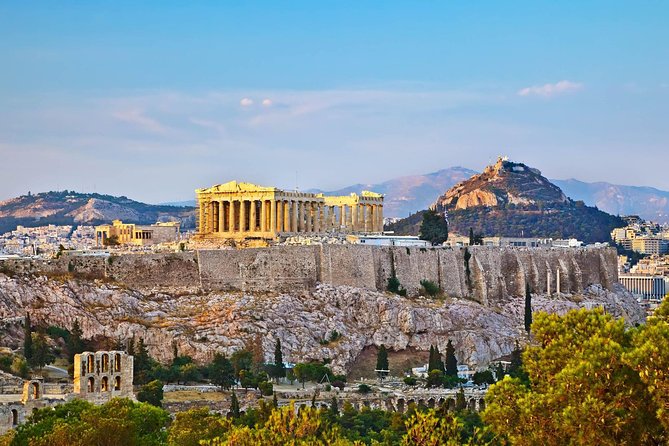
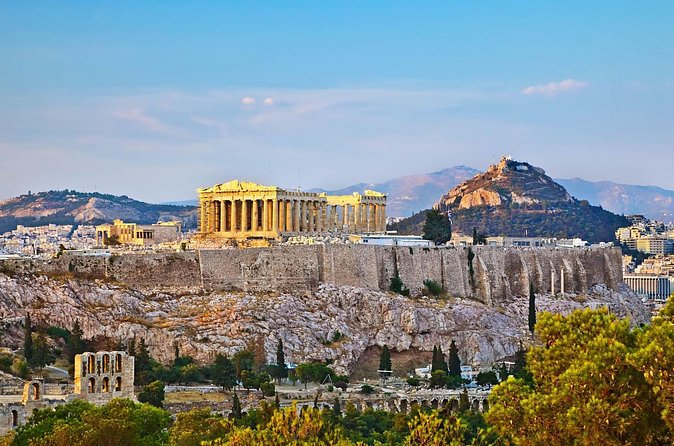
The Acropolis is the headline for a reason. It’s an ancient citadel on a rocky outcrop above Athens, built up during the classical age when Athens rose after the Persian Wars and strengthened its democratic identity. You’ll also notice the artistry of the planning—this wasn’t random stonework. It was a political statement you can still read in the layout today.
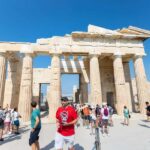
You begin with the Propylaea, the monumental gateway complex. It’s on the west side of the hill and tied to older fortifications, including a Mycenaean-era fortification beneath earlier structures. The current “modern visitor” Propylaea is part of the big Periclean building program, erected around 437–432 BC, and the design is deliberately dramatic, with a pie-shaped marble framing effect around the entrance.
Even if you’re not a deep-architecture person, this stop helps you feel the choreography. You’re not just looking at one building; you’re moving through the same sacred approach that guided ancient visitors.
Temple of Athena Nike: the detail stop people usually skip
Next comes the Temple of Athena Nike, perched at the southeast edge of the sacred rock. This is one of those stops where the reward is proportion: small by scale, but perfect for reading craftsmanship and location. It was built around 426–421 BC and sits on a bastion that once protected the entrance in earlier times.
A fun historical detail here is the link to the idea of “Wingless Victory.” Sources describe Athena Nike as wingless so she wouldn’t leave Athens. Underneath the classical temple, you can also understand how earlier sanctuaries were replaced over time—foundations and earlier altars are preserved beneath the later structure.
The downside? You’ll want to keep your pace here. It’s easy to rush past because it doesn’t look as massive as the Parthenon from a distance. Slow down for a few minutes, because the setting is the point.
Parthenon: the must-see, but don’t treat it like a photo wall
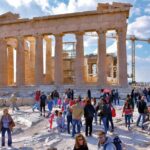
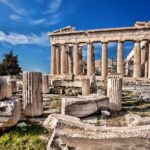
Then you reach the Parthenon, the big one. It’s dedicated to Athena Parthenos, and it’s often described as the clearest creation of Athens at the height of its power. Built between 447 and 438 BC, it replaced earlier versions that were destroyed during the Persian conflicts.
What I like about visiting it in this order (gateway → Nike → Parthenon → Erechtheion) is how the hill becomes a story. The Parthenon isn’t floating in space. It sits inside a planned sacred landscape, shaped by architects Iktinos and Kallikrates, and supervised by Pheidias, who also connected the project to the sculptural program.
One practical note: the major indoor/outdoor site experience depends on entrance timing, and entrance fees are not included as part of the base tour cost. If you’re the type who wants the full on-site experience, plan extra time for ticketing and to avoid stress.
A few more Athens tours and experiences worth a look



Erechtheion and the Caryatids: where the hill turns human
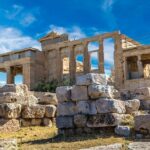
After the Parthenon, the tour shifts to the Erechtheion on the north side. Built 421–406 BC, it replaced an earlier temple and relates to the mythic and religious layers of Athens, including worship linked to Erechtheus and stories connected to Athena and Poseidon.
The Erechtheion also gives you the famous Caryatids—female figures used as sculptural supports. Here, the tour focuses on the porch of the Caryatids, and you’ll learn why only some original statues remain on-site while others are in major museums elsewhere. Even with that complication, the effect is still powerful when you stand in front of the structure.
This stop works best if you like details you can measure with your eyes: height, spacing, and the way sculpture and architecture merge. If you prefer broad panoramas, you might want to balance time here with quick view breaks.
Changing of the Greek Guards at Syntagma: theatrics with history
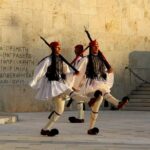
After the Acropolis complex, the day turns to modern Athens. You’ll visit the changing of the Greek guards, the ceremonial Evzones who guard key sites in the center of Athens. The changing happens every day at the top of the hour, so you can use the schedule to time your photos.
The uniform is one of the most eye-catching parts: the fustanella has 400 pleats, linked to the number of years Greece was under Turkish occupation. The craftsmanship matters, too—these uniforms are handmade and can take around 80 days. If you’re thinking, yes, this is a performance, you’re right. It’s also a cultural reminder.
Then you move to the Monument to the Unknown Soldier in Syntagma Square, guarded by the same Evzones. It’s a cenotaph and a war memorial dedicated to Greek soldiers killed in war.
The Hellenic Parliament and Syntagma Square: the city’s living center

From there, the tour heads to the Hellenic Parliament building. It has royal origins: it started as the palace of Kings Otto and George I, then became the Parliament and Senate building about a century after construction, and it still houses the Hellenic Parliament today.
What I appreciate is the continuity. You’re standing in the same central power zone that shaped modern Greek governance, while just steps away the Unknown Soldier and Parliament square keep the political and civic story visible.
Then Syntagma Square itself is where Athens operates like a big meeting point—past and present side by side. Even if you don’t spend long here, the square gives you a practical orientation for the rest of your city walk.
A breather in the National Garden, then back to learning
One of the smarter moments in the day is the stop at the National Garden of Athens, tucked behind Parliament and Syntagma Square. It’s described as a green oasis over 160,000 square meters, with plant types from around the world.
If your Acropolis time has you footsore, this garden stop is a helpful reset. It also tells you something about Athens beyond stone temples: the city invests in public green space. The gardens were created on Queen Amalia’s order in 1839, later renamed the National Garden, and opened to the public in 1923.
After that, you pass the Academy of Athens and the National and Kapodistrian University of Athens and the National Library of Greece, all part of what’s often called a Neoclassical Trilogy. The point isn’t museum-level detail; it’s the feel of Athens as a seat of learning as well as ancient power.
Old Parliament Museum and the story of modern Greece
The tour also includes the National Historical Museum in the Old Parliament Building. The museum covers Modern Greece’s major story arcs, including Ottoman and Latin rule, the Greek War of Independence (1821), liberation struggles, and the development of an independent state.
The Old Parliament itself is part of why the stop matters. It was the first permanent home of the Greek National Assembly and an architectural jewel in the center of Athens. If you’ve mainly thought of Greece as antiquity, this is where you rebalance your timeline.
Plaka: where you handle the day like locals do
At this point, you finally get the kind of break you’ve been saving up for: free time in Plaka. Plaka sits under the Acropolis, with a village feel—narrow cobblestone streets, small shops, jewelry, local ceramics, and sidewalk cafés and family-run tavernas.
The neighborhood also includes Anafiotika, which has that whitewashed, island-like vibe even though you’re deep in Athens. You get about 1 hour 30 minutes for lunch on your own, which is one of the best uses of free time on a port day.
Practical tip: wear shoes you trust. Plaka looks pretty, but it’s still old-stone Athens underfoot.
Ancient Agora and Acropolis Museum: plan your ticket strategy
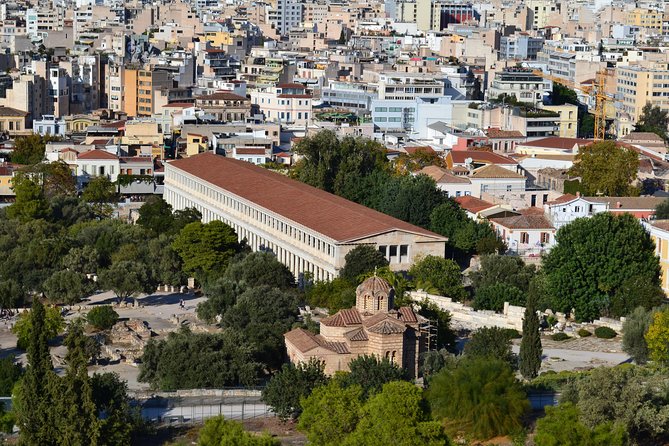
After lunch time, you head to the Ancient Agora of Athens, the historic gathering and marketplace center. It functioned as an assembly and marketplace for about 5,000 years, and the excavations help reveal the area’s layered uses from archaic through Greco-Roman and Byzantine times.
Next comes the Acropolis Museum, designed to house artifacts found on the rock and nearby slopes. This museum is physically close to the Acropolis (about 300 meters) and was opened in 2009. You’ll spend about 1 hour 30 minutes here if you choose to fully use the time.
Here’s the practical reality: entrance fees for archaeological sites and museums are not included, so the value depends on whether you go inside for both Agora and museum. If you’re the type who hates missing museums, budget accordingly before you arrive.
Olympieion and Kallimarmaro: the Athens between the headlines
Your day continues to the Olympeion area, the sanctuary of Olympian Zeus. The site includes a major temple of Zeus and other structures, plus associations like Apollo Delphinios and a tripartite building with a south courtyard linked to traditions around Theseus and Aegeas. Even if you don’t go deep into every foundation, the setting expands your view of what ancient Athens was trying to build.
Then you reach Kallimarmaro, the Panathenaic Stadium made of Pentelic marble. It’s famous because the first modern Olympic games took place here in 1896. The marble changes color with daylight—cool in the morning, shifting toward bone-gold tones later.
This stop is short, but it’s a great breather. You see a living connection between ancient celebration and modern sport.
Lycabettus views: the best finish when you want space
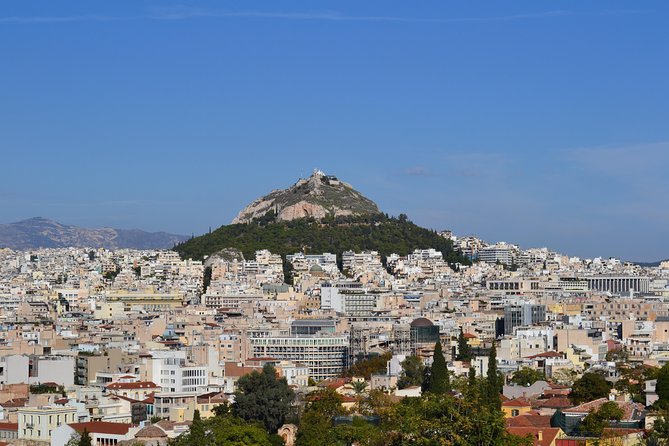
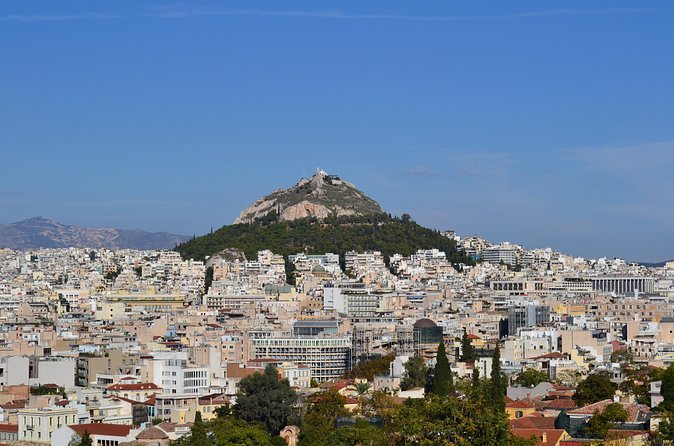
Finally, you climb to the Mount Lycabettus area (also called Lykavettos Hill), about 277 meters above sea level. This is one of the best places in central Athens to get breathing room above the city.
It’s accessible by foot, car, or funicular railway. At the top, you’ll find a small chapel of Saint George and big skyline views over Athens and the coastline. After your visit, the tour drops you back at the same pickup point location for an easy return to your ship or next plan.
If you’re moderate on stamina, Lycabettus is where you can choose your level of effort. The funicular option means you can still enjoy the view without turning the last hour into a knee test.
Price, pace, and the real value for up to 3 people
This tour costs $499.74 per group, and the group size is up to 3. That means your per-person cost depends on how many people share it. If you’re a pair, it’s naturally higher per person; if you can fill all three spots, it drops meaningfully.
Where I think the money makes sense is private access to a full-day route that would be harder to coordinate on your own during a cruise stop. You’re getting a planned sequence covering 15+ popular spots, plus air-conditioned transport and hotel/port pickup and drop-off. You’re also getting a professional English-speaking driver who knows history and culture to the point of guiding you up to entrances.
The pace is also intentional: it’s an eight-hour day with a mix of guided stops and time for lunch and site visits. You’ll walk through ancient ruins and squares, so moderate fitness helps. If you don’t like walking, you may feel rushed.
One more value factor: the tour driver can guide you until you enter archaeological sites and museums, but licensed guides aren’t included for inside companioning unless you arrange one extra (subject to availability). If you want that extra level at major sites, ask ahead and plan your budget.
Should you book this shore excursion?
I’d book it if you want a private day that hits the classics without turning your port stop into a logistics maze. It’s also a strong choice if you like structure but still want flexibility, since you can customize the itinerary.
I’d think twice if you’re trying to keep costs tight on top of the tour price, because entrance tickets for sites and museums aren’t included. I’d also consider the time you’ll want inside the museum and Agora, since that choice affects both comfort and total spending.
If you like this mix—Acropolis big monuments, modern Athens at Syntagma, and finish-the-day views from Lycabettus—this is one of the most practical ways to do it from Piraeus.
FAQ
FAQ
What time does the tour start, and how long is it?
It starts at 8:00am and runs for about 8 hours.
Is this a private tour?
Yes. It’s a private activity, and only your group participates (up to 3 people).
Where do cruise passengers meet the driver?
Meet at the Port of Piraeus, Terminal A, Port E11 (28 Akti Xaveriou Street). Disembark and walk outside the terminal exit door where the driver/guide will be waiting holding a sign with your name.
Does the tour include hotel pickup in Athens?
Yes. Hotel pickup and drop-off in Athens is offered, as well as Piraeus Port pickup and drop-off.
Are entrance fees to archaeological sites and museums included?
No. Entrance fees are not included. The tour notes that you may want to have admission tickets pre-purchased, and they can be arranged in advance for a small service fee.
Can the itinerary be customized?
Yes. The tour allows customization of your itinerary based on your preferences.
Will I have a licensed tour guide inside museums and archaeological sites?
The driver can guide you until you enter, but they are not licensed to accompany you inside archaeological sites and museums. A licensed state tour guide can be arranged for an additional cost, subject to availability.